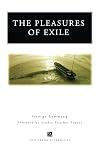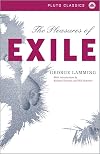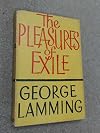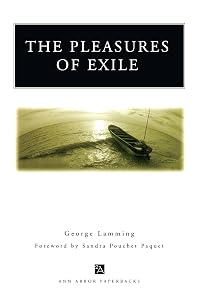
The Pleasures of Exile
by George Lamming
On This Page
Description
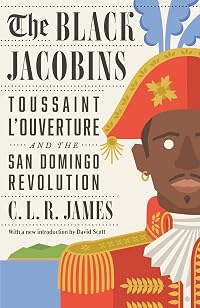
In The Pleasures of Exile, as in his other works, George Lamming embraces the intricate issues of colonization and decolonization with a canny combination of playfulness and seriousness, irony and commitment. "[It] is a reciprocal process," Lamming observes, "to be a colonial is to be a man in a certain relation; and this relation is an example of exile." Through a series of interrelated essays, The Pleasures of Exile explores the cultural politics and relationships created in the show more crucible of colonization. Drawing on Shakespeare's The Tempest and C. L. R. James's The Black Jacobins, as well as his own fiction and poetry, Lamming deftly locates the reader in a specific intellectual and cultural domain while conjuring a rich and varied spectrum of physical, intellectual, psychological, and cultural responses to colonialism. "My subject," he writes, "is the migration of the West Indian writer, as colonial and exile, from his native kingdom, once inhabited by Caliban, to the tempestuous island of Prospero's and his language. This book is a report on one man's way of seeing." show lessTags
Recommendations




























Member Reviews
I was drawn to this by my love for Shakespeare, as Lamming weaves into his professional memoir a classist and colonial interpretation of The Tempest. Also, reading autobiographical material from Colin Powell and Malcolm Gladwell made me interested in the West Indian experience. Lamming's jumble of recollections is poetic and strives to be honest and psychologically accurate as an interpretative over descriptive recollection. I found it eminently readable and enlightening.
An examination of the effects of colonialism on those who are held in check
Ratings
Members
- Recently Added By
Author Information

18+ Works 738 Members
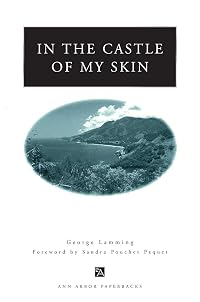
Born in Carrington Village, Barbados, Lamming taught in Trinidad and Venezuela before going to England in 1950. In England, he worked in a factory and also hosted a book program for the BBC West Indian Service while pursuing his writing. Lamming's works are a panorama of West Indian history with a strong sense of nationalism. In the Castle of My show more Skin (1953) is at least partially autobiographical in its presentation of the protagonist's growing sense of individuality and his consequent estrangement from the village and folk community. The subsequent exile of this protagonist is told in The Emigrants (1954), his return is the focus in Of Age and Innocence (1958), and the reclamation of his heritage is the major theme in Season of Adventure (1960). His novels focus on the social and economic changes taking place in the Caribbean, and he uses his protagonists as mouthpieces for his own ideas. (Bowker Author Biography) show less
Common Knowledge
- Canonical title
- The Pleasures of Exile
Classifications
Statistics
- Members
- 69
- Popularity
- 454,861
- Reviews
- 2
- Rating
- (3.63)
- Languages
- English
- Media
- Paper
- ISBNs
- 6
- ASINs
- 2