
Samuel Selvon (1923–1994)
Author of The Lonely Londoners
About the Author
Largely self-educated, Selvon was first a poet, later a journalist, and then a professional writer. In 1946 he became an editor at the Guardian Weekly in Trinidad. He left for England in 1950, where he wrote and published his first novel, A Brighter Sun (1952). This novel depicts the struggle of show more the protagonist, a newly married Indian peasant, to adapt to life in a suburban area. In Turn Again Tiger (1958), a sequel to his highly successful first novel, the protagonist of A Brighter Sun returns to his community with a deeper sense of place. Both novels explore his relations to his origins and the various layers of Trinidadian society. Moses Ascending (1975) is a humorous satire on the situation of the West Indian in London. Although his roots are in the nineteenth-century novel, Selvon has created a personal literary language out of the fusion of standard English with Creole folk language, just as he has joined the techniques of European fiction to the West Indian rhythms. Though he now lives in Calgary, Canada, Selvon continues to write about West Indians with humor and sensitivity and tries to communicate his view that all West Indians---in spite of racial diversity---have a common identity. (Bowker Author Biography) show less
Series
Works by Samuel Selvon
I Hear Thunder 1 copy
Associated Works
The Penguin Book of Migration Literature: Departures, Arrivals, Generations, Returns (2019) — Contributor — 96 copies
Tagged
Common Knowledge
- Legal name
- Selvon, Samuel Dickson
- Birthdate
- 1923-05-20
- Date of death
- 1994-04-16
- Gender
- male
- Education
- Naparima College
- Occupations
- novelist
short story writer
poet
creative writing teacher
editor - Organizations
- University of Calgary
University of Victoria
Trinidad Guardian
Royal Naval Reserve (WWII) - Awards and honors
- Hummingbird Medal Gold for Literature (1969)
Chaconia Medal Gold for Literature (1994)
NALIS Lifetime Achievement Literary Award (2012)
Honorary Doctorate, Warwick University (1989)
Honorary D.Litt, University of West Indies (1985)
Guggenheim Fellow (1955, 1968) - Cause of death
- respiratory failure
- Nationality
- Trinidad and Tobago
- Birthplace
- San Fernando, Trinidad, Trinidad and Tobago
- Places of residence
- Trinidad, Trinidad and Tobago
Port of Spain, Trinidad, Trinidad and Tobago
Calgary, Alberta, Canada
London, England, UK - Place of death
- Piarco International Airport, Tunapuna–Piarco, Trinidad and Tobago
- Burial location
- University of the West Indies cemetery, St Augustine, Trinidad, Trinidad and Tobago
- Map Location
- Trinidad, Trinidad and Tobago
Members
Reviews

Lilting set of loosely connected stories about the "boys", a group of West Indian migrants hustling in London in the 1950s. The central figure is Moses, a world-weary and cynical observer, who acts as a reluctant guide to new arrivals like Sir Galahad and host of occasional get-togethers to reminisce about life back in the Caribbean and daily stuggles in the UK. Not to mention the constant pursuit of women - or "skin" as they are related to. The misogynistic tones grate, but still it feels show more authentic to their voices. Racism is of course a constant battle, but also a sense of wonder at making their way through Trafalgar Square and Oxford Street and other epicentres of empire of the time. It gives a real feel of the 'Water' in the 50s. The language is brillant, poetic and full of slang. Most of all, the book is often hilarious as well as sad, and makes big impressions without labouring points. show less

The Lonely Londoners was Selvon's second novel, written in the first couple of years after he arrived in Britain from Trinidad. As you might expect, it deals with the problems and hardships of newly-arrived Caribbean immigrants in London: the difficulty of finding decent jobs and accommodation, coping with British people who hadn't yet learnt to live with people from different backgrounds, and so on. What you don't expect, though, is what Selvon does with this subject-matter. Never one to show more fit into anyone else's stereotype of what a postcolonial writer should be, he sets the squalor of immigrant life against the glory of exploring your youth and independence in a city like London. He turns it into a glorious, upbeat poetic celebration of London and of Caribbean individuality: imagine Damon Runyon writing Mrs Dalloway after listening to too many calypsos, or James Kelman if he were a few decades older and Trinidadian not Glaswegian, and you get the general idea, but you really have to read it yourself.
Like a lot of British writing of the 1950s, it's all rather misogynistic: it's a novel about a bunch of young men on the loose in which women appear only as disposable girlfriends or embarrassing mothers, but Selvon usually makes it pretty clear that he doesn't intend you to take his narrator's view of things entirely at face value. show less
Like a lot of British writing of the 1950s, it's all rather misogynistic: it's a novel about a bunch of young men on the loose in which women appear only as disposable girlfriends or embarrassing mothers, but Selvon usually makes it pretty clear that he doesn't intend you to take his narrator's view of things entirely at face value. show less
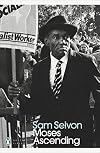
Unlike The Lonely Londoners, this novel has not aged well. Apparently Selvon, way back in 1986, had his face slapped at a Commonwealth Institute event by an activist angered by the sexist depiction of women in his work. As a Trinidadian of East Indian descent he displays an ambiguous attitude towards Black West Indians, and the contemporary Black Power movement in London is largely played for laughs. Kunzru’s introduction to the 2020 Penguin edition does a good job of analysing the show more problematic features of this novel. I’m not in a hurry to read the third book in the trilogy. show less
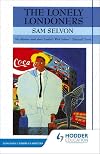
The immigrant experience was never so well told as it is in this short novel. Furthermore the ability of the author to demonstrate that experience through his prose was so successful that I was reminded why I love reading. Set in London in the early nineteen fifties it provides an entry into a world that is both far away and familiar at the same time.
Covering a period of roughly three years, it has no plot but is picaresque or episodic as it follows a limited number of characters of the show more "Windrush generation", all of them "coloureds", through their daily lives in the capital. The various threads of action form a whole through the unifying central character of Trinidadian Moses Aloetta, a veteran emigré who, after more than ten years in London, has still not achieved anything of note and whose homesickness increases as he gets older. Every Sunday morning "the boys", many a recent arrival among them, come together in his rented room to trade stories and inquire after those whom they have not seen for a while.
The immigrants in this story are treated poorly with low-level jobs that are insufficient to provide for more than the most basic necessities. They live on the fringe of the host society that regards them with indifference or hostility. Throughout the force of race and color prejudice is shown in incidents and through conversations but always with a sense of the human comedy that buoys most of the Caribbean natives that populate the story. Moses who has been in London a while shares his experience with newcomers or tries to if they will listen to him.
Early in the story Moses meets a newcomer named Henry Oliver (nicknamed Galahad) who is just "off the boat".
"From the very beginning they out to give you the impression that they hep, that they on the ball, that nobody could tie them up.
Sir Galahad was a fellar like that, and he was trying hard to give Moses the feeling that everything all right, that he could take care of himself, that he don't want help for anything. So that same morning when they finish eating Moses tell him that he would o with him to help him find a work, but Galahad say: 'Don't worry man, I will make out for myself.'"
Galahad goes out and immediately gets lost, but Moses follows him and persuades Galahad to take his advice and get a job, but be sure to find a place to live close to where you work. The patois of the immigrants has an almost musical quality in its simplicity and lack of tense. As the story continues more characters are introduced, in episodic fashion, each with their own idiosyncrasies. Despite their differences, their newness and unfamiliarity with the surroundings they are able to make a home within the larger urban environment provided by the city of London. Near the end of the story they come together for a "fete", a celebration and dance. They are enjoying themselves and for a moment forget about the life they left in the Caribbean, the daily difficulties they face in London, and the loneliness that remains a part of their lives.
"The changing of the seasons, the cold slicing winds, the falling leaves, sunlight on green grass, snow on the land, London particular. Oh what it is and where it is and why it is, no one knows, but to have said: 'I walked on Waterloo Bridge,' 'I rendezvoused at Charing Cross,' "Picadilly Circus is my playground,' to say these things, to have lived these, things, to have lived in the great city of London, centre of the world." show less
Covering a period of roughly three years, it has no plot but is picaresque or episodic as it follows a limited number of characters of the show more "Windrush generation", all of them "coloureds", through their daily lives in the capital. The various threads of action form a whole through the unifying central character of Trinidadian Moses Aloetta, a veteran emigré who, after more than ten years in London, has still not achieved anything of note and whose homesickness increases as he gets older. Every Sunday morning "the boys", many a recent arrival among them, come together in his rented room to trade stories and inquire after those whom they have not seen for a while.
The immigrants in this story are treated poorly with low-level jobs that are insufficient to provide for more than the most basic necessities. They live on the fringe of the host society that regards them with indifference or hostility. Throughout the force of race and color prejudice is shown in incidents and through conversations but always with a sense of the human comedy that buoys most of the Caribbean natives that populate the story. Moses who has been in London a while shares his experience with newcomers or tries to if they will listen to him.
Early in the story Moses meets a newcomer named Henry Oliver (nicknamed Galahad) who is just "off the boat".
"From the very beginning they out to give you the impression that they hep, that they on the ball, that nobody could tie them up.
Sir Galahad was a fellar like that, and he was trying hard to give Moses the feeling that everything all right, that he could take care of himself, that he don't want help for anything. So that same morning when they finish eating Moses tell him that he would o with him to help him find a work, but Galahad say: 'Don't worry man, I will make out for myself.'"
Galahad goes out and immediately gets lost, but Moses follows him and persuades Galahad to take his advice and get a job, but be sure to find a place to live close to where you work. The patois of the immigrants has an almost musical quality in its simplicity and lack of tense. As the story continues more characters are introduced, in episodic fashion, each with their own idiosyncrasies. Despite their differences, their newness and unfamiliarity with the surroundings they are able to make a home within the larger urban environment provided by the city of London. Near the end of the story they come together for a "fete", a celebration and dance. They are enjoying themselves and for a moment forget about the life they left in the Caribbean, the daily difficulties they face in London, and the loneliness that remains a part of their lives.
"The changing of the seasons, the cold slicing winds, the falling leaves, sunlight on green grass, snow on the land, London particular. Oh what it is and where it is and why it is, no one knows, but to have said: 'I walked on Waterloo Bridge,' 'I rendezvoused at Charing Cross,' "Picadilly Circus is my playground,' to say these things, to have lived these, things, to have lived in the great city of London, centre of the world." show less
Lists
Awards


You May Also Like


Associated Authors
Statistics
- Works
- 17
- Also by
- 11
- Members
- 1,456
- Popularity
- #17,648
- Rating
- 3.7
- Reviews
- 45
- ISBNs
- 66
- Languages
- 2
- Favorited
- 8