
Colin MacInnes (1914–1976)
Author of Absolute Beginners
About the Author
Image credit: Courtesy of Allison and Busby
Series
Works by Colin MacInnes
MacInnes Colin 1 copy
Associated Works
Tagged
Common Knowledge
- Canonical name
- MacInnes, Colin
- Other names
- McInnes, Colin (birth)
Thirkell, Colin (childhood) - Birthdate
- 1914-08-20
- Date of death
- 1976-04-22
- Gender
- male
- Education
- London Polytechnic
School of Drawing and Painting, Euston Road, London, UK - Occupations
- novelist
journalist - Organizations
- BBC Radio
British Army (WWII) - Relationships
- McInnes, James Campbell (father)
Thirkell, Angela (mother)
Kipling, Rudyard (cousin)
Baldwin, Stanley (cousin)
Thirkell, Lance (half brother)
McInnes, Graham (brother) (show all 7)
Burne-Jones, Edward (great-grandfather) - Short biography
- Son of singer Joseph Campbell McInnes and novelist Angela Thirkell, Colin MacInnes was born in London, raised in Australia, and returned to England in 1930. He served the UK in WWII, after which he wrote his first novel, To the Victor the Spoils, and worked for BBC Radio until he could earn a living writing.
He was openly bisexual, and though obviously in love with the city of London, remained relatively realistic about urban life. This is reflected in his writing, which often addresses race relations of the day, urban squalor, and includes frank and realistic depictions of gay and lesbian characters. - Nationality
- UK (birth)
Australia (passport) - Birthplace
- London, England, UK
- Places of residence
- London, England, UK (birth)
Australia - Map Location
- UK
Members
Discussions
1914: Colin MacInnes - Resources and General Discussion in Literary Centennials (February 2015)
Reviews

Colin MacInnes's 1959 novel, Absolute Beginners, is a coming-of-age masterpiece. Highly nuanced and perceptive, it follows the 18-year-old narrator, who is a photographer and jazz aficionado, through the chaotic summer on the cusp of entering his last year as a teen, on the final approach to adulthood. Though MacInnes was 44 when it was published, he was remarkably attuned to the budding but shadowy world of late 1950's London teenage culture, its vibrancy still resonating within the book show more nearly sixty years later. It all rings true: the dialogue, the characters, the angst, the confusion, love and loss, disillusion and hope.
Against the backdrop of London's class distinctions and racial unrest, which MacInnes confronts unflinchingly with pointed social commentary, the novel places the reader right in the center of these tensions, and then zeroes in on the emotional strains at the personal level involving the narrator's relationships with family, girlfriend, friends and acquaintances. The descriptions of London are truly evocative, from the loving take on the Thames embankment to the frightful dissection of the dismal and dangerous Napoli/Notting Hill neighborhood. This is an essential work in the Bildungsroman genre: passionate, smart, honest, and insightful. show less
Against the backdrop of London's class distinctions and racial unrest, which MacInnes confronts unflinchingly with pointed social commentary, the novel places the reader right in the center of these tensions, and then zeroes in on the emotional strains at the personal level involving the narrator's relationships with family, girlfriend, friends and acquaintances. The descriptions of London are truly evocative, from the loving take on the Thames embankment to the frightful dissection of the dismal and dangerous Napoli/Notting Hill neighborhood. This is an essential work in the Bildungsroman genre: passionate, smart, honest, and insightful. show less

Part of the cultural conversation takes place, of course, in creative work: arts and crafts. Broader social discussions are encountered within personal conversations, and through public activities, yes, but also by participating in art, as creator and as audience. And art always crosses genre borders, with painters and painting borrowing ideas from poetry, literature from music, theater and film from one another. At the same time, each of us has our special touchpoints. Some of us get show more inspiration more from dance, not so much attuned to television; others from sculpture, or quilting circles, or gardening. There is both a broad cultural profile, and countless idiosyncratic views within it.
This is obvious, but on occasion the truth of it strikes me with particular force. Finishing MacInnes's novel, Absolute Beginners, I reflected on first becoming aware of it without realizing it was a novel, through hearing the Jam's 1981 single of the same name, along with the post-punk world ushering that band to my ears, only later reading about or seeing the book itself and thinking: ah-hah! That's what Weller was on about! -- and then for years not so much hearing more about the book as slotting it amidst my growing exposure to 20th Century British youth culture. I don't think that was grossly unfair to the book, but admittedly this was a subjective and atmospheric imprint more than anything.
The profit-and-loss one now began to look a bit uneasy---I mean, not at my ideas, but me---which always happens if you let loose an idea. [101]
Finally reading the book itself, some forty years later, I am wholly struck by the distinct and fully realised narrative voice, which wasn't translated to me at all by the song or any later impressions of the novel, but also in no way conflicted with it or failed to meet any expectations. This was perhaps my best possible reading scenario. As much as the song and the post-punk Mod scene bring a strong personality to mind, this impression didn't direct my thinking of the novel in any specific way. The story came across very British, sure, yet allowed MacInnes to unspool his story and his storytelling as he wanted, and I felt no resistance to where it took me or what it left out. At several points I found myself thinking of The Catcher In The Rye, both in terms of the cultural preoccupations of each novel's protagonist, and novel's mark upon culture. (Are English students assigned MacInnes at all parallel to how Americans are assigned Salinger?)
While the novel stands alone perfectly fine, based on this reading of MacInnes I would pick up another of his London Novels. show less
This is obvious, but on occasion the truth of it strikes me with particular force. Finishing MacInnes's novel, Absolute Beginners, I reflected on first becoming aware of it without realizing it was a novel, through hearing the Jam's 1981 single of the same name, along with the post-punk world ushering that band to my ears, only later reading about or seeing the book itself and thinking: ah-hah! That's what Weller was on about! -- and then for years not so much hearing more about the book as slotting it amidst my growing exposure to 20th Century British youth culture. I don't think that was grossly unfair to the book, but admittedly this was a subjective and atmospheric imprint more than anything.
The profit-and-loss one now began to look a bit uneasy---I mean, not at my ideas, but me---which always happens if you let loose an idea. [101]
Finally reading the book itself, some forty years later, I am wholly struck by the distinct and fully realised narrative voice, which wasn't translated to me at all by the song or any later impressions of the novel, but also in no way conflicted with it or failed to meet any expectations. This was perhaps my best possible reading scenario. As much as the song and the post-punk Mod scene bring a strong personality to mind, this impression didn't direct my thinking of the novel in any specific way. The story came across very British, sure, yet allowed MacInnes to unspool his story and his storytelling as he wanted, and I felt no resistance to where it took me or what it left out. At several points I found myself thinking of The Catcher In The Rye, both in terms of the cultural preoccupations of each novel's protagonist, and novel's mark upon culture. (Are English students assigned MacInnes at all parallel to how Americans are assigned Salinger?)
While the novel stands alone perfectly fine, based on this reading of MacInnes I would pick up another of his London Novels. show less
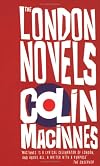
'City of Spades' is a compliment to 'Absolute Beginners', the first Colin MacInnes novel I read, but a mesmerising story in its own right. I love and admire how the author can create such vivid and personable characters from two different perspectives, and present a balanced and objective potrayal of racial tension in 1950s London, delivered in a witty and natural style (and in first person, too - one of only a few writers who know how to utilise this honest yet deceptive narrative voice). show more The chapters switch back and forth between Montgomery Pew, a sensitive yet ineffective young Londoner (the 'white man'), and Johnny Fortune, a student from Lagos who quickly learns the reality of life in the city, but their voices are so distinct that there is rarely any confusion between the two 'I's. The character names are also creative and fitting, from Mr Fortune to Billy Whispers and Peter Pay Paul!
The third book in this trilogy is 'Mr Love and Justice', but the more conventional omniscient narrator isn't as engaging, nor the two central characters, Frankie Love and Ed Justice. show less
The third book in this trilogy is 'Mr Love and Justice', but the more conventional omniscient narrator isn't as engaging, nor the two central characters, Frankie Love and Ed Justice. show less
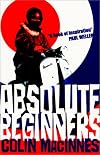
A subtle, wry contemporary take on late 1950s London. The unnamed narrator casually observes life around him for most of the book, until the political, social and personal reality of the time and place hit him - and the reader - in the last chapters. MacInnes has an unnerving knack of covering light and dark in the same mocking, objective voice, so that the emotions behind events are all the more powerful when unravelled from the narrator's point of view; I was nearly brought to tears at one show more point, and the racial tension is staggering. A smart, thoughtful snapshot of twentieth century England, that still applies today, and I particularly have to agree with the psychology of drivers ... show less
Lists
Awards


You May Also Like


Associated Authors
Statistics
- Works
- 20
- Also by
- 4
- Members
- 1,326
- Popularity
- #19,389
- Rating
- 3.6
- Reviews
- 34
- ISBNs
- 87
- Languages
- 5
- Favorited
- 4