
Wyndham Lewis (1882–1957)
Author of Tarr
About the Author
Wydham Lewis: November 18, 1882 -- March 7, 1957 Distinguished and highly original, Wyndham Lewis was known for his sharp wit and sardonic insight. A modern master of satire, Lewis was born off the coast of Nova Scotia in his English father's yacht on November 18, 1882, and grew up in England with show more his mother. He was associated with Roger Fry and Ezra Pound on the vorticist magazine, Blast (1914--1915). Lewis served in France in World War I, and his dynamic paintings of war scenes soon gained him wide recognition for his art, now represented in the Tate Gallery and the Victoria and Albert Museum, London, and in the Museum of Modern Art, New York. After the publication of his naturalistic novel Tarr (1918), he became prominent as a writer. His major work of fiction is The Human Age (1955--56). He also wrote Doom of Youth, The Hitler Cult, and The Jews, Are They Human? Lewis died in London on March 7, 1957. (Bowker Author Biography) show less
Disambiguation Notice:
Not to be confused with the humorist and biographer D. B. Wyndham-Lewis.
Series
Works by Wyndham Lewis
Wyndham Lewis: Drawings and watercolours, 1910-1920 : [exhibition, 13 April to 14 May 1983] (1983) 4 copies
The enemy 3 copies
Blast: Nos. 1 & 2 2 copies
The Mysterious Mr Bull 2 copies
Tarr, The Apes of God, The Human Age: Bk One - Childermass, Bk 2 Monstre Gai, Bk 3 Malign Fiesta 1 copy
Movimentos Vorticistas 1 copy
Mixed lot. 1 copy
The Tyro No 2 1 copy
Timon Of Athens 1 copy
The code of a herdsman 1 copy
Crossing The Water 1 copy
Associated Works
Agenda : Wyndham Lewis special issue — Contributor — 6 copies
Beyond This Limit: Selected Shorter Fiction of Naomi Mitchison (Scottish Classic Series) (1986) — Illustrator — 4 copies
The Lion And The Fox: Art and Literary Works by Wyndham Lewis from the C.J. Fox Collection (2009) — Artist — 1 copy
Tagged
Common Knowledge
- Canonical name
- Lewis, Wyndham
- Legal name
- Lewis, Percy Wyndham
- Birthdate
- 1882-11-18
- Date of death
- 1957-03-07
- Gender
- male
- Education
- Rugby School
Slade School of Art - Occupations
- painter
novelist
editor
short story writer
essayist
art critic (show all 12)
literary critic
official war artist for Canadian and British governments
second lieutenant (British Army)
teacher
playwright
travel writer - Organizations
- British Army Royal Artillery (WWI)
Vorticism (co-founder)
BLAST (editor)
The Tyro (founder and editor)
The Enemy (founder and editor)
Assumption College, Windsor, Ontario, Canada (teacher) - Awards and honors
- Honorary doctorate, Leeds University (1952)
Retrospective Exhibition, National Portrait Gallery (2008)
Retrospective Exhibition, Rugby School (2007)
Retrospective Exhibition, Peggy Guggenheim Collection (2011)
Exhibition, Tate Gallery (1956) - Relationships
- Pound, Ezra (friend)
Pound, Dorothy (friend)
Eliot, T. S. (friend)
Shakespear, Olivia (friend) - Nationality
- UK
- Birthplace
- Amherst, Nova Scotia, Canada
- Places of residence
- London, England, UK
Paris, France - Place of death
- London, England, UK
- Burial location
- Cremated at Golders Green, London, England
- Map Location
- England, UK
- Disambiguation notice
- Not to be confused with the humorist and biographer D. B. Wyndham-Lewis.
Members
Reviews

The is an energetic no-holds-barred satire with the benefit of a confident blistering writer to make it soar. It is topical again, now because it eviscerates the chattering classes who coagulate around art, politics and the left wing "scene".
The novel is set in the 1930's and its characters are all invested in communist politics contemporaneous with the Spanish Civil War. Some are painters, but talentless, one of whom openly admits to being so. Their women are poverty stricken but beguiled show more by the bohemian life and the hot-house left wing world.
Communists in the Spanish Civil War were treacherous and without mercy toward other Republican forces. This novel exposes the treachery of cadres towards their working class faithful; those who have been duped by Marxism, but whose fate is a Spanish gaol.
Duplicity abounds and fools rush in in the course of this masterpiece of satire. A superb plot and ripping language make this a great revelatory read that, I am inclined to believe, outshines Orwell. show less
The novel is set in the 1930's and its characters are all invested in communist politics contemporaneous with the Spanish Civil War. Some are painters, but talentless, one of whom openly admits to being so. Their women are poverty stricken but beguiled show more by the bohemian life and the hot-house left wing world.
Communists in the Spanish Civil War were treacherous and without mercy toward other Republican forces. This novel exposes the treachery of cadres towards their working class faithful; those who have been duped by Marxism, but whose fate is a Spanish gaol.
Duplicity abounds and fools rush in in the course of this masterpiece of satire. A superb plot and ripping language make this a great revelatory read that, I am inclined to believe, outshines Orwell. show less
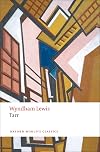
This is a novel of the pre-first world war modernist avant-garde, written by Wyndham Lewis, who was slightly better known as a painter and co-founder of the literary/art movement of Vorticism. It contains a lot of experimentation in writing style, and in a few ways pre-empts the innovation of better known subsequent modernist authors.
In plot, it deals with a group of four characters living in Paris – two male, two female – in what Lewis coins as the Bourgeois Bohemian set. As an show more exemplar of the abstract geometrical principles of Vorticism, their actions over the course of the novel have a quasi-symmetrical rhythm, changing, maintaining balance, and yet going nowhere. With the principles foci of Vorticism being directly counter to those of Futurism (Intellect vs Emotion; Spatial vs Temporal; Balance vs Movement; Contemplation vs Action), it is interesting to see here Lewis embodying on occasion the two different styles in his characters and setting them in conflict. He does this both through their actions, and more cleverly in his style of language when describing them, achieving with some success a parallel to the techniques of painting or visual representation. This novel is also partly meant to be a discussion on the incompatibility of art and life, but is at least as much a social satire and black comedy.
As a novel that was written over a hundred years ago now, it still feels experimental and modern. This is perhaps because not much quite like it has been written since, with contemporary culture never quite absorbing his style in the same way it did with that of better-known modernist writers. There are various reasons for not liking this novel, which have probably prevented its wider popularity, including brutal elements, and generally unlikeable characters. Thankfully this edition was well-footnoted, which helped a lot with a few of the anachronistic references that have not aged well. show less
In plot, it deals with a group of four characters living in Paris – two male, two female – in what Lewis coins as the Bourgeois Bohemian set. As an show more exemplar of the abstract geometrical principles of Vorticism, their actions over the course of the novel have a quasi-symmetrical rhythm, changing, maintaining balance, and yet going nowhere. With the principles foci of Vorticism being directly counter to those of Futurism (Intellect vs Emotion; Spatial vs Temporal; Balance vs Movement; Contemplation vs Action), it is interesting to see here Lewis embodying on occasion the two different styles in his characters and setting them in conflict. He does this both through their actions, and more cleverly in his style of language when describing them, achieving with some success a parallel to the techniques of painting or visual representation. This novel is also partly meant to be a discussion on the incompatibility of art and life, but is at least as much a social satire and black comedy.
As a novel that was written over a hundred years ago now, it still feels experimental and modern. This is perhaps because not much quite like it has been written since, with contemporary culture never quite absorbing his style in the same way it did with that of better-known modernist writers. There are various reasons for not liking this novel, which have probably prevented its wider popularity, including brutal elements, and generally unlikeable characters. Thankfully this edition was well-footnoted, which helped a lot with a few of the anachronistic references that have not aged well. show less
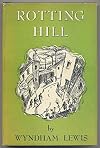
Wyndham Lewis - [Rotting Hill]
It is difficult to review a book and to be positive when the authors views are so totally opposed to mine. Wyndham Lewis was a British writer, painter and art critic who died in 1957. Rotting Hill published in 1951 is described as a novel, but really it is a collection of short stories, linked together by Lewis himself. In a forward to the book Lewis claims that politics cannot be avoided in the modern novel and most of these stories are little more than show more political debates between the author and selected characters.
Rotting Hill is the rot that the socialist government in Britain (the Labour government elected immediately after the end of the second world war) is spreading throughout the country, starting in London where the houses of parliament are situated. In the first and longest story the reverend Rhymer based in an obscure village called Bagwick wishes to buy one of the authors paintings and the two men discuss the current political situation. Rhymer is a socialist and supporter of the Labour government and Lewis describes his struggles with the local landowner who is opposed to a government which are increasing taxes. Rhymer despite his openness and modern views, struggles to get people to come to church and when he visits the local pub the landowner picks a fight with him and his employees gang up and give Rhymer a good beating. Lewis is not above saying that Rhymer got what he deserved. The next story has Lewis travelling first class on a train to Oxford where he gets into a political discussion with a fellow passenger: in this shorter story Lewis's views are a little more fair minded, but he has little sympathy for the working man:
"The British working class is the reverse of socially ambitious. Always it has been the despair of the agitator; a mass as difficult to ignite as a rain soaked mackintosh. It has been content to be an animal, fond of beer and football."
The Rot is a story personal to Lewis as he describes the dry rot that is discovered in his house and is literally eating it away. This is likened to the Labour government. The second longest story is Room without a Telephone which is unusual in that it largely avoids a diatribe against the socialist government. In this one Paul Eldred needs an abdominal operation and his physician advises him to have his teeth removed at the same time (medical advice in the early 1950's in England often identified the poor state of teeth as the causes of illness). Eldred is a high flying business man and is advised that the best medical care would be outside of the new National Health service and so he goes private and ends up in a nursing home run by Nuns. He asks for a room without a telephone and is shown a cell sparsely furnished. This atmospheric story describes the horrors of 1950's medical care. Most of the other stories follow the discussions that Lewis has with various people, perhaps the most interesting is the visit to the Houses of Parliament.
Lewis views seem to be that freedom to do what one wants is the all consuming position and that taxes are too high. There are too many obstacles placed in the way of freedom to use ones capital and anything state run leads to a lowering of standards that can only get worse. Today I suppose he would be labelled as a neoliberal. I will not be reading anything else by this author if I can avoid it and I refuse to be positive, despite a couple of half decent stories. - 2 stars. show less

It's a useful book for understanding how deep antisemitism ran in Britain before WWII. While sincerely (I think) trying to defend "the Jews," he ends up endorsing the basic premises of antisemitism. I've used it in classes for showing how something can be racist and anti=racist (while it attacks certain racist attitudes, it leaves others strengthened.)
I hadn't read it in over ten years, and I thought maybe it had gotten worse over the years in my memory. Nope.
I hadn't read it in over ten years, and I thought maybe it had gotten worse over the years in my memory. Nope.
Lists
Awards


You May Also Like


Associated Authors
Statistics
- Works
- 90
- Also by
- 10
- Members
- 2,932
- Popularity
- #8,739
- Rating
- 3.6
- Reviews
- 15
- ISBNs
- 183
- Languages
- 7
- Favorited
- 19

