
Jeffrey Meyers (1) (1939–)
Author of Hemingway: A Biography
For other authors named Jeffrey Meyers, see the disambiguation page.
About the Author
Jeffrey Meyers, a fellow of the Royal Society of Literature, has written biographies of such literary greats as D.H. Lawrence, Robert Frost, Ernest Hemingway, & F. Scott Fitzgerald. (Bowker Author Biography)
Works by Jeffrey Meyers
Married to Genius: A Fascinating Insight Into the Married Lives of Nine Modern Writers (1977) 31 copies, 1 review
Orwell 1 copy
Associated Works
Tagged
Common Knowledge
- Birthdate
- 1939-04-01
- Gender
- male
- Education
- University of Michigan (BA, 1959)
University of Pennsylvania
University of Edinburgh
Harvard Law School
University of California, Berkeley (MA, 1961)
University of California, Berkeley (PhD, 1967) - Occupations
- professor
- Awards and honors
- American Academy of Arts and Letters Academy Award (Literature ∙ 2005)
Royal Society of Literature - Nationality
- USA
- Birthplace
- New York, New York, USA
- Places of residence
- New York, New York, USA
Berkeley, California, USA - Associated Place (for map)
- USA
Members
Reviews

Jeffrey Meyers is noted for his literary biographies and he succeeds with this biography of Edgar Allan Poe. The details of Poe's mysterious and tragic life are laid out with clarity. He explores Poe's contrariness that bordered on the pathological as he ruined every project he attempted. From journalism to friendship to marriage his life was a failure. I was impressed with the few sturdy friends who persevered in spite of Poe's stubborn behavior. If not for these few who hired him for show more journal's and at least temporarily lifted him out of the gutter he would have had an even shorter and more brutal life.
The wonder of it all was the stories, poetry, and criticism that he produced. It fills two volumes in the Library of America edition and it is mostly good and sometimes great. It is with his works that Meyers also proves an excellent guide, for he combines psychological insight and literary acumen in his brief precis and analysis of the stories and poems. The impact of Poe outside of the United States and on contemporary writers like Nabokov is also presented. The sum of Meyer's work is a complete portrait of Poe the American literary master. show less
The wonder of it all was the stories, poetry, and criticism that he produced. It fills two volumes in the Library of America edition and it is mostly good and sometimes great. It is with his works that Meyers also proves an excellent guide, for he combines psychological insight and literary acumen in his brief precis and analysis of the stories and poems. The impact of Poe outside of the United States and on contemporary writers like Nabokov is also presented. The sum of Meyer's work is a complete portrait of Poe the American literary master. show less
Impressionist Quartet: The Intimate Genius of Manet and Morisot, Degas and Cassatt by Jeffrey Meyers
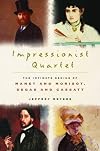
With well-regarded studies of Katherine Mansfield, Somerset Maugham, D.H. Lawrence, and other literary giants to his name, Meyers is a distinguished academic, biographer, and editor. Writing about the impressionists is a perfect match for his talents because of the intimate relationship of art and letters in the late 19th century.
In his four-subject biography Meyers illuminates the intimacies of Edouard Manet, Berthe Morisot, Edgar Degas and Mary Cassatt. Their private ordeals and inner show more demons are used to accentuate the brilliance of their paintings and the revolutionary implications of their artistic vision. Many have speculated that the two male artists enjoyed sexual as well as artistic relationships with their female disciples. Meyers examines contemporary and modern secondary sources (the two couples’ letters were all burned), recording every connection. While he is not completely successful in this endeavor his journey is fascinating nonetheless.
An important aspect of nineteenth century art was the impact of Baudelaire. His concept of the modern painter was a charge of dynamite that Manet detonated in 1863 when he exhibited "Luncheon on the Grass." The enigmatic depiction of a nude woman lounging with fully dressed men in a forest glade was a frank admission of sexuality. It created a furor, as did his "Olympia," the even more arresting view of an unclothed (and visibly bored) prostitute viewing her next client. Both women look directly at the viewer, underscoring the complicity to be found in the eye of the beholder. Despite efforts to secure popular acclaim, Manet was never to rid himself of the notoriety provoked by "Luncheon" and "Olympia." Moreover, his inner torment affected his relationship with Berthe Morisot and found a counterpoint in the private lives of his friends Edgar Degas and Mary Cassatt.
There is much more in this educating and entertaining look at the lives of four Impressionist masters. show less
In his four-subject biography Meyers illuminates the intimacies of Edouard Manet, Berthe Morisot, Edgar Degas and Mary Cassatt. Their private ordeals and inner show more demons are used to accentuate the brilliance of their paintings and the revolutionary implications of their artistic vision. Many have speculated that the two male artists enjoyed sexual as well as artistic relationships with their female disciples. Meyers examines contemporary and modern secondary sources (the two couples’ letters were all burned), recording every connection. While he is not completely successful in this endeavor his journey is fascinating nonetheless.
An important aspect of nineteenth century art was the impact of Baudelaire. His concept of the modern painter was a charge of dynamite that Manet detonated in 1863 when he exhibited "Luncheon on the Grass." The enigmatic depiction of a nude woman lounging with fully dressed men in a forest glade was a frank admission of sexuality. It created a furor, as did his "Olympia," the even more arresting view of an unclothed (and visibly bored) prostitute viewing her next client. Both women look directly at the viewer, underscoring the complicity to be found in the eye of the beholder. Despite efforts to secure popular acclaim, Manet was never to rid himself of the notoriety provoked by "Luncheon" and "Olympia." Moreover, his inner torment affected his relationship with Berthe Morisot and found a counterpoint in the private lives of his friends Edgar Degas and Mary Cassatt.
There is much more in this educating and entertaining look at the lives of four Impressionist masters. show less
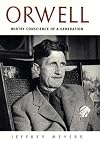
Brisk, readable (though frequently repetitive) bio of a difficult, conflicted man with a terrifically observant, curious, and passionate mind. Calls' em as he sees 'em, even if he sees different sides at different times. A political progressive who saw the evils of totalitarianism, and a doting father (to his credit), and who chased women and was reluctant to consent to his wife's hysterectomy for uterine cancer because it meant she'd not be able to have any more children (um, not so much, show more and she died on the table). A brilliant writer, whose essays read as crisp and fresh today as eighty years ago, and who would happily drink and talk till closing time with writers he had savaged in print the day before...and whose names he would turn around and send off to the British government's secret propaganda office as communist sympathizers, "homosexuals," or just "Stupid." Meyers glosses over this aspect (though to be fair the list wasn't made widely public till after this book was published), minimizing it as doing what he felt was a "patriotic duty."
Repeatedly described as a Gothic, guilt-ridden, "saintly" character (and more than a bit of a poseur as well), Orwell is still a cryptic and contradictory being... and one still worth reading. show less
Repeatedly described as a Gothic, guilt-ridden, "saintly" character (and more than a bit of a poseur as well), Orwell is still a cryptic and contradictory being... and one still worth reading. show less

Let's say up front that I like the book but not the man described therein. Which is not to say that that man is not interesting.
His father was a district attorney whose everyday conversation style carried over from the courtroom, and his mother was hard of hearing; consequently his own conversational style was loud and hectoring. His reputation as America's twentieth century man of letters perhaps explains his large number of sexual partners which continued to increase well up into his show more seventies. His promiscuous appetite for sex and alcohol was only exceeded by his love for writing and literary reputation. His high output, however, is at least partially explained by anthologizing and repackaging. He was consistently a critical but not a commercial success.
Physically he was a sorry specimen, never learning to drive and failing to even hit the target during military marksmanship training. His diet left him pot bellied by his thirties and the only time he drove a motorcycle ended in accident and citation if not arrest. The author regards as apocryphal that he once leapt a somersault while waiting for an elevator.
Despite at least two trips to the Soviet Union in the 1930s he only reluctantly acknowledged its social reality in the 1960s. Conversely his service as a U. S. Army medic well behind the front lines in WWI France left him a lifetime pacifist even after the invasion of Russia in 1941.
The book has a number of humorous anecdotes although not enough for 483 pages of text. One of the most revealing was that he hired a taxi to take him from his home in Cape Cod to John Dos Passos' in northern Virginia. Once there Wilson refused to sit at the dinner table with the taxi driver. (The black cook refused to allow a white man to eat in the kitchen.) Wilson had never forgiven Dos Passos for turning against Communism in the 1930s anyway and they never saw each other again after that visit.
Summers he would leave Cape Cod and spend them in his gloomy and secluded ancestral (as he thought of it) home near Utica, New York. Unsurprising his wife refused to accompany him.
A good deal of the text is literary comment and criticism. Occasionally I got the impression the author was being more tactful than candid. show less
His father was a district attorney whose everyday conversation style carried over from the courtroom, and his mother was hard of hearing; consequently his own conversational style was loud and hectoring. His reputation as America's twentieth century man of letters perhaps explains his large number of sexual partners which continued to increase well up into his show more seventies. His promiscuous appetite for sex and alcohol was only exceeded by his love for writing and literary reputation. His high output, however, is at least partially explained by anthologizing and repackaging. He was consistently a critical but not a commercial success.
Physically he was a sorry specimen, never learning to drive and failing to even hit the target during military marksmanship training. His diet left him pot bellied by his thirties and the only time he drove a motorcycle ended in accident and citation if not arrest. The author regards as apocryphal that he once leapt a somersault while waiting for an elevator.
Despite at least two trips to the Soviet Union in the 1930s he only reluctantly acknowledged its social reality in the 1960s. Conversely his service as a U. S. Army medic well behind the front lines in WWI France left him a lifetime pacifist even after the invasion of Russia in 1941.
The book has a number of humorous anecdotes although not enough for 483 pages of text. One of the most revealing was that he hired a taxi to take him from his home in Cape Cod to John Dos Passos' in northern Virginia. Once there Wilson refused to sit at the dinner table with the taxi driver. (The black cook refused to allow a white man to eat in the kitchen.) Wilson had never forgiven Dos Passos for turning against Communism in the 1930s anyway and they never saw each other again after that visit.
Summers he would leave Cape Cod and spend them in his gloomy and secluded ancestral (as he thought of it) home near Utica, New York. Unsurprising his wife refused to accompany him.
A good deal of the text is literary comment and criticism. Occasionally I got the impression the author was being more tactful than candid. show less
Lists
Awards


You May Also Like


Associated Authors
Statistics
- Works
- 42
- Also by
- 5
- Members
- 1,646
- Popularity
- #15,604
- Rating
- 3.8
- Reviews
- 15
- ISBNs
- 171
- Languages
- 6