

Earl Lovelace
Author of The Dragon Can't Dance
About the Author
Earl Lovelace is the author of five novels, including Salt (winner of the 1997 Commonwealth Writer's Prize); A Brief Conversion and Other Stories; and many plays and essays. He lives in his native Trinidad and is currently on the faculty of Pacific Lutheran University in Tacoma, Washington
Works by Earl Lovelace
Associated Works
Tagged
Common Knowledge
- Birthdate
- 1935-07-13
- Gender
- male
- Education
- Johns Hopkins University
Howard University
Scarborough Methodist Primary School, Scarborough, Tobago (1940-47)
Nelson Street Boys
Ideal High School, Port of Spain, Trinidad (1948-53) - Occupations
- novelist
journalist
playwright
short story writer - Awards and honors
- Guggenheim Fellowship (1980)
- Nationality
- Trinidad and Tobago
- Birthplace
- Toco, Trinidad
- Places of residence
- Toco, Trinidad
Port-of-Spain, Trinidad
Morvant, Trinidad
USA - Associated Place (for map)
- Trinidad
Members
Reviews

My thoughts:
• I was pleasantly surprised on how much I enjoyed this book. It has been some time since I read a “Caribbean Classic” and I wondered how I missed this book as during the 80s and early 90s I was reading most of the books that were part of the Heinemann Caribbean Writers Series.
• This book was 146 pages and the author did a impressive job of telling the story of a small community and the challenges they faced in a recent post-colonial world, the “invasion” of American show more soldiers and how it affected (or maybe just accelerated) the transition the challenges of a modern more urban focused culture, and the challenge of violence vs patience (working through the approved process) for achieving equality goals.
• I thought this book did an excellent job of showing how there was a common goal to get rid of the yoke of colonialism and to have "freedom", but because each individual has/had their own definition of what "freedom" was and what was the path to freedom and how this "freedom" would be measured.
• I thought that the author was very clever to use a female narrator. Though I will admit at first I was a little miffed at the portrayal of female characters. But then I remembered the time when this book was published, the time period that this book is covering. As in most of the literature that covers a pre & post colonial experience women were very much involved and played key roles but were mostly not the front people that were allowed to represent the people. The females were/is the glue that often held it all together and I felt the narrator, Eva, played that role here. It has often been said because women are/were not given equal status to men, they are good at manipulation to get what they want.
• I also liked the history lesson about the Shouters prohibition Ordinance.
• Overall the lyrical language, great pacing, well-developed character sketches, and the thought provoking themes made this an excellent read for me.
• I highly recommend to readers interested in post-colonial experiences and those interested in current issues in post-colonial societies. show less
• I was pleasantly surprised on how much I enjoyed this book. It has been some time since I read a “Caribbean Classic” and I wondered how I missed this book as during the 80s and early 90s I was reading most of the books that were part of the Heinemann Caribbean Writers Series.
• This book was 146 pages and the author did a impressive job of telling the story of a small community and the challenges they faced in a recent post-colonial world, the “invasion” of American show more soldiers and how it affected (or maybe just accelerated) the transition the challenges of a modern more urban focused culture, and the challenge of violence vs patience (working through the approved process) for achieving equality goals.
• I thought this book did an excellent job of showing how there was a common goal to get rid of the yoke of colonialism and to have "freedom", but because each individual has/had their own definition of what "freedom" was and what was the path to freedom and how this "freedom" would be measured.
• I thought that the author was very clever to use a female narrator. Though I will admit at first I was a little miffed at the portrayal of female characters. But then I remembered the time when this book was published, the time period that this book is covering. As in most of the literature that covers a pre & post colonial experience women were very much involved and played key roles but were mostly not the front people that were allowed to represent the people. The females were/is the glue that often held it all together and I felt the narrator, Eva, played that role here. It has often been said because women are/were not given equal status to men, they are good at manipulation to get what they want.
• I also liked the history lesson about the Shouters prohibition Ordinance.
• Overall the lyrical language, great pacing, well-developed character sketches, and the thought provoking themes made this an excellent read for me.
• I highly recommend to readers interested in post-colonial experiences and those interested in current issues in post-colonial societies. show less
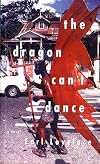
The dragon can't dance is set in Calvary Hill, a shantytown on the edge of Port of Spain, and it deals in a (surprisingly) humorous and lively way with the classic postcolonial dilemma of balancing the need to resist and the need to assimilate the metropolitan culture and better oneself. In a Prologue, Lovelace reminds us that slaves had had to resort to "asserting their humanness in the most wonderful acts of sabotage they could imagine and perform, making a religion of laziness and neglect show more and stupidity and waste: singing hosannahs for flood and hurricane and earthquake..." In the postmodern world, the men of Calvary Hill are still trapped in this tradition: they have merely advanced to hanging about on street corners looking threatening, or engaging in pointless traditional battles with men from other steel band clubs in other parts of the city. Meanwhile, their women either become prostitutes or look for menial employment.
The book follows a small group of characters who all have some dim idea of breaking out of this cycle, mostly frustrated by circumstances. Aldrick, the central character, is a man who has somehow managed to survive without doing anything in his life (he seems to have been trained as a signwriter at some point) except during the pre-carnival season, when he fabricates a new and spectacular dragon costume for himself each year. His dragon is meant to be a genuinely frightening one, and for the two days of the carnival, he becomes the dragon, rattling his chains, breathing fire, and rebelling against - whatever it is he is rebelling against. He sacrifices his chance of getting together with the girl he loves because he knows that it would mean changing his life, and that would take him into a realm he doesn't want to start thinking about, in fact doesn't even have the equipment to.
It is only after he gets drawn into an episode of totally pointless, unplanned rebellion and spends a few years in the prison library that he's able to clarify his thoughts and get an inkling of how to get beyond "rebelling against": we don't learn what he does with that knowledge, but the end of the book leaves us with the feeling that from now on he's going to be trying to take purposive, united action for change.
As you might expect from a book that has glowing references from CLR James on both the front and the back cover (Faber paperback edition), this is good old-fashioned postcolonial Marxism, but very down-to-earth Marxism, with a lot of jokes and put-downs and a total absence of theory. And it manages to convey a great sense of the language and culture of Trinidad. Definitely worth a look. show less
The book follows a small group of characters who all have some dim idea of breaking out of this cycle, mostly frustrated by circumstances. Aldrick, the central character, is a man who has somehow managed to survive without doing anything in his life (he seems to have been trained as a signwriter at some point) except during the pre-carnival season, when he fabricates a new and spectacular dragon costume for himself each year. His dragon is meant to be a genuinely frightening one, and for the two days of the carnival, he becomes the dragon, rattling his chains, breathing fire, and rebelling against - whatever it is he is rebelling against. He sacrifices his chance of getting together with the girl he loves because he knows that it would mean changing his life, and that would take him into a realm he doesn't want to start thinking about, in fact doesn't even have the equipment to.
It is only after he gets drawn into an episode of totally pointless, unplanned rebellion and spends a few years in the prison library that he's able to clarify his thoughts and get an inkling of how to get beyond "rebelling against": we don't learn what he does with that knowledge, but the end of the book leaves us with the feeling that from now on he's going to be trying to take purposive, united action for change.
As you might expect from a book that has glowing references from CLR James on both the front and the back cover (Faber paperback edition), this is good old-fashioned postcolonial Marxism, but very down-to-earth Marxism, with a lot of jokes and put-downs and a total absence of theory. And it manages to convey a great sense of the language and culture of Trinidad. Definitely worth a look. show less
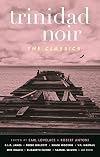
I enjoy the cadence and the sound of the English language in the mouths of the people of Trinidad and Tobago, so it was a pleasure to see it reproduced in so many of the stories in this collection.
The 'classics' refers to the most well-known of Trinidad's authors: VS Naipaul, Samuel Selvon, going as far back as a 1927 story by CLR James. The chronological sequence of the stories presents a picture of the changing people and society over the almost ninety years covered by the stories. In the show more older stories, male authors predominate, but women are well represented in the newer stories. The story of Trinidad must include the story of emigration, and one of my favorites is the 1957 story, The Cricket Match. Here, Samuel Selvon captures, with humor, Trinidadians in the London of the 1950s. This is the only explicit 'away' story, but others touch on characters with relatives who live elsewhere, or are trying to move away. However, most of all, the stories are of the people who live in that two-island nation. show less
The 'classics' refers to the most well-known of Trinidad's authors: VS Naipaul, Samuel Selvon, going as far back as a 1927 story by CLR James. The chronological sequence of the stories presents a picture of the changing people and society over the almost ninety years covered by the stories. In the show more older stories, male authors predominate, but women are well represented in the newer stories. The story of Trinidad must include the story of emigration, and one of my favorites is the 1957 story, The Cricket Match. Here, Samuel Selvon captures, with humor, Trinidadians in the London of the 1950s. This is the only explicit 'away' story, but others touch on characters with relatives who live elsewhere, or are trying to move away. However, most of all, the stories are of the people who live in that two-island nation. show less
 This review was written for LibraryThing Early Reviewers.
As much as surveillance is a nearly palpable force within this work, the narrative is surprisingly humorous and quickly paced. Lovelace's wonderfully written work is grounded in a shantytown of Trinidad, and rings with the dialects and carnivals of the area, but each of the colorful characters in his narrative is also personally at war with the shadows of a postcolonial reality that makes even festivals seem something of a farce at real living. As a novel and as a narrative, this is an show more entertaining journey full of humor, love, cynicism, and strength. And as an exploration of postcolonial worlds and feelings, this is also a necessary work of truth and individual terror, held together with themes of surveillance that preoccupy each of Lovelace's characters even as they enjoy their denials of reality or attempt escape. Absolutely recommended. show less
Lists
Awards


You May Also Like


Associated Authors
Statistics
- Works
- 13
- Also by
- 4
- Members
- 702
- Popularity
- #36,076
- Rating
- 3.8
- Reviews
- 20
- ISBNs
- 41
- Languages
- 3
- Favorited
- 3
