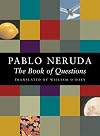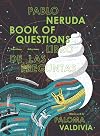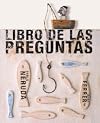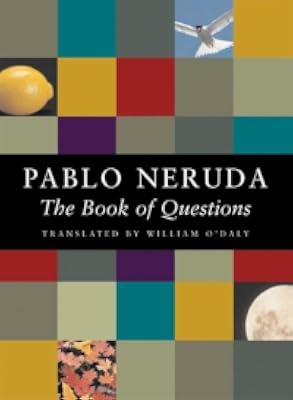
The Book of Questions
by Pablo Neruda
On This Page
Description
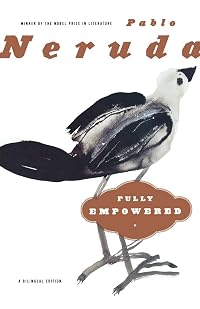
"This Spanish-English bilingual edition is the first fully illustrated selection of Book of Questions: comprising 70 questions of the original 320, these poems, carefully woven together by theme and accompanying full-page illustrations, invite us to wonder at the natural world and the myriad mysteries it contains. "Book of Questions," written by beloved Chilean poet and Nobel Prize winner Neruda, was completed just months before his death in 1973, and is his last great work of poetry. By show more turns lyrical and cosmic, dreamlike and nonsensical, paradoxical and playful, each of these unanswerable questions asks us to set aside certainty and constraint and to enter into the vastness of the unknown. With riddles like "Where is the center of the sea? / Why don't waves break there?" and "What do you call a flower / that flits from bird to bird?", Neruda inspires us to unravel our assumptions and re-envision our relationship to nature. The only answer that is sure to arise from these questions is a closer observation of and reflection on the world in which we live, and a renewed sense of curiosity and wonder at our shared universe"-- show lessTags
Recommendations



Member Reviews
Primeira leitura, início de 2019:
Aqui o dizer poético se apresenta em forma de questões que se formulam com um viés surrealista e que me fizeram lembrar os koans do zen-budismo.
Segunda leitura, início de 2020:
Essa segunda leitura me fez ter uma experiência outra de suas poesias, agora mais aproximadas do tipo de questão sempre presente nas bocas das crianças, num fazer poético inato à infância que está bem explícito no sentido desse poema:
"Dónde está el niño que yo fui,
sigue adentro de mí o se fue?
Sabe que no lo quise nunca
y que tampoco me quería?
Por qué anduvimos tanto tiempo
creciendo para separarnos?
Por qué no morimos los dos
cuando mi infancia se murió?
Y si el alma se me cayó
por qué me sigue el esqueleto?"
Aqui o dizer poético se apresenta em forma de questões que se formulam com um viés surrealista e que me fizeram lembrar os koans do zen-budismo.
Segunda leitura, início de 2020:
Essa segunda leitura me fez ter uma experiência outra de suas poesias, agora mais aproximadas do tipo de questão sempre presente nas bocas das crianças, num fazer poético inato à infância que está bem explícito no sentido desse poema:
"Dónde está el niño que yo fui,
sigue adentro de mí o se fue?
Sabe que no lo quise nunca
y que tampoco me quería?
Por qué anduvimos tanto tiempo
creciendo para separarnos?
Por qué no morimos los dos
cuando mi infancia se murió?
Y si el alma se me cayó
por qué me sigue el esqueleto?"
Ho tra le mani questo libretto di poche pagine. Contiene domande articolate in 74 brevi poesie. L’autore non è un poeta o uno scrittore qualunque, bensì un grande artista che nella sua vita assorbì molte filosofie, diverse dottrine politiche e religiose. Egli sviluppò la sua creatività, attraversando tutta una vasta gamma di esperienze in forma di voci e stili diversi, nel tentativo di dare una risposta alle innumerevoli domande che il suo istinto artistico gli suggeriva. Queste sono contenute in un numero di 320, ma in effetti queste stesse domande possono essere infinite in quanto chi legge queste poesie ne genera a sua volta, altre.
Poco prima di passare a miglior vita, nel mese di settembre del 1973, Pablo Neruda ultimò la show more stesura di questo libro. Intese “visitare”, per così dire, quel profondo “pozzo dell’eternità interiore” che ogni essere umano porta con sè. Ma, mentre il comune mortale vive prigioniero della quotidianità, il vero artista, il vero poeta aspira a cogliere il significato di quei pensieri il cui senso va oltre se stesso. Pablo Neruda volle completare la sua esperienza di vita formulando queste domande rivolte non tanto a chi avrebbe letto i suoi versi, ma soprattutto a se stesso.
Andò alla scoperta del suo “mistero”, seppe guardare alle cose con occhi non suoi, quelli con i quali aveva vissuto le proprie esperienze. Andò alla ricerca non solo delle ragioni, ma soprattutto del perchè di quelle “radici” sulle quali poggia tutta l’esistenza umana. Egli legge la realtà con gli occhi di un bambino, ma anche con la mente razionale di un adulto. Passa in rassegna i momenti della sua vita, che è anche la vita di ognuno di noi. Leggendo queste domande, il lettore si accorge che non ci sono risposte, perchè di queste ce ne possono essere tante e diverse.
Le poesie con le domande si susseguono in questa edizione sia in spagnolo che in inglese. Il lettore ha così la possibilità di filtrare i suoi sentimenti e leggere gli interrogativi proposti con due sistemi linguistici sotto molti aspetti opposti e diversi. Vi ho aggiunto la mia traduzione dall’inglese.
Tell me, is the rose naked
or is that her only dress?
Why do trees conceal
the splendor of their roots?
Who hears the regrets
of the thieving automobile?
Is there anything in the world sadder
than a train standing in the rain?
---
Dime, Ia rosa està desnuda
0 solo tiene ese vestido?
Por que los àrboles esconden
el esplendor de sus raices?
Quien oye los remordimientos
del automovil criminal?
Hay ago mas triste en el mundo
que un tren inmovil en Ia lluvia?
---
Dimmi, la rosa è nuda
o quello è il suo abito?
Perchè gli alberi nascondono
lo splendore delle loro radici?
Chi sente i lamenti
dell’auto rubata?
C’è qualcosa al mondo più triste
di un treno fermo sotto la pioggia?
-----
How many churches are there in heaven?
Why doesn't the shark attack
the brazen sirens?
Does smoke talk with the clouds?
Is it true our desires
must be watered with dew?
---
Cuántas iglesias tiene el cielo?
Por qué no ataca el tiburón
a las impavidas sirenas?
Conversa el humo con las nubes?
Es verdad que las esperanzas
deben regarse con rocìo?
---
Quante chiese ci sono in cielo?
Perchè lo squalo no attacca
le coraggiose sirene?
Il fumo parla con le nuvole?
E’ vero che i nostri desideri
devono essere bagnati di rugiada?
---
What is the distance in round meters
between the sun and the oranges?
Who wakes up the sun when it falls asleep
on its burning bed?
Does the earth sing like a cricket
in the music of the heavens?
Is it true that sadness is thick
and melancholy thin?
---
Qué distancia en metros redondos
hay entre el sol y las naranjas?
Quién despierta al sol cuando duerme
sobre su cama abrasadora?
Canta Ia tierra como un grillo
entre Ia música celeste?
Verdad que es ancha Ia tristeza,
de/gada Ia melancolìa?
---
Qual è la distanza in metri tondi
tra il sole e le arance?
Chi sveglia il sole quando si addormenta
sul letto ardente?
La terra canta come un grillo
nella musica dei cieli?
---
Si alternano immagini di fiumi e di mari, di sale e di nuvole, di limoni e violette, amici e nemici, tutte sostanze della nostra esistenza, in cerca di ragionevoli risposte. Sono sommerse nell’ignoto, tra sogni e incubi, paradossi e certezze, queste poesie adempiono in modo quanto mai brillante la funzione della poesia: quella di aiutarci a entrare nella vera essenza delle cose e di noi stessi. Questo libro è davvero unico, il vero testamento di un artista che sfida la natura, i sentimenti, la sua identità: “Chi sono io, nè quanti sono o sarò?”
“And why is the sun such a bad companion to the traveler in the desert?
And why is the sun so congenial in the hospital garden?
Are they birds or fish in these nets of moonlight?
Was it where they lost me that I finally found myself?
---
Y por qué el sol es tan mal amigo del caminante en el desierto?
Y par qué el sol es tan simpatico en el jardin del hospital?
Son pàjaros o son peces en estas redes de la luna?
Fue adonde a mi me perdieron
que logré por fin encontrarme?
--
E perchè il sole è un così tremendo compagno
per il viaggiatore nel deserto?
E perchè il sole sta così bene a suo agio
nel giardino ospitale?
Sono uccelli o pesci
in queste reti del chiaro di luna?
Fu dove mi persero
che poi io mi ritrovai?
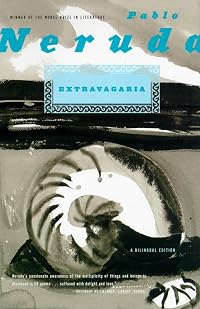
Neruda si rivela alla vigilia della sua fine che sente prossima un artista complicato, contraddittorio, in lotta prima con se stesso e poi con la realtà. Solo la poesia abbatte i confini che lo affliggono con la sua ideologia e i suoi egoismi. Più di tutte le altre sue opere, queste poesie ci fanno capire che soltanto in forma fortemente visionaria ed evocativa si possono dare risposte alle domande che il poeta si pone, ben sapendo che soltanto un forte atto di disperazione può essere usato come atto di fede. Lo aveva anticipato in una sua opera precedente “Extravagaria” con una poesia nella quale così si esprimeva:
“I figli dei figli del figlio -
che ne faranno del mondo?
Il bene o il male?
Mosche o grano?
Non chiedetelo a me.
Ma le domande rimangono”. show less
Poco prima di passare a miglior vita, nel mese di settembre del 1973, Pablo Neruda ultimò la show more stesura di questo libro. Intese “visitare”, per così dire, quel profondo “pozzo dell’eternità interiore” che ogni essere umano porta con sè. Ma, mentre il comune mortale vive prigioniero della quotidianità, il vero artista, il vero poeta aspira a cogliere il significato di quei pensieri il cui senso va oltre se stesso. Pablo Neruda volle completare la sua esperienza di vita formulando queste domande rivolte non tanto a chi avrebbe letto i suoi versi, ma soprattutto a se stesso.
Andò alla scoperta del suo “mistero”, seppe guardare alle cose con occhi non suoi, quelli con i quali aveva vissuto le proprie esperienze. Andò alla ricerca non solo delle ragioni, ma soprattutto del perchè di quelle “radici” sulle quali poggia tutta l’esistenza umana. Egli legge la realtà con gli occhi di un bambino, ma anche con la mente razionale di un adulto. Passa in rassegna i momenti della sua vita, che è anche la vita di ognuno di noi. Leggendo queste domande, il lettore si accorge che non ci sono risposte, perchè di queste ce ne possono essere tante e diverse.
Le poesie con le domande si susseguono in questa edizione sia in spagnolo che in inglese. Il lettore ha così la possibilità di filtrare i suoi sentimenti e leggere gli interrogativi proposti con due sistemi linguistici sotto molti aspetti opposti e diversi. Vi ho aggiunto la mia traduzione dall’inglese.
Tell me, is the rose naked
or is that her only dress?
Why do trees conceal
the splendor of their roots?
Who hears the regrets
of the thieving automobile?
Is there anything in the world sadder
than a train standing in the rain?
---
Dime, Ia rosa està desnuda
0 solo tiene ese vestido?
Por que los àrboles esconden
el esplendor de sus raices?
Quien oye los remordimientos
del automovil criminal?
Hay ago mas triste en el mundo
que un tren inmovil en Ia lluvia?
---
Dimmi, la rosa è nuda
o quello è il suo abito?
Perchè gli alberi nascondono
lo splendore delle loro radici?
Chi sente i lamenti
dell’auto rubata?
C’è qualcosa al mondo più triste
di un treno fermo sotto la pioggia?
-----
How many churches are there in heaven?
Why doesn't the shark attack
the brazen sirens?
Does smoke talk with the clouds?
Is it true our desires
must be watered with dew?
---
Cuántas iglesias tiene el cielo?
Por qué no ataca el tiburón
a las impavidas sirenas?
Conversa el humo con las nubes?
Es verdad que las esperanzas
deben regarse con rocìo?
---
Quante chiese ci sono in cielo?
Perchè lo squalo no attacca
le coraggiose sirene?
Il fumo parla con le nuvole?
E’ vero che i nostri desideri
devono essere bagnati di rugiada?
---
What is the distance in round meters
between the sun and the oranges?
Who wakes up the sun when it falls asleep
on its burning bed?
Does the earth sing like a cricket
in the music of the heavens?
Is it true that sadness is thick
and melancholy thin?
---
Qué distancia en metros redondos
hay entre el sol y las naranjas?
Quién despierta al sol cuando duerme
sobre su cama abrasadora?
Canta Ia tierra como un grillo
entre Ia música celeste?
Verdad que es ancha Ia tristeza,
de/gada Ia melancolìa?
---
Qual è la distanza in metri tondi
tra il sole e le arance?
Chi sveglia il sole quando si addormenta
sul letto ardente?
La terra canta come un grillo
nella musica dei cieli?
---
Si alternano immagini di fiumi e di mari, di sale e di nuvole, di limoni e violette, amici e nemici, tutte sostanze della nostra esistenza, in cerca di ragionevoli risposte. Sono sommerse nell’ignoto, tra sogni e incubi, paradossi e certezze, queste poesie adempiono in modo quanto mai brillante la funzione della poesia: quella di aiutarci a entrare nella vera essenza delle cose e di noi stessi. Questo libro è davvero unico, il vero testamento di un artista che sfida la natura, i sentimenti, la sua identità: “Chi sono io, nè quanti sono o sarò?”
“And why is the sun such a bad companion to the traveler in the desert?
And why is the sun so congenial in the hospital garden?
Are they birds or fish in these nets of moonlight?
Was it where they lost me that I finally found myself?
---
Y por qué el sol es tan mal amigo del caminante en el desierto?
Y par qué el sol es tan simpatico en el jardin del hospital?
Son pàjaros o son peces en estas redes de la luna?
Fue adonde a mi me perdieron
que logré por fin encontrarme?
--
E perchè il sole è un così tremendo compagno
per il viaggiatore nel deserto?
E perchè il sole sta così bene a suo agio
nel giardino ospitale?
Sono uccelli o pesci
in queste reti del chiaro di luna?
Fu dove mi persero
che poi io mi ritrovai?
Neruda si rivela alla vigilia della sua fine che sente prossima un artista complicato, contraddittorio, in lotta prima con se stesso e poi con la realtà. Solo la poesia abbatte i confini che lo affliggono con la sua ideologia e i suoi egoismi. Più di tutte le altre sue opere, queste poesie ci fanno capire che soltanto in forma fortemente visionaria ed evocativa si possono dare risposte alle domande che il poeta si pone, ben sapendo che soltanto un forte atto di disperazione può essere usato come atto di fede. Lo aveva anticipato in una sua opera precedente “Extravagaria” con una poesia nella quale così si esprimeva:
“I figli dei figli del figlio -
che ne faranno del mondo?
Il bene o il male?
Mosche o grano?
Non chiedetelo a me.
Ma le domande rimangono”. show less
I have always loved Neruda, and I bought this book because it was written in the last months of his life. My father is currently dying of cancer, and everyone in my family is searching for ways to shape our emotions right now. Neruda has always done such a beautiful job plucking the strings of love and love-lost, I was hoping he could give a voice a emotion that can't be contained by the word "grief." Rather than simplify or contain his words made a noise my heart recognized.
The book, consisting of 74 poems each of four or five questions, is haunting and typical of Neruda. At times childlike and winsome, at others laced with something darker, they are each a little koan to meditate on. However, the work was left unpublished when Neruda died and I think it shows in the lack of editing. I am used to Neruda being one of the more expansive and generous poets, but some of these little questions shine more than others, and sometimes the transitions of tone are a little awkward. My Spanish is not good enough to comment on the translation, but I found the English to be delicate and moving.
A quién le puedo preguntar
Qué vine a hacer en este mundo?
Por qué me muevo sin querer,
Por qué no puedo estar inmóvil?
Por qué voy rodando sin ruedas,
Volando sin alas ni plumas
Preguntas poéticas sin respuestas, que te hacen pensar. Otra maravilla de Neruda, grande entre los grandes.
A quién le puedo preguntar
Qué vine a hacer en este mundo?
Por qué me muevo sin querer,
Por qué no puedo estar inmóvil?
Por qué voy rodando sin ruedas,
Volando sin alas ni plumas
Preguntas poéticas sin respuestas, que te hacen pensar. Otra maravilla de Neruda, grande entre los grandes.
One of my favorite poems from this collection:
LXXII
If all rivers are sweet
where does the sea get its salt?
How do the seasons know
they must change their shirt?
Why so slowly in winter
and later with such a rapid shudder?
And how do the roots know
they must climb towards the light?
And then greet the air
with so many flowers and colors?
Is it always the same spring
who revives her role?
LXXII
If all rivers are sweet
where does the sea get its salt?
How do the seasons know
they must change their shirt?
Why so slowly in winter
and later with such a rapid shudder?
And how do the roots know
they must climb towards the light?
And then greet the air
with so many flowers and colors?
Is it always the same spring
who revives her role?
Members
- Recently Added By
Lists

Research/Inquiry - questions and wondering
43 works; 3 members

Tom's Bookstore
346 works; 2 members

SYES Library Wishlist
1,080 works; 4 members

Poetry volumes by single author
121 works; 8 members
Author Information

652+ Works 25,962 Members
Pablo Neruda was born Ricardo Eliecer Neftalí Reyes Basoalto in Ferral, Chile on July 12, 1904. In 1923 he sold all of his possessions to finance the publication of his first book, Crepusculario (Twilight), which he published under the pseudonym Pablo Neruda. Veinte Poemas de Amor y una Cancion Desesperada (Twenty Love Poems and a Song of show more Despair), which was published the following year, made him a celebrity and allowed him to stop his studies to devote himself to poetry. His other works include España en el Corazón, Canto General, Las Uvas y el Viento, and Para Nacer He Nacido. He received numerous awards including the World Peace Prize with Paul Robeson and Pablo Picasso in 1950, the Lenin Peace Prize and the Stalin Peace Prize in 1953, and the Nobel Prize for Literature for his poetry in 1971. He died of leukemia on September 23, 1973. (Bowker Author Biography) show less
Awards and Honors
Awards
Notable Lists
Common Knowledge
- Canonical title
- The Book of Questions
- Original title
- El Libro de las Preguntas
- Original publication date
- 1974
- Dedication
- To all the world's children/ Paloma Valdiva
For Seymour Amida/ Sara Lissa Peulson - First words
- So, why do rocks have so many wrinkles and so many holes?
- Last words
- (Click to show. Warning: May contain spoilers.)Might I ask my book if I'm the one who really write it?
- Publisher's editor*
- Pehuén
*Some information comes from Common Knowledge in other languages. Click "Edit" for more information.
Classifications
- Genres
- Poetry, Fiction and Literature
- DDC/MDS
- 861.62 — Literature & rhetoric Spanish Literature Spanish poetry 20th Century 1900-1945
- LCC
- PQ8097 .N4 .L513 — Language and Literature French, Italian, Spanish and Portuguese literatures Spanish literature Provincial, local, colonial, etc. Spanish America
- BISAC
Statistics
- Members
- 682
- Popularity
- 42,043
- Reviews
- 15
- Rating
- (4.11)
- Languages
- 9 — Chinese, Dutch, English, Finnish, French, Italian, Farsi/Persian, Portuguese, Spanish
- Media
- Paper
- ISBNs
- 29
- ASINs
- 2