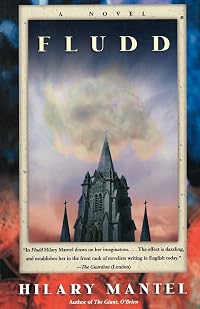
Fludd
by Hilary Mantel
On This Page
Description
One dark and stormy night in 1956, a stranger named Fludd mysteriously turns up in the dismal village of Fetherhoughton. He is the curate sent by the bishop to assist Father Angwin-or is he? In the most unlikely of places, a superstitious town that understands little of romance or sentimentality, where bad blood between neighbors is ancient and impenetrable, miracles begin to bloom. No matter how copiously Father Angwin drinks while he confesses his broken faith, the level of the bottle does show more not drop. Although Fludd does not appear to be eating, the food on his plate disappears. Fludd becomes lover, gravedigger, and savior, transforming his dull office into a golden regency of decision, unashamed sensation, and unprecedented action. Knitting together the miraculous and the mundane, the dreadful and the ludicrous, Fludd is a tale of alchemy and transformation told with astonishing art, insight, humor, and wit. show lessTags
Recommendations






















Member Recommendations

Member Reviews
This variant of the apocryphal legend of Tobit is filled with Mantel’s wit, at once sardonic and humane. If you’ve read her memoir, Giving Up the Ghost, you’ll recognize the story’s setting, Fetherhoughton, as Hadfield, the dreary Derbyshire mill village she grew up in, imaginatively recreated. The characters, Mantel assures us, are invented, except for Fludd, who really existed—three-and-a-half centuries before the time this novel is set in. Robert Fludd was a physician, astrologer, and alchemist. Now, he’s taken up a task more difficult than changing lead to gold: human transformation.
He arrives soon after the bishop informs the parish priest, Father Angwin, that his ways need modernization and that he’s being sent a show more vicar. Fludd arrives at the door of the parochial house one night during a violent thunderstorm. I love this description of his effect on the first person to meet him, the parson’s housekeeper: “Deep within her . . . Miss Dempsey sensed a slow movement, a tiny spiral shift of matter, as if, at the very moment the curate spoke, a change had occurred: a change so minute as to baffle description, but rippling out, in its effect, to infinity.”
Liberating changes come over Father Angwin and Sister Philomena, one of the youngest nuns in the local convent. I’m not sure the change in the convent superior, Mother Perpetua, is liberating, but it’s gratifying to all who knew her.
His work in Fetherhoughton accomplished, Fludd ebbs away. Oddly, no one can remember what he looked like. show less
He arrives soon after the bishop informs the parish priest, Father Angwin, that his ways need modernization and that he’s being sent a show more vicar. Fludd arrives at the door of the parochial house one night during a violent thunderstorm. I love this description of his effect on the first person to meet him, the parson’s housekeeper: “Deep within her . . . Miss Dempsey sensed a slow movement, a tiny spiral shift of matter, as if, at the very moment the curate spoke, a change had occurred: a change so minute as to baffle description, but rippling out, in its effect, to infinity.”
Liberating changes come over Father Angwin and Sister Philomena, one of the youngest nuns in the local convent. I’m not sure the change in the convent superior, Mother Perpetua, is liberating, but it’s gratifying to all who knew her.
His work in Fetherhoughton accomplished, Fludd ebbs away. Oddly, no one can remember what he looked like. show less
I wasn't quite sure what to make of this book, except that I know I really enjoyed it. The book has a [[Barbara Pym]] flavor - set in 1950s England and focused on clergy, the church, and an unsatisfied woman. But then, of course, it has Mantel's own stamp. A man, Fludd, appears on the parsonage steps and Father Angwin, a priest trying to hide his lack of faith from his congregants, assumes he is the curate that the Bishop recently told him he'd be sending. As we get to know Fludd better, though, things are not as they seem. There's just a hint of the supernatural about him. Things and people seem to be shifting with his presence. His effect on one of the local nuns, Sister Philomena, is extreme, but others change in smaller ways.
In a show more note before the book begins, Mantel says the "the real Fludd (1574-1637) was a physician, scholar, and alchemist. In alchemy, everything has a literal and factual description, and in addition a description that is symbolic and fantastical." Mantel has incorporated these ideas of alchemy into her interesting and satisfying book. show less
In a show more note before the book begins, Mantel says the "the real Fludd (1574-1637) was a physician, scholar, and alchemist. In alchemy, everything has a literal and factual description, and in addition a description that is symbolic and fantastical." Mantel has incorporated these ideas of alchemy into her interesting and satisfying book. show less
This short novel by Hilary Mantel is an odd book but accessible. Set in a cold and grim village between Leeds and Manchester in the 1950s, we meet a parish priest being asked to modernise by the bishop. Fludd arrives as his curate, but isn't quite what he seems. The writing is often funny and often dark and sometimes has a magical quality that erupts from the chilly air and general grime. There is a convent and the nuns teach. The children learning for their first communion ask funny questions. The story of the nun going back and forth accompanying a different nun each time and never able to travel alone is brilliant. There are so many more amusing and tightly observed parts. She paints a picture of the north as dark, grim and backward show more but it isn't clear if she is making fun of these attitudes or holds them. It is well written and by the end (Spoiler alert!) things have changed and the transformation seems to be all thanks to Fludd. The parish priest is no longer cowed by the bishop, the young nun has escaped, Mother Purpit has spontaneously combusted and the housekeeper no longer has a wart on her face. show less
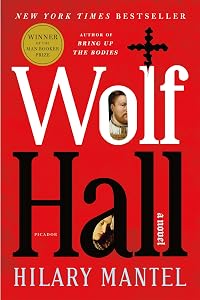
Hilary Mantel is best known in recent years for her award winning novels Wolf Hall (2009) and Bring Up the Bodies (2012). Given the accolades showered upon Mantel's fictional treatment of Tudor England, readers may be forgiven for overlooking one of her earlier novels, Fludd (1989.) Indeed, short, strange, tragicomic, and allegorical, Fludd could easily be dismissed as a curio, a relic from before Mantel's ascent to literary stardom. But like the novel's title character, Fludd conceals more than it lets on.
Mantel takes us to Fetherhoughton, a dour mill town in the north of England. Mid-twentieth century Fetherhoughton is a singularly miserable place, surrounded by moors on three sides, "the vast cemetery of [the villagers'] show more imaginations" (12). Father Angwin, Fetherhoughton's spiritual leader, is a drunk. He is also an atheist. Agnes Dempsey, Father Angwin's be-moled housekeeper, cares for the priest and keeps him to a semblance of order.
The "modern" bishop, upon visiting Fetherhoughton, insists that Father Angwin dispose of the statues of saints that line the church. Father Angwin is distraught: "[F]aith being dead, if we are not to become automatons, we must hold on to our superstitions as hard as we may" (27). The bishop will also send a curate to "assist"--that is, spy upon--Father Angwin. When the titular Fludd arrives in Fetherhoughton, he is both more and less than what he seems, and he sets into motion events that will change the lives of Father Angwin, Agnes, and Sister Philomena, among other Fetherhoughtonians.
Mantel narrates Fludd with a diction that is distinctly English even to these benighted American ears. The "typography of Fetherhoughton may repay consideration," Mantel tells us. "So may the manners, customs and dress of its inhabitants," all of which, by the way, Mantel neatly skewers (11). That line is representative of a syntax and vocabulary that is singularly English. The propriety of Mantel's writing lends it an archness that simultaneously softens and enhances the jibes she makes at her characters' expense. Fetherhoughtonians, stand-ins for Mantel's northern countrymen, refer to the second stories of their homes as "miyoopstairs" (13). Distraught by the suggestion of the vernacular Mass, Father Angwin comments of the townspeople, "I can well understand if you think Latin's too good for them. But the problem I have here is their little grasp of the English language, do you see?" (10). Mantel employs this diction and tone to great comic effect throughout Fludd. She makes it plain that Fetherhoughtonians know nothing about their faith, and the (faux) politeness of her delivery makes clear not only the absurdity of their practice, but also the absolute confidence with which they mangle their religion.
Some readers have complained that Fludd loses its momentum in its third act. It's true that the story grows somber as Mantel shifts her perspective from Father Angwin's battles with the bishop to Sister Philomena's more existential struggle with life as a nun. In my opinion, Mantel's decision to focus on Sister Philomena improves the story. It takes what would be a passing comedy and lends it greater depth. As Mantel makes clear before she begins the novel, Fludd is based on a sixteenth and seventeenth century alchemist, so the story must involve transformation. Some readers may find Sister Philomena dull--I did not--but, by becoming involved with her, Fludd himself is changed. Fludd confesses that he normally ignores women, but he is drawn to Philomena. Through Philomena, then, Mantel takes a deus ex machina-type character, the mysterious and unknowable Fludd, and illuminates his humanity. The novel is the better for it.
Fludd may not be a perfect or even a great novel, but it is a very good one. Some readers have commented on its subtle "gothic" tone, but that's hardly right; indeed, if the gothic is present at all in Fludd, it is there for Mantel to mock. Fludd is something of a paradox. It is a comedy that knows the importance of the issues at which it pokes fun. Mantel is cynical, but she also believes in personal transformation. It is complicated, like Father Angwin, who, having given up on God, fights all the harder on behalf of "the dear old faith." Fludd is of two minds, like many of us these days: "Everyone is where they should be; or we may collude in pretending so. And God's in his heaven? Very bloody likely, Father Angwin thought" (157). Highly recommended. show less
Mantel takes us to Fetherhoughton, a dour mill town in the north of England. Mid-twentieth century Fetherhoughton is a singularly miserable place, surrounded by moors on three sides, "the vast cemetery of [the villagers'] show more imaginations" (12). Father Angwin, Fetherhoughton's spiritual leader, is a drunk. He is also an atheist. Agnes Dempsey, Father Angwin's be-moled housekeeper, cares for the priest and keeps him to a semblance of order.
The "modern" bishop, upon visiting Fetherhoughton, insists that Father Angwin dispose of the statues of saints that line the church. Father Angwin is distraught: "[F]aith being dead, if we are not to become automatons, we must hold on to our superstitions as hard as we may" (27). The bishop will also send a curate to "assist"--that is, spy upon--Father Angwin. When the titular Fludd arrives in Fetherhoughton, he is both more and less than what he seems, and he sets into motion events that will change the lives of Father Angwin, Agnes, and Sister Philomena, among other Fetherhoughtonians.
Mantel narrates Fludd with a diction that is distinctly English even to these benighted American ears. The "typography of Fetherhoughton may repay consideration," Mantel tells us. "So may the manners, customs and dress of its inhabitants," all of which, by the way, Mantel neatly skewers (11). That line is representative of a syntax and vocabulary that is singularly English. The propriety of Mantel's writing lends it an archness that simultaneously softens and enhances the jibes she makes at her characters' expense. Fetherhoughtonians, stand-ins for Mantel's northern countrymen, refer to the second stories of their homes as "miyoopstairs" (13). Distraught by the suggestion of the vernacular Mass, Father Angwin comments of the townspeople, "I can well understand if you think Latin's too good for them. But the problem I have here is their little grasp of the English language, do you see?" (10). Mantel employs this diction and tone to great comic effect throughout Fludd. She makes it plain that Fetherhoughtonians know nothing about their faith, and the (faux) politeness of her delivery makes clear not only the absurdity of their practice, but also the absolute confidence with which they mangle their religion.
Some readers have complained that Fludd loses its momentum in its third act. It's true that the story grows somber as Mantel shifts her perspective from Father Angwin's battles with the bishop to Sister Philomena's more existential struggle with life as a nun. In my opinion, Mantel's decision to focus on Sister Philomena improves the story. It takes what would be a passing comedy and lends it greater depth. As Mantel makes clear before she begins the novel, Fludd is based on a sixteenth and seventeenth century alchemist, so the story must involve transformation. Some readers may find Sister Philomena dull--I did not--but, by becoming involved with her, Fludd himself is changed. Fludd confesses that he normally ignores women, but he is drawn to Philomena. Through Philomena, then, Mantel takes a deus ex machina-type character, the mysterious and unknowable Fludd, and illuminates his humanity. The novel is the better for it.
Fludd may not be a perfect or even a great novel, but it is a very good one. Some readers have commented on its subtle "gothic" tone, but that's hardly right; indeed, if the gothic is present at all in Fludd, it is there for Mantel to mock. Fludd is something of a paradox. It is a comedy that knows the importance of the issues at which it pokes fun. Mantel is cynical, but she also believes in personal transformation. It is complicated, like Father Angwin, who, having given up on God, fights all the harder on behalf of "the dear old faith." Fludd is of two minds, like many of us these days: "Everyone is where they should be; or we may collude in pretending so. And God's in his heaven? Very bloody likely, Father Angwin thought" (157). Highly recommended. show less
In the bleak Northern mill village of Fetherhoughton, the population trudge grimly through life, surrounded by poverty and the tight grip of the Catholic Church. Old Ma Purpit - Mother Perpetua, mother superior and headmistress - terrorises the children and the nuns alike.
Father Angwin, the parish priest, doesn't believe in God or in change, and since his job requires the former and his bishop the latter he's begun to put his faith in the whisky decanter.
Into this village comes Fludd: the new curate, it seems, and sent by the bishop. Except there's something odd about Fludd - and some odd things are happening in the village.
The picture of northern grimness seemed a bit caricatured at the start of the book, like the apogee of one of show more those deprivation one-upmanship conversations that just gets silly: "When I were a lad, we lived ten of us in one room and me brothers an' me 'ad one pair o' shoes between the six of us." "That's nothing! When I were a lad, we slept seventeen to a bed, and there were that many 'oles in the roof we 'ad to shelter under the whippet to keep the rain off." So also the picture of the Catholic Church: very bleak and wholly negative. But as the book continues these pictures begin to work. Not literally - the village never quite works as a real place - but as symbols of downtrodden lives, of oppressive institutional religion and of looking with new perspectives at the same old things.
I didn't love this book, but I did like it, and it did stimulate my thoughts about faith and change. Worth reading, I think, but perhaps the kind of book to borrow from the library rather than to rush out and buy. show less
Father Angwin, the parish priest, doesn't believe in God or in change, and since his job requires the former and his bishop the latter he's begun to put his faith in the whisky decanter.
Into this village comes Fludd: the new curate, it seems, and sent by the bishop. Except there's something odd about Fludd - and some odd things are happening in the village.
The picture of northern grimness seemed a bit caricatured at the start of the book, like the apogee of one of show more those deprivation one-upmanship conversations that just gets silly: "When I were a lad, we lived ten of us in one room and me brothers an' me 'ad one pair o' shoes between the six of us." "That's nothing! When I were a lad, we slept seventeen to a bed, and there were that many 'oles in the roof we 'ad to shelter under the whippet to keep the rain off." So also the picture of the Catholic Church: very bleak and wholly negative. But as the book continues these pictures begin to work. Not literally - the village never quite works as a real place - but as symbols of downtrodden lives, of oppressive institutional religion and of looking with new perspectives at the same old things.
I didn't love this book, but I did like it, and it did stimulate my thoughts about faith and change. Worth reading, I think, but perhaps the kind of book to borrow from the library rather than to rush out and buy. show less
This was the third early novel by the author on which I embarked and this time it was a pleasant surprise. There was wry humour and satire, based upon a 1950s imaginary village at the edge of the moors somewhere near Yorkshire, and revolving around the Catholic Church. I must have turned over two pages at the start because I missed the note about Fludd, the original alchemist, until I'd finished the book - but I did understand the references to alchemy terms.
There's a nice ambiguity about who Fludd in the book actually is - angel, devil, or reincarnated 17th century alchemist (he does refer to a second birth at some point) but I wasn't troubled by that. The only thing that is a bit odd is the way he leaves a certain character at the show more end; it seems a bit callous. But other than that, I enjoyed the story, the fact that despite the 'grim' setting it was a lot more upbeat than the previous two books of hers I'd just read, and the characters and set-up were well realised and almost a pre-cursor to the Father Ted series, a favourite of mine, so I award this 4 stars. show less
There's a nice ambiguity about who Fludd in the book actually is - angel, devil, or reincarnated 17th century alchemist (he does refer to a second birth at some point) but I wasn't troubled by that. The only thing that is a bit odd is the way he leaves a certain character at the show more end; it seems a bit callous. But other than that, I enjoyed the story, the fact that despite the 'grim' setting it was a lot more upbeat than the previous two books of hers I'd just read, and the characters and set-up were well realised and almost a pre-cursor to the Father Ted series, a favourite of mine, so I award this 4 stars. show less
Do you ever get that feeling when reading a book that you're a part of something special and very important, but you aren't entirely sure that you can grasp the entirety of what the author is presenting to you? That is the feeling I had with Fludd. It didn't seem as though there was much plot to the book until the very end, and then all at once I was finished and was left feeling as though I had read everything closely but had somehow missed The Big Picture.
The book is about religion and faith and the positive and negative effects the two can have on people. But there is so much more to it. Symbolism, I might say, up the wazoo. There are statues and nuns and obscure questions of faith ("If one uses dripping to cook on a Friday during show more Lent, is that considered eating meat?"). A never-ending carafe of whiskey. A priest who claims disbelief in God to Fludd, but who then says that the devil lives in Netherhoughton. (Can you believe in the devil but not in God? Is that not depressing?) And then, the biggest enigma of them all, there is Fludd.
He arrives and miracles happen. No one can really describe what his face looks like. He appears to finish the food on his plate, but no one ever sees him put food in his mouth. He doesn't seem to do much of anything, but he comes and he goes and things are different. His name, at the least, suggests a great deal about him.
I realize that I haven't so much reviewed this book as made oblique references to how much it has remained in my mind after I finished reading it. Isn't that a stellar review in and of itself? I should think most authors want readers to continue chewing over their stories after reading the last word. I am still chewing (much as Fludd spent much of the book chewing without seeming to eat anything). But I think I know enough about my reaction to recommend the book- it is a misleading slim volume, but it will stay with you after you're done. show less
The book is about religion and faith and the positive and negative effects the two can have on people. But there is so much more to it. Symbolism, I might say, up the wazoo. There are statues and nuns and obscure questions of faith ("If one uses dripping to cook on a Friday during show more Lent, is that considered eating meat?"). A never-ending carafe of whiskey. A priest who claims disbelief in God to Fludd, but who then says that the devil lives in Netherhoughton. (Can you believe in the devil but not in God? Is that not depressing?) And then, the biggest enigma of them all, there is Fludd.
He arrives and miracles happen. No one can really describe what his face looks like. He appears to finish the food on his plate, but no one ever sees him put food in his mouth. He doesn't seem to do much of anything, but he comes and he goes and things are different. His name, at the least, suggests a great deal about him.
I realize that I haven't so much reviewed this book as made oblique references to how much it has remained in my mind after I finished reading it. Isn't that a stellar review in and of itself? I should think most authors want readers to continue chewing over their stories after reading the last word. I am still chewing (much as Fludd spent much of the book chewing without seeming to eat anything). But I think I know enough about my reaction to recommend the book- it is a misleading slim volume, but it will stay with you after you're done. show less
Members
- Recently Added By
Lists

Books featuring monks and/or nuns
166 works; 33 members

Books Read in 2014
2,343 works; 86 members

Books Read in 2017
4,249 works; 129 members

A Good Read (Radio 4)
221 works; 1 member

Books recommended by Calgary Public Library staff
1,588 works; 4 members

Top Five Books of 2025
954 works; 303 members
Author Information

66+ Works 38,829 Members
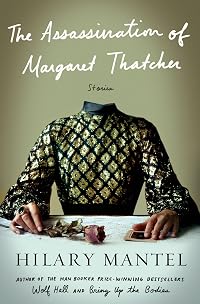
Hilary Mantel was born in Glossop, Derbyshire, England on July 6, 1952. She studied law at the London School of Economics and Sheffield University. She worked as a social worker in Botswana for five years, followed by four years in Saudi Arabia. She returned to Britain in the mid-1980s. In 1987 she was awarded the Shiva Naipaul Memorial Prize for show more an article about Jeddah. She worked as a film critic for The Spectator from 1987 to 1991. She has written numerous books including Eight Months on Ghazzah Street, A Place of Greater Safety, A Change of Climate, The Giant, O'Brien, Giving up the Ghost: A Memoir, and Beyond Black. She has won several awards for her work including the Winifred Holtby Memorial Prize, the Cheltenham Prize and the Southern Arts Literature Prize for Fludd; the 1996 Hawthornden Prize for An Experiment in Love, the 2009 Man Booker Prize for Wolf Hall, and the 2012 Man Booker Prize for Bring up the Bodies. She made The New York Times Best Seller List with her title The Assassination of Margaret Thatcher. (Bowker Author Biography) show less
Some Editions
Awards and Honors
Common Knowledge
- Original publication date
- 1989
- People/Characters
- Agnes Dempsey; Father Angwin; Fludd; Sister Philomena; Sister Perpetua
- Important places
- Fetherhoughton
- Dedication
- For Anne Ostrowska
- First words
- On Wednesday the bishop came in person.
- Quotations
- Out of her black drapings and her rolls of petticoats, standing shivering in the fireless parlour in her long linen drawers, she looked a pitiful beanpole ... she stood with her arms crossed over her breasts in a pose at once... (show all) picturesque and gauche: going to God knows what.
"Twilfit or Excelsior?" Sister Anthony asked.
"Oh, I couldn't. I couldn't put on corsets. I've never worn corsets in my life."
Sister Anthony was taken aback. "Don't you have them in Ireland these days?"
"I shouldn't know how to manage. What if I wanted to go to the lavatory?"
"You'll have to have something, you know." Sister Anthony felt around in the chest. "Try this bust-bodice. Come on now, look lively. ... Either you may have my silk combinations," she said, "or you'll have to go in your drawers, please yourself.""
The frightening thing is that life is fair; but what we need, as someone has already observed, is not justice but mercy. (p. 74)
Christ died to free us from the burden of our sind, but he never, so fars as she could see, lifted a finder for free us fromour stupidity. (p. 117) - Last words
- (Click to show. Warning: May contain spoilers.)He was a modern policeman, fresh-faced and cold-eyed, and he liked nothing better than to tear around the country in his big black car.
Classifications
Statistics
- Members
- 1,001
- Popularity
- 26,089
- Reviews
- 34
- Rating
- (3.48)
- Languages
- English, German, Spanish
- Media
- Paper, Audiobook, Ebook
- ISBNs
- 20
- UPCs
- 1
- ASINs
- 10