On This Page
Description
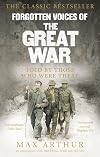
In 1972, a team of academics and archivists from the Imperial War Museum set about the momentous task of tracing ordinary men and women who lived through one of the most harrowing periods in modern history, the First World War. Veterans from Britain, Germany, America, and Australia were interviewed in detail about their day-to-day experiences on and off the front. It has since grown to be the most important archive of its kind in the world. These audiobooks contain just a sample of these show more voices--some of which have rested unheard for more than 30 years--the forgotten voices of a generation no longer with us. show lessTags
Recommendations




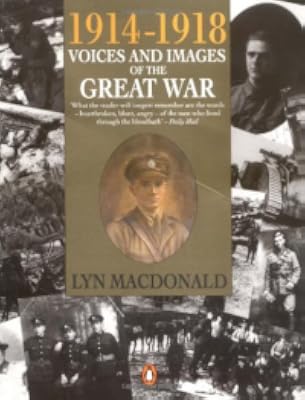






Member Reviews
A moving collection of extracts from taped interviews with WWI veterans recorded by the Imperial War Museum since 1972. These are organised by year so one can get a feeling for the overall flow of events; each reminiscence is cross-referenced by author, so that you can follow an individual witness's story if you choose. A mixture of horrific, moving, heroic, degrading and depressing memories. Coming through it all is a feeling by veterans that no-one who had not lived through their experiences could understand what they had been through.
This one was intense. Not that I did not expect it to be, given the topic - but it still took the wind out of me on a few occasions.
Mr. Arthur - through the testimonies of the people who lived through it - pulls no punches. Whatsoever. You are taken on an emotionally intense, vivid, brutal and flat-out visceral tour of those four pivotal years in modern history.
But this is not a piece of "Rule, Britannia"-esque, self-promoting literature. You get to hear the voices of the Germans, the French, members of the ANZAC corps - and last but not least, the civilians. The voice of the home front.
And when I say visceral, I mean visceral. You are not spared any details. Decomposing bodies, gangrenous wounds, people drowning in latrines, foolhardy show more blaze-of-glory charges to no avail - it's all there, in gory detail. This book is not for the faint-hearted.
But you also hear of the more light-hearted aspects. The banter. The jokes. The famous Christmas truce. The stories of medical officers haranguing the common soldiery about the dangers of venereal disease - only to sneak into the clinic shortly after to give himself the treatment he was giving the privates' privates.
And of course the armistice. The collapse of the German army. How soldiers home on leave were handed the white feathers of cowardice because they were wearing "civvy clothes".
This book was an experience. It took some time to digest. But I heartily recommend it! show less
Mr. Arthur - through the testimonies of the people who lived through it - pulls no punches. Whatsoever. You are taken on an emotionally intense, vivid, brutal and flat-out visceral tour of those four pivotal years in modern history.
But this is not a piece of "Rule, Britannia"-esque, self-promoting literature. You get to hear the voices of the Germans, the French, members of the ANZAC corps - and last but not least, the civilians. The voice of the home front.
And when I say visceral, I mean visceral. You are not spared any details. Decomposing bodies, gangrenous wounds, people drowning in latrines, foolhardy show more blaze-of-glory charges to no avail - it's all there, in gory detail. This book is not for the faint-hearted.
But you also hear of the more light-hearted aspects. The banter. The jokes. The famous Christmas truce. The stories of medical officers haranguing the common soldiery about the dangers of venereal disease - only to sneak into the clinic shortly after to give himself the treatment he was giving the privates' privates.
And of course the armistice. The collapse of the German army. How soldiers home on leave were handed the white feathers of cowardice because they were wearing "civvy clothes".
This book was an experience. It took some time to digest. But I heartily recommend it! show less
This is a set of transcriptions of recording made of veterans of the first world war telling their stories. Started by the Imperial War museum in 1972, it is an incredibly valuable archive of memory, especially now it is outside living memory.
having said that, i'm not sure this is necessarily the best way to present that archive. By attempting to cover the entire first world war in 313 pages of text, it is, necessarily, a very swift overview of the events of the war. The inclusion of testimony from other allied forces (French & Americans) the German forces makes it especially interesting, although I felt the memories of those at home were a bit spurious, unless it was that of men of leave.
So, yes, it is a worthwhile book, but I would show more say that there are better examples of this type of narrative out there. [b:They Called It Passchendaele: The Third Battle of Ypres & the Men Who Fought in It|1623876|They Called It Passchendaele The Third Battle of Ypres & the Men Who Fought in It|Lyn Macdonald|http://photo.goodreads.com/books/1186017285s/1623876.jpg|1617867], for example, I found to be a much more moving story, as it concentrates on one patch of the western front and you really get in under the skin of that battle in a way that this book cant' - you're always skimming off onto another event. show less
having said that, i'm not sure this is necessarily the best way to present that archive. By attempting to cover the entire first world war in 313 pages of text, it is, necessarily, a very swift overview of the events of the war. The inclusion of testimony from other allied forces (French & Americans) the German forces makes it especially interesting, although I felt the memories of those at home were a bit spurious, unless it was that of men of leave.
So, yes, it is a worthwhile book, but I would show more say that there are better examples of this type of narrative out there. [b:They Called It Passchendaele: The Third Battle of Ypres & the Men Who Fought in It|1623876|They Called It Passchendaele The Third Battle of Ypres & the Men Who Fought in It|Lyn Macdonald|http://photo.goodreads.com/books/1186017285s/1623876.jpg|1617867], for example, I found to be a much more moving story, as it concentrates on one patch of the western front and you really get in under the skin of that battle in a way that this book cant' - you're always skimming off onto another event. show less
A stately book that does what it says on the tin; it is the story of the First World War told through the reminiscences of those who were there. Mostly British and Dominion troops, with a few French and German and – later – American contributors, the accounts are sometimes a bit dry. However, this is more than compensated by the matter-of-fact reportage, which shocks the reader as you recognise that those people were actually there and experienced those horrific things. The events were unspeakable and so it is no wonder that it is difficult to speak well of them.
I read this book over quite a considerable period of time. It is not something I feel you can simply pick up and read from cover to cover. The book is in chronological order, for each year of the First World War. I read each year at a time and then took a break in between. By doing this I felt I was giving myself time to reflect on all of the entries that I read.
The book is order chronologically (as I've said) and with notes and entries from a vast range of people involved in, and affected by, the First World War. Within in each year, there are sections for different battles, thereby keeping all linked entries together. The people whose information has been used range from nurses to factory workers, soldiers to commanders, children to show more wives - and from many different nationalities. This makes it a highly informative and educational read - giving a real insight into the lives of all touched by the Great War.
The Imperial War Museum has collated this material over many years and whittled down the thousands and thousands of notes, letters and diaries in order to produce this excellent collection. The photographs they have used complement the written text and further enhance understanding of what happened and how the people involved must have felt.
Some of the entries will disgust you, some will entertain you; all of them with make you think. The ones that really stuck in my mind were from soldiers coming home for leave and how their families and friends reacted to them. After this, it was the last entries that made me reflect on how the soldiers in particular were feeling - one day they were fighting the next they weren't. It must have led to a feeling of loss, in a strange way. show less
The book is order chronologically (as I've said) and with notes and entries from a vast range of people involved in, and affected by, the First World War. Within in each year, there are sections for different battles, thereby keeping all linked entries together. The people whose information has been used range from nurses to factory workers, soldiers to commanders, children to show more wives - and from many different nationalities. This makes it a highly informative and educational read - giving a real insight into the lives of all touched by the Great War.
The Imperial War Museum has collated this material over many years and whittled down the thousands and thousands of notes, letters and diaries in order to produce this excellent collection. The photographs they have used complement the written text and further enhance understanding of what happened and how the people involved must have felt.
Some of the entries will disgust you, some will entertain you; all of them with make you think. The ones that really stuck in my mind were from soldiers coming home for leave and how their families and friends reacted to them. After this, it was the last entries that made me reflect on how the soldiers in particular were feeling - one day they were fighting the next they weren't. It must have led to a feeling of loss, in a strange way. show less
A powerful collection of memories of ordinary men and women who survived World War 1. If you can, listen to the audiobook — rather than being read by a narrator, it comprises of the original recordings of the soldiers themselves.
Incredible book tracing WW1 through the words of men and women who lived through the war. Very moving and harrowing. and their contributions are put together chronologically. As it focuses on the whole war rather than one battle, it necessarily touches on lots of things.
Members
- Recently Added By
Lists

THE WAR ROOM
813 works; 24 members
Author Information

38+ Works 2,048 Members
Some Editions
Series

Common Knowledge
- Canonical title
- Forgotten Voices of the Great War
- Original title
- Forgotten Voices of the Great War
- Original publication date
- 2002
- Important events
- World War I (1914 | 1918)
Classifications
Statistics
- Members
- 598
- Popularity
- 48,975
- Reviews
- 12
- Rating
- (3.92)
- Languages
- Dutch, English, Portuguese (Portugal)
- Media
- Paper, Audiobook, Ebook
- ISBNs
- 18
- ASINs
- 6