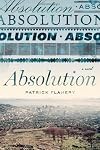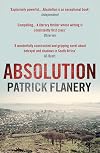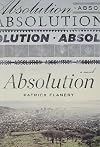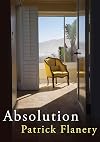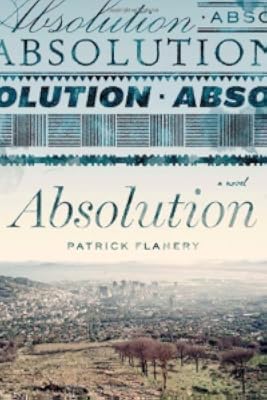
Absolution
by Patrick Flanery
On This Page
Description
In modern-day South Africa, Clare Walde tells the story of her sister's death and the disappearance of her daughter during apartheid twenty years earlier.Tags
Recommendations













Member Reviews
Having only read one of her books and knowing next to nothing of her personal life, I wondered if Clare was a stand-in for Doris Lessing? It doesn’t matter if that’s true or not, the book is excellent. Some reviews complain that things are not as clear for the reader as they could be, but I didn’t mind as much as some. There are several narratives and timelines to follow and if you don’t pay attention, things can slip. There’s Clare in the present, bellowing over having to meet with Sam, her (chosen) biographer, to answer tedious questions (why won’t he ask the right ones?). There’s Sam’s current situation, staying with college friend, Greg, while he waits for his wife, Sarah, to join him in Johannesburg. There’s also show more Sam’s past; when he was an abandoned/orphaned child and met Laura, Clare’s estranged daughter, now missing and presumed dead for 2 decades. And finally we have a section written by Clare to Laura in which she confesses her past sins and speculates on what Laura’s final notebooks really mean.
There is such deliberation in the way this story is told that it’s easy to trust the author. Even when things were obscure, I felt confident that Flanery would get me satisfaction in the end. For example, Laura’s notebooks aren’t presented whole, but instead are interpreted by Clare (and I don’t even think she quotes her even once). Since we never get to read Laura first hand, we have to wonder how much of what’s in the notebooks is true and how much is Clare’s fantasies about how virtuous her daughter was and by extension, her cause; overturning the government. Which leads me to another character; South Africa during the incredibly corrupt apartheid government. According to his bio, Flanery has never lived there and even if he did, he’s too young to have been an adult then. The sense of place and time is so thorough and realistic that I’d never have bet an author with no direct experience could have written it. Fantastic and very scary, not just for the blacks in that situation (although it was far, far worse), but for everyone. The menace is palpable. The whole “investigation” into Clare’s home invasion/break in was insane and reminds me that I really need to read Kafka.
And if that’s not enough, the writing is fabulous. Normally when I read a thriller or similar novel, I don’t subvocalize. Never do. I am a sight reader and a very fast one, but with books like this I do subvocalize. It’s a deliberate choice I make and the extra time it takes to read is worth it. Sam and Clare have different voices and I just love how total that was. For example, Clare uses the word cohere quite a bit, but I didn’t notice Sam do it once, which he wouldn’t. Keeping that straight is one of those signs you are in good hands.
“and a voice like curdled cream…” p. 51 (describing a real estate agent)
“The light carried the thick odor of wood smoke and returned to you earlier fires on the beaches of childhood holidays, to the far for funerals and weddings, numberless ceremonies of the everyday and the extraordinary.” p. 144 (Clare imposing her desires onto Laura’s history)
“Clare looked for a smile but Mark was as solemn as if preparing for the judicial chamber; if there was humor or empathy there, another part of him sat holding down the cage that contained them.” p. 253 (Mark is Clare’s son who has just heard Clare’s big secret about the death of her sister)
“You decided that day to accept whatever invitation was extended, to infiltrate yourself into her life, finding a way to return the sting of her transgressions.” p. 264 (Clare again supposing, this time how Laura got involved with her anti-apartheid cell)
With all that said, I have little doubt that Flanery will once again end up on my top five books list for 2016. show less
There is such deliberation in the way this story is told that it’s easy to trust the author. Even when things were obscure, I felt confident that Flanery would get me satisfaction in the end. For example, Laura’s notebooks aren’t presented whole, but instead are interpreted by Clare (and I don’t even think she quotes her even once). Since we never get to read Laura first hand, we have to wonder how much of what’s in the notebooks is true and how much is Clare’s fantasies about how virtuous her daughter was and by extension, her cause; overturning the government. Which leads me to another character; South Africa during the incredibly corrupt apartheid government. According to his bio, Flanery has never lived there and even if he did, he’s too young to have been an adult then. The sense of place and time is so thorough and realistic that I’d never have bet an author with no direct experience could have written it. Fantastic and very scary, not just for the blacks in that situation (although it was far, far worse), but for everyone. The menace is palpable. The whole “investigation” into Clare’s home invasion/break in was insane and reminds me that I really need to read Kafka.
And if that’s not enough, the writing is fabulous. Normally when I read a thriller or similar novel, I don’t subvocalize. Never do. I am a sight reader and a very fast one, but with books like this I do subvocalize. It’s a deliberate choice I make and the extra time it takes to read is worth it. Sam and Clare have different voices and I just love how total that was. For example, Clare uses the word cohere quite a bit, but I didn’t notice Sam do it once, which he wouldn’t. Keeping that straight is one of those signs you are in good hands.
“and a voice like curdled cream…” p. 51 (describing a real estate agent)
“The light carried the thick odor of wood smoke and returned to you earlier fires on the beaches of childhood holidays, to the far for funerals and weddings, numberless ceremonies of the everyday and the extraordinary.” p. 144 (Clare imposing her desires onto Laura’s history)
“Clare looked for a smile but Mark was as solemn as if preparing for the judicial chamber; if there was humor or empathy there, another part of him sat holding down the cage that contained them.” p. 253 (Mark is Clare’s son who has just heard Clare’s big secret about the death of her sister)
“You decided that day to accept whatever invitation was extended, to infiltrate yourself into her life, finding a way to return the sting of her transgressions.” p. 264 (Clare again supposing, this time how Laura got involved with her anti-apartheid cell)
With all that said, I have little doubt that Flanery will once again end up on my top five books list for 2016. show less
Absolution is set in contemporary South Africa, a country struggling to establish a new identity in the insecure, often violent, post-apartheid era. The novel is written from multiple skillfully interwoven perspectives. Its structure gives us first person, second person and third person points of view, as well as some “neutral” information in excerpts from testimony before the Truth and Reconciliation Commission. These perspectives overlap just enough to keep the reader intrigued, absorbed, and puzzled as to what is the “truth”, or whether there is any way to reconcile the disparate versions of events that emerge.
Our first person narrator is Sam Leroux, a somewhat awkward young man who has been chosen to write the biography of show more a well-known and controversial author, Clare Wald. Acknowledged as an expert on Wald, whose work he reveres, Sam is nevertheless ill-equipped to draw her into conversational interviews, and Wald is not inclined to make his task any easier. She informs him that she is “a terror”, and sets the ground rules for their meetings. She will not discuss her dead sister, or her presumed-dead daughter Laura’s revolutionary activities; she will not offer Sam food or drink; she will not allow him access to her diaries or other personal papers; she will not entertain questions whose answers are a matter of public record. As Sam tells us of these meetings, we perceive that his interest in Clare Wald is not exclusively academic, that there is some history between them which he is at pains to repress.
Clare herself is one of the most elaborately unreliable narrators I've ever encountered. In interviews with Sam, when she is not avoiding direct answers to his questions, she sometimes lies to him outright, as Sam and the reader learn over time. Ultimately, we are not even certain that Clare is not subconsciously deceiving herself about much of her past. Clare’s eponymous sections of the novel are composed as though she were writing the history of her daughter’s last days, pieced together from diaries given to her after Laura’s disappearance, and from Clare’s own nightmares and novelistic imaginings. Further, she relates this history in the second person, as though she were explaining it all to a living participant whose memory has been damaged, or perhaps to a ghost from whom she is hoping to elicit either confirmation or refutation. “Outside, it was light enough to see yourself in one of the truck’s mirrors. There were purplish bags under your eyes and you had recently chipped one of your front teeth. It was not a face you liked, too much of me in the jaw and complexion…” “You could not recall how many days it had been; perhaps five, perhaps as many as fifteen hundred. You had been deprived of any means of recording the passage of time…” Laura’s final hours, as envisioned by Clare, are horrific, and it is difficult to imagine any mother conjuring up such an end to her child’s existence, let alone writing it down.
In the third person sections of Absolution, an omniscient narrator takes us through periods of Sam’s early life and reveals the way Clare lives now--a voluntary prisoner in her own home, locked away behind double gates and shuttered windows, with panic buttons in every room. We learn the connections between these two people, and begin to understand the sources of their internal conflicts. As the title suggests, they are both carrying satchels of guilt, struggling to understand and atone for their ambiguous complicity in distant events. Although he is married and has established a reputation for himself, Sam is still quite young and on occasion naïve. However traumatic his past, his future is still his to shape. We expect him to make a decent show of it. Clare, on the other hand, is near the end of her life, and if she has any illusions left, it is because she has planted them, pruned them and kept them alive in the otherwise overgrown garden of her memory. It is difficult to sympathize with her, impossible to like her, but her efforts to examine her life and come to an acceptance of its rugged truths are admirable.
Absolution is one of the best novels I have read in a long time. It is thought-provoking, thrilling and suspenseful, and a masterpiece of literary construction. Remarkably, it is also a first novel from author Patrick Flanery. I will be replacing my dog-eared, well-marked-up ARC of this book with a final published edition, and look forward to a re-read, which will surely be even more rewarding than the first. Five stars; highly recommended. show less
Our first person narrator is Sam Leroux, a somewhat awkward young man who has been chosen to write the biography of show more a well-known and controversial author, Clare Wald. Acknowledged as an expert on Wald, whose work he reveres, Sam is nevertheless ill-equipped to draw her into conversational interviews, and Wald is not inclined to make his task any easier. She informs him that she is “a terror”, and sets the ground rules for their meetings. She will not discuss her dead sister, or her presumed-dead daughter Laura’s revolutionary activities; she will not offer Sam food or drink; she will not allow him access to her diaries or other personal papers; she will not entertain questions whose answers are a matter of public record. As Sam tells us of these meetings, we perceive that his interest in Clare Wald is not exclusively academic, that there is some history between them which he is at pains to repress.
Clare herself is one of the most elaborately unreliable narrators I've ever encountered. In interviews with Sam, when she is not avoiding direct answers to his questions, she sometimes lies to him outright, as Sam and the reader learn over time. Ultimately, we are not even certain that Clare is not subconsciously deceiving herself about much of her past. Clare’s eponymous sections of the novel are composed as though she were writing the history of her daughter’s last days, pieced together from diaries given to her after Laura’s disappearance, and from Clare’s own nightmares and novelistic imaginings. Further, she relates this history in the second person, as though she were explaining it all to a living participant whose memory has been damaged, or perhaps to a ghost from whom she is hoping to elicit either confirmation or refutation. “Outside, it was light enough to see yourself in one of the truck’s mirrors. There were purplish bags under your eyes and you had recently chipped one of your front teeth. It was not a face you liked, too much of me in the jaw and complexion…” “You could not recall how many days it had been; perhaps five, perhaps as many as fifteen hundred. You had been deprived of any means of recording the passage of time…” Laura’s final hours, as envisioned by Clare, are horrific, and it is difficult to imagine any mother conjuring up such an end to her child’s existence, let alone writing it down.
In the third person sections of Absolution, an omniscient narrator takes us through periods of Sam’s early life and reveals the way Clare lives now--a voluntary prisoner in her own home, locked away behind double gates and shuttered windows, with panic buttons in every room. We learn the connections between these two people, and begin to understand the sources of their internal conflicts. As the title suggests, they are both carrying satchels of guilt, struggling to understand and atone for their ambiguous complicity in distant events. Although he is married and has established a reputation for himself, Sam is still quite young and on occasion naïve. However traumatic his past, his future is still his to shape. We expect him to make a decent show of it. Clare, on the other hand, is near the end of her life, and if she has any illusions left, it is because she has planted them, pruned them and kept them alive in the otherwise overgrown garden of her memory. It is difficult to sympathize with her, impossible to like her, but her efforts to examine her life and come to an acceptance of its rugged truths are admirable.
Absolution is one of the best novels I have read in a long time. It is thought-provoking, thrilling and suspenseful, and a masterpiece of literary construction. Remarkably, it is also a first novel from author Patrick Flanery. I will be replacing my dog-eared, well-marked-up ARC of this book with a final published edition, and look forward to a re-read, which will surely be even more rewarding than the first. Five stars; highly recommended. show less
 This review was written for LibraryThing Early Reviewers.
This book was tremendously well written! I loved the four-pronged narrative and the divergence in each story. South Africa itself felt like another character, the way it affected so many decisions and brought up such a host of emotions in the human characters. The themes of guilt, loss, and entrapment were thoroughly explored in Sam and Clare, and the relationship between the two of them felt genuine. How much do you let another person know that you know? When can you trust enough? Who will be the first to speak? I will be on the lookout for more books by Patrick Flanery.
What a beautifully complex novel! So much so that It is difficult to summarize without over-simplifying, such is the depth and scope of this undertaking. Clare Wald is a famous author, world renowned for the political aspects of her writing, which she wrote under the scrutiny of intense censorship during the Apartheid reign in South Africa. Her daughter, Laura, was a radical an a rogue whose defiance was of a more physical and destructive nature which most likely led to her disappearance.
Now Sam, chosen to be Clare's biographer, interviews this remarkable yet deeply flawed woman in hopes of finding answers of his own, meanwhile Clare struggles with coping with her daughter's disappearance by reading her journals and writing a show more fictionalized account of what may have happened to her. A story that Sam may know more about than he's letting on.
And more. Much, much more.
Whereas many authors hammer their plot down the reader's, with a very simple form of writing such as: "Here's the topic I'm discussing and here's the story built around it!" Patrick Flanery's writing is more fluid, multi-dimensional and significantly more effective. None of the characters are perfect, and not every single scene has a clear definable purpose. He presents his characters, their actions, their thoughts, and it is the reader who draws the conclusions.
It's really is quite fantastic. I was so very close to giving it a 5-star rating, something I've been trying to avoid, but it just need that extra oomph toward the end. Because it covers such a myriad of topics it doesn't have that sort of grand finale, final page KAPOW that many books do and considering how stimulating the rest of the book is I wish it would have had a more revelationary conclusion. All things considered, however, it is still a remarkable book and I'm tremendously glad I read it. show less
Now Sam, chosen to be Clare's biographer, interviews this remarkable yet deeply flawed woman in hopes of finding answers of his own, meanwhile Clare struggles with coping with her daughter's disappearance by reading her journals and writing a show more fictionalized account of what may have happened to her. A story that Sam may know more about than he's letting on.
And more. Much, much more.
Whereas many authors hammer their plot down the reader's, with a very simple form of writing such as: "Here's the topic I'm discussing and here's the story built around it!" Patrick Flanery's writing is more fluid, multi-dimensional and significantly more effective. None of the characters are perfect, and not every single scene has a clear definable purpose. He presents his characters, their actions, their thoughts, and it is the reader who draws the conclusions.
It's really is quite fantastic. I was so very close to giving it a 5-star rating, something I've been trying to avoid, but it just need that extra oomph toward the end. Because it covers such a myriad of topics it doesn't have that sort of grand finale, final page KAPOW that many books do and considering how stimulating the rest of the book is I wish it would have had a more revelationary conclusion. All things considered, however, it is still a remarkable book and I'm tremendously glad I read it. show less
This review was written for LibraryThing Early Reviewers.With the end of apartheid in South Africa in the 1990s white South Africans were left to answer for the devastation caused by hundreds of years of exploitation of the indigenous black majority. The Truth and Reconciliation Commission, an easy target for criticism, not only failed to redress the human rights crimes of a regime but also to reconcile the remaining black and white communities. It is the consequences of this failed reconciliation that Patrick Flanery’s novel Absolution attempts to reveal.
While it would prove fertile ground for reflection to delve into the means by which sanctioned criminals absolve themselves, Flanery imagines the pardon necessary for those who opposed apartheid but still enjoyed its advantages. Blatant show more race superiority and opportunism are submerged and disguised by overt, though relative, noble political stances and high mindedness. The hypocrisy of these postures is tested and exposed by the various acts of resulting violence and betrayal.
At first it may seem that there could be nothing less revealing about apartheid than looking at white bourgeois discomfort but Flanery paints a complex emotional and intellectual picture that lays bare the contradictions of colonialism and liberalism. Although he resorts to some implausible plot devices to create confrontations, the primary characters are full. The sense of real persons with real dilemmas is present throughout without losing the purpose of the novel.
This is a very strong first effort and one hopes to see this talent fully realized. show less
While it would prove fertile ground for reflection to delve into the means by which sanctioned criminals absolve themselves, Flanery imagines the pardon necessary for those who opposed apartheid but still enjoyed its advantages. Blatant show more race superiority and opportunism are submerged and disguised by overt, though relative, noble political stances and high mindedness. The hypocrisy of these postures is tested and exposed by the various acts of resulting violence and betrayal.
At first it may seem that there could be nothing less revealing about apartheid than looking at white bourgeois discomfort but Flanery paints a complex emotional and intellectual picture that lays bare the contradictions of colonialism and liberalism. Although he resorts to some implausible plot devices to create confrontations, the primary characters are full. The sense of real persons with real dilemmas is present throughout without losing the purpose of the novel.
This is a very strong first effort and one hopes to see this talent fully realized. show less
This review was written for LibraryThing Early Reviewers.This is a story of lives lived in ways which give cause for regret. This is becoming a genre. Ian McEwan talked about [b:Atonement|6867|Atonement|Ian McEwan|http://photo.goodreads.com/books/1320449708s/6867.jpg|2307233]. Here the quest is for Absolution. In both cases memory and remembrances are fluid. They are fuzzy or not reliable. The quests for Atonement and Absolution become larger, more significant then the events that precipitated the need.
Will this bring us to [b:The Sense of an Ending|10746542|The Sense of an Ending|Julian Barnes|http://photo.goodreads.com/books/1311704453s/10746542.jpg|15657664]? All of these books are characterised by muddy memories and relative truths, and unreliable authors within the stories.
It’s hard to show more believe that this is the first novel from Patrick Flanery. It is a self-assured and complex work that braids together the related stories of several characters. Clare is a famous South African author, a bit of a curmudgeon, who is working with her biographer. (If this was ever made into a movie, Maggie Smith would be perfect for the role.) She is using her own literary skills as a tool to clarify mysterious past events involving her family’s roles in the political history of South Africa, but she is a bit obtuse with her young biographer who struggles to understand how his own life has figured into hers. Most of the novel leads to discovering why Clare feels the need for absolution.
Flanery’s writing is intelligent, incisive, and he can write a mean bit of suspenseful action. “Before killing you they would burn the names from your mouth, pull syllables from your fingernails, soak vowels and consonants from your nostrils, remind you of their authority with steel and wire, electricity and fire.”
There was an intense scene of a home invasion, where you could almost hear the scared breathing trying not to be heard, the tense silence broken by stealthy creaks. Clare is interviewed by police afterward, and that becomes a brilliantly Kafka-esque interaction.
There are wonderful gems of prose. On family: “One can but sow the seed and provide the proper environment, and hope that the flower promised by the illustration on the packet is the one that will grow, trust that the hybrid will not revert to the characteristics of some earlier generation, or be so transformed by unpredictable and wholly external factors – a drought, a storm, environmental pollution – that the seed mutates and something unrecognizable grows.”
Or when one’s vacation plans are suddenly upset by a phone call with unexpected news: “Lying in bed that morning, the phone still in his hand, he could feel the broken expectation of that escape raining down around him, and then he realized the rain was not just in his head but outside the window, a shower of ice that began to coat the glass, contorting their view of the traffic, the canary sludge of taxis, bleeding brake lights along West End Avenue.”
And I loved this description of a minor character: “Timothy is overripe and over-processed. His nails have been manicured, his suit is more expensive than anything I’ll ever be able to afford. He’s rotten with success.”
Flanery is American but writes convincingly of what daily life is like nowadays for some in cities like Capetown and Johannesburg. Some descriptions were so detailed that I followed along in Google Maps Streetview. That was an interesting exercise — I felt as if suddenly I was seeing the scene as the author saw it in his own mind.
This book has been one of the best I’ve read in a few months. show less
Will this bring us to [b:The Sense of an Ending|10746542|The Sense of an Ending|Julian Barnes|http://photo.goodreads.com/books/1311704453s/10746542.jpg|15657664]? All of these books are characterised by muddy memories and relative truths, and unreliable authors within the stories.
It’s hard to show more believe that this is the first novel from Patrick Flanery. It is a self-assured and complex work that braids together the related stories of several characters. Clare is a famous South African author, a bit of a curmudgeon, who is working with her biographer. (If this was ever made into a movie, Maggie Smith would be perfect for the role.) She is using her own literary skills as a tool to clarify mysterious past events involving her family’s roles in the political history of South Africa, but she is a bit obtuse with her young biographer who struggles to understand how his own life has figured into hers. Most of the novel leads to discovering why Clare feels the need for absolution.
Flanery’s writing is intelligent, incisive, and he can write a mean bit of suspenseful action. “Before killing you they would burn the names from your mouth, pull syllables from your fingernails, soak vowels and consonants from your nostrils, remind you of their authority with steel and wire, electricity and fire.”
There was an intense scene of a home invasion, where you could almost hear the scared breathing trying not to be heard, the tense silence broken by stealthy creaks. Clare is interviewed by police afterward, and that becomes a brilliantly Kafka-esque interaction.
There are wonderful gems of prose. On family: “One can but sow the seed and provide the proper environment, and hope that the flower promised by the illustration on the packet is the one that will grow, trust that the hybrid will not revert to the characteristics of some earlier generation, or be so transformed by unpredictable and wholly external factors – a drought, a storm, environmental pollution – that the seed mutates and something unrecognizable grows.”
Or when one’s vacation plans are suddenly upset by a phone call with unexpected news: “Lying in bed that morning, the phone still in his hand, he could feel the broken expectation of that escape raining down around him, and then he realized the rain was not just in his head but outside the window, a shower of ice that began to coat the glass, contorting their view of the traffic, the canary sludge of taxis, bleeding brake lights along West End Avenue.”
And I loved this description of a minor character: “Timothy is overripe and over-processed. His nails have been manicured, his suit is more expensive than anything I’ll ever be able to afford. He’s rotten with success.”
Flanery is American but writes convincingly of what daily life is like nowadays for some in cities like Capetown and Johannesburg. Some descriptions were so detailed that I followed along in Google Maps Streetview. That was an interesting exercise — I felt as if suddenly I was seeing the scene as the author saw it in his own mind.
This book has been one of the best I’ve read in a few months. show less
Wow, this might be the best book I'll read this year. The story of Clare Wald and Sam Leroux and the secrets, lies and truths that bind them and tear at them is riveting and beautifully written; Patrick Flanery may be a debut author but he writes like Margaret Atwood and tackles tough social, historical and personal issues. A biographer faces off against a seemingly unwilling writer; it's not so much a battle of wits as a slow unraveling. The perspective shifts between the two and the book that Clare is writing about her dead daughter Laura, a disappeared activist who was taking care of the child Sam just before she vanished. It's a staggering, wonderful and accomplished book. I hope his subsequent books live up to the promise of his show more astonishing debut. My full review is on my blog here: http://www.bostonbibliophile.com/2012/04/review-absolution-by-patrick-flanery.ht... show less
This review was written for LibraryThing Early Reviewers.Members
- Recently Added By
Published Reviews
ThingScore 100
Complex in theme, complex in narrative, this is a masterful literary exploration of the specter of conscience and the formidable cost of reconciliation.
added by 1morechapter
Lists

Top Five Books of 2016
795 works; 229 members

Books Read in 2014
2,343 works; 89 members

International IMPAC Dublin Literary Award
179 works; 6 members

Phi Beta Kappa reading list
260 works; 8 members

Books Read in 2016
4,666 works; 199 members

IMPAC Dublin Literary Award 2014 longlist
150 works; 3 members

Books Read in 2012
816 works; 34 members

Africa
109 works; 8 members
Author Information

5+ Works 793 Members
Awards and Honors
Awards
Distinctions
Common Knowledge
- Original publication date
- 2012
- People/Characters
- Clare Wald; Laura Wald; Sam Lawrence (Leroux)
- Important places
- South Africa
Classifications
Statistics
- Members
- 291
- Popularity
- 110,413
- Reviews
- 41
- Rating
- (3.78)
- Languages
- 7 — Dutch, English, French, German, Italian, Portuguese, Spanish
- Media
- Paper, Ebook
- ISBNs
- 23
- ASINs
- 5