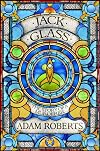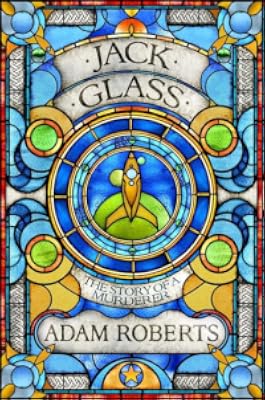
Jack Glass
by Adam Roberts
On This Page
Description
WINNER OF THE BSFA AWARD FOR BEST NOVEL Jack Glass is the murderer. We know this from the start. Yet as this extraordinary novel tells the story of three murders committed by Glass the reader will be surprised to find out that it was Glass who was the killer and how he did it. And by the end of the book our sympathies for the killer are fully engaged. Riffing on the tropes of crime fiction (the country house murder, the locked room mystery) and imbued with the feel of golden age SF, JACK show more GLASS is another bravura performance from Roberts. Whatever games he plays with the genre, whatever questions he asks of the reader, Roberts never loses sight of the need to entertain and JACK GLASS has some wonderfully gruesome moments, is built around three gripping HowDunnits and comes with liberal doses of sly humour. Roberts invites us to have fun and tricks us into thinking about both crime and SF via a beautifully structured novel set in a society whose depiction challanges notions of crime, punishment, power and freedom. It is an extraordinary novel. show lessTags
Recommendations













Member Reviews
"Jack Glass: La historia de un asesino" de Adam Roberts es una novela que fusiona con audacia las convenciones de la ciencia ficción y el misterio detectivesco, presentando tres relatos interconectados que giran en torno a la enigmática figura de Jack Glass, un criminal legendario dotado de una mente brillante para el crimen y la interpretación de los asesinatos. Ambientada en un futuro distópico donde la humanidad habita un sistema solar regido por la estricta Lex Ulanova y las poderosas familias MOH, la novela explora un universo de burbujas orbitales, asteroides convertidos en prisiones y tensiones políticas entre los estamentos de poder y los desposeídos.
El libro se estructura en tres partes, cada una un misterio distinto: un show more relato de prisión, un caso clásico de whodunit y un enigma de cuarto cerrado. Desde el inicio, el narrador, que adopta el papel de un doctor Watson, advierte al lector que Jack Glass es el asesino en cada uno de estos casos, desafiándonos a desentrañar cómo y por qué comete sus crímenes. La primera parte, "En la caja", nos sumerge en la brutal experiencia de siete prisioneros confinados en una cavidad dentro de un asteroide, luchando por sobrevivir en un entorno hostil con recursos limitados. A través de estas historias, Roberts teje una narrativa que combina intriga, especulación científica y un trasfondo político que cuestiona las jerarquías y la justicia en un sistema solar colonizado.
Con un estilo que evoca tanto la Edad de Oro de la ciencia ficción como la del misterio detectivesco, "Jack Glass" invita al lector a resolver los enigmas mientras explora temas de supervivencia, moralidad y el impacto de los avances tecnológicos, como el supuesto descubrimiento de un método para viajar más rápido que la luz, en una sociedad profundamente desigual.
Adam Roberts, con "Jack Glass: La historia de un asesino", entrega una obra que se sitúa en la encrucijada entre la ciencia ficción especulativa y el misterio detectivesco, demostrando su destreza para fusionar géneros con una ambición literaria que desafía las expectativas. Publicado en 2012, este libro es un homenaje consciente a las convenciones de la Edad de Oro de ambos géneros, pero también una reescritura moderna que subvierte sus tropos con una mirada crítica hacia las estructuras de poder y la condición humana en un futuro distópico. "Jack Glass" es una novela estimulante, aunque no exenta de ciertos desequilibrios que impiden que alcance la excelencia absoluta.
La novela se estructura en tres partes, cada una presentada como un misterio distinto: un relato de prisión, un whodunit y un enigma de cuarto cerrado. Esta división no solo rinde tributo a los cánones del misterio clásico, sino que también permite a Roberts explorar diferentes facetas de su universo ficcional, un sistema solar donde la humanidad vive en burbujas orbitales y asteroides-prisión, bajo el yugo de la Lex Ulanova y las familias MOH. La premisa inicial, en la que el narrador declara abiertamente que Jack Glass es el asesino, establece un juego metatextual fascinante: el lector no busca descubrir quién, sino cómo y por qué. Este desafío narrativo, reminiscente de las obras de Agatha Christie o Dorothy L. Sayers, es uno de los mayores aciertos de la novela, ya que convierte la lectura en un ejercicio activo de deducción.
La primera parte, "En la caja", es particularmente destacable por su atmósfera opresiva y su exploración de la supervivencia en condiciones extremas. Roberts describe con minuciosidad el confinamiento de siete prisioneros en una cavidad sellada dentro de un asteroide, enfrentados al frío, la sed y la hostilidad mutua. La prosa, densa y visceral, captura la desesperación de los personajes mientras luchan por transformar un entorno inhóspito en un espacio habitable. Este segmento recuerda a las narrativas de ciencia ficción más duras, como las de Arthur C. Clarke, pero impregnadas de un tono psicológico que evoca los dilemas éticos de "El señor de las moscas". Sin embargo, la intensidad de esta sección no siempre se mantiene en las partes posteriores, donde el ritmo narrativo puede volverse irregular, especialmente en el segundo relato, que se siente más convencional en su estructura de whodunit.
El universo que Roberts construye es otro de los puntos fuertes de la novela. La sociedad del sistema solar, dividida en estamentos (Ulanovs, familias MOH, Gongsi, Polloi y Sumpolloi), está delineada con suficiente detalle para resultar creíble, pero sin abrumar al lector con exposiciones excesivas. La mención del supuesto descubrimiento de un método de viaje más rápido que la luz (FTL) añade una capa de intriga científica, aunque Roberts, fiel a su premisa de que tal tecnología es imposible según las leyes físicas, utiliza este elemento más como un MacGuffin que como un motor narrativo central. Esta decisión, aunque coherente con la verosimilitud científica, puede decepcionar a los lectores que esperen una exploración más profunda de la ciencia ficción especulativa.
Donde "Jack Glass" brilla con mayor intensidad es en su capacidad para entrelazar los enigmas criminales con reflexiones sobre el poder, la desigualdad y la moralidad. Jack Glass, como figura central, es un personaje fascinante: un asesino, sí, pero también un detective, un protector y un símbolo de resistencia contra un sistema opresivo. Su ambigüedad moral recuerda a antihéroes como el Hannibal Lecter de Thomas Harris, aunque con un trasfondo más político que psicológico. Sin embargo, la caracterización de los personajes secundarios, especialmente en la primera parte, puede sentirse algo esquemática, con figuras que a veces se reducen a arquetipos (el líder autoritario, el bruto impulsivo, el débil temeroso). Esto resta profundidad a ciertos momentos clave de la narrativa.
Estilísticamente, Roberts demuestra un dominio notable de la prosa, alternando entre un tono erudito, casi victoriano, y un registro más crudo y visceral cuando la situación lo requiere. Los poemas incluidos al final del libro, como "McAuley’s Hymn" o "The Mary Anna", añaden una dimensión lírica que enriquece el trasfondo cultural del universo ficcional, aunque su inclusión puede sentirse algo desconectada del núcleo narrativo. La dedicatoria a su madre y las influencias confesadas de autoras como Margery Allingham y Ngaio Marsh refuerzan el carácter de homenaje de la obra, pero también su voluntad de trascender las limitaciones de los géneros que aborda.
En conclusión, "Jack Glass: La historia de un asesino" es una obra ambiciosa que combina con éxito elementos de ciencia ficción y misterio, ofreciendo una experiencia lectora intelectualmente estimulante y emocionalmente intensa. Aunque no alcanza la perfección debido a ciertos altibajos en el ritmo y la caracterización, su originalidad y su capacidad para provocar reflexión sobre la justicia, el poder y la humanidad en un futuro distante la convierten en una adición valiosa al canon de la ciencia ficción literaria. Recomendada para aquellos que disfruten de los desafíos narrativos y las narrativas que no temen cuestionar las convenciones de los géneros que habitan. show less
El libro se estructura en tres partes, cada una un misterio distinto: un show more relato de prisión, un caso clásico de whodunit y un enigma de cuarto cerrado. Desde el inicio, el narrador, que adopta el papel de un doctor Watson, advierte al lector que Jack Glass es el asesino en cada uno de estos casos, desafiándonos a desentrañar cómo y por qué comete sus crímenes. La primera parte, "En la caja", nos sumerge en la brutal experiencia de siete prisioneros confinados en una cavidad dentro de un asteroide, luchando por sobrevivir en un entorno hostil con recursos limitados. A través de estas historias, Roberts teje una narrativa que combina intriga, especulación científica y un trasfondo político que cuestiona las jerarquías y la justicia en un sistema solar colonizado.
Con un estilo que evoca tanto la Edad de Oro de la ciencia ficción como la del misterio detectivesco, "Jack Glass" invita al lector a resolver los enigmas mientras explora temas de supervivencia, moralidad y el impacto de los avances tecnológicos, como el supuesto descubrimiento de un método para viajar más rápido que la luz, en una sociedad profundamente desigual.
Adam Roberts, con "Jack Glass: La historia de un asesino", entrega una obra que se sitúa en la encrucijada entre la ciencia ficción especulativa y el misterio detectivesco, demostrando su destreza para fusionar géneros con una ambición literaria que desafía las expectativas. Publicado en 2012, este libro es un homenaje consciente a las convenciones de la Edad de Oro de ambos géneros, pero también una reescritura moderna que subvierte sus tropos con una mirada crítica hacia las estructuras de poder y la condición humana en un futuro distópico. "Jack Glass" es una novela estimulante, aunque no exenta de ciertos desequilibrios que impiden que alcance la excelencia absoluta.
La novela se estructura en tres partes, cada una presentada como un misterio distinto: un relato de prisión, un whodunit y un enigma de cuarto cerrado. Esta división no solo rinde tributo a los cánones del misterio clásico, sino que también permite a Roberts explorar diferentes facetas de su universo ficcional, un sistema solar donde la humanidad vive en burbujas orbitales y asteroides-prisión, bajo el yugo de la Lex Ulanova y las familias MOH. La premisa inicial, en la que el narrador declara abiertamente que Jack Glass es el asesino, establece un juego metatextual fascinante: el lector no busca descubrir quién, sino cómo y por qué. Este desafío narrativo, reminiscente de las obras de Agatha Christie o Dorothy L. Sayers, es uno de los mayores aciertos de la novela, ya que convierte la lectura en un ejercicio activo de deducción.
La primera parte, "En la caja", es particularmente destacable por su atmósfera opresiva y su exploración de la supervivencia en condiciones extremas. Roberts describe con minuciosidad el confinamiento de siete prisioneros en una cavidad sellada dentro de un asteroide, enfrentados al frío, la sed y la hostilidad mutua. La prosa, densa y visceral, captura la desesperación de los personajes mientras luchan por transformar un entorno inhóspito en un espacio habitable. Este segmento recuerda a las narrativas de ciencia ficción más duras, como las de Arthur C. Clarke, pero impregnadas de un tono psicológico que evoca los dilemas éticos de "El señor de las moscas". Sin embargo, la intensidad de esta sección no siempre se mantiene en las partes posteriores, donde el ritmo narrativo puede volverse irregular, especialmente en el segundo relato, que se siente más convencional en su estructura de whodunit.
El universo que Roberts construye es otro de los puntos fuertes de la novela. La sociedad del sistema solar, dividida en estamentos (Ulanovs, familias MOH, Gongsi, Polloi y Sumpolloi), está delineada con suficiente detalle para resultar creíble, pero sin abrumar al lector con exposiciones excesivas. La mención del supuesto descubrimiento de un método de viaje más rápido que la luz (FTL) añade una capa de intriga científica, aunque Roberts, fiel a su premisa de que tal tecnología es imposible según las leyes físicas, utiliza este elemento más como un MacGuffin que como un motor narrativo central. Esta decisión, aunque coherente con la verosimilitud científica, puede decepcionar a los lectores que esperen una exploración más profunda de la ciencia ficción especulativa.
Donde "Jack Glass" brilla con mayor intensidad es en su capacidad para entrelazar los enigmas criminales con reflexiones sobre el poder, la desigualdad y la moralidad. Jack Glass, como figura central, es un personaje fascinante: un asesino, sí, pero también un detective, un protector y un símbolo de resistencia contra un sistema opresivo. Su ambigüedad moral recuerda a antihéroes como el Hannibal Lecter de Thomas Harris, aunque con un trasfondo más político que psicológico. Sin embargo, la caracterización de los personajes secundarios, especialmente en la primera parte, puede sentirse algo esquemática, con figuras que a veces se reducen a arquetipos (el líder autoritario, el bruto impulsivo, el débil temeroso). Esto resta profundidad a ciertos momentos clave de la narrativa.
Estilísticamente, Roberts demuestra un dominio notable de la prosa, alternando entre un tono erudito, casi victoriano, y un registro más crudo y visceral cuando la situación lo requiere. Los poemas incluidos al final del libro, como "McAuley’s Hymn" o "The Mary Anna", añaden una dimensión lírica que enriquece el trasfondo cultural del universo ficcional, aunque su inclusión puede sentirse algo desconectada del núcleo narrativo. La dedicatoria a su madre y las influencias confesadas de autoras como Margery Allingham y Ngaio Marsh refuerzan el carácter de homenaje de la obra, pero también su voluntad de trascender las limitaciones de los géneros que aborda.
En conclusión, "Jack Glass: La historia de un asesino" es una obra ambiciosa que combina con éxito elementos de ciencia ficción y misterio, ofreciendo una experiencia lectora intelectualmente estimulante y emocionalmente intensa. Aunque no alcanza la perfección debido a ciertos altibajos en el ritmo y la caracterización, su originalidad y su capacidad para provocar reflexión sobre la justicia, el poder y la humanidad en un futuro distante la convierten en una adición valiosa al canon de la ciencia ficción literaria. Recomendada para aquellos que disfruten de los desafíos narrativos y las narrativas que no temen cuestionar las convenciones de los géneros que habitan. show less
Here's an interesting specimen. What's to be made of Adam Roberts' BSFA-award winning novel Jack Glass (Gollancz, 2012)? Jack Glass is part murder mystery, part golden age science fiction, without being wholly either. Ranging the vastness of the solar system, from meteorite prison cells to a future Earth, Jack Glass is an engaging play on the tropes on the tropes of crime and sci-fi novels, with cogent social commentary thrown in.
Jack Glass is a murderer, among other things; that much is clear from the start. But whom did Jack kill? How? And why? Jack Glass is presented in three parts, each a mystery with its own unique character: "One...is a prison story. One is a regular whodunit. One is a locked-room mystery," the narrator tells us, show more "[u]nless you find that each of them is all three at once." (Original emphasis.) Each mystery is an entry in the "faster than light" (FTL) murders, as they're known to Jack's universe, their name inspired by the technology that inspired them.
The action spans the solar system. Part I drops Jack--and the reader--quite literally, on an asteroid, with no escape. The story moves to Earth in Part II. Here Roberts introduces the reader to Diana and Eva Argent, teenage scions of an elite family that serves the Ulanovs, and to their "tutor," Iago. (It is not giving anything away to note that Iago is already known to the reader.) A servant is murdered on the Argent estate, and Diana inserts herself into the investigation. Finally, in Part III, Jack and Diana take to space. The reader is treated to a tour of the cosmos that renders the squalor of Dickens' London pale by comparison.
Readers will enjoy the novelty of Roberts' premise and the sheer delight he takes in language. Iago, Diana thinks, is "as old as a druid. He was ancient as chaos and old night." (I detect hints of Bradbury here.) Later, as Diana and Jack travel from one space colony to another, Roberts tells us, "[a] large crowd surrendering to its own ecstasy in zero-g is a striking sight." I'm hard pressed to disagree, and harder pressed to recall the last time an author surprised me with a turn of phrase as pithy as it is accurate in its observation of human nature.
Jack Glass is not perfect. After a promising start in Part I, this reader had difficulty getting into the rhythm of Part II, in which the principle FTL murder is committed and the conventions that will characterize the rest of the story are established. Diana Argent, from whose perspective Part II is mainly told, is a spoiled teenager, and that is partly the point--but knowing that doesn't make it easier to read. There is a great deal of exposition in Part II, a significant lull in the action, that breaks the flow of the narrative. Roberts corrects course in Part III, although, here, he makes use of a deus ex machina to resolve the predicament in which Jack and Diana find themselves. (In Roberts' defense, this ploy fits the plot.)
Jack Glass is an homage to detective fiction and, further, to golden age science fiction. Readers will find here the tropes they would expect of classic sci-fi, from "faster than light" travel to space colonies--all tempered by twenty-first century social commentary. The cosmic poor, for instance, eke out an existence in "bubbles," eating "ghunk" (an organic protein soup, apparently) and suffering the trauma of regular exposure to solar radiation. Thankfully, Roberts' references to the material that inspired him do not detract from his narrative--and I say this as a reader unfamiliar with classic science fiction.
The pleasure Roberts takes in language and his source material makes Jack Glass a joy to read, even if it is hobbled at times by his narrative decisions. The referential nature of Jack Glass should not put off readers unfamiliar with golden age sci-fi, and may, indeed, inspire them to read more deeply in the genre. Jack Glass is recommended for SFF neophytes, lovers of good prose regardless of genre, and those hardened sci-fi readers who can appreciate an ironic second look at their beloved classics. show less
Jack Glass is a murderer, among other things; that much is clear from the start. But whom did Jack kill? How? And why? Jack Glass is presented in three parts, each a mystery with its own unique character: "One...is a prison story. One is a regular whodunit. One is a locked-room mystery," the narrator tells us, show more "[u]nless you find that each of them is all three at once." (Original emphasis.) Each mystery is an entry in the "faster than light" (FTL) murders, as they're known to Jack's universe, their name inspired by the technology that inspired them.
The action spans the solar system. Part I drops Jack--and the reader--quite literally, on an asteroid, with no escape. The story moves to Earth in Part II. Here Roberts introduces the reader to Diana and Eva Argent, teenage scions of an elite family that serves the Ulanovs, and to their "tutor," Iago. (It is not giving anything away to note that Iago is already known to the reader.) A servant is murdered on the Argent estate, and Diana inserts herself into the investigation. Finally, in Part III, Jack and Diana take to space. The reader is treated to a tour of the cosmos that renders the squalor of Dickens' London pale by comparison.
Readers will enjoy the novelty of Roberts' premise and the sheer delight he takes in language. Iago, Diana thinks, is "as old as a druid. He was ancient as chaos and old night." (I detect hints of Bradbury here.) Later, as Diana and Jack travel from one space colony to another, Roberts tells us, "[a] large crowd surrendering to its own ecstasy in zero-g is a striking sight." I'm hard pressed to disagree, and harder pressed to recall the last time an author surprised me with a turn of phrase as pithy as it is accurate in its observation of human nature.
Jack Glass is not perfect. After a promising start in Part I, this reader had difficulty getting into the rhythm of Part II, in which the principle FTL murder is committed and the conventions that will characterize the rest of the story are established. Diana Argent, from whose perspective Part II is mainly told, is a spoiled teenager, and that is partly the point--but knowing that doesn't make it easier to read. There is a great deal of exposition in Part II, a significant lull in the action, that breaks the flow of the narrative. Roberts corrects course in Part III, although, here, he makes use of a deus ex machina to resolve the predicament in which Jack and Diana find themselves. (In Roberts' defense, this ploy fits the plot.)
Jack Glass is an homage to detective fiction and, further, to golden age science fiction. Readers will find here the tropes they would expect of classic sci-fi, from "faster than light" travel to space colonies--all tempered by twenty-first century social commentary. The cosmic poor, for instance, eke out an existence in "bubbles," eating "ghunk" (an organic protein soup, apparently) and suffering the trauma of regular exposure to solar radiation. Thankfully, Roberts' references to the material that inspired him do not detract from his narrative--and I say this as a reader unfamiliar with classic science fiction.
The pleasure Roberts takes in language and his source material makes Jack Glass a joy to read, even if it is hobbled at times by his narrative decisions. The referential nature of Jack Glass should not put off readers unfamiliar with golden age sci-fi, and may, indeed, inspire them to read more deeply in the genre. Jack Glass is recommended for SFF neophytes, lovers of good prose regardless of genre, and those hardened sci-fi readers who can appreciate an ironic second look at their beloved classics. show less
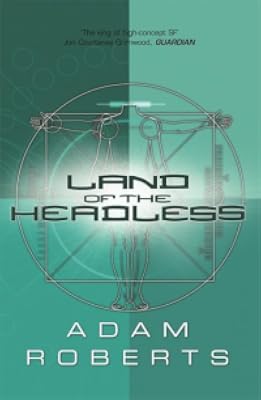
Adam Roberts is one of the most consistently interesting sci-fi writers that I've come across. His novels tend to contain a strikingly bizarre central concept, the implications of which are then spun out. My favourite example of this is [b:Land of the Headless|1438371|Land of the Headless|Adam Roberts|https://images.gr-assets.com/books/1183590467s/1438371.jpg|1428951], probably the only novel you will ever read in which the main characters have been decapitated before the story begins. In 'Jack Glass', the central conceit is stylistic - the reader is told of three murder mysteries and that the eponymous anti-hero is the murderer in each case. Knowing this, each third of the book is spent trying to work out how and why each killing took show more place. This caused a marked reluctance on my part to put the book down until I'd finished it, as I genuinely wanted to know the answers and felt compelled to make (incorrect) guesses.
The interlinked murder mysteries take place within a very intriguing and well-drawn world, a few hundred years in the future. Although elements reminded me of novels by Gwyneth Jones, John Courtney Grimwood, Alaistair Reynolds, and Neal Stephenson, the overall feel of it was fresh and original. I especially appreciated the discussion of how the economics in this world operated, and how this interacted with the political situation. The range of religions mentioned was also amusingly satirical, especially when economics-as-religion came up. The politics had an unsubtle neo-Marxism about them, which I liked. I found the depth of world-building impressive, given that that the book read like a marriage of straightforward sci-fi adventure with a murder mystery sequence.
'Jack Glass' is perhaps weaker when it comes to characterisation. The progression of events drives the narrative, dragging the characters along behind it. I would have liked to hear more from Sapho, especially in the discussion of revolution. At one point I caught a reference to her being in one place having been previously stated to be in another, then assumed this would have some key significance. It did not, so I assume it was a typo. I approve of Jack Glass himself remaining something of an enigma, though, and Diana Argent seemed like a realistically self-absorbed teenager.
Overall, 'Jack Glass' was a very entertaining, clever, and beautifully imagined novel. Long may Adam Roberts continue to have such great ideas. Now I need to find a copy of [b:By Light Alone|9281340|By Light Alone|Adam Roberts|https://images.gr-assets.com/books/1294414057s/9281340.jpg|14163408]. show less
The interlinked murder mysteries take place within a very intriguing and well-drawn world, a few hundred years in the future. Although elements reminded me of novels by Gwyneth Jones, John Courtney Grimwood, Alaistair Reynolds, and Neal Stephenson, the overall feel of it was fresh and original. I especially appreciated the discussion of how the economics in this world operated, and how this interacted with the political situation. The range of religions mentioned was also amusingly satirical, especially when economics-as-religion came up. The politics had an unsubtle neo-Marxism about them, which I liked. I found the depth of world-building impressive, given that that the book read like a marriage of straightforward sci-fi adventure with a murder mystery sequence.
'Jack Glass' is perhaps weaker when it comes to characterisation. The progression of events drives the narrative, dragging the characters along behind it. I would have liked to hear more from Sapho, especially in the discussion of revolution. At one point I caught a reference to her being in one place having been previously stated to be in another, then assumed this would have some key significance. It did not, so I assume it was a typo. I approve of Jack Glass himself remaining something of an enigma, though, and Diana Argent seemed like a realistically self-absorbed teenager.
Overall, 'Jack Glass' was a very entertaining, clever, and beautifully imagined novel. Long may Adam Roberts continue to have such great ideas. Now I need to find a copy of [b:By Light Alone|9281340|By Light Alone|Adam Roberts|https://images.gr-assets.com/books/1294414057s/9281340.jpg|14163408]. show less
Wow. A delicious trifecta of science fiction, murder, and mystery. Tonally one of the weirdest books I've read in awhile. Oppressive political structures. Social critique. Crime and punishment. Quantum physics. FTL travel. Dreamscapes as problem solving tools. Sociopaths, assassins. And yet lots of lightness and wry humor that worked. I love how all the back cover blurbs make note of it as a scifi book that would rival any so-called literary work. Bold but maybe not that far off. The prose is startling and beautiful at times. Will have to let this one soak in my brain before a detailed review.
A witty blend of SF and detective novel, in three parts. I really enjoyed the first part, In the Box, but the second part where we were introduced to Dia I found initially teeth grittingly annoying. But, Dia does grow up significantly, fairly quickly by the end of that section and becomes much less annoying as a result. Entertaining and somewhat puzzling, and consistent imaginative world building.
“A quantity of blood is spilled in this story, I’m sorry to say; and a good many people die; and there is some politics too. There is danger and fear. Accordingly I have told his tale in the form of a murder mystery; or to be more precise (and at all costs we must be precise) three, connected murder mysteries.
But I intend to play fair with you, reader, right from the start, or I’m no true Watson. So let me tell everything now, at the beginning, before the story gets going.“
Such a promising beginning; a sly narration, word play, and enticing hints. A troublesome book; very well written, cold and only intellectually interesting characters, dysconjugate plotting, and rather engaging world-building. The result is a book that is show more clearly well-done but doesn’t ever reach that point of emotional resonance or engagement.
After the prologue by the aforementioned sly narrator, the first section/story, “In the Box,” is about seven men placed on an asteroid as part of their prison sentence. It will be eleven years before the ship returns, so until then, survival is up to them. A fascinating, brutal and uncomfortable character study as the seven men engage in the adult version of Lord of the Flies. The reader knowing that a murder will take place lends an interesting tension to the already violent group dynamics; I was poised on the edge of a reading seat wondering how and when it would happen. Oh, and the ending! A clever, disgusting, squeamish solution.
**********************
All this and more quotes at:
http://clsiewert.wordpress.com/2014/07/06/jack-glass-by-adam-roberts-not-at-all-... show less
But I intend to play fair with you, reader, right from the start, or I’m no true Watson. So let me tell everything now, at the beginning, before the story gets going.“
Such a promising beginning; a sly narration, word play, and enticing hints. A troublesome book; very well written, cold and only intellectually interesting characters, dysconjugate plotting, and rather engaging world-building. The result is a book that is show more clearly well-done but doesn’t ever reach that point of emotional resonance or engagement.
After the prologue by the aforementioned sly narrator, the first section/story, “In the Box,” is about seven men placed on an asteroid as part of their prison sentence. It will be eleven years before the ship returns, so until then, survival is up to them. A fascinating, brutal and uncomfortable character study as the seven men engage in the adult version of Lord of the Flies. The reader knowing that a murder will take place lends an interesting tension to the already violent group dynamics; I was poised on the edge of a reading seat wondering how and when it would happen. Oh, and the ending! A clever, disgusting, squeamish solution.
**********************
All this and more quotes at:
http://clsiewert.wordpress.com/2014/07/06/jack-glass-by-adam-roberts-not-at-all-... show less
After two lacklustre near future novels this far future novel, which plays with the toys of the murder mystery genre, is a cracking return to form for this author.
A few centuries hence, the solar system has become a large slum, in which trillions live in bubble homes floating in space, subsisting on basic food grown from hydroponics and recycled water. Above the masses are the police/gangsters and above them are the Clan Families. And pre-emminent among the Clan Families are the Ulanovs, the source of all power. Not surprisingly, there are those in the 'Sump', the bubble-dwellers, who want to change this despotic system.
The story focuses on the two scions of the Argent Family, Diana and Eva, the former gene-engineered for intuition, the show more latter for logical reasoning. Eva is working on her seventh PhD, which is on "champagne supernovas", a very rare type of supernova which appear for no discernable reason. And there is a rumuour that someone has invented an FTL drive. If this is true it then it could either free mankind to roam the stars or give the stars to the Ulanovs, or another of the Families...
I think I have said enough as I do not want to give away anything that might ruin the impact of the three crime/whodununit-puzzles herein. I have not said anything about the title character but he is declared a murderer right at start so this snippet is giving nothing away. I found this novel hard to put down, as it fires on all cylinders in its rich blend of genre fictions. If you have not read anything yet by this author yet, try this novel. show less
A few centuries hence, the solar system has become a large slum, in which trillions live in bubble homes floating in space, subsisting on basic food grown from hydroponics and recycled water. Above the masses are the police/gangsters and above them are the Clan Families. And pre-emminent among the Clan Families are the Ulanovs, the source of all power. Not surprisingly, there are those in the 'Sump', the bubble-dwellers, who want to change this despotic system.
The story focuses on the two scions of the Argent Family, Diana and Eva, the former gene-engineered for intuition, the show more latter for logical reasoning. Eva is working on her seventh PhD, which is on "champagne supernovas", a very rare type of supernova which appear for no discernable reason. And there is a rumuour that someone has invented an FTL drive. If this is true it then it could either free mankind to roam the stars or give the stars to the Ulanovs, or another of the Families...
I think I have said enough as I do not want to give away anything that might ruin the impact of the three crime/whodununit-puzzles herein. I have not said anything about the title character but he is declared a murderer right at start so this snippet is giving nothing away. I found this novel hard to put down, as it fires on all cylinders in its rich blend of genre fictions. If you have not read anything yet by this author yet, try this novel. show less
Members
- Recently Added By
Published Reviews
ThingScore 75
Jack Glass is a lightweight but enjoyable read, commendably different from anything else. Its strength lies in its lively writing.
added by souloftherose
Lists

BingoDOG - Genre Benders
74 works; 14 members

infjsarah's wishlist
408 works; 2 members
Author Information

123+ Works 6,451 Members
Some Editions
Awards and Honors
Awards
Distinctions
Series
Belongs to Publisher Series
Gallimard, Folio SF (671)
Common Knowledge
- Original publication date
- 2012-07-26
- Dedication
- To Merryl Wynne Roberts
- First words
- This narrative, which I hereby doctorwatson for your benefit, o reader, concerns the greatest mystery of our time.
- Last words
- (Click to show. Warning: May contain spoilers.)To tell his story to you.
Classifications
Statistics
- Members
- 477
- Popularity
- 63,841
- Reviews
- 24
- Rating
- (3.65)
- Languages
- English, French, Romanian
- Media
- Paper, Audiobook, Ebook
- ISBNs
- 7
- ASINs
- 4