Legacy
by Susan Kay
On This Page
Description
A Spellbinding Tale of England's Most Passionate Queen—and the Three Men Whose Destinies Belonged to Her Alone.Beloved for its stunning storytelling, Legacy offers an exquisite portrait of the queen who defined an era. Tracing the unlikely path from her tragic childhood to her ruthless confrontations with Mary, Queen of Scots, and capturing in all its glory her brilliant reign as Europe's most celebrated queen, Susan Kay peels back the layers of a mysterious monarch and satisfies the show more questions of history.
Winner of the Georgette Heyer Historical Novel Prize and the Betty Trask Award, Susan Kay gives us Elizabeth the woman: proud, passionate, and captivating in her intensity. The queen who inspired men to love her with bewitching devotion, no matter what the cost, but the depth of her love for England required a sacrifice that would haunt her to the grave.
"Full of dramatic twists and turns, not to mention a scintillating central character and colorful supporting cast. Readers will lose themselves for hours in this richly entertaining novel." —Booklist
. show less
Tags
Recommendations
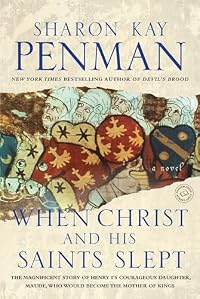
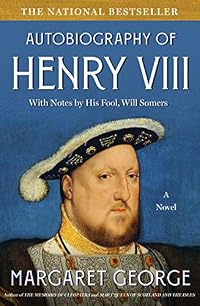
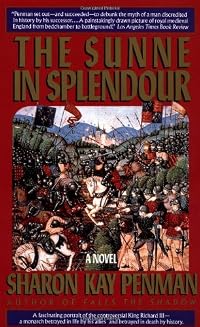
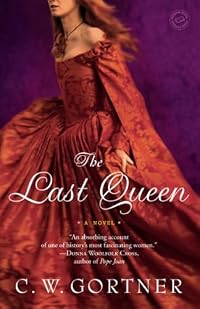
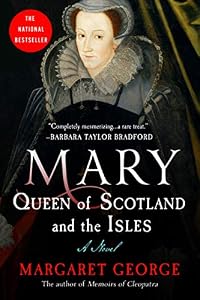
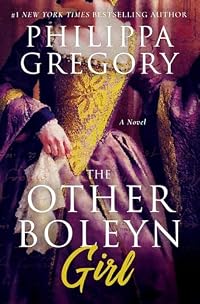
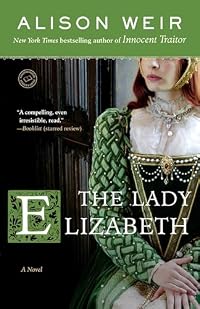
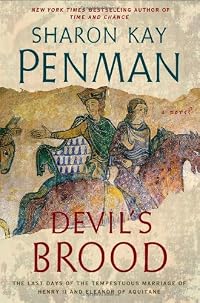








Member Reviews
It's no secret that I find English history fascinating, and while I prefer the Hanoverians to the Tudors, it's pretty hard not to be intrigued by one of Britain's most historically dysfunctional families. Susan Kay clearly has a fascination for them, as evidenced by her novel that spans about 70 years, chronicling all of Queen Elizabeth I's life.
The book is entertaining- whether it's entirely accurate, I don't know. There are love affairs galore, innuendos everywhere, secrets alluded to but not brought fully into the open, and many conclusions drawn that may or may not be true. It's as much as soap opera as a historical novel (though I would strongly disagree with Publishers Weekly above in calling it a "romance"), and I don't think I show more can really believe everything Kay wrote and seemed to pass off as fact. But it sure was fun to read :-)
The book has many central characters in it, all satellites around the gravitational force that is Elizabeth. These characters are all well-drawn and could be subjects of complex, critical analysis on their own. But no one really notices them (and by no one, I mean me) because of the Queen.
I think Kay's novel is a success because of how completely mesmerizing Elizabeth I is. She shines from the start and doesn't let up until the very end. She's generous and cruel, happy and depressed, and completely captivating. It is easy to see why she is still seen as a legend today, and her masterful manipulation of not only her own courtiers but those from all over Europe is portrayed perfectly.
The most interesting part to me, though, was the psychology of Elizabeth's character. In Kay's book, she is supremely flawed. She is haunted by the death of her mother, by the actions of her father, and by the effects of both these people on her country and her life. Every one of her relationships has a shadow on it because of her parents. She goes through life believing that perhaps she is a witch. She has trouble getting close to people. She feels the need to be cruel and stand-offish and proud. She feels that she must be married to England, and not to any man.
Why is it that strong women are so often portrayed as ones with no heart, or ones who turn their hearts off for the good of others? I understand that Elizabeth's entire reign was built around the premise of her being the Virgin Queen who toiled for England and not for a husband and family- but why is that the only way it ever seems to work for females? Most male heroes, throughout history, have a female counterpart that they seem to trust and love and confide in, and it never makes them seem weak. But for women, automatically, it is assumed that the man would take over the central role in her life and that everything else would take a backseat to him. And, what's more, if her husband were not to be less important than her work, then something is always, always considered to be wrong with the woman. Well, how often is she considered to be unwomanly in those circumstances?
Elizabeth was ruling a country that was bankrupt and basically in shambles- I think she was quite justified in putting England before any man in her life. But part of the reason she lives on so strongly is because she didn't marry anyone, and that was considered the ultimate sacrifice (and a huge aberration by a royal person, of course). She is remembered in this almost goddess-like mentality of being a strong and able woman who gave up her personal happiness for the sake of her country. But who's to really say now that she gave up her chance at happiness? What if she just really wanted to rule her country and not be bothered by a husband and children who would probably spend a good amount of their time trying to take her power away from her? Is that so wrong? Is it accurate for authors to portray her as a lonely and depressed ruler, just because she was female? If she had been a man, would she be so fascinating to us still? Would people romanticize him the way they romanticize her? There have been many manipulative and cunning men in English history- check out those Plantaganets- so why is it that it's always the women who act in these ways that create such a stir?
Of course, there are issues of sexism throughout history to contend with in all of the above questions I raise, and I understand that there aren't easy answers- but I think that's why Queen Elizabeth is such an interesting figure to so many people. What was it that made her the way she was? When she died, was she content with the way her life went, or would she have preferred it to go differently? Did she want the greatness and immortality, or would she have preferred to be Robert Dudley's wife?
I think Kay confronts a lot of these issues in her novel, and she does not cut Elizabeth short at all. The Queen is even more complex and difficult to understand at the end of the novel than she was at the beginning. And I think that's where the book really shines- Kay doesn't pigeonhole Elizabeth at all, but makes her huge and inspiring, so that we have some idea of what the Elizabethan age must have been like. show less
The book is entertaining- whether it's entirely accurate, I don't know. There are love affairs galore, innuendos everywhere, secrets alluded to but not brought fully into the open, and many conclusions drawn that may or may not be true. It's as much as soap opera as a historical novel (though I would strongly disagree with Publishers Weekly above in calling it a "romance"), and I don't think I show more can really believe everything Kay wrote and seemed to pass off as fact. But it sure was fun to read :-)
The book has many central characters in it, all satellites around the gravitational force that is Elizabeth. These characters are all well-drawn and could be subjects of complex, critical analysis on their own. But no one really notices them (and by no one, I mean me) because of the Queen.
I think Kay's novel is a success because of how completely mesmerizing Elizabeth I is. She shines from the start and doesn't let up until the very end. She's generous and cruel, happy and depressed, and completely captivating. It is easy to see why she is still seen as a legend today, and her masterful manipulation of not only her own courtiers but those from all over Europe is portrayed perfectly.
The most interesting part to me, though, was the psychology of Elizabeth's character. In Kay's book, she is supremely flawed. She is haunted by the death of her mother, by the actions of her father, and by the effects of both these people on her country and her life. Every one of her relationships has a shadow on it because of her parents. She goes through life believing that perhaps she is a witch. She has trouble getting close to people. She feels the need to be cruel and stand-offish and proud. She feels that she must be married to England, and not to any man.
Why is it that strong women are so often portrayed as ones with no heart, or ones who turn their hearts off for the good of others? I understand that Elizabeth's entire reign was built around the premise of her being the Virgin Queen who toiled for England and not for a husband and family- but why is that the only way it ever seems to work for females? Most male heroes, throughout history, have a female counterpart that they seem to trust and love and confide in, and it never makes them seem weak. But for women, automatically, it is assumed that the man would take over the central role in her life and that everything else would take a backseat to him. And, what's more, if her husband were not to be less important than her work, then something is always, always considered to be wrong with the woman. Well, how often is she considered to be unwomanly in those circumstances?
Elizabeth was ruling a country that was bankrupt and basically in shambles- I think she was quite justified in putting England before any man in her life. But part of the reason she lives on so strongly is because she didn't marry anyone, and that was considered the ultimate sacrifice (and a huge aberration by a royal person, of course). She is remembered in this almost goddess-like mentality of being a strong and able woman who gave up her personal happiness for the sake of her country. But who's to really say now that she gave up her chance at happiness? What if she just really wanted to rule her country and not be bothered by a husband and children who would probably spend a good amount of their time trying to take her power away from her? Is that so wrong? Is it accurate for authors to portray her as a lonely and depressed ruler, just because she was female? If she had been a man, would she be so fascinating to us still? Would people romanticize him the way they romanticize her? There have been many manipulative and cunning men in English history- check out those Plantaganets- so why is it that it's always the women who act in these ways that create such a stir?
Of course, there are issues of sexism throughout history to contend with in all of the above questions I raise, and I understand that there aren't easy answers- but I think that's why Queen Elizabeth is such an interesting figure to so many people. What was it that made her the way she was? When she died, was she content with the way her life went, or would she have preferred it to go differently? Did she want the greatness and immortality, or would she have preferred to be Robert Dudley's wife?
I think Kay confronts a lot of these issues in her novel, and she does not cut Elizabeth short at all. The Queen is even more complex and difficult to understand at the end of the novel than she was at the beginning. And I think that's where the book really shines- Kay doesn't pigeonhole Elizabeth at all, but makes her huge and inspiring, so that we have some idea of what the Elizabethan age must have been like. show less
had mixed feelings about this one. The author is an evocative writer and this was a good page turner. But it did veer more towards the romantic end of the historical novel spectrum than I am wholly comfortable with. It committed for me the cardinal sin of depicting Elizabeth and Dudley as having sex, almost casually after years of non-physical romance. I do not think their romance should be seen in modern terms as necessarily involving physical sex and I think if it had the course of events in the Queen's reign and her impact on government and the country would have been different.
I would also say that the author rather exaggerated Elizabeth's lack of enthusiasm for religious persecution in certain situations; while to a degree show more genuinely not seeking to make a window into men's souls, she is here depicted as having an unrealistically modern agnosticism or even atheism that doesn't fit the facts about her religious upbringing or resistance to trimming to the wind in her sister Mary's reign. Finally, the crowning psychological idea that Elizabeth's execution of the Earl of Essex was symbolic vengeance against all men for the execution of her mother by her father struck me as rather absurd, though I suppose we can never know exactly what psychological effects the trauma of her upbringing and the first 25 years of her life might have had on her reign. 3.5/5 show less
I would also say that the author rather exaggerated Elizabeth's lack of enthusiasm for religious persecution in certain situations; while to a degree show more genuinely not seeking to make a window into men's souls, she is here depicted as having an unrealistically modern agnosticism or even atheism that doesn't fit the facts about her religious upbringing or resistance to trimming to the wind in her sister Mary's reign. Finally, the crowning psychological idea that Elizabeth's execution of the Earl of Essex was symbolic vengeance against all men for the execution of her mother by her father struck me as rather absurd, though I suppose we can never know exactly what psychological effects the trauma of her upbringing and the first 25 years of her life might have had on her reign. 3.5/5 show less
I LOVED this book. There were a few things which made me wince and I had to remind myself that it's meant to be fiction. Could Dudley and Elizabeth been lovers all those years right under William Cecil's (not to mention the entire court's) nose? We'll never know and I suspect not for reason too many to enumerate here. The last section The Effigy seemed hurried, as though the author realized her book was already over 500 pages long and couldn't spend as much time on Essex as she might have. It felt very realistic to me in many ways, as though those conversations had happened and those complex emotional paths were that obvious. This book really brought home to me how incredible Elizabeth was: her mind, her shrewdness and political show more instinct and what a tightrope she had to walk every minute of her life. Thank you again SantaThing for choosing this wonderful book! show less
Legacy is the fictional story of one of England greatest queens—Elizabeth I, who reigned from 1558 until her death in 1603. It was during her reign that England achieved a certain amount of political stability and created a sense of national identity in the English people. Her relationship with Robert Dudley, Earl of Leicester, was highly debated, and it’s the focus of part of the plot of this novel. Elizabeth’s relationship with William Cecil is also central to the plot.
I haven’t read many novels about the life of Elizabeth I (Jean Plaidy wrote one called Queen of this Realm that I wasn’t so keen on because she focused more the legend, not the actual person), but this is easily the best. Susan Kay gets into the head and heart show more of Elizabeth, who’s a very difficult person to write fiction about, I think—probably because so much is known about her life that there’s not much room for invention. And it’s hard for an author to present these well-known facts about Elizabeth’s life in a new, exciting way. I actually felt, for example, the tension that Elizabeth felt while imprisoned in the Tower, not knowing what would happen to her. It’s also pretty ambitious for an author to tackle Elizabeth’s entire life (actually, starting with Henry VIII’s break from Rome so that her could marry her mother, Anne Boleyn), but Kay does it in an admirable way.
Susan Kay does play around a bit with the history in this novel, however, especially with regards to what happened to Robert Dudley’s wife, Amy. But the author gives her reader great insight into Elizabeth’s thoughts and feelings in a believable, real way. I think that history has put Elizabeth on a bit of a pedestal in terms of what she accomplished during her reign, but Kay turns her into a real, fallible person in this novel, easily likeable despite her faults and mistakes. The author glossed over the fact that Elizabeth was a patron of the arts in real life; she was even a published author herself. But since this book has a lot of ground to cover, it’s understandable that some things would be missed. Overall, this is an excellent novel about the life of Elizabeth I. Sourcebooks is coming out with a reprint of this next month, and it's good that this book will be enjoyed by a new generation of readers. show less
I haven’t read many novels about the life of Elizabeth I (Jean Plaidy wrote one called Queen of this Realm that I wasn’t so keen on because she focused more the legend, not the actual person), but this is easily the best. Susan Kay gets into the head and heart show more of Elizabeth, who’s a very difficult person to write fiction about, I think—probably because so much is known about her life that there’s not much room for invention. And it’s hard for an author to present these well-known facts about Elizabeth’s life in a new, exciting way. I actually felt, for example, the tension that Elizabeth felt while imprisoned in the Tower, not knowing what would happen to her. It’s also pretty ambitious for an author to tackle Elizabeth’s entire life (actually, starting with Henry VIII’s break from Rome so that her could marry her mother, Anne Boleyn), but Kay does it in an admirable way.
Susan Kay does play around a bit with the history in this novel, however, especially with regards to what happened to Robert Dudley’s wife, Amy. But the author gives her reader great insight into Elizabeth’s thoughts and feelings in a believable, real way. I think that history has put Elizabeth on a bit of a pedestal in terms of what she accomplished during her reign, but Kay turns her into a real, fallible person in this novel, easily likeable despite her faults and mistakes. The author glossed over the fact that Elizabeth was a patron of the arts in real life; she was even a published author herself. But since this book has a lot of ground to cover, it’s understandable that some things would be missed. Overall, this is an excellent novel about the life of Elizabeth I. Sourcebooks is coming out with a reprint of this next month, and it's good that this book will be enjoyed by a new generation of readers. show less
This is a book that I might one day buy, though I only got it from my high school library. This is an excellent account of Queen Elizabeth I's life from her perspective. After I read it she was a bit of a personal hero, and I used her as my hero in sophomore Spanish class "hero for defeating the Spanish Armada" (because I wanted to be ironic). Anyway, she's just an all-around fascinating person, and this is a completely excellent retelling of her story.
This award winning novel by Susan Kay chronicles the life of Elizabeth Tudor from her early childhood until her death many, many years later. The novel is separated into five parts: The Girl, The Woman, The Queen, The Goddess and The Effigy. Kay features the many events of Elizabeth's life from her relationship with Robert Dudley, her defeat of the Spanish Armada, and even the Babington plot and other situations dealing with Mary, Queen of Scots.
One of the great things about this practically perfect novel about Elizabeth is that it covers so much of her life and all the things that happened in it, including her 40 year reign as queen. Kay exquisitely weaves so many characters and plots around Elizabeth that you hardly notice you are show more reading so much history because it's just so smooth.
The other, probably more outstanding is Kay's characterization of Elizabeth. You really get a full image of her and how what the kind of person she probably was. It's very different from what you might read in other novels, but Elizabeth is so intricate and real that you come out of this book thinking you know her and understand her. It took Kay many years to write this book and you really get the idea of how much work and research went into this.
I highly recommend this book, if you can find it, since it is out of print at this time. If you enjoy Elizabeth Tudor it is a must have. show less
One of the great things about this practically perfect novel about Elizabeth is that it covers so much of her life and all the things that happened in it, including her 40 year reign as queen. Kay exquisitely weaves so many characters and plots around Elizabeth that you hardly notice you are show more reading so much history because it's just so smooth.
The other, probably more outstanding is Kay's characterization of Elizabeth. You really get a full image of her and how what the kind of person she probably was. It's very different from what you might read in other novels, but Elizabeth is so intricate and real that you come out of this book thinking you know her and understand her. It took Kay many years to write this book and you really get the idea of how much work and research went into this.
I highly recommend this book, if you can find it, since it is out of print at this time. If you enjoy Elizabeth Tudor it is a must have. show less
Here's what I wrote after reading in 1987: "The story of Elizabeth I, daughter of Henry VIII and Anne Boelyn and Queen of England for ~fifty years. Book is fiction in that is contains dialog and examines relationships. However, much of what the book contains is documented fact. Most interesting learning: She was a willy and canny politician and yet used her femininity for all it was worth. She feigned illness. She acted interested in marriage when she was not, she fainted at convenient times." Much has been written about this amazing woman and I did indeed enjoy this first dip into learning about her.
Members
- Recently Added By
Published Reviews
ThingScore 25
Although she has obviously done sufficient research to portray the basics of Elizabeth's story with accuracy, Kay's interpretation of events reads like a soap opera.
added by cattriona
Lists

KayStJ's to-read list
1,616 works; 11 members
Author Information
5 Works 1,718 Members
Awards and Honors
Series
Belongs to Publisher Series
Heyne Allgemeine Reihe (10460)
Common Knowledge
- Canonical title
- Legacy
- Original publication date
- 1985
- People/Characters
- Elizabeth I, Queen of England; Robert Dudley, 1st Earl of Leicester; Robert Cecil, 1st Earl of Salisbury
- Important places
- London, England, UK; England, UK
Classifications
Statistics
- Members
- 504
- Popularity
- 59,443
- Reviews
- 16
- Rating
- (4.06)
- Languages
- 5 — Czech, Danish, English, German, Swedish
- Media
- Paper, Ebook
- ISBNs
- 23
- UPCs
- 1
- ASINs
- 10