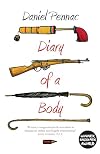
Diary of a Body
by Daniel Pennac
On This Page
Description
From a particularly humiliating accident at scout camp, to the final stages of terminal illness, Daniel Pennac's warm, witty and heart-breaking novel shows the rise and fall of an ordinary man, told through his observations of his own body. It is with damp eyes (not to mention underpants) that our narrator begins his diary, seeking through it to come to terms with the demoralising quirks of his fleshy confines. Through the joys and horrors of puberty to the triumphs of adolescence, we grow show more to love him through every growth, leak and wound, as he finds himself developing muscles, falling in love, and then leaving school to join the French Resistance. Yet, as ever, this is only half the story. As years pass and hairs grey, everything he took for granted begins to turn against him. Tackling taboo topics with honesty and charm, Pennac's wit remains sharp even as everything else begins to sag. This is a hugely original story of the most relatable of unlikely love stories: a human, and the body that defines him. show lessTags
Recommendations








Member Reviews
Un libro assai strano, insolito nella forma, affrontato all'inizio con molte perplessità: che cosa racconterà un diario del corpo? Di solito al diario si consegnano confessioni, intimi pensieri, magari qualche disturbo, così, di passaggio, per giustificare un particolare cattivo umore.
E invece qui si parla del corpo, e attraverso il corpo dei sentimenti e dei ricordi, delle relazioni, di simpatie antipatie e amori, il tutto con leggerezza e senza imbarazzi, con metafore fulminanti, impietosamente e con la massima verosimiglianza, e guizzi di humor irresistibili.
Sconsiglierei questo libro ai più giovani, che forse lo troverebbero pedante, e ai più vecchi, già troppo presi dal proprio decadimento per apprezzare quello altrui, mentre show more è indicatissimo per lettori dell'età di mezzo.
Ovviamente, il tutto è rigorosamente al maschile, e si apprezza l'onestà di Pennac nel non aver cercato di uscire dall'esperienza del proprio corpo. show less
E invece qui si parla del corpo, e attraverso il corpo dei sentimenti e dei ricordi, delle relazioni, di simpatie antipatie e amori, il tutto con leggerezza e senza imbarazzi, con metafore fulminanti, impietosamente e con la massima verosimiglianza, e guizzi di humor irresistibili.
Sconsiglierei questo libro ai più giovani, che forse lo troverebbero pedante, e ai più vecchi, già troppo presi dal proprio decadimento per apprezzare quello altrui, mentre show more è indicatissimo per lettori dell'età di mezzo.
Ovviamente, il tutto è rigorosamente al maschile, e si apprezza l'onestà di Pennac nel non aver cercato di uscire dall'esperienza del proprio corpo. show less
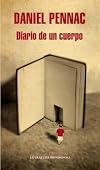
The cover made me think this was a story of decades of hypochondria, but Pennac is an exhilarating read, often apparently drunk on vocabulary, so I went ahead. And was reminded of Adrian Mole. A gallic Adrian Mole, living inside his head and vehemently self absorbed, how strange. (The jacket text, which I hadn't read, made the same connection/comparison.)
But Pennac is less distanced from his hero than Townsend is, and so the book's more moving when the man ages. Towards the end, I cried; but can't tell why I reacted so strongly. The story is more than the sum of its parts.
But Pennac is less distanced from his hero than Townsend is, and so the book's more moving when the man ages. Towards the end, I cried; but can't tell why I reacted so strongly. The story is more than the sum of its parts.
Een dagboek, uitsluitend over lichamelijke dingen. Het dagboek loop van 1938 tot 2010 (als de schrijver 87 is geworden en sterft). Heel erg knap geschreven. Je leeft mee en wordt als het ware zelf ouder. Eerst is het terugkijken, hoe was het ook al weer als kind. Dan nadert je eigen leeftijd (hij schrijft mooi over zijn zestigste verjaardag) en dan wordt hij langzaam zo oud als mijn ouders.
Wat bijzonder is, is dat er bijna geen aandacht wordt besteed aan de buitenwereld: de tweede wereldoorlog speelt een kleine rol, omdat hij daarin gewond raakt. Maar niets over de studentenopstanden in 1968 (hij woont in Parijs), of over 9/11, echt geen woord! Over zijn vrouw zegt hij op het laatst dat hij steeds dol is gebleven op haar lichaam. Als show more het geen lijfboek was geweest, had hij een heel ander dagboek bijgehouden, over de zwijgzaamheid van Mona (zijn vrouw) bijvoorbeeld en de relatie met zijn dochter.
Toen ik het boek uithad, ben ik opnieuw voorin gaan lezen. Het laat me nog niet los. show less
Wat bijzonder is, is dat er bijna geen aandacht wordt besteed aan de buitenwereld: de tweede wereldoorlog speelt een kleine rol, omdat hij daarin gewond raakt. Maar niets over de studentenopstanden in 1968 (hij woont in Parijs), of over 9/11, echt geen woord! Over zijn vrouw zegt hij op het laatst dat hij steeds dol is gebleven op haar lichaam. Als show more het geen lijfboek was geweest, had hij een heel ander dagboek bijgehouden, over de zwijgzaamheid van Mona (zijn vrouw) bijvoorbeeld en de relatie met zijn dochter.
Toen ik het boek uithad, ben ik opnieuw voorin gaan lezen. Het laat me nog niet los. show less
El narrador decide iniciar el diario tras una experiencia traumática vivida a la edad de doce años, cuando un grupo de niños lo atan a un árbol y unas hormigas empiezan a subir por sus piernas. El preadolescente, aterrado por esta invasión de su cuerpo, entra en pánico y no consigue controlar sus esfínteres. Al día siguiente, asombrado por la reacción de su cuerpo ante un hecho tan emocional como el miedo, decide iniciar un diario físico que, de algún modo, le ayude a «proteger en adelante mi cuerpo contra los asaltos de mi imaginación, y mi imaginación contra las intempestivas manifestaciones de mi cuerpo». De este modo arranca un diario que habrá de convertirse en una forma de conocimiento en torno a su propio cuerpo show more y, también, en una forma de control sobre el que tal vez sea el otro gran protagonista de esta novela: el miedo (a la enfermedad, a la muerte, al dolor, a la pérdida de control, la locura, etc.). show less
Feb 12, 2017Spanish
«No tendré más miedo, no tendré más miedo, no tendré más miedo.» Estas son las primeras palabras que repite el protagonista de esta original novela. En un principio, parece que no es más que un niño de doce años que escribe un diario porque tiene miedo a su madre, a los espejos, a las hormigas... pero su temor más grande es que muera Violette, la mujer que lo ha cuidado desde que murió su padre. Desgraciadamente, a Violette no le queda mucho tiempo y él se quedará solo con una madre que nunca lo ha querido. Hasta aquí no parece que el suyo sea diferente a cualquier otro diario. Sin embargo, sus intenciones van mucho más allá de la mera recopilación de estados psíquicos: quiere escribir acerca de su cuerpo y de todos show more aquellos descubrimientos que experimenta a través de este. Nada escapa a su curiosidad. Por eso, no hay pudor en él sino descubrimiento y naturalidad. No hay prejuicios sino la firme voluntad de hablar del despertar físico y de las nuevas sensaciones que le permiten cambiar su manera de relacionarse con el mundo. show less
Mar 30, 2023Spanish
Ce roman de Daniel Pennac nous montre à quel point cet auteur est particulièrement doué pour entraîner son lecteur avec lui, quel que soit la forme qu'il donne à son récit. Ici, un journal tenu par un homme tout au long de sa vie. Et ça marche ! On est pris par le personnage et par ses descriptions, tour à tout intrigué, peiné, réjouit...bref il nous fait ressentir tout un tas d'émotions.
Jan 11, 2015 (Edited)French
Arguto diario delle sensazioni corporeee al netto dei sentimenti. Sconsigliato agli ipocondriaci
Nov 18, 2012Italian
Members
- Recently Added By
Lists

Books Read in 2016
4,666 works; 197 members
Author Information

95+ Works 13,178 Members
Some Editions
Awards and Honors
Distinctions
The Guardian Book of the Day (2016-02-06)
Series
Belongs to Publisher Series
Common Knowledge
- Canonical title
- Diary of a Body
- Original title
- Journal d'un corps
- Original publication date
- 2012-02-09; 2012
- People/Characters*
- Le rédacteur du journal; Violette; La mère du rédacteur; Le père du rédacteur; Tijo; Mona (show all 11); Bruno; Lison; Grégoire; Fanny; Marguerite
- First words*
- AVERTISSSEMENT
Mon amie Lison – ma vieille, chère, irremplaçable et très exaspérante amie Lison – a l'art des cadeaux embarrassants, cette sculpture inachevée qui occupe les deux tiers de ma chambre, par exemp... (show all)le, ou les toiles qu'elle laisse à sécher pendant des mois dans mon couloir et ma salle à manger sous prétexte que son atelier est devenu trop petit. [...]
Le 3 août 2010
Ma chère Lison,
Te voilà revenue de mon enterrement, rentrée chez toi, tristounette forcément, mais Paris t’attend, tes amis, ton atelier, quelques toiles en souffrance, tes projets nombreu... (show all)x, dont celui de ton décor pour l’Opéra, tes fureurs politiques, l’avenir des jumelles, la vie, ta vie. [...] - Last words*
- (Click to show. Warning: May contain spoilers.)[...]. N'aie pas peur, je vais te montrer.
- Original language
- French
*Some information comes from Common Knowledge in other languages. Click "Edit" for more information.
Classifications
Statistics
- Members
- 291
- Popularity
- 110,149
- Reviews
- 9
- Rating
- (3.80)
- Languages
- 8 — Catalan, Dutch, English, French, German, Italian, Portuguese (Portugal), Spanish
- Media
- Paper, Audiobook, Ebook
- ISBNs
- 20
- ASINs
- 8