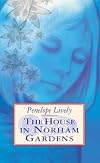
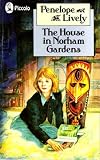
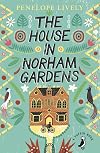
The House in Norham Gardens
by Penelope Lively
On This Page
Description
The carved shield she finds in the attic, brought from New Guinea years ago, causes fourteen-year-old Clare disturbing dreams.Tags
Recommendations





















Member Reviews
This is a splendid book; what would be classed as YA nowadays but much more serious and literate than most of the modern genre. The plot is somewhat inconsequential; Clare, a 14-year old orphan, who lives in a huge Victorian house in one of the better roads of North Oxford with her two aged great-aunts, comes across a New Guinea aboriginal mask brought home by her anthropologist great=grandfather. It preys on her mind giving her troubled dreams and disturbed sleep. Gradually the story of the mask works itself out and she donates it to the University Museum.
What the book is about is much more important: who we are, how we relate to our forebears, how we deal with death. Clare’s parents had died in an air-crash when she was eight and, show more after some time living in her aunt’s family, she ends up with her two old great-aunts, both unmarried, academic and left-wing. They are intellectually very sound but somewhat unworldly, relying on Clare and a helpful daily woman to manage the household economy. They treat Clare as an equal which may account, in part, for another reviewer’s observation that she speaks like a middle-aged woman.
A personal attraction to this book is the picture it creates of Oxford. A good part of the story takes place in a freezing, snow-covered city, getting harder to imagine now but taking me right back to 1963 when the Isis froze and people drove cars along the Cherwell. It is a ‘Town’ rather than ‘Gown’ view with Keble being the only college getting a mention and that only because it faces the Pitt-Rivers Museum. Clare does go into the city but only to meet her friends in shops and to go the bus station.
Norham Gardens holds sentimental memories: I used to walk up Mansfield Road under the flowering lime trees to visit the most beautiful girl in the world who lived in a house very like Clare’s. Well, it was in Fyfield Road actually but only yards away. show less
What the book is about is much more important: who we are, how we relate to our forebears, how we deal with death. Clare’s parents had died in an air-crash when she was eight and, show more after some time living in her aunt’s family, she ends up with her two old great-aunts, both unmarried, academic and left-wing. They are intellectually very sound but somewhat unworldly, relying on Clare and a helpful daily woman to manage the household economy. They treat Clare as an equal which may account, in part, for another reviewer’s observation that she speaks like a middle-aged woman.
A personal attraction to this book is the picture it creates of Oxford. A good part of the story takes place in a freezing, snow-covered city, getting harder to imagine now but taking me right back to 1963 when the Isis froze and people drove cars along the Cherwell. It is a ‘Town’ rather than ‘Gown’ view with Keble being the only college getting a mention and that only because it faces the Pitt-Rivers Museum. Clare does go into the city but only to meet her friends in shops and to go the bus station.
Norham Gardens holds sentimental memories: I used to walk up Mansfield Road under the flowering lime trees to visit the most beautiful girl in the world who lived in a house very like Clare’s. Well, it was in Fyfield Road actually but only yards away. show less
Could a book be more lovely? I'm not sure it could. The writing is exquisite, thought provoking, and I'm sure I will be looking fondly back on this book years from now. But all that being said, I never really hooked onto the plot. It all seemed a bit funny. Perhaps even unnecessary. All I really wanted to read about was this quiet, thoughtful main character, her elderly aunts, her new friends, her adjusting to adulthood and what it might mean. I'm not sure I needed the New Guinea shield, spirits, a strange illness...
Ah well. Now I must profusely thank Katy for recommending this book and go read everything else Penelope Lively has written.
Ah well. Now I must profusely thank Katy for recommending this book and go read everything else Penelope Lively has written.
It's a long time since I read this book, so long that I'm not even going to make my usual inaccurate stab at a guess. That doesn't matter; I remember this book glowingly, searingly, this is a wonderful book.
Why? The writing? It's been so long I couldn't say for sure, except that I know I loved it from the first, and it's usually the writing that seduces me, but I don't think it was the writing that lodged it in my mind.
It might have been Clare and her aunts, of course, the idea of a girl growing up normal in a household that would have blown the minds of many of my schoolfriends.
It might have been the counterpoint of their exotic lodger against the grey realities of England.
It might have been the story of the tambouran itself, woven in show more so skillfully, the little glimpses at each chapter heading gradually taking their place in main narrative, the exploration of the somethings lost in progress, of the delicate balance between undoubted improvements in health and opportunity, and the loss of diversity.
It might be that it was one of the first books I read that forced me to recognise the impossibility of a perfectly happy ending.
Or it could just be that it prompted me to visit the Pitt Rivers Museum, which is an entirely worthwhile outcome in its own right. show less
Why? The writing? It's been so long I couldn't say for sure, except that I know I loved it from the first, and it's usually the writing that seduces me, but I don't think it was the writing that lodged it in my mind.
It might have been Clare and her aunts, of course, the idea of a girl growing up normal in a household that would have blown the minds of many of my schoolfriends.
It might have been the counterpoint of their exotic lodger against the grey realities of England.
It might have been the story of the tambouran itself, woven in show more so skillfully, the little glimpses at each chapter heading gradually taking their place in main narrative, the exploration of the somethings lost in progress, of the delicate balance between undoubted improvements in health and opportunity, and the loss of diversity.
It might be that it was one of the first books I read that forced me to recognise the impossibility of a perfectly happy ending.
Or it could just be that it prompted me to visit the Pitt Rivers Museum, which is an entirely worthwhile outcome in its own right. show less
This one was kind of dark for me and the conclusion sudden. I did enjoy the characters and the place. It was just a tale where it seemed to always be dark, unsettled and wintery. Lovely writing though.
This book made me want to go back to the Pitt Rivers museum and study it all again. I loved it. I must have read it as a child but I can't remember it at all and I think it wouldn't have made much impression on me. The overall plot isn't very strong, (the African tribe and their need for the shield), it is more about character and atmosphere.
FROM PUBLISHER'S INFO:
The carved shield she finds in the attic, brought from New Guinea years ago, causes fourteen-year-old Clare disturbing dreams.
/
Clare lives with her ancient great-aunts in a rambling old house that has been the family home for generations. One day, Clare discovers an ancient wood carving in the attic. Soon, she begins to dream about the tribe it originally belonged to.
The carved shield she finds in the attic, brought from New Guinea years ago, causes fourteen-year-old Clare disturbing dreams.
/
Clare lives with her ancient great-aunts in a rambling old house that has been the family home for generations. One day, Clare discovers an ancient wood carving in the attic. Soon, she begins to dream about the tribe it originally belonged to.
ex-lib. AADL
Members
- Recently Added By
Lists

Books Read in 2014
2,344 works; 89 members

Which house?
423 works; 16 members
Author Information

73+ Works 14,539 Members
Penelope Lively has written over 18 books for children, and over 15 titles for adults, distinguishing herself on both levels. Among the awards she has received are the coveted Booker Prize for the adult novel "Moon Tiger" (1987) and the Carnegie Medal for the highly acclaimed juvenile work, "The Ghost of Thomas Kempe" (1973). In Lively's writing, show more for both adults and children, the recurrent theme is interpreting the past through exploring the function of memory. "My particular preoccupation as a writer is with memory. Both with memory in the historical sense and memory in the personal sense." Beginning her writing career in the early 1970's, Lively wrote exclusively for children for over a decade. Because children have limited memories, devices were used to explore their perceptions of the past, such as ghosts in "Uninvited Ghosts and Other Stories" (1985), and a sampler in "A Stitch in Time' (1976). Lively's first adult novel, "The Road to Lichfield" (1977) was the result of turning to an older audience when she felt inspiration running out. Her adult novels include "Passing On" (1995), the story of a mother's legacy to her children and 'Oleander, Jacarandi: A Childhood Perceived' (1994) which is a memoir of Lively's childhood. Penelope (Low) Lively, born March 17, 1933 in Cairo, Egypt, had a most unusual childhood. She grew up in Cairo with no formal education until age 12, when her family put her in boarding school in England. After earning a B.A. in history at Oxford in 1955, she married Jack Lively, a university professor, whom she calls her most useful critic. They have a son and a daughter, Adam and Josephine. (Bowker Author Biography) show less
Awards and Honors
Common Knowledge
- Original publication date
- 1974
Classifications
- Genres
- Fiction and Literature, Children's Books, Young Adult
- DDC/MDS
- 823.914 — Literature & rhetoric English & Old English literatures English fiction 1900- 1901-1999 1945-1999
- LCC
- PZ7 .L7397 .H — Language and Literature Fiction and juvenile belles lettres Fiction and juvenile belles lettres Juvenile belles lettres
- BISAC
Statistics
- Members
- 210
- Popularity
- 156,022
- Reviews
- 7
- Rating
- (3.86)
- Languages
- English, Italian, Spanish, Swedish
- Media
- Paper, Ebook
- ISBNs
- 11
- ASINs
- 2