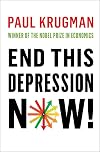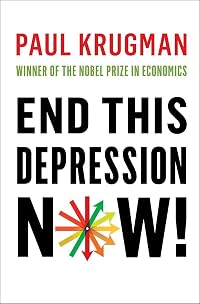
End This Depression Now!
by Paul Krugman
On This Page
Description
Krugman pursues the questions of how bad the "Great Recession" really is, how we got stuck in what can now be called a depression and, above all, how we can free ourselves.Tags
Recommendations
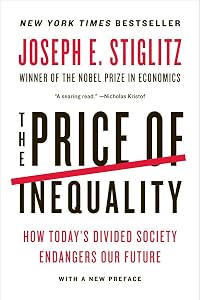
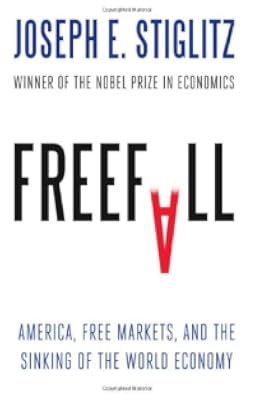
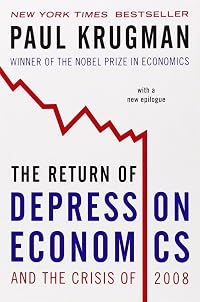
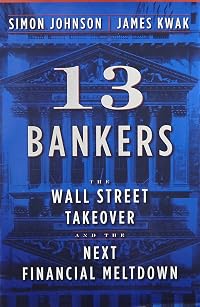
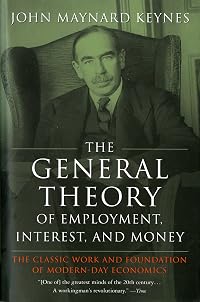
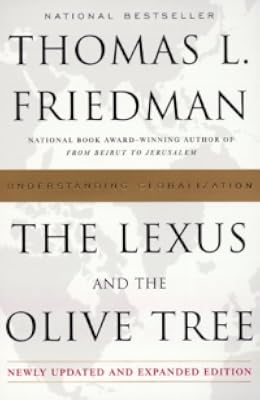
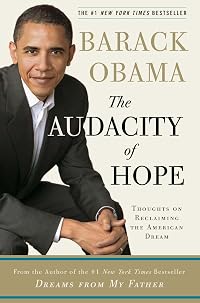
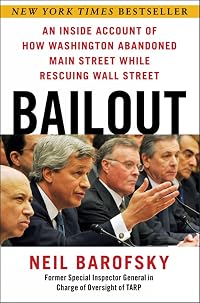
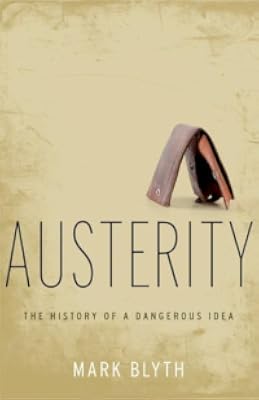
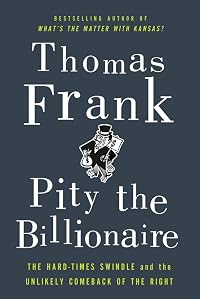
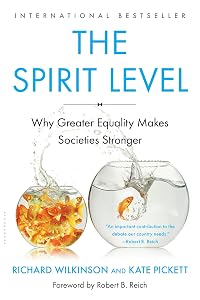
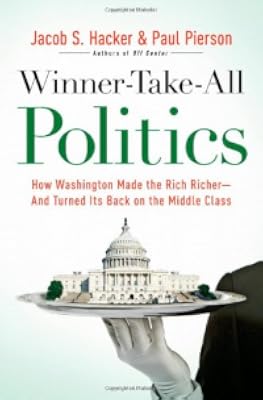
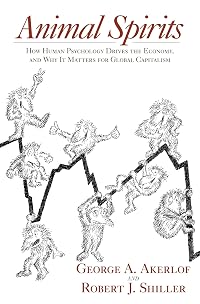
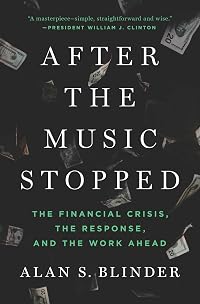
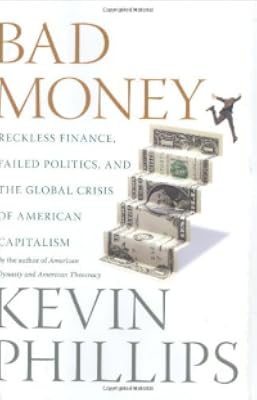
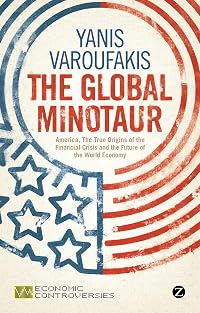
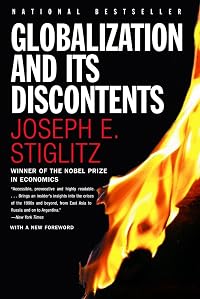

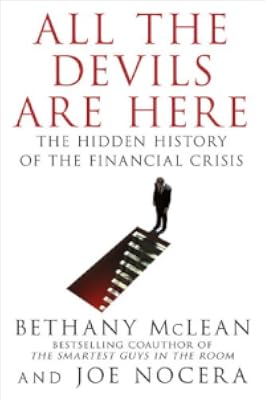
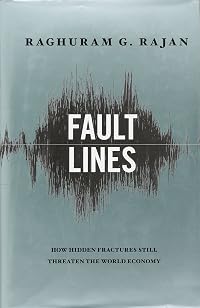
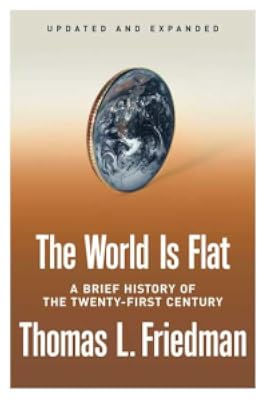
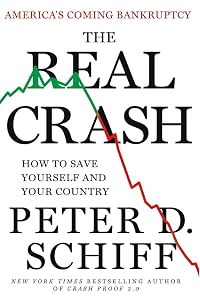
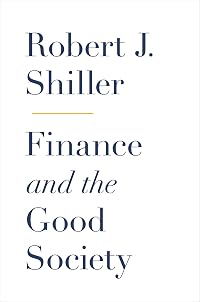
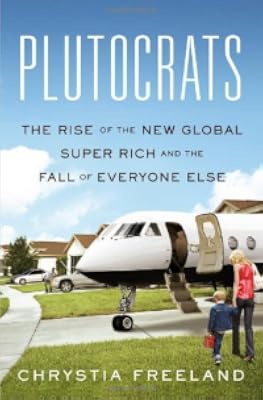
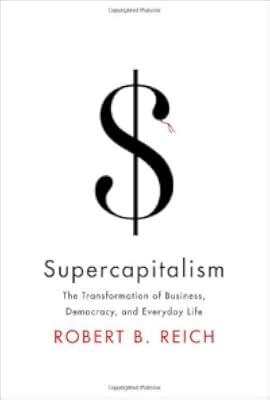
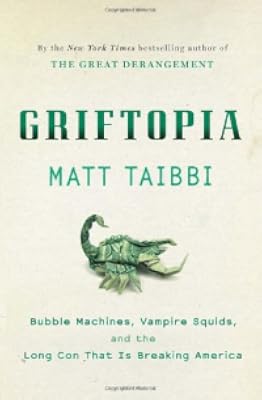
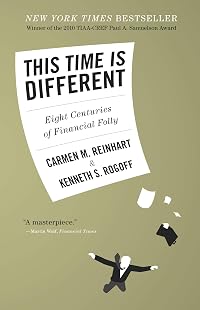
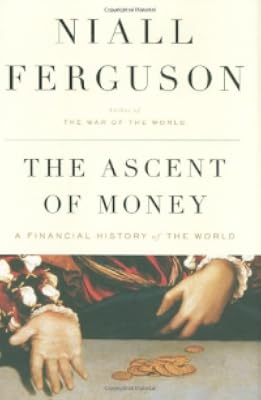
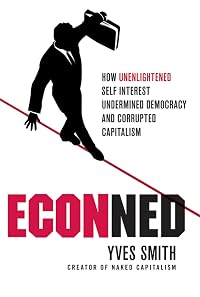
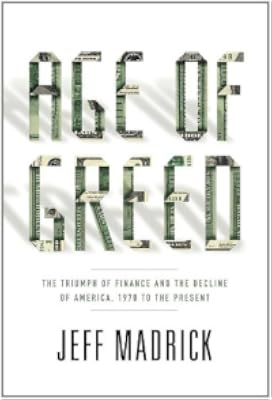
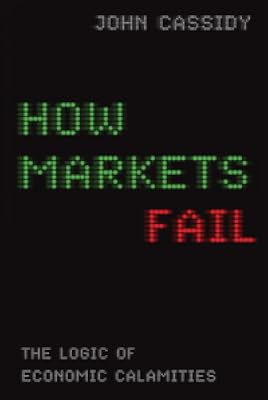
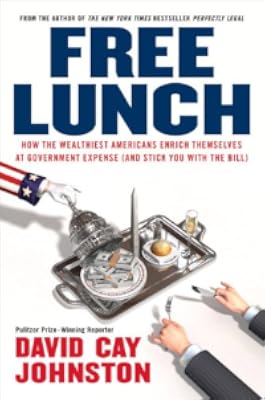
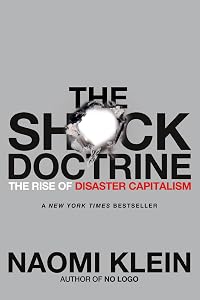
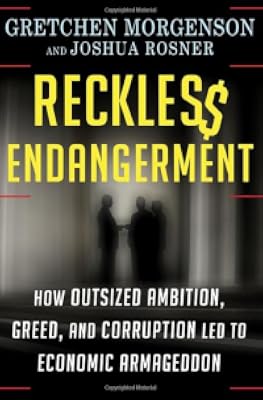
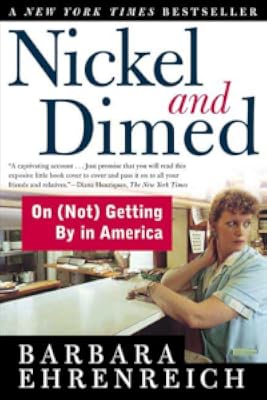
Member Recommendations
What's the Economy For, Anyway? Why It's Time to Stop Chasing Growth and Start Pursuing Happiness by David K. Batker
aulsmith Both books discuss economic issues that affect real people not just people with investments
Member Reviews
That the developed world has been caught in a perfectly foreseeable, avoidable, solvable slump for four years now is so stupid it would be funny if it weren't so sad. Millions of man-years have been thrown away as the result of economic policies that shouldn't have passed the laugh test in an age where anyone can pick up a book on the Great Depression and read about what went wrong. Yet here we are, trillions of dollars poorer than we should be, standing by as elected leaders make decisions on faulty, imagined, or no evidence at all. Krugman is a lot more calm when he discusses these things and those people than I would be, and even though his perfectly reasonable prescriptions for economic recovery have an uphill climb to the lofty show more heights of discourse where real decisions get made, the fact that they are so straightforward and sensible gives me some hope for the future. This book is largely a synthesis of material from the past few years on his blog cleaned up, re-ordered, and organized, which would be somewhat disappointing if the material were not so strong. It reminds me of his earlier The Return of Depression Economics in its subject-hopping structure, but with a somewhat stronger central narrative in the vein of The Conscience of a Liberal. The book tackles many subjects familiar to frequent blog readers: the roots of the crisis; failures of monetary policy; the inadequacy of the stimulus; the roots and remedies for the Euromess; lessons of the Great Depression; and the illogic of conservative doctrines like "expansionary austerity", the "confidence fairy", and "immaculate inflation". Its prescriptions are those that have been tested by history: more direct public infrastructure spending, aid to states (or countries in the case of Europe), accommodative monetary policy including a temporarily higher inflation target, and better trade and environmental policy. As he discusses and refutes objections to his analyses, the Republican Party is a frequent object of criticism, as are clueless European leaders, the finance-industrial complex, economists who have been either misinformed or unhelpful, and fatuous pundits. Krugman has been criticized for his dismissive tone towards people he disagrees with, and while he doesn't ever call someone an idiot outright here, he certainly doesn't spare feelings. Since I happen to agree with his analysis I don't mind when he calls someone out, but I would hope that readers of other political persuasions could concentrate rebuttals on disagreements over any of the facts he talks about and not get hung up over a dismissive tone or academic nerd burns. One of the things that should be obvious to everyone is that no one is helped by this recession-verging-on-depression, and we should all be looking for ways to solve this crisis without regard to the affiliation of who's proposed the solutions. Everyone has a stake in future prosperity, because a rising tide might lift all boats, but an ebbing tide will surely sink many. Krugman doesn't have quite the soaring rhetoric of his hero Keynes, but in clarity and rigor he should certainly be considered on the same plane. Here's hoping that important people check this book out, and that they will have the "Rooseveltian resolve" to take the courageous steps we need to get people back to work. show less
Very well-written explanation of what brought on the financial crisis, why current policies are failing, and what we can do to fix the situation. READ THIS BOOK!! Understanding the information contained is essential to informed voting in the next election.
I think Krugman does a pretty good job of explaining how more, not less, government spending can help us to repair the economy and get people to work. He also does an excellent job of showing why austerity is not only not beneficial to those reliant on the government for help but why it can also further weaken economies that are already in recession or depression The most relevant and obvious example that Krugman uses are the case studies of Greece, Spain and Ireland. They've instituted various austerity measures that have only help to worsen their bleak economies. Lastly, his whole book is a refutation of the idea that deficits are automatically bad for the government. We hear this so much in everyday political discourse and it's show more rarely challenged. I hope that this book will be read by numerous Americans, especially those who are on the fence about who to vote for in the upcoming elections. show less
I didn't particularly like Paul Krugman's last two books, as they more or less repeated the content of Krugman's columns and blog without adding the usual parts of a book such as a bibliography. This one is better, but again is missing a bibliography and further reading section and directed mostly at those who do neither read nor listen to Paul and are clueless about economics, such as President Obama.
This book is thus the ideal primer to drop into the hands of people who are willing to learn basic facts about macroeconomics. In thirteen short chapters, Paul Krugman is your guide to depression, inflation, deficits, stimulus, austerity and the euro. Using examples from literature, movies and TV, he boils down complex phenomena to show more understandable nuggets. Alongside the explanations, he exposes the weak and evil minds of the nude emperors from Harvard and Chicago who unfortunately are never held to attention neither in the US media nor by their universities for preaching falsehoods. The book, overall, is pretty mild. What Paul Krugman advocates in this book should be acceptable to a moderate Republican. It is more or less a return to the economic policies of the early 1980s. "End the depression now" calls, despite its exclamation point, for only a mild stimulus package and for what should be a no-brainer, such as re-hiring school teachers.
Unfortunately, these are not normal times. What Paul Krugman and Robert Reich seem to be ignoring is that it is not a battle for the facts. The plutocracy and its servant in the White House could very easily learn about textbook macroeconomics. The real fight is about political power where books are of little help. At least the participants in this march of folly can not claim that they couldn't have known that their policies wouldn't work. For doubters, there is this short book to clear up some misconceptions. show less
This book is thus the ideal primer to drop into the hands of people who are willing to learn basic facts about macroeconomics. In thirteen short chapters, Paul Krugman is your guide to depression, inflation, deficits, stimulus, austerity and the euro. Using examples from literature, movies and TV, he boils down complex phenomena to show more understandable nuggets. Alongside the explanations, he exposes the weak and evil minds of the nude emperors from Harvard and Chicago who unfortunately are never held to attention neither in the US media nor by their universities for preaching falsehoods. The book, overall, is pretty mild. What Paul Krugman advocates in this book should be acceptable to a moderate Republican. It is more or less a return to the economic policies of the early 1980s. "End the depression now" calls, despite its exclamation point, for only a mild stimulus package and for what should be a no-brainer, such as re-hiring school teachers.
Unfortunately, these are not normal times. What Paul Krugman and Robert Reich seem to be ignoring is that it is not a battle for the facts. The plutocracy and its servant in the White House could very easily learn about textbook macroeconomics. The real fight is about political power where books are of little help. At least the participants in this march of folly can not claim that they couldn't have known that their policies wouldn't work. For doubters, there is this short book to clear up some misconceptions. show less
The dismal science. It has lots of different ways of explaining how the economic and therefore real world works, but most of them are very wrong a lot of the time.
However Krugman has a way of putting across his points in a reasonable clear and concise way. And most of what he says in this book makes sense.
The fact that with low inflation and austerity measures in place, the only thing that an economy can do is contract further. That a government spending $1 will generate $1.50 of economic benefit, that light touch regulation will only be ridden rough shod over by the global elite.
Lots of sense written in here, cannot see any politician reading it though.
However Krugman has a way of putting across his points in a reasonable clear and concise way. And most of what he says in this book makes sense.
The fact that with low inflation and austerity measures in place, the only thing that an economy can do is contract further. That a government spending $1 will generate $1.50 of economic benefit, that light touch regulation will only be ridden rough shod over by the global elite.
Lots of sense written in here, cannot see any politician reading it though.
I thought that this was a decent book. I agree with the premises that Krugman puts forward. However, if it is meant for a good macro-economic overview, then it is a bit wonkish. I think it could have been more concise. Again, its greatest value is in presenting a basic economic framework for those who may not really understand how the economy works. What I find frustrating is that the data of the last 85 years clearly should show what does and does not work. It is hard to believe that supposedly intelligent economists do not see our current crisis as a lack of demand. It is scary when those that are doing well in this current crisis put forth propositions that do not help the entire economy but only serve their narrow self interests.
This was a verh interesting book. I'm very fond of Krugman's style, and the fact that he can make complicated economic theory understandable to someone whose brain really doesn't work that way.
That said, this book is sad, and depressing. According to Krugman, the depression we're in right now isn't so much an economic problem as a political one - fixing it is easily within our grasps, but for whatever reason (and there are many, including greed) they just don't want to. They aren't willing to do what it takes to fix the problem. It's sad, it's disgusting, and it's totally unnecessary.
That said, this book is sad, and depressing. According to Krugman, the depression we're in right now isn't so much an economic problem as a political one - fixing it is easily within our grasps, but for whatever reason (and there are many, including greed) they just don't want to. They aren't willing to do what it takes to fix the problem. It's sad, it's disgusting, and it's totally unnecessary.
Members
- Recently Added By
Published Reviews
ThingScore 75
added by Shortride
Lists

Books Read in 2013
1,630 works; 51 members
Author Information

59+ Works 7,435 Members
Paul Krugman was born on February 28, 1953. He received a B.S. in economics from Yale University in 1974 and a Ph.D from MIT in 1977. From 1982 to 1983, he worked at the Reagan White House as a member of the Council of Economic Advisers. He taught at numerous universities including Yale University, MIT, UC Berkeley, the London School of Economics, show more and Stanford University before becoming a professor of economics and international affairs at Princeton University in 2000. He has written over 200 scholarly papers and 20 books including Peddling Prosperity; International Economics: Theory and Policy; The Great Unraveling; and The Conscience of a Liberal. Since 2000, he has written a twice-weekly column for The New York Times. He received the 1991 John Bates Clark Medal and the 2008 Nobel Memorial Prize in Economic Sciences. His title End This Depression Now! made The New York Times Best Seller List for 2012. (Bowker Author Biography) show less
Some Editions
Common Knowledge
- Original publication date
- 2012
- Important events
- Great Depression; Great Recession
Classifications
- Genres
- Economics, Nonfiction, General Nonfiction, Business, Politics and Government, History
- DDC/MDS
- 330.973 — Society, government, & culture Economics Jobs & Careers Economic geography and history North America United States
- LCC
- HB3743 .K78 — Social sciences Economic theory. Demography Economic theory. Demography Business cycles. Economic fluctuations
- BISAC
Statistics
- Members
- 531
- Popularity
- 56,371
- Reviews
- 18
- Rating
- (4.11)
- Languages
- 9 — Dutch, English, Finnish, French, German, Italian, Slovenian, Spanish, Swedish
- Media
- Paper, Audiobook, Ebook
- ISBNs
- 23
- ASINs
- 6