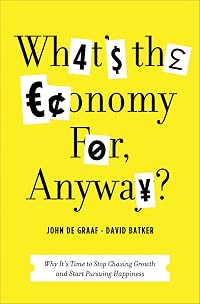
What's the Economy For, Anyway? Why It's Time to Stop Chasing Growth and Start Pursuing Happiness
by David K. Batker, John De Graff
On This Page
Description
"What's The Economy For, Anyway? is a thought-provoking, funny, readable, anti-ideological book based on the cult hit film of the same name. Here, scholars John de Graaf (author of Affluenza) and David Batker tackle thirteen touchstone economic issues and challenge readers to consider just what the point of our economy is. Emphasizing powerful American ideals such as working together, pragmatism, and equality for all, de Graaf and Batker set forth a simple, powerful goal for any economic show more system: the greatest good for the greatest number, over the longest run. Their vision will appeal to a wide array of readers across traditional silos. Drawing from this nation's rich economic history, the book shows that the good life in America is achieved when people and markets work together with an active government to create a better economy, one that works for everyone, not just the privileged few. Beginning by taking our fetish for GDP and shattering it, the chapters touch on quality of life, health, security, time management, worklife, leisure, social justice, and perhaps most important, sustainability. This sparkling, message-driven book is exactly what we need: a guide to what really matters, and how we can use the resources of our economy to make the world a better place"-- show lessTags
Recommendations












Member Recommendations
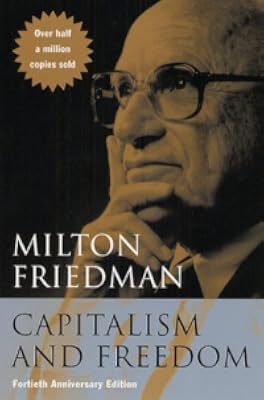
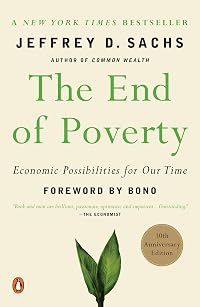
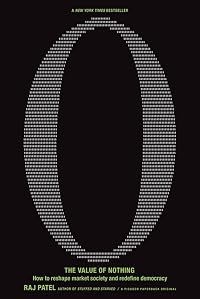
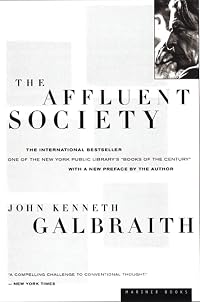
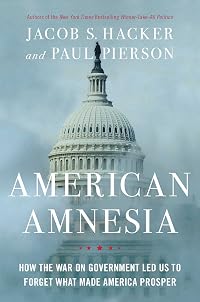
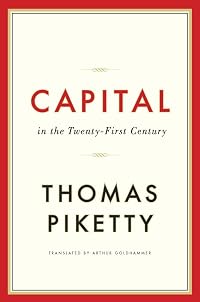
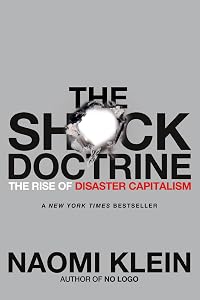
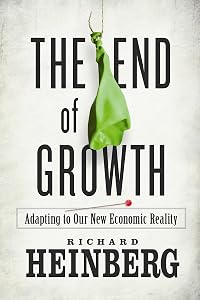
aulsmith Both books discuss economic issues that affect real people not just people with investments
by anonymous user

Member Reviews
The first book on economics that I've encountered that starts with the premise that an economy's most important job is to provide food, shelter and clothing for the people participating in it! The authors clearly understand that an economy is a shared idea about how we can collectively get things done and that the idea we currently share in the United States isn't working very well.
Throughout the book the authors point to other high-functioning economies (mostly in Europe) that have made different collective decisions about what they want their economies to do. It is clear that:
- the economy will not collapse if we provide health insurance for everyone
- employment will go up if we all get more time off (because more people will be show more needed to get the same amount of work done)
- having less stuff and more time will not only be better for us as individuals (more time means more exercise for one thing). It's also better for the environment
My only complaint about the book is that it gets a tad redundant. I don't know how many times the point about time off is better for your health was repeated. I got it the first time.
However, I highly recommend this book to anyone who thinks we can't change things in the US because the economy will collapse. It's not the economy, stupid, it's what we want from the economy that's the problem. show less
Throughout the book the authors point to other high-functioning economies (mostly in Europe) that have made different collective decisions about what they want their economies to do. It is clear that:
- the economy will not collapse if we provide health insurance for everyone
- employment will go up if we all get more time off (because more people will be show more needed to get the same amount of work done)
- having less stuff and more time will not only be better for us as individuals (more time means more exercise for one thing). It's also better for the environment
My only complaint about the book is that it gets a tad redundant. I don't know how many times the point about time off is better for your health was repeated. I got it the first time.
However, I highly recommend this book to anyone who thinks we can't change things in the US because the economy will collapse. It's not the economy, stupid, it's what we want from the economy that's the problem. show less
Ratings
Members
- Recently Added By
Lists

Economics for the layperson
33 works; 9 members

Rethinking Money
21 works; 4 members

Non-Fiction Worth Reading
1,015 works; 255 members

Income Inequality
20 works; 4 members
Author Information
1 Work 61 Members
John De Graaf is the national coordinator of Take Back your Time, an organization challenging time poverty and overwork in the United States and Canada (see www.timeday.org), and a frequent speaker on issues of overwork and overconsumption in America. David K. Batker is the director of Earth Economics, a firm that provides ecologically oriented show more economic analysis. show less
3 Works 84 Members
Some Editions
Common Knowledge
- Canonical title
- What's the Economy For, Anyway? Why It's Time to Stop Chasing Growth and Start Pursuing Happiness
- Original publication date
- 2011
- Dedication
- To Herman E. Daly, whose ideas
provide the foundation for a twenty-first-century economics.
In memory of Jonathan Rowe (1946–2011),
a brilliant advocate of new ways to measure progress. - Blurbers
- Schor, Juliet B.; Crittenden, Ann; Ausubel, Kenny; Singer, Alison; Andrews, Cecile; Baker, Dean (show all 17); Bezruchka, Stephen; Daly, Herman E.; Fahn, Larry; Folbre, Nancy; Hayes, Cylvia; Hightower, Jim; Korten, David C.; McKibben, Bill; Mick, David; Robin, Vicki; Spiro, David
Classifications
- Genres
- Economics, Nonfiction, General Nonfiction, Business, Politics and Government, Science & Nature
- DDC/MDS
- 330.973 — Society, government, & culture Economics Jobs & Careers Economic geography and history North America United States
- LCC
- HC103 .D38 — Social sciences Economic history and conditions Economic history and conditions By region or country
- BISAC
Statistics
- Members
- 61
- Popularity
- 507,307
- Reviews
- 1
- Rating
- (3.89)
- Languages
- English
- Media
- Paper, Ebook
- ISBNs
- 4
- ASINs
- 2