
The Gutenberg Galaxy: The Making of Typographic Man
by Marshall McLuhan
On This Page
Description
A history of western society and print technology from a media perspective.Tags
Recommendations
















Member Reviews
This was a fun and inspiring book, and there were points at which I would have considered just giving it five stars despite some of its obvious flaws and the fact that it is quite dated. I really like the way that McLuhan constructs his narrative by quoting other writers and commenting on the quoted material. I found this to be wonderfully transparent and to give a sense of the relative weight of each author in relation to McLuhan's thought. It sometimes felt like I was reading the most enjoyable annotated bibliography ever, or a medieval text with glosses and super-glosses.
The main point of irritation for me is how McLuhan's interpretations of texts could be so loose and, honestly, lazy. Some reviewers have made mention of the dreadful show more King Lear episode at the beginning, but he does that to some degree all the way through, especially with Shakespeare. I'm not arguing for sticking to authorial intention, but good literary critics can sell the reader on some of the outrageous interpretations that they produce. McLuhan doesn't seem to be even trying sometimes: he just comes up with his argument in advance, looks around for a text to back it up, and doesn't bother being very selective. That was how it came across to me, at least. For someone with close ties to the discipline of literary criticism, he seems to have an especially hard time with it.
Overall, I loved the book and am now equipped with a list of other authors to check out. McLuhan is fun and has a distinctive way of writing theory that I wish more people had copied. show less
The main point of irritation for me is how McLuhan's interpretations of texts could be so loose and, honestly, lazy. Some reviewers have made mention of the dreadful show more King Lear episode at the beginning, but he does that to some degree all the way through, especially with Shakespeare. I'm not arguing for sticking to authorial intention, but good literary critics can sell the reader on some of the outrageous interpretations that they produce. McLuhan doesn't seem to be even trying sometimes: he just comes up with his argument in advance, looks around for a text to back it up, and doesn't bother being very selective. That was how it came across to me, at least. For someone with close ties to the discipline of literary criticism, he seems to have an especially hard time with it.
Overall, I loved the book and am now equipped with a list of other authors to check out. McLuhan is fun and has a distinctive way of writing theory that I wish more people had copied. show less
Over the years I have come to appreciate the often criticized McLuhan, and "The Gutenberg Galaxy" is my favorite of his books. Its theme is how Western civilization was changed by adopting first the phonetic alphabet, and later the printing press. McLuhan thought that these inventions created a visual bias in the way we see the world, altered the “ratio among our senses,” and changed the trajectory of our culture. In moving from oral language or pictographs to the elastic, abstract medium of the phonetic alphabet, Western man moved from a tribal world—a tactile world of simultaneity, inclusiveness, personal significance, social integration, and magic to a schizophrenic visual world of point of view, chronology, individualism, show more linear perspective, abstraction, science, nationalism, and militarism. “When the meaningless sign linked to the meaningless sound we have built the shape and meaning of Western man,” McLuhan says. (p. 50)
McLuhan taught English at the University of Wisconsin, St. Louis University, and the University of Toronto, where he was also the founder and director of the Center for Culture and Technology.
McLuhan points out that during the manuscript phase of book production reading was always done aloud and to an audience. Literature was not so much literary as rhetorical, and the rules of rhetoric governed its composition. When society was primarily oral, words were seen as sacred, and their hearing was often compared with digestion. Words were poetic, and point of view shifted erratically by our standards. The concept of authorship was unknown before printing.
Printing brought silent reading and authorship, but also led to what McLuhan called the “homogenization of space,” the segmentation of actions and functions, and a rise in technology or “applied knowledge.” Art and science split apart. Holism fractured and science became entranced with the shards. What had been a cohesive society new became a collection of individuals formed into nation-states. “Print is the technology of individualism,” McLuhan says.
McLuhan was fascinated by media and its effects, and his thinking strayed into the effects of other media besides print. In one section of the book, McLuhan demonstrates that the grammar of film— cutaways, closeups, pan shots, etc.—is not easily understood or transparent, but must be learned if the film is to be understood as the creator wishes. Tribal Africans viewing a training film about sanitation missed the film's message but saw a chicken passing in the periphery through a frame. Also, the African audience was confused and chagrined to see a person disappear off the edge of the screen; the film later had to be re-edited to portray the person’s disappearing around a corner, rendering it acceptable for this oral-tactile audience.
McLuhan made a career by saying the opposite of what library technophiles say they believe: only information matters, not the “container” in which it resides, be it book, video, text-on-screen, etc. McLuhan's central message is that the container *is* the message, irrespective of the information “within”; our predominant form of media will determine how we see the world. show less
McLuhan taught English at the University of Wisconsin, St. Louis University, and the University of Toronto, where he was also the founder and director of the Center for Culture and Technology.
McLuhan points out that during the manuscript phase of book production reading was always done aloud and to an audience. Literature was not so much literary as rhetorical, and the rules of rhetoric governed its composition. When society was primarily oral, words were seen as sacred, and their hearing was often compared with digestion. Words were poetic, and point of view shifted erratically by our standards. The concept of authorship was unknown before printing.
Printing brought silent reading and authorship, but also led to what McLuhan called the “homogenization of space,” the segmentation of actions and functions, and a rise in technology or “applied knowledge.” Art and science split apart. Holism fractured and science became entranced with the shards. What had been a cohesive society new became a collection of individuals formed into nation-states. “Print is the technology of individualism,” McLuhan says.
McLuhan was fascinated by media and its effects, and his thinking strayed into the effects of other media besides print. In one section of the book, McLuhan demonstrates that the grammar of film— cutaways, closeups, pan shots, etc.—is not easily understood or transparent, but must be learned if the film is to be understood as the creator wishes. Tribal Africans viewing a training film about sanitation missed the film's message but saw a chicken passing in the periphery through a frame. Also, the African audience was confused and chagrined to see a person disappear off the edge of the screen; the film later had to be re-edited to portray the person’s disappearing around a corner, rendering it acceptable for this oral-tactile audience.
McLuhan made a career by saying the opposite of what library technophiles say they believe: only information matters, not the “container” in which it resides, be it book, video, text-on-screen, etc. McLuhan's central message is that the container *is* the message, irrespective of the information “within”; our predominant form of media will determine how we see the world. show less
Marshall McLuhan liked to play with words. He liked to get his information from a printed page. One with uniform letters, uniformly shaped, precise in its presentation, and precise in its information, presenting a large or small part of a world that was perceived as rational. He believed that the way in which information was presented to us was crucial in how our minds would receive, retain and build on the information received. He believed as well, that information presented in an alphabetic format was different than that presented in a hieroglyphic or digital format. This is his presentation of that point of view. it has not been outdone. Read the book, and do not read it on an electronic, E-book format. That would defeat the purpose show more of his work. show less
In some sense, this is a difficult book. Its main theme is interesting in itself, but as the title points out, it’s a Galaxy, or a myriad of connections that are simply to great to properly grasp it fully. If we take the analogy of the galaxy even further, it becomes obvious that even McLuhan’s analysis of the Gutenberg influence in Western culture is somewhat doomed to failure: we are simply too close to its effects, too deep inside it, to understand it clearly — just like trying to understand the Milky Way from inside is also a baffling task.
Being a difficult subject is a kind of excuse for the somewhat opaqueness of this work. McLuhan, in the essay that ends the book, states that “[t]he present volume has employed a mosaic show more pattern of perception and observation up till now” (MCLUHAN, 1962). This mosaic pattern is an attempt to cover the vast subject with meaningful quotes from different areas of study, using the quotes to provide examples of how typography changed humankind’s perception of things, altering the relation with understanding and the world at large — making of the whole of humanity a uniform entity. However, even though we can understand the approach McLuhan chose to cover this subject, this mosaic technique is also very confusing at times and can often mislead from the author’s original intention.
My feeling is that at some point even McLuhan himself was confused as to where he was trying to go with the text he had produced thus far. However, I’m not trying to diminish his work or to state that it could be done in some other, more competent way. As stated before, the subject matter, being a galaxy of consequences, it’s simply too overwhelming to be completely grasped.
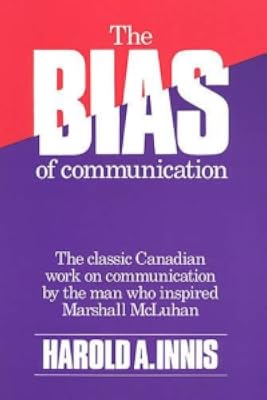
But, in the end, this book can provide some light to those who want to understand history’s movements and changes in a different light, one that focus on the technological changes of information sharing, thus showing a different perspective that takes away history from the hands of some enlightened individuals and places it in the domain of the accidents that simple inventions with huge penetration have had in society at large. This book is also good to direct your attention the work of Harold Innis that provides much more insight into this theme of information technology, media shaping and history making. As McLuhan himself states, “Harold Innis was the first person to hit upon the process of change as implicit in the forms of media technology. The present book is a footnote of explanation to his work.” (MCLUHAN, 1962).
So is it worth reading? As always, it depends. If you’re studying media, media development, media implications, and so on, probably yes; if you’re just want to gloss over some of the ideas herein contained, probably not — you’ll be better served if you read a summary or a thorough review of this work. show less
Being a difficult subject is a kind of excuse for the somewhat opaqueness of this work. McLuhan, in the essay that ends the book, states that “[t]he present volume has employed a mosaic show more pattern of perception and observation up till now” (MCLUHAN, 1962). This mosaic pattern is an attempt to cover the vast subject with meaningful quotes from different areas of study, using the quotes to provide examples of how typography changed humankind’s perception of things, altering the relation with understanding and the world at large — making of the whole of humanity a uniform entity. However, even though we can understand the approach McLuhan chose to cover this subject, this mosaic technique is also very confusing at times and can often mislead from the author’s original intention.
My feeling is that at some point even McLuhan himself was confused as to where he was trying to go with the text he had produced thus far. However, I’m not trying to diminish his work or to state that it could be done in some other, more competent way. As stated before, the subject matter, being a galaxy of consequences, it’s simply too overwhelming to be completely grasped.
But, in the end, this book can provide some light to those who want to understand history’s movements and changes in a different light, one that focus on the technological changes of information sharing, thus showing a different perspective that takes away history from the hands of some enlightened individuals and places it in the domain of the accidents that simple inventions with huge penetration have had in society at large. This book is also good to direct your attention the work of Harold Innis that provides much more insight into this theme of information technology, media shaping and history making. As McLuhan himself states, “Harold Innis was the first person to hit upon the process of change as implicit in the forms of media technology. The present book is a footnote of explanation to his work.” (MCLUHAN, 1962).
So is it worth reading? As always, it depends. If you’re studying media, media development, media implications, and so on, probably yes; if you’re just want to gloss over some of the ideas herein contained, probably not — you’ll be better served if you read a summary or a thorough review of this work. show less
es interesnate,pero esta muy caragdo de información y tiende a dispersar la mente por la cantidad de terminos que se utilizan , sin embargo, es importante leer como cultura general
Insight on where we have been and are going.
difficult read
Members
- Recently Added By
Lists

CBC's 100 True Stories
100 works; 6 members

why the internet makes us dumb
7 works; 1 member

Yet another list
67 works; 1 member

Alan Kay's Reading List
103 works; 3 members

Books Referenced by Izetbegovic's Islam Between East and West
233 works; 2 members
Author Information

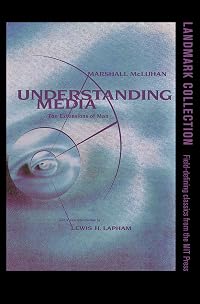
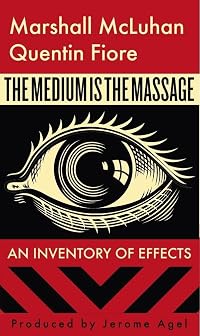
A poetry professor turned media theorist---or media guru, as some in the press called him at the time---Marshall McLuhan startled television watchers during the 1960's with the notion that the medium they were enthralled by was doing more than transmitting messages---it was the message: Its rapid-fire format, mixing programs and advertisements, show more conveyed as much as---or more than---any single broadcast element. McLuhan grew up in the prairie country of the Canadian West and studied English at the University of Manitoba and Cambridge University. As television entered a period of huge growth during the 1950's, McLuhan, then a college professor, became interested in advertising. He thought of it as something to be taken seriously as a new culture form, beyond its obvious capability of selling products. That interest led to his increasing speculation about what media did to audiences. In his unpredictable modern poetry classes at the University of Toronto, he spoke more and more of media. The students he taught were the television generation, the first to grow up with the medium. Many were fascinated by McLuhan's provocative observations that a medium of communication radically alters the experience being communicated. A society, he said, is shaped more by the style than by the content of its media. Thus, the linear, sequential style of printing established a linear, sequential style of thinking, in which one thing is considered after another in orderly fashion: it shaped a culture in which (objective) reason predominated and experience was isolated, compartmentalized, and repeatable. In contrast, the low-density images of television, composed of a mosaic of light and dark dots, established a style of response in which it is necessary to unconsciously reconfigure the dots immediately in order to derive meaning from them. It has shaped a culture in which (subjective) emotion predominates and experience is holistic and unrepeatable. Since television (and the other electronic media) transcends space and time, the world is becoming a global village---a community in which distance and isolation are overcome. McLuhan was crisp and assured in his pronouncements and impatient with those who failed to grasp their import. McLuhan's most famous saying, "the medium is the message," was explicated in the first chapter of his most successful book, "Understanding Media," published in 1966 and still in print. It sold very well for a rather abstruse book and brought McLuhan widespread attention in intellectual circles. The media industry responded by seeking his advice and enthusiastically disseminating his ideas in magazines and on television. These ideas caused people to perceive their environment, particularly their media environment, in radically new ways. It was an unsettling experience for some, liberating for others. Though McLuhan produced some useful insights, he was given to wild generalizations and flagrant exaggerations. Some thought him a charlatan, and he always felt himself an outcast at the university, at least partly because of his disdain for print culture and opposition to academic conventions. He never seemed quite as energetic after an operation in 1967 to remove a huge brain tumor, but he continued to work and teach until he suffered a stroke in 1979. He died a year later. Though today his writings are not discussed as much by the general public, his thesis is still considered valid and his ideas have become widely accepted. (Bowker Author Biography) show less
Awards and Honors
Notable Lists
Series
Belongs to Publisher Series
Work Relationships
Common Knowledge
- Original publication date
- 1962
Classifications
- Genres
- Nonfiction, General Nonfiction, Philosophy, Literature Studies and Criticism, Technology
- DDC/MDS
- 655.1 — Applied science & technology Management & public relations [Formerly: Printing, Publishing, and Copyright]
- LCC
- Z116 .M15 — Bibliography, Library Science and Information Resources Book industries and trade Printing
- BISAC
Statistics
- Members
- 1,141
- Popularity
- 22,015
- Reviews
- 16
- Rating
- (3.79)
- Languages
- 15 — Catalan, Chinese, English, Estonian, French, German, Galician, Hungarian, Italian, Polish, Portuguese, Russian, Spanish, Swedish, Turkish
- Media
- Paper, Ebook
- ISBNs
- 42
- UPCs
- 1
- ASINs
- 31