On This Page
Description
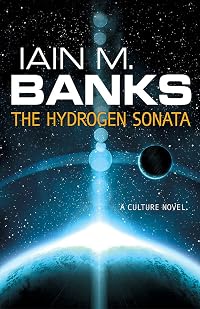
Suspected of involvement after the Regimental High Command is destroyed as they prepared to go to a new level of existence called Sublime, Lieutenant Commander Vyr Cossont must find a nine-thousand-year-old man to clear her name.Tags
Recommendations















Member Reviews
Aren’t pious people awful? And aren’t politicians shits? And aren’t pious politicians awful shits?
The Gzilt are subliming. That is, an entire race species are collectively going to move from a ‘normal’ state of being into one where they do not exist in this universe. Possibly it’s like going to a better place but rather confusingly the facts are uncertain because the very few beings that have come back to the mundane after subliming aren’t talking about it.
The entire civilization has to do it at the same time, so everyone wears funky little countdown clocks and watches of various design. As that hour approaches, it becomes apparent that there are quite a lot of loose ends to tidy up.
To begin with, when a race itself show more decides to sublime, it’s generally because it believes that it has reached the apogee of its civilization. This does not mean, however, that the population are perfect beings, far from it. Corruption, criminality and ambition continue right up until the last moment, it’s just that everyone now knows when that last moment is going to be.
Then there is the thorny issue of legacy. For instance, once you have sublimed you will be above such things but before that, well, it would be nice to be remembered in some way, such as having a solar system named in your memory, like the biggest park bench in the universe. And there are all those other civilizations waiting to move in, and grab all your cool toys.
And of course, watching all of this is the Culture, Bank’s fabulous creation. Almost defying description, it’s a post-scarcity collective of civilizations that would hate to think of itself as having any defining characteristics. Its defining characteristics are; the aforementioned hatred of same, its habit of taking responsibility in matters that are not really its concern, and its love of constructing mind-boggling artificial intelligences and putting them in spaceships of god-like power.
The plot fairly thunders along, there is a countdown, there is a deadline and nothing but nothing can stop the subliming. Meanwhile, there is squabbling and conflict over who gets the toys and the territory and a fair amount of skulduggery, murder and mayhem as those with lots to lose try to cover their tracks prior to the Gzilt checking into an altogether better reality.
All this gives Banks more than adequate scope for battles small and large, with bewildering weapons being used in the vast expanse of space and, with very exciting results, in confined spaces. There’s also a fairly eccentric cast of characters, the most lovingly created of which is the avatar of one of the god-like ships.
There is also a rather lovely end-of-days mobile party that provides plenty of eye watering debauchery and an encounter with the Culture’s oldest citizen, a sort of super-pensioner who has literally forgotten more about the period of the founding of the Culture than most others know, which actually turns out to be something of a problem.
Banks has tremendous fun with the various civilizations, at various stages of development, that are jockeying for position as successors to the Gzilt. Each thinks itself a worthy successor, each is hopelessly outclassed by the Culture but as the Culture and the Gzilt are technology equivalent, things do get messy when the plasma and anti-matter starts flying.
There is fun technology, there is fun with belief systems, this is a fun book and hugely enjoyable. Robots and lasers, what’s not to love?
It is also surprisingly good at illustrating just how far those in power will go to protect reputations and achieve their ultimate aim, and just how dangerous a politician can be if they think that they are not only right, but are doing right for those who do not understand the situation sufficiently to do right themselves, as each successively more murderous action is justified.
And of course, here is the big question – will the Gzilt actually sublime or will the secrets of individuals and whole civilizations be exposed in those last days of the countdown and spoil the party in the sense of stopping the sublimation, and kicking off at least one interstellar war? show less
The Gzilt are subliming. That is, an entire race species are collectively going to move from a ‘normal’ state of being into one where they do not exist in this universe. Possibly it’s like going to a better place but rather confusingly the facts are uncertain because the very few beings that have come back to the mundane after subliming aren’t talking about it.
The entire civilization has to do it at the same time, so everyone wears funky little countdown clocks and watches of various design. As that hour approaches, it becomes apparent that there are quite a lot of loose ends to tidy up.
To begin with, when a race itself show more decides to sublime, it’s generally because it believes that it has reached the apogee of its civilization. This does not mean, however, that the population are perfect beings, far from it. Corruption, criminality and ambition continue right up until the last moment, it’s just that everyone now knows when that last moment is going to be.
Then there is the thorny issue of legacy. For instance, once you have sublimed you will be above such things but before that, well, it would be nice to be remembered in some way, such as having a solar system named in your memory, like the biggest park bench in the universe. And there are all those other civilizations waiting to move in, and grab all your cool toys.
And of course, watching all of this is the Culture, Bank’s fabulous creation. Almost defying description, it’s a post-scarcity collective of civilizations that would hate to think of itself as having any defining characteristics. Its defining characteristics are; the aforementioned hatred of same, its habit of taking responsibility in matters that are not really its concern, and its love of constructing mind-boggling artificial intelligences and putting them in spaceships of god-like power.
The plot fairly thunders along, there is a countdown, there is a deadline and nothing but nothing can stop the subliming. Meanwhile, there is squabbling and conflict over who gets the toys and the territory and a fair amount of skulduggery, murder and mayhem as those with lots to lose try to cover their tracks prior to the Gzilt checking into an altogether better reality.
All this gives Banks more than adequate scope for battles small and large, with bewildering weapons being used in the vast expanse of space and, with very exciting results, in confined spaces. There’s also a fairly eccentric cast of characters, the most lovingly created of which is the avatar of one of the god-like ships.
There is also a rather lovely end-of-days mobile party that provides plenty of eye watering debauchery and an encounter with the Culture’s oldest citizen, a sort of super-pensioner who has literally forgotten more about the period of the founding of the Culture than most others know, which actually turns out to be something of a problem.
Banks has tremendous fun with the various civilizations, at various stages of development, that are jockeying for position as successors to the Gzilt. Each thinks itself a worthy successor, each is hopelessly outclassed by the Culture but as the Culture and the Gzilt are technology equivalent, things do get messy when the plasma and anti-matter starts flying.
There is fun technology, there is fun with belief systems, this is a fun book and hugely enjoyable. Robots and lasers, what’s not to love?
It is also surprisingly good at illustrating just how far those in power will go to protect reputations and achieve their ultimate aim, and just how dangerous a politician can be if they think that they are not only right, but are doing right for those who do not understand the situation sufficiently to do right themselves, as each successively more murderous action is justified.
And of course, here is the big question – will the Gzilt actually sublime or will the secrets of individuals and whole civilizations be exposed in those last days of the countdown and spoil the party in the sense of stopping the sublimation, and kicking off at least one interstellar war? show less
Just finished. Overwhelming impression is one of a deep and abiding sorrow, a keening lamentation for the vicissitudes of real life. Banks started the Culture in a dark place, but one which held, in the form of the Culture, the prospect of a better greater future.
Now, 10 books later, the mood is instead a bitter, exasperated nihilism. The Culture retains its stature, but the rest of the Galaxy remains a nasty vicious mire, with different gauzy decorations.
Now, 10 books later, the mood is instead a bitter, exasperated nihilism. The Culture retains its stature, but the rest of the Galaxy remains a nasty vicious mire, with different gauzy decorations.
More mad Culture fun, this time involving a sci-fi Rapture and the complications attending when a deep dark secret, only not really, threatens to come out making life very difficult for people and ships alike. A lot of this is about life and death, immortality and afterlife and meaning and the things you do to pass the time between birth and death and why you even bother, making the whole thing almost painfully poignant and significant as it turned out to be the last Culture novel and the next-to-last Banks novel. This is incredibly sad and at the same time it has all the magnificent bravura, panache, energy and utter disregard for scale that you want from a truly popping space opera with big visionary ideas and brain-melting scenery show more and blistering action and scathing dialogue between god-like machines and yet the same old fears about life and death and the meaning of it all no matter what the scale. You don't want it to stop. Then it stops. show less
With **Hydrogen Sonata**, I have now finished the Culture series by *Iain Banks*. It's been a ride.
Hydrogen Sonata is a somewhat typical Culture book, and while I didn't quite enjoy it as much as other Culture books, it's still wonderful scifi. The pieces are all there: Snarky ships (which were actually at their best in this book), universe-spanning plots, but with plenty of single characters involved, who do their things in their flawed ways, often-but-not-always saved or guided by said snarky ships. Showing off the good and bad in AI and human characters. The main story arc – a civilization set on subliming because they decided so, not out of actual conviction, pulled along by the politicians who orchestrated the decision – is so show more much of a Brexit metaphor that it hurts. Good book all around. show less
Hydrogen Sonata is a somewhat typical Culture book, and while I didn't quite enjoy it as much as other Culture books, it's still wonderful scifi. The pieces are all there: Snarky ships (which were actually at their best in this book), universe-spanning plots, but with plenty of single characters involved, who do their things in their flawed ways, often-but-not-always saved or guided by said snarky ships. Showing off the good and bad in AI and human characters. The main story arc – a civilization set on subliming because they decided so, not out of actual conviction, pulled along by the politicians who orchestrated the decision – is so show more much of a Brexit metaphor that it hurts. Good book all around. show less
I've read through the whole series of Culture novels over the past 6 months, starting the next one after I've finished the last. It's sad coming to the end of the series which I've enjoyed a lot (even when I've criticised it), especially knowing that it's the end because the brilliant author has died. But in many ways this book feels like a fitting end to the series because it's so focused on endings and death in general.
The basis of the plot is around a whole civilisation about to Sublime - go off into the higher dimensions with an experience totally incomprehensible from here in the Real and basically disappear from galactic life almost totally. One of the ships refers to it as, paraphrasing, disappearing up your own arse. To the show more people back at home, it must seem very similar to death, even though it's like an afterlife that everyone knows for sure exists. Everyone has the same concerns with memorialising themselves, somehow proving they existed in the Real. One of the major characters concerns himself with having a star named after him. One of the major planets is covered in a giant city where the main character comes from that was originally built by a previously sublimed civilisation and now stands as a living monument to them, even with new inhabitants. The action is started by a ship from what's left behind of a previously sublimed civilization, existing only to tie up the loose ends they left when they went away. We hear what the music piece the book is named after is thought of by its long dead composer -he thought it was awful and it was made as a joke, even though it's now revered and is his legacy . What it means to be remembered, what you leave behind, if it really matters - it's something that comes up again and again throughout the book.
Along the way you meet what's presumably the oldest human in the Culture, who was there when it was first founded. He gives his opinion on living and the meaning of it:
In a way, the themes of this book are a reaction to the bleakness of the first book of the series, Consider Phlebas. (massive spoilers for both that book and this)Phlebas ends on a sort of depressing note, very "shoot the shaggy dog" to use TVTropes terms. This book is similar, although far less depressing - mostly what happened didn't matter at all, yet people died for this thing that didn't matter. Nobody who was bad gets justice. Yet it to me is far more optimistic - there was some value in trying to do the right thing but it was better to leave the Gzilt legacy intact than try and tell the truth about their religious book when it'd cause confusion and panic even though the book barely matters to them any more. One of the character's talks about seeing the "ghost" of someone he killed - in a way they'll carry over to the Sublime, even in a very indirect way. Maybe I haven't made my case well, but there's a sense of stoicism about this book. People die, bad things happen, but things go on. There's always something more, even with the horrible bits.
Along the way there's a variety of stuff that's seen throughout the series that's fun - lots of inter-Mind and internal Mind conversations and rivalries and multiple amazing landscapes and cultures and aliens described in loving detail.
I'm bad at articulating this stuff, but the message of the book to me was a sort of "there is meaning in every moment of life and just existing, ultimately we go and really our legacy doesn't matter that much because it will be picked over and taken and interpreted in ways we don't agree with but it's important that we try to do the right thing anyway and do what we can to make the future better and hopefully we'll leave our mark". Which sounds kind of wishy washy maybe. I don't know. The thing that kept me reading the series I think is the Culture itself. A lot of thought gets put into philosophical and aesthetic debates which suggest that somehow utopia is "boring" or looks with horror at the possibility of a future free from want and major conflict. Which is shit. I like the Culture on a lot of levels, but primarily I like that it is in many ways utopian, and the focus of the books isn't on "well it's not utopian" but on the moral dimension of what you should do from there and also the sheer amazingness and joy of being a post-scarcity society with the power to keep trillions of people happy and living and thriving. It's a beautiful thing to read about. Everything I've read about Iain Banks is that he cared about caring for others and making life better for everyone. In this sense the Culture is a worthy testament to him as a person both because of the great writing and concepts and as a political work. Maybe that's reaching too far. But the series as a whole is brilliant and this is a fitting send off to a great setting and world by a great author. show less
The basis of the plot is around a whole civilisation about to Sublime - go off into the higher dimensions with an experience totally incomprehensible from here in the Real and basically disappear from galactic life almost totally. One of the ships refers to it as, paraphrasing, disappearing up your own arse. To the show more people back at home, it must seem very similar to death, even though it's like an afterlife that everyone knows for sure exists. Everyone has the same concerns with memorialising themselves, somehow proving they existed in the Real. One of the major characters concerns himself with having a star named after him. One of the major planets is covered in a giant city where the main character comes from that was originally built by a previously sublimed civilisation and now stands as a living monument to them, even with new inhabitants. The action is started by a ship from what's left behind of a previously sublimed civilization, existing only to tie up the loose ends they left when they went away. We hear what the music piece the book is named after is thought of by its long dead composer -
Along the way you meet what's presumably the oldest human in the Culture, who was there when it was first founded. He gives his opinion on living and the meaning of it:
Living either never has any point, or is always its own point; being a naturally cheery soul, I lean towards the latter. However, just having done more of it than another person doesn’t really make much difference... Meaning is everywhere. There is always meaning. Or at least all things show a disturbing tendency to have meaning ascribed to them when intelligent creatures are present. It’s just that there’s no final Meaning, with a capital M.
In a way, the themes of this book are a reaction to the bleakness of the first book of the series, Consider Phlebas. (massive spoilers for both that book and this)
Along the way there's a variety of stuff that's seen throughout the series that's fun - lots of inter-Mind and internal Mind conversations and rivalries and multiple amazing landscapes and cultures and aliens described in loving detail.
I'm bad at articulating this stuff, but the message of the book to me was a sort of "there is meaning in every moment of life and just existing, ultimately we go and really our legacy doesn't matter that much because it will be picked over and taken and interpreted in ways we don't agree with but it's important that we try to do the right thing anyway and do what we can to make the future better and hopefully we'll leave our mark". Which sounds kind of wishy washy maybe. I don't know. The thing that kept me reading the series I think is the Culture itself. A lot of thought gets put into philosophical and aesthetic debates which suggest that somehow utopia is "boring" or looks with horror at the possibility of a future free from want and major conflict. Which is shit. I like the Culture on a lot of levels, but primarily I like that it is in many ways utopian, and the focus of the books isn't on "well it's not utopian" but on the moral dimension of what you should do from there and also the sheer amazingness and joy of being a post-scarcity society with the power to keep trillions of people happy and living and thriving. It's a beautiful thing to read about. Everything I've read about Iain Banks is that he cared about caring for others and making life better for everyone. In this sense the Culture is a worthy testament to him as a person both because of the great writing and concepts and as a political work. Maybe that's reaching too far. But the series as a whole is brilliant and this is a fitting send off to a great setting and world by a great author. show less
End Days.
Oh yes, the end is coming for the whole Gzilt civilization. They're tired of making music and screwing. They're tired of being so damn *good* at everything. So, let's follow the holy text and hop aboard the higher-dimensional expressway and SUBLIMEo ourselves!
They're not the first culture to do it, and I'm sure they won't be the last, but the Culture has something to say about it. Yes they do.
I need to warn you, folks. There's sensitive information ahead. Even slightly spoiler-like and disturbing. Proceed with due caution.
"Uh, bub? Yeah, we got something you probably ought to see before you off yourself."
"Busybody know-it-all machines, what do you know? You're too afraid to see what comes next!"
"Ah, yeah, about that, we keep show more sending explorers who never want to come back."
"Then it must be great!"
"You do know you're committing a full racial suicide on yourself, right?"
"We have Holy Texts that say otherwise!"
"Ah, yeah, bub? Um, yeah, go right ahead."
It's pretty intense, right? A whole galactic civilization just going poof like that? Well, little did I know how much of a love story this was going to be! The romance, of course, is between a four-armed chick destined to go down the evolutionary pneumatic tube of the Sublime and a rather eccentric dildo of a ship that named himself Mistake Not My Current State Of Joshing Gentle Peevishness For The Awesome And Terrible Majesty Of The Towering Seas Of Ire That Are Themselves The Mere Milquetoast Shallows Fringing My Vast Oceans Of Wrath.
Kinda a mouthful, true, so the warship usually just calls himself Mistake Not. Kinda catchy, no? Better than the ships named, You Call This Clean? or A Fine Disregard For Awkward Facts.
God I love these Culture Ships.
Well anyway, the countdown is down and there's an absolute ton of interesting things going on that I'm not going to spoil because they're awesome, including philosophizing and rather mean Memory Cubes and a discussion with a REALLY OLD and CROTCHETY ship. Is this a novel about making life's living fun? Finding reasons to go on? Is this about talking a whole civilization off the cliff? Yeah, I suppose it really is, but it's also a celebration of all the peculiarities of living.
That's pretty awesome when you think about it.
Iain M. Banks died the very next year. Diagnosed with inoperable cancer in April of '13 and dead in June of the same year.
It gives me a lot to think about beyond just the fun and oddly prescient nature of this novel. show less
Oh yes, the end is coming for the whole Gzilt civilization. They're tired of making music and screwing. They're tired of being so damn *good* at everything. So, let's follow the holy text and hop aboard the higher-dimensional expressway and SUBLIMEo ourselves!
They're not the first culture to do it, and I'm sure they won't be the last, but the Culture has something to say about it. Yes they do.
I need to warn you, folks. There's sensitive information ahead. Even slightly spoiler-like and disturbing. Proceed with due caution.
"Uh, bub? Yeah, we got something you probably ought to see before you off yourself."
"Busybody know-it-all machines, what do you know? You're too afraid to see what comes next!"
"Ah, yeah, about that, we keep show more sending explorers who never want to come back."
"Then it must be great!"
"You do know you're committing a full racial suicide on yourself, right?"
"We have Holy Texts that say otherwise!"
"Ah, yeah, bub? Um, yeah, go right ahead."
It's pretty intense, right? A whole galactic civilization just going poof like that? Well, little did I know how much of a love story this was going to be! The romance, of course, is between a four-armed chick destined to go down the evolutionary pneumatic tube of the Sublime and a rather eccentric dildo of a ship that named himself Mistake Not My Current State Of Joshing Gentle Peevishness For The Awesome And Terrible Majesty Of The Towering Seas Of Ire That Are Themselves The Mere Milquetoast Shallows Fringing My Vast Oceans Of Wrath.
Kinda a mouthful, true, so the warship usually just calls himself Mistake Not. Kinda catchy, no? Better than the ships named, You Call This Clean? or A Fine Disregard For Awkward Facts.
God I love these Culture Ships.
Well anyway, the countdown is down and there's an absolute ton of interesting things going on that I'm not going to spoil because they're awesome, including philosophizing and rather mean Memory Cubes and a discussion with a REALLY OLD and CROTCHETY ship. Is this a novel about making life's living fun? Finding reasons to go on? Is this about talking a whole civilization off the cliff? Yeah, I suppose it really is, but it's also a celebration of all the peculiarities of living.
That's pretty awesome when you think about it.
Iain M. Banks died the very next year. Diagnosed with inoperable cancer in April of '13 and dead in June of the same year.
It gives me a lot to think about beyond just the fun and oddly prescient nature of this novel. show less
A book club pick :)
Mind-blowing settings! What was the plot, again?
All the Culture novels I’ve read so far (this is my fourth) have brought me sci-fi joy and a sense of wonder. This one was no exception. I love Banks’ sentient spaceships with cool names – Mistake Not… (the full name is hilarious), Passing By And Thought I’d Drop In, Beats Working, You Call This Clean? Many scenes and settings are a glorious fever dream. Quite a few characters are a fever dream too. There are great conversations. I could have read a whole book just with ship Minds bickering and thinking.
”I had made swinging by your current location, however out of the way, something of a priority, for reasons which are beginning to escape me.”
”I shall show more endeavour to be more scintillating.”
”What idiocy is this?”
”A fitting idiocy.”
”It supposed it was just what biologicals did. If you wanted to feel you were still somehow in control of a ship or a fleet or even your civilization, talking amongst yourselves seemed to be the way you convinced yourself of it.”
The plot, though… The Gzilt civilization has reached a point where they are ready to ascend to another plane of existence, the Sublime. There are festivities, political machinations, and Scavenger species crowding around to pick up the remaining tech. The Gzilt have a religious text called the Book of Truth, which has been great a predicting the future over the ages. There is a secret about the Book of Truth that can get revealed… And this is the McGuffin that everyone in the book spends almost 600 pages chasing, chasing, chasing, with horrific collateral damage. Space stations and space fleets explode. I couldn’t care less about the Gzilt, their evil politicians and their Book of Truth. By the end, the whole thing is an exercise in pointlessness and futility. I am all for a discussion of the futility of people’s endeavours, but I would have preferred it done in less convoluted ways and fewer pages.
3.8 stars, rounded up ;) show less
Mind-blowing settings! What was the plot, again?
All the Culture novels I’ve read so far (this is my fourth) have brought me sci-fi joy and a sense of wonder. This one was no exception. I love Banks’ sentient spaceships with cool names – Mistake Not… (the full name is hilarious), Passing By And Thought I’d Drop In, Beats Working, You Call This Clean? Many scenes and settings are a glorious fever dream. Quite a few characters are a fever dream too. There are great conversations. I could have read a whole book just with ship Minds bickering and thinking.
”I had made swinging by your current location, however out of the way, something of a priority, for reasons which are beginning to escape me.”
”I shall show more endeavour to be more scintillating.”
”What idiocy is this?”
”A fitting idiocy.”
”It supposed it was just what biologicals did. If you wanted to feel you were still somehow in control of a ship or a fleet or even your civilization, talking amongst yourselves seemed to be the way you convinced yourself of it.”
The plot, though… The Gzilt civilization has reached a point where they are ready to ascend to another plane of existence, the Sublime. There are festivities, political machinations, and Scavenger species crowding around to pick up the remaining tech. The Gzilt have a religious text called the Book of Truth, which has been great a predicting the future over the ages. There is a secret about the Book of Truth that can get revealed… And this is the McGuffin that everyone in the book spends almost 600 pages chasing, chasing, chasing, with horrific collateral damage. Space stations and space fleets explode. I couldn’t care less about the Gzilt, their evil politicians and their Book of Truth. By the end, the whole thing is an exercise in pointlessness and futility. I am all for a discussion of the futility of people’s endeavours, but I would have preferred it done in less convoluted ways and fewer pages.
3.8 stars, rounded up ;) show less
Members
- Recently Added By
Lists

NPRs your picks: top 100 Sci-Fi/Fantasy books
297 works; 80 members

Favourite Science Fiction Books of the 21st Century
47 works; 8 members

Stories About Other Worlds
145 works; 13 members

ALA The Reading List
490 works; 28 members
Talk Discussions
Past Discussions
THE HYDROGEN SONATA discussion (The Culture group read) in 75 Books Challenge for 2014 (October 2014)
Author Information

66+ Works 93,264 Members
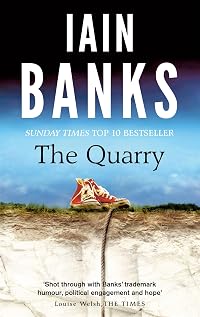
Iain Banks was born in Fife in 1954 and was educated at Stirling University where he studied English Literature, Philosophy and Psychology. Banks came to widespread and controversial public note with the publication of his first novel, The Wasp Factory, in 1984. His first science fiction novel, Consider Phlebas, was published in 1987. He continued show more to write both mainstream fiction (as Iain Banks) and science fiction (as Iain M. Banks). Banks' mainstream fiction included The Wasp Factory (1984), Walking on Glass (1985), The Bridge (1986), Espedair Street (1987), Canal Dreams (1989), The Crow Road (1992), Complicity (1993), Whit (1995), A Song of Stone (1997), The Business (1999), Dead Air (2002) and The Steep Approach to Garbadale (2007). His final book, The Quarry, was released posthumously on June 20, 2013. Banks died on June 9, 2013 of terminal gall bladder cancer. (Bowker Author Biography) show less
Some Editions
Awards and Honors
Awards
Series

Work Relationships
Is contained in
Common Knowledge
- Canonical title*
- La sonate hydrogène
- Original title
- The Hydrogen Sonata
- Original publication date
- 2012-10
- People/Characters
- Vyr Cossont; Pyan; Ue Mistake not…; LOU Caconym; MSV Pressure Drop; GSV Kakistocrat (show all 25); MSV Passing By And Thought I'd Drop In; GSV Empiricist; LCU Beats Working; GSV Just the Washing Instruction Chip in Life's Rich Tapestry; LSV You Call This Clean?; Yueweag Etalde; Nyomulde; Ny-Xandabo Tyun; Ziborlun; Banstegeyn; Chekwri; Orpe; Osselbri 17 Haldesib; Sefoy Geljemyn; Ngaroe QiRia; Reikl; Gaed; T'ikrin Vilabier; Eglyle Parinherm
- Dedication
- To the memory of
Paul Gambol
and
Ronnie Martin
With thanks to Adèle, Tim, Les, Joanna and Nick - First words
- In the dying days of the Gzilt civilisation, before its long-prepared-for elevation to something better and the celebrations to mark this momentous but joyful occasion, one of its last surviving ships encountered an alien ves... (show all)sel whose sole task was to deliver a very special party-goer to the festivities.
- Quotations
- She hadn't forgotten all her military training; one point she certainly recalled being taught was that anything that looked like an outrageous coincidence was probably enemy action.
It would be far preferable if things were better, but they're not, so let's make the most of it. Let's see what fresh fuckwittery the dolts can contrive to torment themselves with this time. - Last words
- (Click to show. Warning: May contain spoilers.)The sound was swept away by the mindless air.
- Blurbers
- Gibson, William
- Original language
- English
- Canonical DDC/MDS
- 823.087625
*Some information comes from Common Knowledge in other languages. Click "Edit" for more information.
Classifications
- Genres
- Science Fiction, Fiction and Literature
- DDC/MDS
- 823.087625 — Literature & rhetoric English & Old English literatures English fiction By type Genre fiction Adventure fiction Speculative fiction Science fiction Space opera
- LCC
- PR6052 .A485 .H93 — Language and Literature English English Literature 1961-2000
- BISAC
Statistics
- Members
- 2,293
- Popularity
- 8,709
- Reviews
- 89
- Rating
- (3.94)
- Languages
- English, French, German, Hungarian
- Media
- Paper, Audiobook, Ebook
- ISBNs
- 23
- ASINs
- 16