Les Diaboliques
by Jules Barbey d'Aurevilly
On This Page
Description
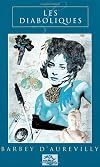
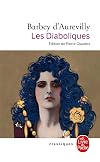
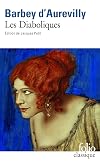
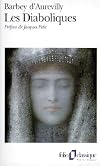
With its six trenchant tales of perverse love, Diaboliques proved so scandalous on its original appearance in 1874 that it was declared a danger to public morality and seized on the grounds of blasphemy and obscenity. More shocking in our day is how little known this masterpiece of French decadent fiction is, despite its singular brilliance and its profound influence on writers from Charles Baudelaire to Marcel Proust, Oscar Wilde, J. K. Huysmans, and Walter Benjamin. This new, finely show more calibrated translation--the first in nearly a century--returns Jules Barbey d'Aurevilly's signature collection to its rightful place in the ranks of literary fiction that tests the bounds of culture. Psychologically intense in substance and style, the stories of Diaboliques combine horror, comedy, and irony to explore the affairs and foibles of men and women whose aristocratic world offers neither comfort nor protection from romantic failure or sexual outrage. Conquest and seduction, adultery and revenge, prostitution and murder--all are within Barbey d'Aurevilly 's purview as he penetrates the darker recesses of the human heart. Raymond N. MacKenzie, whose deft translation captures the complex expression of the original with its unique blend of the literary high and low, also includes an extensive introduction and notes, along with the first-ever translation of Barbey d'Aurevilly's late story "A Page from History" and the important preface to his novel The Last Mistress. show lessTags
Recommendations




















Member Recommendations

Member Reviews
In a similar manner to "Les Liaisons Dangeruese", this collection of 7 long stories presents a 19th century French aristocratic milieu that is elegant, subtle, and cold as ice. The She-Devils in each story are women who exert some memorable and remarkable effect on a male raconteur. Each story is more violent, overwrought, and improbable than the one before; they're never less than engrossing, and even funny in a utterly caustic way (D'Aurevilly is chuckling as he writes, but no one IN the stories seems to have much sense of humor.) Love and sexuality are presented as absolutely cruel drivers with nothing redeeming about them; relationships even between parents and children are selfish and egoistic.
I loved reading this. I wouldn't want show more to live in the world of these stories, but they were hella entertaining. show less
I loved reading this. I wouldn't want show more to live in the world of these stories, but they were hella entertaining. show less
It is indeed funny, how this book combines the genuine horror of a young officer whose hand has been touched by a hand of a young woman under the dinner table in the first novella (Le rideau cramoisi) with the graphic mutilation and torture scenes, or with eighty nuns raped by two escadrons and thrown into a well while still alive in the last novellas.
Style sample (makes me wanna turn it into an intertitle in a silent film): "Notre amour avait eu la simultanéité de deux coups de pistolet tirés en même temps, et qui tuent…"
The first four stories really make you wonder why you should be reading this torrent of words, generously seasoned with names of mythological and historical figures, at times obscure or imaginary. But the last show more two make it up and are not for the faint of heart. show less
Style sample (makes me wanna turn it into an intertitle in a silent film): "Notre amour avait eu la simultanéité de deux coups de pistolet tirés en même temps, et qui tuent…"
The first four stories really make you wonder why you should be reading this torrent of words, generously seasoned with names of mythological and historical figures, at times obscure or imaginary. But the last show more two make it up and are not for the faint of heart. show less
Les Diaboliques is a superb collection featuring 6 short stories/novelettes, written by Jules Barbey d'Aurevilly over the space of 25 years or so and united by similar themes - revenge, amour fou, depravity and above all women with moral compasses far outside the norm. The florid, decadent style of writing feels well-fitted to the stories here: such excellent works as the mysterious and almost Gothic "Le Rideau cramoisi" about a macabre first love, the delightfully amoral "Le Bonheur dans le crim", and of course the acrid and venomous "La vengeance d'une femme" which might be the best of the set and was memorably adapted to film by Rita Azevedo Gomes a decade ago. The only story here which feels somewhat lesser than the others might be show more "Le Plus Bel Amour de Don Juan" which spends long enough building up to a conclusion which ultimately renders it something of a shaggy dog story by comparison, but that might be the only (slight) drop in consistency. d'Aurevilly's deep monarchist and Catholic convictions (and this worldview definitely pervades his work more openly than, say, Baudelaire's similar perspective) make an interesting contrast and often contradiction for the dandy aesthetic of the works here as well as the shocking violent and sexual denouements of several of the stories contained therein. Another masterpiece of French literature.
______
Not an easy reading experience as such but my engagement with it made the language much easier to work with, and I had a big breakthrough moment during reading which motivated me even further. Glad I'm now dedicating 90 minutes-2 hours or so before sleeping to reading rather than doing drips and drabs when I get the chance as getting lost in these stories was great both for my own enjoyment of them and for getting myself into an immersive flow state. Shocked at how quickly I read this too as taken altogether this is my longest yet, and it took me less than a fortnight - I've come a long way from (enjoyably) struggling through Le Grand Meaulnes for a month. show less
______
Not an easy reading experience as such but my engagement with it made the language much easier to work with, and I had a big breakthrough moment during reading which motivated me even further. Glad I'm now dedicating 90 minutes-2 hours or so before sleeping to reading rather than doing drips and drabs when I get the chance as getting lost in these stories was great both for my own enjoyment of them and for getting myself into an immersive flow state. Shocked at how quickly I read this too as taken altogether this is my longest yet, and it took me less than a fortnight - I've come a long way from (enjoyably) struggling through Le Grand Meaulnes for a month. show less
Jules Barbey d’Aurevilly (1808 – 1889), romantic with the sensibility of a decadent , self-styled dandy, teller of risqué novels and short stories, shocked readers and infuriated the authorities with the publication of Les Diaboliques. But there is much more to this captivating novel with its sumptuous, elegant language, well-crafted metaphors and highly visual and sensual imagery than simply shock value. Below are a number of themes common to the six separate tales comprising this novel:
Story within a story
For example, in The Crimson Curtain, the first-person narrator tells us as readers how one evening years ago while returning from a hunting trip he shared a carriage with a rotund, old dandy he calls Vicomte de Brassard. The show more carriage made a stop in a small provincial town for repair. Gazing up at an upper-story window of one of the town’s large buildings, a crimson curtain caught the narrator’s attention; he points out the captivating tint of the curtain to his riding companion. Ah, such are the twists of fate, since, as it turns out, that exact room with the crimson curtain was a dramatic marker for de Brassard’s life -- it all happened back in the day when he was but a seventeen-year-old sublieutenant. And dandy de Brassard tells the tale.
Storytelling with a hook
There’s a point, usually about half way through, when something unexpected happens to propel the story into overdrive. And what variety of event are we alluding to here? Why, of course, as if lighting a fuse to a stick of dynamite, a woman ignites a man’s passion: BOOM! Now we’re reading a Barbey-d’Aurevilly-style spellbinding page-turner.
Dandyism
For Barbey d’Aurevilly, a dandy is not only a man scrupulously devoted to style, neatness and fashion but, as he describes Vicomte de Brassard, a dandy has a seductive beauty which seduce not only woman but circumstances themselves; has a careless disdain and repugnance of discipline; keeps several mistresses at the same time like seven strings of his lyre; drinks like a Pole; jests about his own immorality; belongs to his own times and transcends his times; and, lastly, above all else, scorns all emotion as being beneath him.
Conversation as a cultural highpoint
In all six of these Barbey d’Aurevilly tales, the characters raise conversation to an art form – probing inquiry; genteel exchange; elaborate, detailed storytelling with all the necessary color and nuance to convey a vivid, sensual picture; and, above all, a deep respect for the speaker, permitting one’s interlocutor time and space – none of those spurious interruptions commonplace in our current world: cutting a speaker off mid-sentence, answering cell-phones, texting, checking emails, looking at one’s watch (the ultimate insult). Indeed, engaging in conversation as a cultivated skill, a consummate refinement, similar to playing baroque music or painting in oils.
Woman as the real power player
19th century France: Victorian, bourgeois, patriarchal, or, in other words, a male-centered, conservative, reason-dominated society. But the dirty little secret for the upholders of Victorian patriarchy is our all-too-human life is fueled by passion and emotion, most particularly sexual emotion – sexual attraction, sexual arousal and, of course, erotic love. The power of each of these Barbey d’Aurevilly tales lies in the fact a female instigates or initiates the key action. Talk about turning those Victorian values upside down and shaking! No wonder the authorities hated Barbey d’Aurevilly and banned his 1874 novel – Les Diaboliques also gave the French reading public one of its first tastes of what came to be known as the Decadent Movement, with its smashing to bits the connection and linking of virtue/reward, vice/punishment, good morals/happiness and bad morals/unhappiness, as in Happiness in Crime, a tale of two adulterers and murderers who live happily ever after.
For a more specific rasa, let’s look at one of the tales. In The Greatest Love of Don Juan, we read of a Don Juan-like lover, Comte de Ravila, dining with twelve of his previous romantic conquests. Barbey d’Aurevilly describes the physical strength and mature sensuality of these sumptuous lovers: “Full curves and ample proportions, dazzling bosoms, beating in majestic swells above liberally cut bodices . . . “ And then he writes of the sheer psychic power of these ladies as the evening progresses: “They felt a new and mysterious power in their innermost being of which, until then, they had never suspected the existence. The joy of this discovery, the sensation of a tripled life force, the physical incitements, so stimulating to highly strung temperaments, the sparkling lights, the penetrating odor of so many flowers swooning in an atmosphere overheated with the emanations of all these lovely bodies, the sting of heady wines, all acted together.”
Then, one woman demands our Don Juan tell the story of the greatest love of his life. If effect, he is being asked to choose one of his lovers amongst the present company. Comte de Ravila tells his story but, turns out, the story is not at all what these ladies expected.
My take is Ravila did the exactly the right thing. True, his story was not a tale of wild, heart-stopping, hot-blooded passion – he probably had twelve equally erotic and fantastically romantic stories to tell on that subject, one for each lady present, however his story was of a completely different cast but a story that had, from his perspective, a happy ending – he escaped from the banquet with the real prize: his life.
What an impossible question to ask a man: to choose one woman amongst twelve surrounding him. If he did, he most likely would have been torn to shreds by eleven Dionysian-frenzied former lovers. That’s the way to think on your feet and save your skin, Ravila. Bravo! show less
He felt that this woman was going to tell him about things the like of which he’d never heard. He was no longer thinking about her beauty. He was looking at her as if he wanted to attend her autopsy.
[“Il lui semblait que cette femme allait lui raconter de ces choses comme il n’en avait pas entendu encore. Il ne pensait plus à sa beauté. Il la regardait comme s’il avait désiré assister à l’autopsie de son cadavre.”]
I once heard someone explain what ‘rococo’ meant by saying that it’s what happens when the baroque out-baroques itself. Barbey d’Aurevilly is what happens when the Romantic movement out-Romantics itself. These stories are obsessed with the Romanticism of high emotion and the sublime – only here show more it’s all much darker and more ‘decadent’: le sublime de l’enfer, as Barbey calls it at one point.
Each story centres on a woman whose passions prove fatal, for her or for someone else. But although the women are so central to what happens, they are without exception remote and unknowable, with utterly mysterious motives – almost like characters from a Norse saga. We know them only through the men that endlessly discuss them, lust after them, or hate them. They are – brace yourself as I reach for this adjective – positively sphingine, by which I mean cool, beautiful, mysterious and deadly.
Nothing interior illumated the outside of this woman. And nothing from the outside had any effect on her interior.
[“Rien du dedans n’éclairait les dehors de cette femme. Rien du dehors ne se répercutait au-dedans !”]
In the first story, ‘The Crimson Curtain’, the woman around whom the entire plot revolves does not speak even a single line. Although not the most shocking, this tale was in some ways my favourite, and passed the test of a good short story – that it works perfectly as an anecdote. I told it to my wife over a pint in the pub and she had her hand over her mouth for much of it. It bears an uncanny resemblance to the ‘Vincent Vega and Marcellus Wallace’s Wife’ chapter of Pulp Fiction, in that they both concern an illicit liaison that takes a sudden (very similar) U-turn for the worse.
The ending of that piece is very artful – in that almost everything that matters is left unresolved and up in the air. It’s an effect I like very much, and which Barbey deploys at several points throughout the book. There is a very modern feeling that what is left unsaid is much more exciting than any resolution could ever be – ‘what is not known,’ the narrator says somewhere, ‘multiplies by a hundred the impression of what is known.’
‘Ah!’ said Mlle Sophie de Revistal passionately. ‘It is the same in music as it is in life. What gives expressiveness to both are the silences more than the harmonies.’
[“—Ah ! — dit passionnément Mlle Sophie de Revistal, — il en est également de la musique et de la vie. Ce qui fait l’expression de l’une et de l’autre, ce sont les silence bien plus que les accords.”]
So you end up in this rather oppressive world of suspicion, rumour, and frightful supposition, peopled by these strange sphinxy women and the Byronic protagonists who are fascinated by them.
All but one of the stories are bracketed in reported speech from one of the characters, and with some longish introductions you might be tempted to wonder why the author doesn’t just hurry up and get on with it. But after a while, there emerges a strong sense that having these stories come out ‘in conversation’ is very important to Barbey – Les Diaboliques is, among other things, a love letter to the art of sparkling conversation, what he calls ‘the last glory of the French spirit’. (The orignal title for the collection was Conversational Ricochets.) Conversation is the primary tool on display here, although ‘At a Dinner of Atheists’ does open on a wonderful descriptive passage about a Valognes church at dusk which makes me wonder what might be on offer in his other books.
For all that these conversations may seem hopelessly dated to some readers now, there is a real cumulative effect building as you work your way through, and the last couple of stories here pack quite a punch. Impossible to imagine anything like this being published in England in 1874. ‘A Woman’s Vengeance’, the final piece, takes the clichéd 19th-century narrative of the poor innocent girl forced into a life of prostitution (Fantine from Les Misérables, for instance – a book which Barbey loathed) and turns it on its head in the most remarkable way. It takes in a surprisingly frank sex scene and includes a moment of almost medieval violence and jealousy.
Barbey was basically a royalist disillusioned by France's endless social revolutions, and he was sceptical about life in a democratic future. Instead of cheap moralising and hookers with hearts of gold, he gives you deep emotional doubt and damaged, incomprehensible strangers. Passion may drive these people to excesses of lust, intrigue and horror – but at their worst, Barbey seems to feel they are also at their most essentially human – beyond society’s conventions, and perhaps even, in some way that we are not, free. show less
[“Il lui semblait que cette femme allait lui raconter de ces choses comme il n’en avait pas entendu encore. Il ne pensait plus à sa beauté. Il la regardait comme s’il avait désiré assister à l’autopsie de son cadavre.”]
I once heard someone explain what ‘rococo’ meant by saying that it’s what happens when the baroque out-baroques itself. Barbey d’Aurevilly is what happens when the Romantic movement out-Romantics itself. These stories are obsessed with the Romanticism of high emotion and the sublime – only here show more it’s all much darker and more ‘decadent’: le sublime de l’enfer, as Barbey calls it at one point.
Each story centres on a woman whose passions prove fatal, for her or for someone else. But although the women are so central to what happens, they are without exception remote and unknowable, with utterly mysterious motives – almost like characters from a Norse saga. We know them only through the men that endlessly discuss them, lust after them, or hate them. They are – brace yourself as I reach for this adjective – positively sphingine, by which I mean cool, beautiful, mysterious and deadly.
Nothing interior illumated the outside of this woman. And nothing from the outside had any effect on her interior.
[“Rien du dedans n’éclairait les dehors de cette femme. Rien du dehors ne se répercutait au-dedans !”]
In the first story, ‘The Crimson Curtain’, the woman around whom the entire plot revolves does not speak even a single line. Although not the most shocking, this tale was in some ways my favourite, and passed the test of a good short story – that it works perfectly as an anecdote. I told it to my wife over a pint in the pub and she had her hand over her mouth for much of it. It bears an uncanny resemblance to the ‘Vincent Vega and Marcellus Wallace’s Wife’ chapter of Pulp Fiction, in that they both concern an illicit liaison that takes a sudden (very similar) U-turn for the worse.
The ending of that piece is very artful – in that almost everything that matters is left unresolved and up in the air. It’s an effect I like very much, and which Barbey deploys at several points throughout the book. There is a very modern feeling that what is left unsaid is much more exciting than any resolution could ever be – ‘what is not known,’ the narrator says somewhere, ‘multiplies by a hundred the impression of what is known.’
‘Ah!’ said Mlle Sophie de Revistal passionately. ‘It is the same in music as it is in life. What gives expressiveness to both are the silences more than the harmonies.’
[“—Ah ! — dit passionnément Mlle Sophie de Revistal, — il en est également de la musique et de la vie. Ce qui fait l’expression de l’une et de l’autre, ce sont les silence bien plus que les accords.”]
So you end up in this rather oppressive world of suspicion, rumour, and frightful supposition, peopled by these strange sphinxy women and the Byronic protagonists who are fascinated by them.
All but one of the stories are bracketed in reported speech from one of the characters, and with some longish introductions you might be tempted to wonder why the author doesn’t just hurry up and get on with it. But after a while, there emerges a strong sense that having these stories come out ‘in conversation’ is very important to Barbey – Les Diaboliques is, among other things, a love letter to the art of sparkling conversation, what he calls ‘the last glory of the French spirit’. (The orignal title for the collection was Conversational Ricochets.) Conversation is the primary tool on display here, although ‘At a Dinner of Atheists’ does open on a wonderful descriptive passage about a Valognes church at dusk which makes me wonder what might be on offer in his other books.
For all that these conversations may seem hopelessly dated to some readers now, there is a real cumulative effect building as you work your way through, and the last couple of stories here pack quite a punch. Impossible to imagine anything like this being published in England in 1874. ‘A Woman’s Vengeance’, the final piece, takes the clichéd 19th-century narrative of the poor innocent girl forced into a life of prostitution (Fantine from Les Misérables, for instance – a book which Barbey loathed) and turns it on its head in the most remarkable way. It takes in a surprisingly frank sex scene and includes a moment of almost medieval violence and jealousy.
Barbey was basically a royalist disillusioned by France's endless social revolutions, and he was sceptical about life in a democratic future. Instead of cheap moralising and hookers with hearts of gold, he gives you deep emotional doubt and damaged, incomprehensible strangers. Passion may drive these people to excesses of lust, intrigue and horror – but at their worst, Barbey seems to feel they are also at their most essentially human – beyond society’s conventions, and perhaps even, in some way that we are not, free. show less
Jules Barbey d’Aurevilly (1808 – 1889), romantic with the sensibility of a decadent , self-styled dandy, teller of risqué novels and short stories, shocked readers and infuriated the authorities with the publication of Les Diaboliques. But there is much more to this captivating novel with its sumptuous, elegant language, well-crafted metaphors and highly visual and sensual imagery than simply shock value. Below are a number of themes common to the six separate tales comprising this novel:
Story within a story
For example, in The Crimson Curtain, the first-person narrator tells us as readers how one evening years ago while returning from a hunting trip he shared a carriage with a rotund, old dandy he calls Vicomte de Brassard. The show more carriage made a stop in a small provincial town for repair. Gazing up at an upper-story window of one of the town’s large buildings, a crimson curtain caught the narrator’s attention; he points out the captivating tint of the curtain to his riding companion. Ah, such are the twists of fate, since, as it turns out, that exact room with the crimson curtain was a dramatic marker for de Brassard’s life -- it all happened back in the day when he was but a 17 year old sublieutenant. And dandy de Brassard tells the tale.
Storytelling with a hook
There’s a point, usually about half way through, when something unexpected happens to propel the story into overdrive. And what variety of event are we alluding to here? Why, of course, as if lighting a fuse to a stick of dynamite, a woman ignites a man’s passion: BOOM! Now we’re reading a Barbey-d’Aurevilly-style spellbinding page-turner.
Dandyism
For Barbey d’Aurevilly, a dandy is not only a man scrupulously devoted to style, neatness and fashion but, as he describes Vicomte de Brassard, a dandy has a seductive beauty which seduce not only woman but circumstances themselves; has a careless disdain and repugnance of discipline; keeps several mistresses at the same time like seven strings of his lyre; drinks like a Pole; jests about his own immorality; belongs to his own times and transcends his times; and, lastly, above all else, scorns all emotion as being beneath him.
Conversation as a cultural highpoint
In all six of these Barbey d’Aurevilly tales, the characters raise conversation to an art form – probing inquiry; genteel exchange; elaborate, detailed storytelling with all the necessary color and nuance to convey a vivid, sensual picture; and, above all, a deep respect for the speaker, permitting one’s interlocutor time and space – none of those spurious interruptions commonplace in our current world: cutting a speaker off mid-sentence, answering cell-phones, texting, checking emails, looking at one’s watch (the ultimate insult). Indeed, engaging in conversation as a cultivated skill, a consummate refinement, similar to playing baroque music or painting in oils.
Woman as the real power player
19th century France: Victorian, bourgeois, patriarchal, or, in other words, a male-centered, conservative, reason-dominated society. But the dirty little secret for the upholders of Victorian patriarchy is our all-too-human life is fueled by passion and emotion, most particularly sexual emotion – sexual attraction, sexual arousal and, of course, erotic love. The power of each of these Barbey d’Aurevilly tales lies in the fact a female instigates or initiates the key action. Talk about turning those Victorian values upside down and shaking! No wonder the authorities hated Barbey d’Aurevilly and banned his 1874 novel – Les Diaboliques also gave the French reading public one of its first tastes of what came to be known as the Decadent Movement, with its smashing to bits the connection and linking of virtue/reward, vice/punishment, good morals/happiness and bad morals/unhappiness, as in Happiness in Crime, a tale of two adulterers and murderers who live happily ever after.
For a more specific rasa, let’s look at one of the tales. In The Greatest Love of Don Juan, we read of a Don Juan-like lover, Comte de Ravila, dining with twelve of his previous romantic conquests. Barbey d’Aurevilly describes the physical strength and mature sensuality of these sumptuous lovers: “Full curves and ample proportions, dazzling bosoms, beating in majestic swells above liberally cut bodices . . . “ And then he writes of the sheer psychic power of these ladies as the evening progresses: “They felt a new and mysterious power in their innermost being of which, until then, they had never suspected the existence. The joy of this discovery, the sensation of a tripled life force, the physical incitements, so stimulating to highly strung temperaments, the sparkling lights, the penetrating odor of so many flowers swooning in an atmosphere overheated with the emanations of all these lovely bodies, the sting of heady wines, all acted together.”
Then, one woman demands our Don Juan tell the story of the greatest love of his life. If effect, he is being asked to choose one of his lovers amongst the present company. Comte de Ravila tells his story but, turns out, the story is not at all what these ladies expected.
My take is Ravila did the exactly the right thing. True, his story was not a tale of wild, heart-stopping, hot-blooded passion – he probably had twelve equally erotic and fantastically romantic stories to tell on that subject, one for each lady present, however his story was of a completely different cast but a story that had, from his perspective, a happy ending – he escaped from the banquet with the real prize: his life.
What an impossible question to ask a man: to choose one woman amongst twelve surrounding him. If he did, he most likely would have been torn to shreds by eleven Dionysian-frenzied former lovers. That’s the way to think on your feet and save your skin, Ravila. Bravo! show less
Despite the author's misogyny, monarchism, love of military tradition, racism, and often overblown prose, I found these six tales within tales of proud and passionate woman whose behavior seems evil, if not diabolical, to the bored and blasé men who tell and listen to their stories, weirdly compelling -- at least for the first two-thirds or so of the book. The narrators and listeners are men who miss the passing of Napoleon's army and Empire, and long for the past when their aristocratic titles and military exploits meant something. Shocking when first published, and subsequently banned, in 1874, this collection has moments that are still quite shocking today, although it is apparently now considered a classic in France. D'Aurevllly show more was steeped in French military and aristocratic history, as as in the classics of the Greek and Roman eras, as the book is filled with references that made me occasionally resort to Wikipedia but more often regret the lack of explanatory footnotes or endnotes. The edition I read, which I picked up when bookstore browsing because it looked intriguing, was also marred by typographical errors. show less
Members
- Recently Added By
Lists

Short Stories, Tales and Novellas
31 works; 1 member
Author Information

121+ Works 1,551 Members
Some Editions
Series
Belongs to Publisher Series
Work Relationships
Is contained in
Common Knowledge
- Original title
- Les diaboliques
- Original publication date
- 1874
- Epigraph*
Le Rideau cramoisi :
"Really."
Le plus bel amour de Don Juan :
"Le meilleur régal du diable, c'est une innocence."
(A.)
Le Bonheur dans le crime : "Dans ce temps délicieux, quand on raconte une histoire vraie, c'est à croire que le Diable a dicté."
Le Dessous de cartes d'une partie de whist : -" Vous moquez-vous de nous, monsieur, avec une pareille histoire?
- Est-ce qu'il n'y a pas, madame, une espèce de tulle qu'on appelle du tulle illusion?..." (A une soirée... (show all) chez le prince T...)
A un dîner d'athées : "Ceci est digne de gens sans Dieu." (ALLEN)
La vengeance d’une femme : "Fortiter"- First words
- Il y a terriblement d'années, je m'en allais chasser le gibier d'eau dans les marais de l'Ouest, - et comme il n'y avait pas alors de chemins de fer dans le pays où il me fallait voyager, je prenais la diligence de *** qui ... (show all)passait à la patte d'oie du château de Rueil et qui, pour le moment, n'avait dans son coupé qu'une seule personne. (Le rideau cramoisi)
"Il vit donc toujours, ce vieux mauvais sujet?" (Le plus bel amour de Don Juan)
J'étais un des matins de l'automne dernier à me promener au jardin des Plantes, en compagnie du docteur Torty, certainement une de mes plus vieilles connaissances. (Le bonheur dans le crime)
J'étais, un soir de l'été dernier, chez la baronne de Mascranny, une des femmes de Paris qui aiment le plus l'esprit comme on en avait autrefois, et qui ouvre les deux battants de son salon - un seul suffirait - au peu qui... (show all) en reste parmi nous. (Le dessous de cartes d'une partie de whist)
Le jour tombait depuis quelques instants dans les rues de la ville de ***. (À un dîner d'athées)
J'ai souvent entendu parler de la hardiesse de la littérature moderne; mais je n'ai, pour mon compte, jamais cru à cette hardiesse-là. (La vengeance d'une femme)
'ai souvent entendu parler de la hardiesse de la littérature moderne; mais je n'ai, pour mon compte, jamais cru à cette hardiesse-là. (La vengeance d'une femme) - Last words
- (Click to show. Warning: May contain spoilers.)Et nous roulâmes, et nous eûmes bientôt dépassé la mystérieuse fenêtre, que je vois toujours dans mes rêves, avec son rideau cramoisi. (le rideau cramoisi)
(Click to show. Warning: May contain spoilers.)Et nous roulâmes, et nous eûmes bientôt dépassé la mystérieuse fenêtre, que je vois toujours dans mes rêves, avec son rideau cramoisi. (Le rideau cramoisi). -
(Click to show. Warning: May contain spoilers.)- Sans cela!... fit la duchesse songeuse. (Le plus bel amour de Don Juan)
(Click to show. Warning: May contain spoilers.)Sans cela!... fit la duchesse songeuse. (Le plus bel amour de Don Juan)
(Click to show. Warning: May contain spoilers.)- Et peut-être même avec son crime!" - dit le docteur. - "Et moi aussi!"- ajouta-t-il, le hardi bonhomme. (Le bonheur dans le crime)
(Click to show. Warning: May contain spoilers.)- Voilà qui est fini! - ajouta-t-elle; - je ne porterai plus de résédas. (Le dessous de cartes d'une partie de whist)
(Click to show. Warning: May contain spoilers.)- Servez donc le café! - dit, de sa voix de tête, le vieux M. de Mesnilgrand. - S'il est, Mesnil, aussi fort que ton histoire, il sera bon. (À un dîner d'athées)
(Click to show. Warning: May contain spoilers.)Car il savait, lui, qu'elle ne se repentait pas, et que cette touchante humilité était encore, après la mort, de la vengeance! (La vengeance d'une femme) - Original language
- French
*Some information comes from Common Knowledge in other languages. Click "Edit" for more information.
Classifications
Statistics
- Members
- 703
- Popularity
- 40,543
- Reviews
- 13
- Rating
- (3.85)
- Languages
- 12 — Czech, Dutch, English, French, German, Italian, Lithuanian, Polish, Slovak, Spanish, Swedish, Turkish
- Media
- Paper, Ebook
- ISBNs
- 73
- UPCs
- 1
- ASINs
- 28