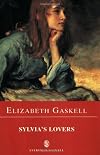
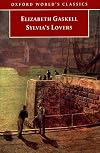
Sylvia's Lovers
by Elizabeth Gaskell
On This Page
Description
This tragic tale from Elizabeth Gaskell follows the wartime love affairs of the title character. After her true love is believed to have perished at sea, Sylvia seeks stability in a loveless arranged marriage. But does her husband know more about her first lover's fate than he is admitting?.
Tags
Recommendations













Member Reviews
I have to admit that Sylvia's Lovers left me strangely unmoved. There was a point about two-thirds of the way through the book that it became a page turner but it was rather short lived. The most interesting parts reflect the anger and agonies caused by the press gangs at the end of the eighteenth century. The worst parts have to do with the silly melodramatic plot and tiresome use of dialect (as if Ms. Gaskell didn't want us to forget for a second that the characters are hopelessly uneducated). In the end, it's a rather mediocre example of her work.
I really loved this book! The book blurb says its takes place during the late 18th century. I think the book was slow going in the first half, but from midpoint on it was spellbinding. It's the story of three people: Sylvia, a woman torn between two men, the romantic sailor Charlie Kincaid, and her quiet, mannerly cousin Philip. The story centers around the impressment of Charlie and moral dilemmas that arise from that. Gaskell gives the characters such passion. Good stuff! 528 pages
“Sylvia’s Lovers” is a slow-paced, lengthy tome. Had it been half as long I may have liked it twice as much.
Lots of time is wasted with overlong and unnecessary descriptions. The opening chapter could’ve been cut altogether. The descriptive writing itself is very good, as it always is with Mrs Gaskell, but there’s just too much of it for my tastes.
Also, there are elongated asides or digressions, which do nothing to advance the story. On top of this there’s a repetition of information, by which I mean that the reader receives certain info twice after witnessing a scene between two or three characters, only for one of those featured to repeat what just happened to another character. Why relate everything again when something show more like, “She told him all that happened”, would suffice?
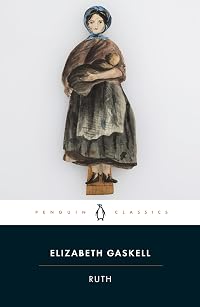
The main plot is fine enough, though the number of asides, etc., detract from it too much to get into it for more than a few consecutive paragraphs every so often. I found it a little too preachy for my liking, and at times somewhat depressing, though not as morbid as “Ruth”.
Another downside is that the characters’ dialect slows down the narrative to a degree of annoyance. It’s not like in Mrs Gaskell’s “North & South”, where the northerners spoke in a Manchester dialect whilst the southerners spoke “proper” English. The characters in this novel *all* speak in a strong Yorkshire dialect.
Even though I’m a Yorkshireman myself, I feel it would’ve worked better if the author had mentioned early on in what accent her characters speak with. This way she could’ve written the dialogue with proper grammar, leaving the reader to imagine the characters’ accent.
The dialogue itself is well-written, though. The characters are also strong and believable. I liked Hester – one of the co-stars – best.
Elizabeth Gaskell had a talent for storytelling, of that there’s no doubt in my mind, but mostly it’s not brought to the surface in this overlong book. I rate “North & South” & “Mary Barton” as her best novels. show less
Lots of time is wasted with overlong and unnecessary descriptions. The opening chapter could’ve been cut altogether. The descriptive writing itself is very good, as it always is with Mrs Gaskell, but there’s just too much of it for my tastes.
Also, there are elongated asides or digressions, which do nothing to advance the story. On top of this there’s a repetition of information, by which I mean that the reader receives certain info twice after witnessing a scene between two or three characters, only for one of those featured to repeat what just happened to another character. Why relate everything again when something show more like, “She told him all that happened”, would suffice?
The main plot is fine enough, though the number of asides, etc., detract from it too much to get into it for more than a few consecutive paragraphs every so often. I found it a little too preachy for my liking, and at times somewhat depressing, though not as morbid as “Ruth”.
Another downside is that the characters’ dialect slows down the narrative to a degree of annoyance. It’s not like in Mrs Gaskell’s “North & South”, where the northerners spoke in a Manchester dialect whilst the southerners spoke “proper” English. The characters in this novel *all* speak in a strong Yorkshire dialect.
Even though I’m a Yorkshireman myself, I feel it would’ve worked better if the author had mentioned early on in what accent her characters speak with. This way she could’ve written the dialogue with proper grammar, leaving the reader to imagine the characters’ accent.
The dialogue itself is well-written, though. The characters are also strong and believable. I liked Hester – one of the co-stars – best.
Elizabeth Gaskell had a talent for storytelling, of that there’s no doubt in my mind, but mostly it’s not brought to the surface in this overlong book. I rate “North & South” & “Mary Barton” as her best novels. show less
An intriguing, anti-romantic novel, melodramatic and fascinating. I didn't find either the handsome, dashing but shallow and unreliable Charley Kinraid or the dismal, obsessed Philip Hepburn sympathetic, but I did find poor Sylvia so.
Hope to have a review of this in the ezine 'the F word' out soon, going into it's 'anti romantic' tendencies as I see them.
I think readers often find Gaskell's intention unclear because she finished the third volume in a rush, so Sylvia's bitter disillusionment with her one-time-Idol Kinraid receives less stress than her growing obession with him in the first volume.
Hope to have a review of this in the ezine 'the F word' out soon, going into it's 'anti romantic' tendencies as I see them.
I think readers often find Gaskell's intention unclear because she finished the third volume in a rush, so Sylvia's bitter disillusionment with her one-time-Idol Kinraid receives less stress than her growing obession with him in the first volume.
Syvia's Lovers is the saddest book I have ever read which means that it is a wonderful book. The love of parents for a first and only child born later in life when hope was almost gone is a great and powerful love and tragic events rendered that more painful in the telling. Rich in historical detail , this is Elizabeth Gaskell at her best.
I don't think this one was ever near becoming my favourite Gaskell novel, but it was enjoyable enough, following the life and loves of Sylvia in a small town based on Whitby in the late 18th century.
An interesting novel--not as good as Gaskell's North and South or Wives and Daughters, but still an interesting historical novel...i.e., written about press gangs and the whaling industry during the Napoleonic Wars sixty years later.
Members
- Recently Added By
Talk Discussions
Past Discussions
Anyone care to discuss, or read and discuss, 'Sylvia's Lovers' by Elizabeth Gaskell? in Girlybooks (October 2011)
Author Information

233+ Works 30,612 Members
Elizabeth Gaskell was born on September 29, 1810 to a Unitarian clergyman, who was also a civil servant and journalist. Her mother died when she was young, and she was brought up by her aunt in Knutsford, a small village that was the prototype for Cranford, Hollingford and the setting for numerous other short stories. In 1832, she married William show more Gaskell, a Unitarian clergyman in Manchester. She participated in his ministry and collaborated with him to write the poem Sketches among the Poor in 1837. Our Society at Cranford was the first two chapters of Cranford and it appeared in Dickens' Household Words in 1851. Dickens liked it so much that he pressed Gaskell for more episodes, and she produced eight more of them between 1852 and 1853. She also wrote My Lady Ludlow and Lois the Witch, a novella that concerns the Salem witch trials. Wives and Daughters ran in Cornhill from August 1864 to January 1866. The final installment was never written but the ending was known and the novel exists now virtually complete. The story centers on a series of relationships between family groups in Hollingford. Most critics agree that her greatest achievement is the short novel Cousin Phillis. Gaskell was also followed by controversy. In 1853, she offended many readers with Ruth, which explored seduction and illegitimacy that led the "fallen woman" into ostracism and inevitable prostitution. The novel presents the social conduct in a small community when tolerance and morality clash. Critics praised the novel's moral lessons but Gaskell's own congregation burned the book and it was banned in many libraries. In 1857, The Life of Charlotte Brontë was published. The biography was initially praised but angry protests came from some of the people it dealt with. Gaskell was against any biographical notice of her being written during her lifetime. After her death on November 12, 1865, her family refused to make family letters or biographical data available. (Bowker Author Biography) show less
All Editions
Some Editions
Series
Belongs to Publisher Series
Work Relationships
Is contained in
Contains
Is abridged in
Common Knowledge
- Canonical title
- Sylvia's Lovers
- Original publication date
- 1863
- People/Characters
- Sylvia Robson; Charley Kinraid; Philip Hepburn; Hester Rose; Bella Hepburn; Bella Robson (show all 9); Daniel Robson; Jeremiah Foster; Kester
- Important events
- Napoleonic Wars
- Dedication
- This book is dedicated to my dear husband by her who best knows his value
- First words
- On the north-eastern shores of England there is a town called Monkshaven, containing at the present day about fifteen thousand inhabitants.
- Last words
- (Click to show. Warning: May contain spoilers.)"One of the Fosters, them as founded the Old Bank, left her a vast o' money; and she were married to a distant cousin of theirs, and went off to settle in America many and many a year ago."
Classifications
Statistics
- Members
- 680
- Popularity
- 42,381
- Reviews
- 13
- Rating
- (3.59)
- Languages
- 5 — English, Finnish, French, Italian, Spanish
- Media
- Paper, Ebook
- ISBNs
- 62
- ASINs
- 18