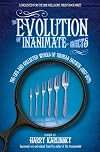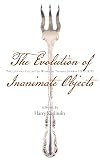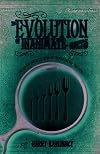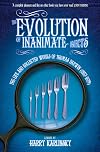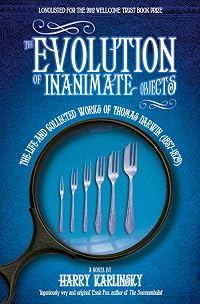
The Evolution of Inanimate Objects
by Harry Karlinsky
On This Page
Description
LONGLISTED FOR THE WELLCOME TRUST BOOK PRIZE 2012 While carrying out historical research at an Ontario asylum, psychiatrist Harry Karlinsky comes across a familiar surname in the register. Could the "Thomas Darwin of Down, England" be a relative of the famous Charles Darwin? In a narrative woven from letters, photographs, historical documents and illustrations, what emerges is a sketch of Thomas's life -- the last of eleven children born to Charles Darwin. It tells of his obsession with show more extending his father's studies into the realm of inanimate objects - kitchen utensils, to be precise. Can the theory of evolution be aplied to knives, forks and spoons? In this stunning factitious biography, Karlinsky presents us with the tragically short life of Thomas Darwin, leaving the reader to decide how much is fact and how much is fiction. show lessTags
Recommendations

























Member Recommendations
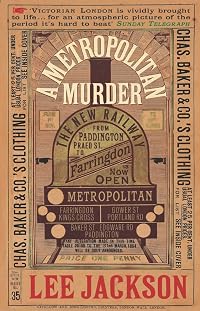
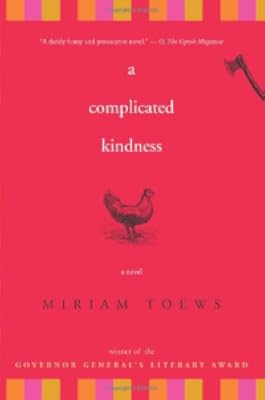
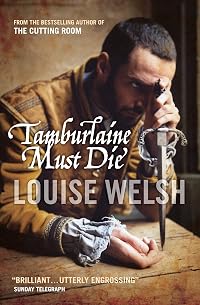
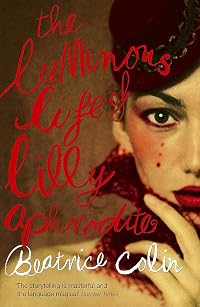
bluepiano Both protagonists are close connections of Darwin who discuss the evolution of unlikely subjects. Both are presented through found documents footnoted by their editors. Karlinksy's book is rather pleasing & Drayson's markedly intelligent one, rewarding.
Member Reviews
Harry Karlinsky, a professor of psychiatry at the University of British Columbia, has compiled a fictitious biography of Thomas Darwin. Had he lived, Thomas would been the eleventh and last child of Charles and Emma Darwin. The documentation of his fictive life is meticulous. The novel is tricked out with a scholarly panoply of memoirs, letters and certificates, footnotes, quotations from authors real and invented and an extensive bibliography.
Karlinsky presents Thomas as a brilliant and isolated child who was entranced, early in his life, by his father’s pursuit of the evolutionary principle. Thomas went on to spend two years at Cambridge University before dropping his studies and fleeing to Canada where his eccentric behaviour and show more odd delusions about forks and spoons resulted in his arrest and confinement in the London Asylum, Ontario where he died within months of a virulent form of tuberculosis. The delusions that led to his detention involved indecent speculations about sexual relations in the cutlery drawers and the consequential evolution of the different varieties of fork used for consuming meat, pastry and peas.
Stylistic verisimilitude has its perils in a fictitious biography. The account of Thomas Darwin’s early life, recounted in the opening chapters, is tedious - in the authentic style of most family histories - twining his fictive thread among the known lives of Charles, Emma and the ten children who preceded his fictive birth.The documentation of his insanity, his institutional confinement and death is presented with dry, academic precision. The same dry, scholarly tone is preserved in the exploration of Thomas’s evolutionary theory. As a fictitious biography it struck me as ingenious but dull, lacking the exuberance of burlesque or exaggeration that might have enlivened poor Thomas’s delusions and made them memorable or pathetic.
Karlinsky insists from the outset that this is a fictional biography. His reasons for doing so are never apparent; why give away the punchline before the joke? It is also unnecessary. Thomas’s theory of the evolution of inanimate artefacts is sufficiently ridiculous to defy credulity. Karlinsky’s insistence on the non-existence of Thomas denies his readers even the minor pleasures of voluntarily suspended disbelief. show less
Karlinsky presents Thomas as a brilliant and isolated child who was entranced, early in his life, by his father’s pursuit of the evolutionary principle. Thomas went on to spend two years at Cambridge University before dropping his studies and fleeing to Canada where his eccentric behaviour and show more odd delusions about forks and spoons resulted in his arrest and confinement in the London Asylum, Ontario where he died within months of a virulent form of tuberculosis. The delusions that led to his detention involved indecent speculations about sexual relations in the cutlery drawers and the consequential evolution of the different varieties of fork used for consuming meat, pastry and peas.
Stylistic verisimilitude has its perils in a fictitious biography. The account of Thomas Darwin’s early life, recounted in the opening chapters, is tedious - in the authentic style of most family histories - twining his fictive thread among the known lives of Charles, Emma and the ten children who preceded his fictive birth.The documentation of his insanity, his institutional confinement and death is presented with dry, academic precision. The same dry, scholarly tone is preserved in the exploration of Thomas’s evolutionary theory. As a fictitious biography it struck me as ingenious but dull, lacking the exuberance of burlesque or exaggeration that might have enlivened poor Thomas’s delusions and made them memorable or pathetic.
Karlinsky insists from the outset that this is a fictional biography. His reasons for doing so are never apparent; why give away the punchline before the joke? It is also unnecessary. Thomas’s theory of the evolution of inanimate artefacts is sufficiently ridiculous to defy credulity. Karlinsky’s insistence on the non-existence of Thomas denies his readers even the minor pleasures of voluntarily suspended disbelief. show less
Ratings
Members
- Recently Added By
Lists

Pants on fire
27 works; 4 members
Author Information
4 Works 63 Members
Awards and Honors
Awards
Common Knowledge
- Canonical title
- The Evolution of Inanimate Objects
- Original publication date
- 2010
- People/Characters
- Thomas Darwin; Harry Karlinski
- Important places
- England, UK
Classifications
Statistics
- Members
- 25
- Popularity
- 1,076,962
- Reviews
- 1
- Rating
- (3.20)
- Languages
- English
- Media
- Paper, Ebook
- ISBNs
- 5
- ASINs
- 1