Confessing a Murder
by Nicholas Drayson
On This Page
Description
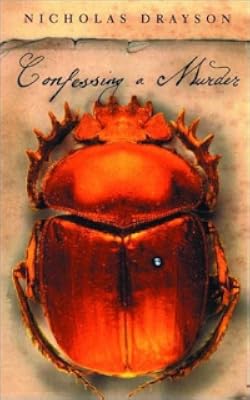
The Theory of Evolution was the greatest scientific concept of its age. It was so revolutionary that its author, Charles Darwin, revealed to a friend in 1854 that even mentioning it felt like 'confessing a murder'. Both the man and his theory are still the subject of intrigue and debate. How was it that the unremarkable younger son of a rich plutocrat, who idled through school, dropped out of medical studies and looked destined to be a clergyman of some quiet country parish, came to lay the show more foundation stone of modern biology? And how was it that another biologist, Alfred Russel Wallace, came up with the same theory at the same time? The answer may be found in Nicholas Drayson's delicious first novel. Purporting to be an anonymous memoir found in an attic, its author is an arrogant but brilliant homosexual whose life has crossed with that of Darwin with startling regularity. He is writing it on a small island in the Java Sea of which he is the only human inhabitant. The island has a live volcano and, aware that his life will soon come to an end, he sets out the true story of the theory of natural selection, confesses a murder of his own, and provides a fascinating and delightful acc show lessTags
Recommendations











Member Recommendations
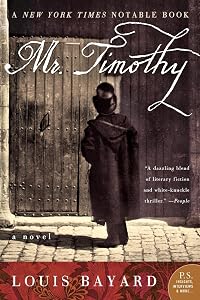
bluepiano Both protagonists are close connections of Darwin who discuss the evolution of unlikely subjects. Both are presented through found documents footnoted by their editors. Karlinksy's book is rather pleasing & Drayson's markedly intelligent one, rewarding.
Member Reviews
Confessing a Murder starts with a question, "It is sweet to name a thing, for is it not by naming that we gain possession?" (p 2).
In the style of nameless narration this is the story of a scientist, exiled from England. He has been stranded on an active volcanic island for three seasons, studying the flora and fauna of his entrapped environment. He knows time is running out and hints by stating things like, the mountain has "other plans." He tells the story of how he got there interspersed with detailed descriptions of his discoveries on the island. Just this alone would make a fascinating story, but Drayson takes it a step further by included the fictionalized character of Charles Darwin as the unknown naturalist's friend and show more companion, implying, and then later announcing, the theory of evolution was imposed upon Darwin by this friend. This is a story of blind love and deaf, dumb, and blind greed.
As an aside, I couldn't get over the fantastical wildlife our nameless protagonist discovers. Birds that hibernate under water, vampire plants which suck the blood of birds. and many, many more.
The one quote I loved, "I do not know why we betray the things we love" (p 32). Hang onto this sentence because it will come back tenfold. show less
In the style of nameless narration this is the story of a scientist, exiled from England. He has been stranded on an active volcanic island for three seasons, studying the flora and fauna of his entrapped environment. He knows time is running out and hints by stating things like, the mountain has "other plans." He tells the story of how he got there interspersed with detailed descriptions of his discoveries on the island. Just this alone would make a fascinating story, but Drayson takes it a step further by included the fictionalized character of Charles Darwin as the unknown naturalist's friend and show more companion, implying, and then later announcing, the theory of evolution was imposed upon Darwin by this friend. This is a story of blind love and deaf, dumb, and blind greed.
As an aside, I couldn't get over the fantastical wildlife our nameless protagonist discovers. Birds that hibernate under water, vampire plants which suck the blood of birds. and many, many more.
The one quote I loved, "I do not know why we betray the things we love" (p 32). Hang onto this sentence because it will come back tenfold. show less
Actually one of the best books I've read in around a year. Being an evolutionist I was immediately caught up in the historical intrigue and description of some rather fanciful animals. Good book through and through.
historical fiction? the narrator is fictional but the main characters are not; the island setting is not a real place; some but not all the animal species exist; some of the events really happened but not most .... all results in a suprising novel ... sometimes with too much biological detail of reproductive habits of beetles or other species. Was Charles Darwin really called Bobby by his family?
I gave up on this book. It contains some excellent writing but, unfortunately, I found it slow and boring!
Ratings
Members
- Recently Added By
Lists

Books Read in 2003
257 works; 7 members

BingoDOG - Scientists in Fiction
111 works; 17 members

Found manuscripts
35 works; 2 members
Author Information

5 Works 921 Members
Nicholas Drayson, a writer and naturalist, was formerly a curator at the National Museum in Canberra, Australia.
Awards and Honors
Awards
Common Knowledge
- Original publication date
- 2002
Classifications
Statistics
- Members
- 117
- Popularity
- 278,215
- Reviews
- 4
- Rating
- (3.57)
- Languages
- English
- Media
- Paper
- ISBNs
- 4