On This Page
Description
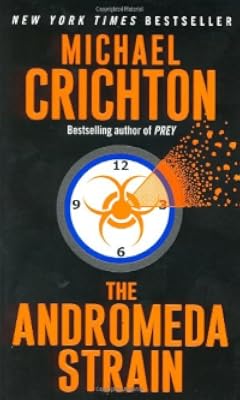
From the author of Jurassic Park, Timeline, and Sphere comes a captivating thriller about a deadly extraterrestrial microorganism, which threatens to annihilate human life.Five prominent biophysicists have warned the United States government that sterilization procedures for returning space probes may be inadequate to guarantee uncontaminated re-entry to the atmosphere. Two years later, a probe satellite falls to the earth and lands in a desolate region of northeastern Arizona. show more Nearby, in the town of Piedmont, bodies lie heaped and flung across the ground, faces locked in frozen surprise. What could cause such shock and fear? The terror has begun, and there is no telling where it will end.
. show less
Tags
Recommendations

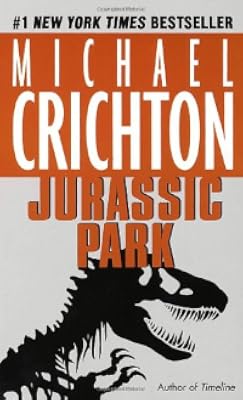
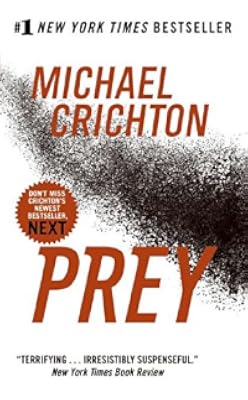
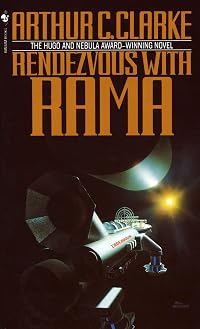

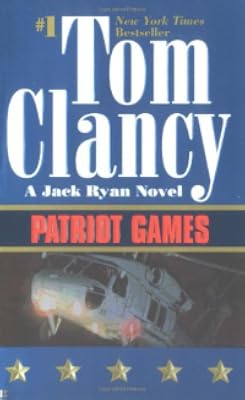




Member Recommendations

Desmorph The slippery slope of technology and the evolution of mankind provide a colorful backdrop for this futuristic tale.
00
Member Reviews
This book is fifty years old. 50! Published in 1969, it was Michael Crichton's first novel. It spent a half year or more on the NY Times best-seller list. Millions of copies sold. Launched Crichton's hugely successful career. My reading of it this week is my first (even though it's been on my shelf since about 1987). Despite many reviews panning it—"average", "boring", "slow and dull", "Great until it wasn't", "Too much science, not enough action", "too much explanation and not enough story", "Really, really dull"—I thought it a good yarn, one that keeps you turning the pages. Yeah, it provided a lot of unintended laughs. But, hey, it's Brain Candy.
The Andromeda Strain is a turnabout on [War of the Worlds] by H. G. Wells, in which show more space invaders attack mankind with devastating effect, only to succumb to the earth's plethora of bacteria and viruses to which they lack immunity. In Crichton's story it's mankind that lacks immunity to invading space pestilence.
In the opening pages, two soldiers searching for a downed U. S. satellite follow its tracking signal into an isolated town in northwestern Arizona. They are horrified to discover corpses littering the main street. And then they die too.
It turns out that the government has been preparing for this eventuality—lethal microbes from outer space. Jeremy Stone, Crichton's unbelievably brilliant, Nobel-winning (youngest ever!) scientist (and, by the way, lawyer), marshalls the scientific community to persuade the government to create a mammoth and, naturally, highly secret cutting edge laboratory buried deep under the desert of northwestern Nevada. When those space invaders salt the earth's atmosphere with alien bacteria to decimate mankind, a select team of scientists (5 only, men only) will be whisked to this lab, investigate the bacteria, contrive an antidote, and save our world.
Brilliant!
In a different theater of the military-industrial complex, an ongoing operation (a secret operation) has been launching satellites specifically to troll for alien vectors that may be out there and return to earth with their catch. Several launch-and-retrieval cycles in, nothing suspect is caught. Then a satellite's orbit shifts inexplicably and is brought back to earth. The wrong people retrieve it, a misguided soul cracks it open, and quite a few people die (including those two men rightfully assigned to retrieve the satellite). The race begins!
Plot and technology and science surpass all in this yarn. The characters are from central casting, most embellished with a frightful secret or irritating (or endearing) quirk or tick. In addition to Stone, the Wildfire team includes microbiologist Peter Leavitt, an "ingrained" pessimist, "thoughtful, imaginative and not afraid to think daringly"; pathologist Charles Burton, often called " 'the Stumbler,' partly because of his tendency to trip over his untied shoelaces and baggy trouser cuffs and partly because of his talent for tumbling by error into one important discovery after another"; and surgeon Mark Hall, a compromise choice, an unmarried (essential) medico knowledgeable about "...electrolytes…&$91;b]lood chemistries, pH, acidity and alkalinity, the whole thing." A fifth member escapes service when duty calls by being hospitalized by appendicitis
I detected no evidence of the story, published in 1969, being set into the future. Was the science and technology upon which the story was built contemporary to 1969? I doubt it. My sense of disbelief was formidably challenged by the flawless operation of all the lab's gee-whiz features and equipment. Too, I just couldn't help but laugh at the lab protocols. Five levels, descending, each new level more strictly sanitized than the one above. The team members are subjected to increasingly stringent, even invasive, dipping, bathing, steaming, showering, immersing, and forced air drying. But what about the skilled and efficient lab assistants and techs awaiting the appearances of the brainiacs? Did they go through the same ream-steam-and-dry-clean protocol? Does each person go home each day? Or does each serve an extended weeks-long or months-long tour? They are simply cyphers who materialize as needed, then vanish.
Needless to say, science triumphs and most of America and the world hear not a word about. show less
The Andromeda Strain is a turnabout on [War of the Worlds] by H. G. Wells, in which show more space invaders attack mankind with devastating effect, only to succumb to the earth's plethora of bacteria and viruses to which they lack immunity. In Crichton's story it's mankind that lacks immunity to invading space pestilence.
In the opening pages, two soldiers searching for a downed U. S. satellite follow its tracking signal into an isolated town in northwestern Arizona. They are horrified to discover corpses littering the main street. And then they die too.
It turns out that the government has been preparing for this eventuality—lethal microbes from outer space. Jeremy Stone, Crichton's unbelievably brilliant, Nobel-winning (youngest ever!) scientist (and, by the way, lawyer), marshalls the scientific community to persuade the government to create a mammoth and, naturally, highly secret cutting edge laboratory buried deep under the desert of northwestern Nevada. When those space invaders salt the earth's atmosphere with alien bacteria to decimate mankind, a select team of scientists (5 only, men only) will be whisked to this lab, investigate the bacteria, contrive an antidote, and save our world.
Brilliant!
In a different theater of the military-industrial complex, an ongoing operation (a secret operation) has been launching satellites specifically to troll for alien vectors that may be out there and return to earth with their catch. Several launch-and-retrieval cycles in, nothing suspect is caught. Then a satellite's orbit shifts inexplicably and is brought back to earth. The wrong people retrieve it, a misguided soul cracks it open, and quite a few people die (including those two men rightfully assigned to retrieve the satellite). The race begins!
Plot and technology and science surpass all in this yarn. The characters are from central casting, most embellished with a frightful secret or irritating (or endearing) quirk or tick. In addition to Stone, the Wildfire team includes microbiologist Peter Leavitt, an "ingrained" pessimist, "thoughtful, imaginative and not afraid to think daringly"; pathologist Charles Burton, often called " 'the Stumbler,' partly because of his tendency to trip over his untied shoelaces and baggy trouser cuffs and partly because of his talent for tumbling by error into one important discovery after another"; and surgeon Mark Hall, a compromise choice, an unmarried (essential) medico knowledgeable about "...electrolytes…&$91;b]lood chemistries, pH, acidity and alkalinity, the whole thing." A fifth member escapes service when duty calls by being hospitalized by appendicitis
I detected no evidence of the story, published in 1969, being set into the future. Was the science and technology upon which the story was built contemporary to 1969? I doubt it. My sense of disbelief was formidably challenged by the flawless operation of all the lab's gee-whiz features and equipment. Too, I just couldn't help but laugh at the lab protocols. Five levels, descending, each new level more strictly sanitized than the one above. The team members are subjected to increasingly stringent, even invasive, dipping, bathing, steaming, showering, immersing, and forced air drying. But what about the skilled and efficient lab assistants and techs awaiting the appearances of the brainiacs? Did they go through the same ream-steam-and-dry-clean protocol? Does each person go home each day? Or does each serve an extended weeks-long or months-long tour? They are simply cyphers who materialize as needed, then vanish.
Needless to say, science triumphs and most of America and the world hear not a word about. show less
I believe the first time I read this was very likely not horribly long after it was released. May have been around 73 or 74. I remembered very little of the story, beyond the initial destruction of a small town, one character's reaction to blinking lights, and the Wildfire facility.
Having re-read this, I think Crichton was a touch more enamoured with the facility and the science around it, than the actual Andromeda Strain itself, still, he chose a very unique narrative voice to tell this story, and I have to say, I actually enjoyed the hell out of it.
Yes, it's dated, but one of Crichton's smartest decisions was to set it in present (for the time) day 1969, so the tech actually holds up very well.
All in all, a fun ride to revisit half a show more century (!) later. show less
Having re-read this, I think Crichton was a touch more enamoured with the facility and the science around it, than the actual Andromeda Strain itself, still, he chose a very unique narrative voice to tell this story, and I have to say, I actually enjoyed the hell out of it.
Yes, it's dated, but one of Crichton's smartest decisions was to set it in present (for the time) day 1969, so the tech actually holds up very well.
All in all, a fun ride to revisit half a show more century (!) later. show less
One reason I love Michael Crichton, despite not being a lover of thrillers in general, is that both his writing and his concepts are a cut above your normal thrillers. However, I found that The Andromeda Strain strained (pun intended) to meet this higher bar. The novel still scores highly as a concept: dangerous space microbes coming to Earth on a crashed satellite is a very clever scenario – even now in 2026, let alone in 1969, pre-Moon Landing – and Crichton's medical background helped provide a lot of verisimilitude and robustness to the concept. But I felt the writing was not up to the same standard.
It's not poor by any means, and there's nothing you could point to and say "there's a glaring flaw". But the characters prove show more mostly interchangeable, lacking individual personality, and Crichton does not do so well in raising the tension or maintaining the pace. The early spookiness and terror of the malady, particularly in that disturbing setting of Piedmont where the infected satellite crash-lands, evaporates completely (again, pun intended) and pretty soon the plot confines itself entirely to a lab, with the stakes neutered and the book becoming less a thriller and more an academic proof-of-concept. I found the ending disappointing, but the book's charms outweigh its limitations and I remind myself that this is one of Crichton's earlier career efforts; while The Andromeda Strain's ending was poor, his own career was just beginning and would bring forth the titles that make me judge him against a high bar in the first place. show less
It's not poor by any means, and there's nothing you could point to and say "there's a glaring flaw". But the characters prove show more mostly interchangeable, lacking individual personality, and Crichton does not do so well in raising the tension or maintaining the pace. The early spookiness and terror of the malady, particularly in that disturbing setting of Piedmont where the infected satellite crash-lands, evaporates completely (again, pun intended) and pretty soon the plot confines itself entirely to a lab, with the stakes neutered and the book becoming less a thriller and more an academic proof-of-concept. I found the ending disappointing, but the book's charms outweigh its limitations and I remind myself that this is one of Crichton's earlier career efforts; while The Andromeda Strain's ending was poor, his own career was just beginning and would bring forth the titles that make me judge him against a high bar in the first place. show less
I find it remarkable how good it holds up to today's standards. If it weren't for some antiquated technology, I could have sworn it came out 5 years ago.
In the first half, the writing is concise, with a documentary feel, like "Seconds from Disaster". It is mostly crisis management.
The second half is more suspenseful, it is a medical/biological investigation. It focuses on five doctors in a laboratory trying to understand a new disease. You feel like you're in the room, looking over a scientist's shoulder all the time, impatiently waiting for him to tell you what he sees under the microscope.
I see some criticism regarding the ending - I think it works quite well in principle, especially after the COVID-19 pandemic. The idea is great, show more the execution feels a bit out of place.
The narrator was absolutely fantastic - I mostly identified characters by their voices instead of their names.
Andromeda Strain was very entertaining. 4 stars for now because of some verbosity midway through and a bit of a weird ending. A very strong 4. show less
In the first half, the writing is concise, with a documentary feel, like "Seconds from Disaster". It is mostly crisis management.
The second half is more suspenseful, it is a medical/biological investigation. It focuses on five doctors in a laboratory trying to understand a new disease. You feel like you're in the room, looking over a scientist's shoulder all the time, impatiently waiting for him to tell you what he sees under the microscope.
I see some criticism regarding the ending - I think it works quite well in principle, especially after the COVID-19 pandemic. The idea is great, show more the execution feels a bit out of place.
The narrator was absolutely fantastic - I mostly identified characters by their voices instead of their names.
Andromeda Strain was very entertaining. 4 stars for now because of some verbosity midway through and a bit of a weird ending. A very strong 4. show less
The Andromeda Strain is a biological thriller, telling the tale of a crashed satellite containing foreign-to-Earth material. Landing near a small town, a doctor's curiosity compels him to tamper with and open the satellite, to disastrous results. The town is found dead - people laying in the streets, dead, casually grasping their chests - with the exception of an old man and an infant. The story focuses on a group of scientists who make up the Wildfire organization, tasked with investigating and studying any alien life-forms that may enter Earth. They must race against the clock to prevent nuclear disaster and the spread of an organism capable of killing humans in mere seconds.
Crichton has written an exciting page-turner, full of twists show more and excitement. The characters are interesting, though they play second fiddle to the organism, and what we learn of their methods and interactions is intriguing. The novel is fantastic up to the end, which ended much quicker than it ought to have. Had Crichton taken the ending another hundred pages and resolved it as well as the story leading up to it transpired, this would be a must-read, stellar novel. show less
Crichton has written an exciting page-turner, full of twists show more and excitement. The characters are interesting, though they play second fiddle to the organism, and what we learn of their methods and interactions is intriguing. The novel is fantastic up to the end, which ended much quicker than it ought to have. Had Crichton taken the ending another hundred pages and resolved it as well as the story leading up to it transpired, this would be a must-read, stellar novel. show less
This book made a massive impact on me when I first read it at the age of twelve or thirteen. It hardly read like fiction, given Crichton's peppering of the book with facsimile documents, renderings of computer displays, and scientifically plausible dialogue (and, truth to tell, info-dumps). And four pages of referenced scientific papers! At the same time, it latched onto the zeitgeist of James Bond and Gerry Anderson's 'Thunderbirds', with secret laboratories concealed under agricultural research stations and talk of nuclear weapons and biowar.
Today, it still reads as well as it ever did, though that does mean it reads a bit like a government report at times. It is also very much a Cold War product, even though it isn't actually about show more the Cold War; but it has the Cold War mindset. Read this and be transported back to the 1960s, that era of great hope alternating with the threat of terrible annihilation. show less
Today, it still reads as well as it ever did, though that does mean it reads a bit like a government report at times. It is also very much a Cold War product, even though it isn't actually about show more the Cold War; but it has the Cold War mindset. Read this and be transported back to the 1960s, that era of great hope alternating with the threat of terrible annihilation. show less
"Certainly the Wildfire team was under severe stress, but they were also prepared to make mistakes. They had even predicted that this would occur. What they did not anticipate was the magnitude, the staggering dimensions of their error. They did not expect that their ultimate error would be a compound of a dozen small clues that were missed, a handful of crucial facts that were dismissed."
-- From Chapter 24, The Andromeda Strain
Michael Crichton's 1969 techno-thriller is in some ways an update of H G Wells' The War of the Worlds, but instead of invading Martians being defeated by a earth-borne microbes (or "putrefactive and disease bacteria" as Wells has it, our "microscopic allies") here it is the extraterrestrial microscopic organisms show more that threaten humankind. Brought back to earth by a Project Scoop satellite, they kill human beings by almost instantly clotting their blood. A top secret team codenamed Wildfire is tasked with retrieving, analysing, assessing and counteracting this virulent invader before it spreads to the general population. Holed up in an underground lab, they have a scant few days to come up with solutions; this being a thriller, things do not go smoothly.
Put thus baldly The Andromeda Strain appears to be a fairly humdrum novel, its premise familiar from scores of dystopic novel plotlines and SFF films and TV series. But, bearing in mind the date of its release -- at the height of a flurry of manned space missions (though just three years from the last Apollo mission to the moon) and on the crest of a wave of optimism in the march of science and technology in the face of Cold War tensions -- its then impact isn't hard to imagine. The nightmare scenario of an invisible killer chimed in with fears of Russian aggression -- remember, the USSR and its Warsaw Pact allies had in 1968 invaded Czechoslovakia, a country at the heart of Europe. While the US became more mired in a disastrous Vietnam conflict, despite opposing a technologically poorer nation, on the other hand it had sent a mission around the moon; and computer sciences seemed to be announcing new advances on a daily basis.
In such an extraordinary time of upheaval Crichton's novel comes as little surprise. For this work of speculative fiction he chose to write in what would now be called a creative nonfiction style, buttressing it with much that would not be unexpected in a scientific paper, such as diagrams, computer print-outs and an extensive academic bibliography. Though some of this material, typical of the so-called hard SF genre, has now dated, what to me seems extraordinary is that half a century later much of it is still recognisably current when compared to the less realistic SF offerings then available in popular culture, especially in the visual media (for example TV series such as Lost in Space, Star Trek and Doctor Who).
The Andromeda Strain is largely plot-driven. Few of the characters, though mostly distinctive, remain truly memorable: bacteriologist Jeremy Stone is team leader and near enough infallible; Mark Hall, a surgeon, is accorded almost the only chance to play action hero; because of equipment failure pathologist Charles Burton seems a real goner at one stage; and microbiologist Peter Leavitt's unwillingness to face a personal truth nearly puts the whole enterprise -- and the world's human population -- at risk. Otherwise their roles seem to be to, stage by stage, elucidate for us readers the team's findings and tentative conclusions. That is, until the next crisis develops.
These crises take various forms. First there are the purely mechanical and -- to a lesser extent -- system failures, which the team have to respond to on an ad hoc basis. Then there are the human errors, not least the release of the deadly bug in the first place. Some of these human errors are procedural, from not following protocols to the letter, while others are due to human failings, pure and simple, the result of fatigue and stress compounded by the urgency of the situation. Unless I have missed something, there doesn't appear to be a crisis engineered from sheer malice -- a relief to this reader, wary of the habitual insertion of a villainous adversary in much of the more populist examples of this genre.
In short, because of the clues presented right from the start we are aware that a crisis of global magnitude is averted, so that the jeopardy premised by the novel is ultimately averted. What Crichton only alludes to without revisiting it later on (leaving it to ferment in the reader's mind) are the habitual risks taken by governments in sending objects into space: the dangers of inadvertent contamination, the foolhardiness in deliberately searching for and possibly retrieving microscopic alien organisms (for what ulterior purpose?) and, most worrying, the potential disasters waiting from the steady and unceasing accumulation of space junk in orbit around the earth.
The catastrophic risks from these scenarios (particularly the last) have increased, not diminished, in the five decades since the author published his fictional account; in this respect The Andromeda Strain -- while undoubtedly entertaining -- in the final analysis takes on the role of a modern Cassandra. Let's hope it's not too late. show less
-- From Chapter 24, The Andromeda Strain
Michael Crichton's 1969 techno-thriller is in some ways an update of H G Wells' The War of the Worlds, but instead of invading Martians being defeated by a earth-borne microbes (or "putrefactive and disease bacteria" as Wells has it, our "microscopic allies") here it is the extraterrestrial microscopic organisms show more that threaten humankind. Brought back to earth by a Project Scoop satellite, they kill human beings by almost instantly clotting their blood. A top secret team codenamed Wildfire is tasked with retrieving, analysing, assessing and counteracting this virulent invader before it spreads to the general population. Holed up in an underground lab, they have a scant few days to come up with solutions; this being a thriller, things do not go smoothly.
Put thus baldly The Andromeda Strain appears to be a fairly humdrum novel, its premise familiar from scores of dystopic novel plotlines and SFF films and TV series. But, bearing in mind the date of its release -- at the height of a flurry of manned space missions (though just three years from the last Apollo mission to the moon) and on the crest of a wave of optimism in the march of science and technology in the face of Cold War tensions -- its then impact isn't hard to imagine. The nightmare scenario of an invisible killer chimed in with fears of Russian aggression -- remember, the USSR and its Warsaw Pact allies had in 1968 invaded Czechoslovakia, a country at the heart of Europe. While the US became more mired in a disastrous Vietnam conflict, despite opposing a technologically poorer nation, on the other hand it had sent a mission around the moon; and computer sciences seemed to be announcing new advances on a daily basis.
In such an extraordinary time of upheaval Crichton's novel comes as little surprise. For this work of speculative fiction he chose to write in what would now be called a creative nonfiction style, buttressing it with much that would not be unexpected in a scientific paper, such as diagrams, computer print-outs and an extensive academic bibliography. Though some of this material, typical of the so-called hard SF genre, has now dated, what to me seems extraordinary is that half a century later much of it is still recognisably current when compared to the less realistic SF offerings then available in popular culture, especially in the visual media (for example TV series such as Lost in Space, Star Trek and Doctor Who).
The Andromeda Strain is largely plot-driven. Few of the characters, though mostly distinctive, remain truly memorable: bacteriologist Jeremy Stone is team leader and near enough infallible; Mark Hall, a surgeon, is accorded almost the only chance to play action hero; because of equipment failure pathologist Charles Burton seems a real goner at one stage; and microbiologist Peter Leavitt's unwillingness to face a personal truth nearly puts the whole enterprise -- and the world's human population -- at risk. Otherwise their roles seem to be to, stage by stage, elucidate for us readers the team's findings and tentative conclusions. That is, until the next crisis develops.
These crises take various forms. First there are the purely mechanical and -- to a lesser extent -- system failures, which the team have to respond to on an ad hoc basis. Then there are the human errors, not least the release of the deadly bug in the first place. Some of these human errors are procedural, from not following protocols to the letter, while others are due to human failings, pure and simple, the result of fatigue and stress compounded by the urgency of the situation. Unless I have missed something, there doesn't appear to be a crisis engineered from sheer malice -- a relief to this reader, wary of the habitual insertion of a villainous adversary in much of the more populist examples of this genre.
In short, because of the clues presented right from the start we are aware that a crisis of global magnitude is averted, so that the jeopardy premised by the novel is ultimately averted. What Crichton only alludes to without revisiting it later on (leaving it to ferment in the reader's mind) are the habitual risks taken by governments in sending objects into space: the dangers of inadvertent contamination, the foolhardiness in deliberately searching for and possibly retrieving microscopic alien organisms (for what ulterior purpose?) and, most worrying, the potential disasters waiting from the steady and unceasing accumulation of space junk in orbit around the earth.
The catastrophic risks from these scenarios (particularly the last) have increased, not diminished, in the five decades since the author published his fictional account; in this respect The Andromeda Strain -- while undoubtedly entertaining -- in the final analysis takes on the role of a modern Cassandra. Let's hope it's not too late. show less
Members
- Recently Added By
Lists

Best Science Fiction Novels
816 works; 430 members

The Guardian's 1000 Novels Everyone Must Read
1,005 works; 551 members

Read the book and saw the movie
1,170 works; 195 members

Books That Will Keep You on the Edge of Your Seat
73 works; 20 members

Best Books About Plagues and Epidemics
99 works; 17 members

NPRs your picks: top 100 Killer Thrillers
100 works; 17 members

1960s, Best books published therein
254 works; 22 members

Speculative Fiction to Read
706 works; 31 members

Best Books With Aliens
67 works; 10 members

Favorite Childhood Books
1,651 works; 519 members

Viral Outbreaks and Pandemics
82 works; 8 members

BlackDog's Complete Paperbacks From Hell List
639 works; 3 members
Books We Couldn't Put Down
443 works; 197 members

Ranking
66 works; 1 member

The 100 Best Crime Novels and Thrillers since 1945
100 works; 6 members
1970s
657 works; 23 members

Publisher's Weekly Bestsellers - Part II - 1940 - 1979
355 works; 5 members

Mustich's 1000 Books to Read Before You Die: A Life Changing List
1,001 works; 19 members

Science and Techno Thrillers
9 works; 2 members

Unread books
1,063 works; 82 members

1960s
281 works; 16 members

100 Mysteries and Thrillers to Read in a Lifetime
99 works; 22 members

Books Read in 2015
3,299 works; 129 members

Blue Pyramid 1,276 Best Books of All Time
1,248 works; 32 members
Favourite Books
1,819 works; 316 members

BingoDOG - Scientists in Fiction
111 works; 17 members
Honey For a Child's Heart
1,152 works; 25 members

Carole's List
445 works; 13 members
Favorite Science Fiction
456 works; 218 members
Author Information

142+ Works 172,315 Members
John Michael Crichton, known as Michael Crichton, was born on October 28, 1942 in Chicago, Illinois. He wrote novels while attending Harvard University and Harvard Medical School to help pay the tuition. One of these, The Andromeda Strain, which was published in 1969, became a bestseller. After graduating summa cum laude, he was a postdoctoral show more fellow at the Salk Institute in California before becoming a full-time writer and film director. His carefully researched novels included Eaters of the Dead, The Terminal Man, The Great Train Robbery, Congo, Sphere, Jurassic Park, Rising Sun, Disclosure, The Lost World, Airframe, and Micro. He also wrote non-fiction works including Five Patients: The Hospital Explained, Jasper Johns, and Travels. In the late 1960s, he also wrote under the pen names Jeffrey Hudson and John Lange. He has received several awards including Writer of the Year in 1970 from the Association of American Medical Writers and two Edgar Awards in 1968 and in 1979. Many of his novels have been made into highly successful films, six of which he directed. He was also the creator and executive producer of the Emmy Award-winning television series ER. In addition to his writing and directorial success, his expertise in information science enabled him to run a software company and develop a computer game. He died of cancer on November 4, 2008 at the age of 66. (Bowker Author Biography) show less
Some Editions
Awards and Honors
Awards
Distinctions
Series

Work Relationships
Is contained in
Has the adaptation
Has as a student's study guide
Common Knowledge
- Canonical title
- The Andromeda Strain
- Original title
- The Andromeda Strain
- Original publication date
- 1969
- People/Characters
- Jeremy Stone; Peter Leavitt; Charles Burton; Mark Hall; Christian Kirke; Peter Jackson (show all 7); Jamie Ritter
- Important places
- Piedmont, Arizona, USA; Flatrock, Nevada, USA; Las Vegas, Nevada, USA; Andros V; Arizona, USA; Outer space
- Related movies
- The Andromeda Strain (1971 | IMDb); The Andromeda Strain (2008 | IMDb)
- Epigraph
- The survival value of human intelligence has never been satisfactorily demonstrated. — Jeremy Stone
Increasing vision is increasingly expensive. — R.A. Janek
THIS FILE IS CLASSIFIED TOP SECRET
Examination by unauthorized persons is a criminal offense punishable by fines and imprisonment up to 20 years and $20,000.
DO NOT ACCEPT FROM COURIER IF SEAL IS BROKEN
The courier is required by law to demand your card 7592. He is not permitted to relinquish this file without such proof of identity. - Dedication
- for A.C.D., M.D., who first proposed the problem
- First words
- A man with binoculars.
- Quotations
- "All yours, Gunner." Wilson did not answer. He dropped his nose, cracked down his flaps, and felt a shudder as the plane sank sickeningly, like a stone, toward the ground. Below him, the area around the town was lighted for h... (show all)undreds of yards in every direction. He pressed the camera buttons and felt, rather than heard, the vibrating whir of the cameras. For a long moment he continued to fall, and then he shoved the stick forward, and the plane seemed to catch in the air, to grasp, and lift and climb. He had a fleeting glimpse of the main street. He saw bodies, bodies everywhere, spreadeagled, lying in the streets, across cars ... "Jesus," he said. And then he was up, still climbing, bringing the plane around in a slow arc, preparing for the descent into his second run and trying not to think of what he and seen. One of the first rules of air reconnaisssance was "Ignore the scenery"; analysis and evaluation were not the job of the pilot. That was left to the experts, and pilots who forgot this, who became too interested in what they were photgraphing, got into trouble. Usually they crashed.
- Last words
- (Click to show. Warning: May contain spoilers.)"Yes," Stone said, "We have to understand."
- Publisher's editor
- Gottlieb, Robert
- Original language
- English
- Disambiguation notice
- This is the book The Andromeda Strain by Michael Crichton. Please do not combine with any of the film adaptations.
ISBN 0061172278 is actually for The Andromeda Strain / The Terminal Man
Classifications
Statistics
- Members
- 11,426
- Popularity
- 794
- Reviews
- 180
- Rating
- (3.66)
- Languages
- 18 — Czech, Danish, Dutch, English, Estonian, Finnish, French, German, Hungarian, Italian, Lithuanian, Norwegian, Polish, Portuguese, Romanian, Russian, Spanish, Swedish
- Media
- Paper, Audiobook, Ebook
- ISBNs
- 98
- UPCs
- 3
- ASINs
- 91