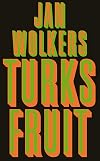
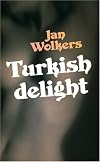
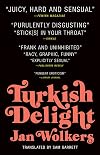
Turkish Delight
by Jan Wolkers
On This Page
Description
Upon its original publication in 1969, Turkish Delight was a sensation and a scandal. Its graphic language and explicit sex scenes had an explosive effect, but just as revolutionary was its frank, colloquial style. The more straightlaced critics condemned the book, but readers saw a novel that reflected the way that they spoke, thought, and felt.Turkish Delight opens with a screed: a sculptor in his studio, raging against the love he lost and describing, in gory detail, the state of his life show more since she left him. Our narrator alternates between the story of his relationship with Olga--its passion and affection, but also its obsessiveness and abuse--and the dark days that followed, as he attempts to recapture what they had when they lived together, "happy as beasts." The two only reunite during Olga's inexorable and tragic decline into cancer--the chemo having taken her hair and rotted her teeth, she will only eat the soft, sweet Turkish Delight that her ex-lover brings to her bedside.In a new translation by Sam Garrett (Herman Koch's The Dinner), readers get a sense of Wolkers's revolutionary style and musical prose, Turkish Delight's particular balance of naked impulse and profound longing.Tin House Books gratefully acknowledges the support of the Dutch Foundation for Literature, whose generous subsidy made this new translation possible. show lessTags
Recommendations










Member Reviews
Olga es burguesa, pelirroja y sensual hasta quitar el aliento. Él es un artista sin un centavo, rudo, práctico. Todo comienza con un choque automovilístico provocado por un doloroso cierre de bragueta, que desemboca en un matrimonio arrollador, desaforado, que desafía los prejuicios de la educación de Olga y se convierte en un paraíso terrenal en el que la locura es el destino final. Escrita a fines de los sesenta, Delicias turcas cuenta la historia de un amorío sorprendente, tempestuoso, sensual, escandalosamente explícito, una pasión de esas que sólo la muerte puede destruir. Pero también es una cruda y satírica mirada sobre el conflicto entre la potencia represora de la sociedad burguesa y los arrolladores embates de la show more revolución sexual. Delicias turcas ha sido traducida a más de diez idiomas y llevada a la pantalla grande por Paul Verhoeven en 1972. show less
In dit boek beschrijft Jan Wolkers op een zeer bevlogen en sensuele manier zijn liefde voor Olga, en zijn wanhoop na haar vertrek.
Dit boek heeft mij op vijftienjarige leeftijd de literatuur ingeleid. Mijn oudere zusje moest het lezen voor haar literatuurlijst en op een gegeven moment hoorde ik mijn moeder op fluistertoon vragen of ze het mee naar boven wilde nemen omdat het 'ongeschikt' voor mij was. Natuurlijk moest ik het boek toen lezen. Alles waar mijn moeder blijkbaar bang voor was gebeurde niet. Ik was helemaal niet geschokt door de beschrijving van de seksuele passages, maar wel door het rauwe liefdesverdriet van de hoofdpersoon. Zelf verzeild in een aan-uit-relatie met mijn eerste vriendje kon ik me helemaal inleven in de gevoelens van de naamloze ik-verteller. Na 'Turks fruit' heb ik ook alle andere romans van Wolkers verslonden...
Ook was ik er als de show more kippen bij toen 'Brieven aan Olga' verscheen van Wolkers biograaf Onno Blom. Een aanrader voor iedereen die net als ik van 'Turks Fruit' heeft genoten. show less
Ook was ik er als de show more kippen bij toen 'Brieven aan Olga' verscheen van Wolkers biograaf Onno Blom. Een aanrader voor iedereen die net als ik van 'Turks Fruit' heeft genoten. show less
Jan 5, 2011Dutch
1
De hoofdpersoon, de jonge beeldhouwer Erik heeft een turbulent liefdesleven, tot hij zijn grote liefde Olga ontmoet. Zij trouwen tegen de zin van Olga's rijke ouders. Geschapen voor elkaar, trekken zij zich niets aan van alle tegenwerking en beleven een grandioze, romantische zomer. Totdat Olga zich zeer vreemd begint te gedragen. Ze breekt abrupt met Erik en gaat weer naar haar ouders. Wat is er in godsnaam aan de hand?
Jan 9, 2008Dutch
Daté, dérangeant, facile mais percutant. et au final très émouvant.
Oct 26, 2021French
"סיפור אהבה" בגרסה שונה. בחור פוגש בחורה. בחור משוגע אחר בחורה. בחורה עוזבת בחור. בחור כמעט משתגע מצער. בחורה מתה מסרטן. הרבה מין ועוד הרבה יותר דם ומוות ודברים מורבידיים אחרים. נקרא היטב ומהר.
Dec 12, 2011Hebrew
In de autobiografische roman Turks Fruit verscheen oorspronkelijk in 1969. Jan Wolkers beschrijft in Turks fruit de heftige liefde van een beeldhouwer voor een jonge liftster. De roman is Wolkers meest gelezen en meest vertaalde boek en werd in 1972 verfilmd door Paul Verhoeven met Monique van der Ven en Rutger Hauer in de hoofdrollen. De roman beleefde tientallen herdrukken en geldt thans als een klassiek meesterwerk.
Apr 12, 2025Dutch
Members
- Recently Added By
Lists

Books About Candy
13 works; 5 members
Author Information

102+ Works 4,294 Members
Jan Wolkers could serve as the prototype of the group of post--World War II writers who give the impression of having seized the crushing of Nazi power as an opportunity to attempt to cast off the yoke of oppression in all forms and formats. Their protest took the form of rebellion against any form of authority that seemed to restrict their show more freedom and individuality. In effect they, and more particularly Wolkers, demonstrated against authority in the home (often represented by a supposedly dominant father figure); against the political system (as, for instance, represented by American capitalism and international military involvement); against God and church office-bearers; and finally, against society and social norms in general as these found expression in current views on proper language, morals, and manners. We thus find that Wolkers's main characters challenge all forms of established, prewar concepts as embodied in selected characters, frequently holding them up for ridicule and caricature. By way of contrast, the author portrays a series of persons who appear to be the victims of the corrupt views of modern society, usually social outcasts such as the immortal Uncle Louis in Serpentina's Petticoat (1961) with which Wolkers made his debut and simultaneously established his name. Animals, which almost by definition are also considered innocent, sometimes serve as victims of man's desire for power as well, as in Wolkers's famous Back to Oegstgeest (1965). A unique form of expression of resentment is Wolkers's use of cruelty, as though the writer wishes to vent his anger on anything he can lay his hands on. It is important to note, in this connection, that the negative qualities mentioned above---such as anger, resentment, ridicule, and cruelty---do, in fact, together form the very thin and sometimes transparent shell covering Wolkers's sensitive and vulnerable nature and his religious pursuit of fairness, justice, love, and beauty. In literally demonstrating these commendable qualities, Wolkers is a worthy representative of his generation. (Bowker Author Biography) show less
Some Editions
Awards and Honors
Notable Lists
Series
Belongs to Publisher Series
Common Knowledge
- Canonical title
- Turkish Delight
- Original title
- Turks fruit
- Original publication date
- 1969
- Important places
- Amsterdam, North Holland, Netherlands
- Related movies
- Turks fruit (1973 | IMDb)
- Dedication*
- Voor Olga Stabulas
- First words*
- Ik was aardig in de rotzooi terechtgekomen nadat ze bij me weggegaan was.
- Last words*
- (Click to show. Warning: May contain spoilers.)Ik zei dat ze hem moest ophouden. Dat ze het zelf zo gewild had.
- Original language
- Dutch
- Canonical DDC/MDS
- 839.31367
*Some information comes from Common Knowledge in other languages. Click "Edit" for more information.
Classifications
- Genres
- General Fiction, Fiction and Literature
- DDC/MDS
- 839.31367 — Literature & rhetoric German & related literatures Other Germanic literatures Netherlandish literatures Dutch Dutch fiction 20th Century 1946-1999
- LCC
- PT5881.33 .O38 .T8 — Language and Literature German, Dutch and Scandinavian literatures Dutch literature Individual authors or works 1961-2000
- BISAC
Statistics
- Members
- 727
- Popularity
- 39,039
- Reviews
- 9
- Rating
- (3.62)
- Languages
- 7 — Dutch, English, French, German, Polish, Spanish, Swedish
- Media
- Paper, Audiobook, Ebook
- ISBNs
- 38
- ASINs
- 8