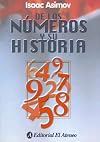
Asimov on Numbers
by Isaac Asimov
Essay Collections, Science essays for The Magazine of Fantasy and Science Fiction (16)
On This Page
Description
Seventeen essays on numbers and number theory and the relationship of numbers to measurement, the calendar, biology, astronomy, and the earth.Tags
Recommendations
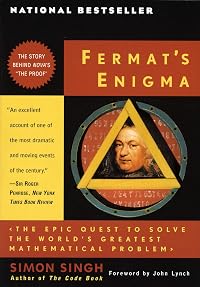


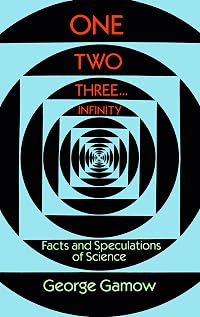













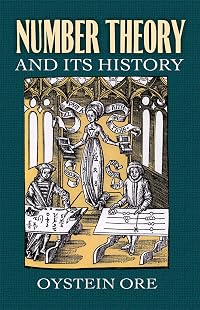
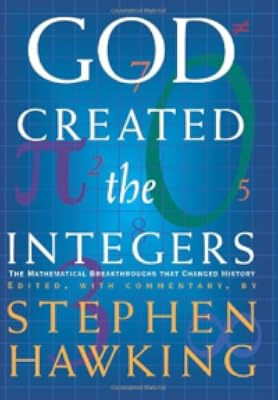
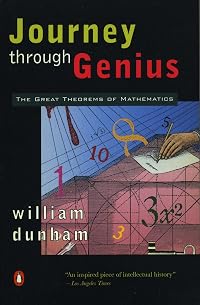

Member Recommendations
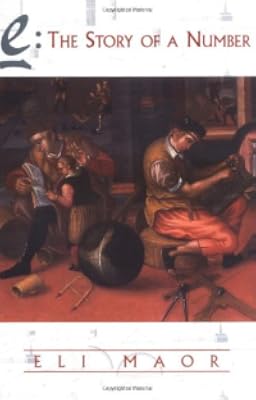
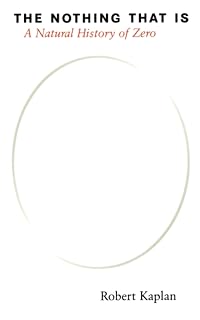
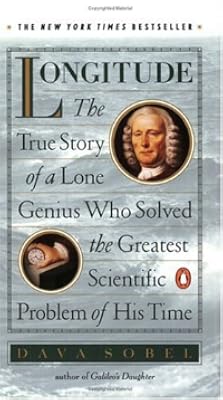
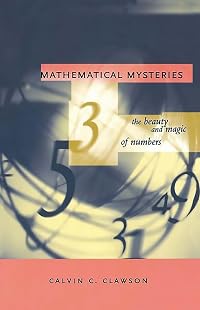
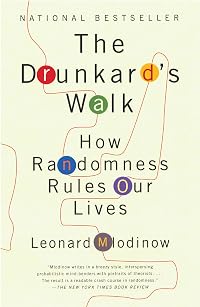
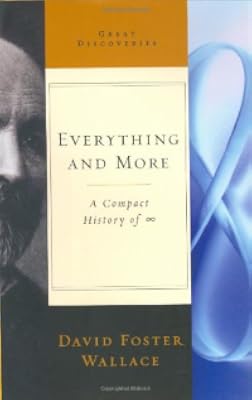
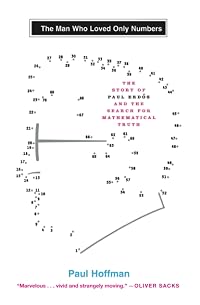
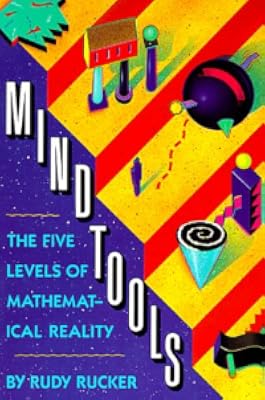
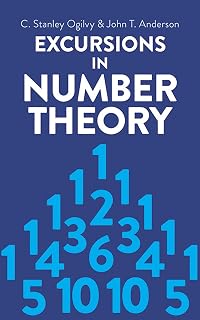
themulhern This discussion of e covers some of the same material as the third essay in Asimov's collection, but in a vastly more satisfying way.
Member Reviews
Each time I see a numeral
A prime, a two, a zero
I can’t resist a fine-eyed urge
To count and say
Thank Asimov, his “Numbers”
Have properties
Deducive, it’s their way.
Thank Asimov, his “Numbers,”
They rise up in
The most delightful ways.
Those little (pi)s
So helpful and revealing
When in equations
Send you answers
That you needed.
Thank heaven that their power
Brings favors to us all
No matter where
No matter who
Without them
What would we ever do?
Thank heaven
Thank heaven
Thank heaven for all numbers.
[Inspired by lyrics written by Alan Jay Lerner and Frederick Loewe and sung by Maurice Chevalier—but do not blame these gentlemen for the lines above.]
Numbers have a lot of personalities in this collection of essays: abundant, deficient, show more perfect, complex, Arabic, Roman, base 2 or 3 or anything, imaginary, real, rational, irrational, integral, natural, transcendental, negative, positive, prime, one or two or zero. Hey, how about that zero? Isaac Asimov teaches us not to underestimate it. Its magnitude may be zero but don’t be fooled—its impact has been huge.
I think my favorite bit had to do with the units for measuring volumes (of, e.g., beer!). Here are some that folks used in England: drams, firkins, kilderkins, barrels, hogsheads, puncheons, butts, pottles, bushels, pecks, strikes, cooms, quarters, chaldrons, weys, and lasts. If you feel those Dickensian names promise too simple a system of measurement, take note that some of these units change depending on
(1) What you are measuring (a firkin of ale does not equal a firkin of beer).
(2) Where you are measuring (a chaldron in London differs from a chaldron somewhere else).
Shouldn’t we Americans look to embrace this elegant system rather than that awfully inconvenient metric mess? show less
A prime, a two, a zero
I can’t resist a fine-eyed urge
To count and say
Thank Asimov, his “Numbers”
Have properties
Deducive, it’s their way.
Thank Asimov, his “Numbers,”
They rise up in
The most delightful ways.
Those little (pi)s
So helpful and revealing
When in equations
Send you answers
That you needed.
Thank heaven that their power
Brings favors to us all
No matter where
No matter who
Without them
What would we ever do?
Thank heaven
Thank heaven
Thank heaven for all numbers.
[Inspired by lyrics written by Alan Jay Lerner and Frederick Loewe and sung by Maurice Chevalier—but do not blame these gentlemen for the lines above.]
Numbers have a lot of personalities in this collection of essays: abundant, deficient, show more perfect, complex, Arabic, Roman, base 2 or 3 or anything, imaginary, real, rational, irrational, integral, natural, transcendental, negative, positive, prime, one or two or zero. Hey, how about that zero? Isaac Asimov teaches us not to underestimate it. Its magnitude may be zero but don’t be fooled—its impact has been huge.
I think my favorite bit had to do with the units for measuring volumes (of, e.g., beer!). Here are some that folks used in England: drams, firkins, kilderkins, barrels, hogsheads, puncheons, butts, pottles, bushels, pecks, strikes, cooms, quarters, chaldrons, weys, and lasts. If you feel those Dickensian names promise too simple a system of measurement, take note that some of these units change depending on
(1) What you are measuring (a firkin of ale does not equal a firkin of beer).
(2) Where you are measuring (a chaldron in London differs from a chaldron somewhere else).
Shouldn’t we Americans look to embrace this elegant system rather than that awfully inconvenient metric mess? show less
I suspect many folks would find this collection dry and a bit boring (made for nerds,) but I've always enjoyed Asimov's essays and have found his other collections insightful and fun to read. This collection was no exception. This specific collection featured essays on mathematics (more specifically numbers or arithmetic.) The book takes us from the discovery of concepts like "zero" to using numbers to scale, size, and categorize almost anything you can think of. By reading these you not only gain a better understanding of the history of math, insights into geography, biology, etc., but also the simple processes that can be used in our own every day efforts to understand and deal with the world around you. Along the way Asimov also show more includes extra embedded pieces that help illuminate a piece history or place that is connected to an essay. Of course there is also the Asimov charm and his corny humor which takes the edge off the technical thrust of this work. I've have also used some of the presentation ideas of Asmov in the book in teaching my 6-12 grade students math. show less
I came across this book at my school library by chance, I probably wouldn't have picked it up if it didn't have "Asimov" printed in large type down the spine. The book is a collection of nonfiction essays written by Isaac Asimov that deal in some way with numbers.
I was expecting a book about maths when I picked it up, and that's what it mostly was (written in a way that would be approachable by anyone who has an interest), but nearing the end they essays seemed to be included just because they had a bunch of numbers in them (but I can't blame the title for lying to me).
One of the essays included about the metric system (when it was written, most of the English world had not adopted it, by the time the book was published only the United show more States were left) threw me off because it sounded like one big attack against all other units of measure rather than an explanation of why the Metric system is better. I have no sympathy for any other systems, but this essay felt out of place from the others because of the style. show less
I was expecting a book about maths when I picked it up, and that's what it mostly was (written in a way that would be approachable by anyone who has an interest), but nearing the end they essays seemed to be included just because they had a bunch of numbers in them (but I can't blame the title for lying to me).
One of the essays included about the metric system (when it was written, most of the English world had not adopted it, by the time the book was published only the United show more States were left) threw me off because it sounded like one big attack against all other units of measure rather than an explanation of why the Metric system is better. I have no sympathy for any other systems, but this essay felt out of place from the others because of the style. show less
For several years running, Asimov wrote a regular column on general science for Fantasy & Science Fiction. These columns were later compiled into a series of books grouped by topic. Asimov on Numbers consists of those essays that Asimov wrote concerning math and (as one would expect) numbers.
In the first several essays in the book, Asimov takes on mathematical concepts like e, i, pi, and infinity – defining and explaining the terms, as well as attempting to give a little bit of history concerning their development. In later essays, Asimov discusses such "numbers" related topics as the metric system, roman numerals, and the structure of the calendar. The last few essays focus on taking about various geographical data, such as show more identifying the tallest mountains, or biggest lakes and islands (and coming up with multiple ways to judge which particular geographical feature gets the top spot in each category). Some of these essays can only be described as being about "numbers" in the very loosest sense, and probably appear in this volume mostly because they wouldn't fit into Asimov on Biology or any of the others in the series.
As I have noted elsewhere, Asimov's direct writing style, while sometimes a hindrance when writing fiction, is quite effective for non-fiction writing. His humor, while often groan-inducing, serves to leaven what could otherwise have been some interminably dull topics. The essays are intended for a general audience, so anyone who has studied mathematics to any great extent will likely not get much out of the essays other than Asimov's quirky and somewhat humorous take on various concepts. For someone who is almost entirely ignorant of anything beyond the most basic math, this book would be a decent, although sometimes meandering, introduction to the subject. Overall, this is a competent but unspectacular look into what could have been a relatively dry subject.
This review has also been posted to my blog Dreaming About Other Worlds. show less
In the first several essays in the book, Asimov takes on mathematical concepts like e, i, pi, and infinity – defining and explaining the terms, as well as attempting to give a little bit of history concerning their development. In later essays, Asimov discusses such "numbers" related topics as the metric system, roman numerals, and the structure of the calendar. The last few essays focus on taking about various geographical data, such as show more identifying the tallest mountains, or biggest lakes and islands (and coming up with multiple ways to judge which particular geographical feature gets the top spot in each category). Some of these essays can only be described as being about "numbers" in the very loosest sense, and probably appear in this volume mostly because they wouldn't fit into Asimov on Biology or any of the others in the series.
As I have noted elsewhere, Asimov's direct writing style, while sometimes a hindrance when writing fiction, is quite effective for non-fiction writing. His humor, while often groan-inducing, serves to leaven what could otherwise have been some interminably dull topics. The essays are intended for a general audience, so anyone who has studied mathematics to any great extent will likely not get much out of the essays other than Asimov's quirky and somewhat humorous take on various concepts. For someone who is almost entirely ignorant of anything beyond the most basic math, this book would be a decent, although sometimes meandering, introduction to the subject. Overall, this is a competent but unspectacular look into what could have been a relatively dry subject.
This review has also been posted to my blog Dreaming About Other Worlds. show less
Part I:
Chapter 1: Nothing Counts
Numbers, ancient numbers, the invention of zero. A typical dig at numerology, which of course deserves it. Apparently, when we talk about the score in a game we're really saying "What's the twenty?". How strange.
Chapter 2: One, Ten, Buckle My Shoe
Binary number system, and number systems using various bases. Conversion of base 2 to base 8 by grouping. It is easy to prove this must always be correct and does not require induction. The method is of course generalizable to other powers, e.g., base 3 and 27., base 2 and 4. Conversion between bases generally is more or less covered.
Chapter 3: Exclamation Point!
(1 + 1/n)^n approaches e from below as n approaches infinity. The derivative of this function is show more (1/x+1)^x*(ln(1/x+1)-1/((1/x+1)*x)) which is big and confusing (obtained from derivative-calculator.net, I couldn't have done it myself). It's not clear that this is positive for n > 0, just by looking, due to the negative term. So, I haven't shown that (1 + 1/n)^n is monotonically increasing, although Asimov seems quite sure.
Another way to express e is 1/0! + 1/1! + 1/2! + 1/3! + ... This is a nice expression, because every term you use increases the precision of your value. 1/n! > 1/(n + 1)! + 1/(n + 2)! + .... Asimov asserts this without proof.
Part II: Numbers and Mathematics
6. A Piece of Pi
Perimeter and diameter go together better than circumference and diameter. For one thing, circumference is Latin and the other two are Greek. Also, perimeter starts with pi, and when the diameter is one ms the perimeter is pi ms. There is a cute joke: if the law declaring pi to be 3 were passed, wouldn't all the wheels in the state obediently become hexagons? 22/7 is a fine rational approximation for pi, a bit too large by .04%. Archimedes used the "method of exhaustion" with 96 sided polygons and bounded pi from above by 22/7 and from below by 223/71. If you average the two and use that value for pi, the error is only 0.0082%, so precision increased by about 100 times. In the sixteenth century somebody arrived at the value 355/113 which is greater by only about 0.000008%. If you used that to calculate the circumference of the earth assuming it was a perfect sphere you would be off by 11 feet. 335/113 is 3.1415[92]. In the 16th century Francois Vieta uses a similar but more algebraic approach than Archimedes. Leibniz derived a series: pi = 4/1 - 4/3 + 4/5 - 4/7 + 4/9 - 4/11.... According to Asimov, this series does not converge very rapidly. You can look at a bunch of graphs online and see that among the various approximations it is one that is distinguished by oscillating wildly about the true value. With the naive approach, getting a value correct to 10 decimal places requires about five billion terms according to Wikipedia. Many people tried to calculate pi to various precisions, up to 72 decimal places by 1717, hoping to find a repeating term, hence proof that pi was a rational number. pi was proved irrational in 1761. For all known sizes, even the known size of the universe in Asimov's day, 35 decimal places is quite enough to leave one with a ridiculously small error when calculating lengths. Various people continued to calculate the value of pi more or less by hand into the late 1800s. In the 1940s that job was taken on by the ENIAC which got the value of pi to 2035 places and by 1955 10,000 or so.
Chapter 7: Tools of the Trade
Straightedge and compass constructions. By using compass and straightedge you can arrive at any rational number geometrically, apparently. It's not obvious to me how you would even trisect a line, but you can find convincing examples on Wikipedia. Clever, yet indirect. It might seem that it would be impossible to arrive at lines of irrational length using straightedge and compass construction but this, on reflection, is obviously not true. Think of square root of 2, which is irrational and which is also just the diagonal of a unit square. The Greeks believed that any conceivable number could be represented by some such construction, although it might take hundreds of years to discover, e.g., Gauss's division of the circle into 17 equal parts. The method could be generalized to various numbers, although certainly not all, but it also constituted a method for constructing n-sided polygons for the various n. Straightedge and compass numbers are a subset of the algebraic numbers (you can't take roots higher than 2 with a straightedge and compass). In 1844, it was proved that non-algebraic numbers exist. A likely but not certain candidate was e and in 1873 it was demonstrated that e was certainly not algebraic and it was called transcendental. In 1882 it was proved that pi was transcendental.
Part III: Numbers and Measurement
9: Forget It!
A tirade about how stupid it is to have a measurement system which does not match the base of the number system. The English finally went to decimal coinage and the metric system; but the US still sticks w/ the English system of measurement, which is a dumb thing to do. Makes some general remarks about simplifying English grammar, which are pretty stupid. Yet the publishers numbered the parts with Roman numerals anyway.
Part IV: Numbers and the Calendar
TODO
Part V: Numbers and Biology
TODO
Part VI: Numbers and Astronomy
TODO
Part VII: Numbers and the Earth
This is not quite a collection of miscellaneous geographical statistics, but nearly so.
15. Water, Water, Everywhere
The sizes of lakes and oceans.
16. Up and Down the Earth
Ranking mountains and trenches by how high and how deep using different metrics. This is the best of the three.
17. The Isles of Earth
Points out that the division of continents is kind of arbitrary. Europe and Asia run together and both are joined to Africa, really. One nice etymological point: island is derived from the Anglo-Saxon while isle is from the Latin, terra in sala -> insula. "island" gained an "s" late in its life to make it more like "Isle". show less
Chapter 1: Nothing Counts
Numbers, ancient numbers, the invention of zero. A typical dig at numerology, which of course deserves it. Apparently, when we talk about the score in a game we're really saying "What's the twenty?". How strange.
Chapter 2: One, Ten, Buckle My Shoe
Binary number system, and number systems using various bases. Conversion of base 2 to base 8 by grouping. It is easy to prove this must always be correct and does not require induction. The method is of course generalizable to other powers, e.g., base 3 and 27., base 2 and 4. Conversion between bases generally is more or less covered.
Chapter 3: Exclamation Point!
(1 + 1/n)^n approaches e from below as n approaches infinity. The derivative of this function is show more (1/x+1)^x*(ln(1/x+1)-1/((1/x+1)*x)) which is big and confusing (obtained from derivative-calculator.net, I couldn't have done it myself). It's not clear that this is positive for n > 0, just by looking, due to the negative term. So, I haven't shown that (1 + 1/n)^n is monotonically increasing, although Asimov seems quite sure.
Another way to express e is 1/0! + 1/1! + 1/2! + 1/3! + ... This is a nice expression, because every term you use increases the precision of your value. 1/n! > 1/(n + 1)! + 1/(n + 2)! + .... Asimov asserts this without proof.
Part II: Numbers and Mathematics
6. A Piece of Pi
Perimeter and diameter go together better than circumference and diameter. For one thing, circumference is Latin and the other two are Greek. Also, perimeter starts with pi, and when the diameter is one ms the perimeter is pi ms. There is a cute joke: if the law declaring pi to be 3 were passed, wouldn't all the wheels in the state obediently become hexagons? 22/7 is a fine rational approximation for pi, a bit too large by .04%. Archimedes used the "method of exhaustion" with 96 sided polygons and bounded pi from above by 22/7 and from below by 223/71. If you average the two and use that value for pi, the error is only 0.0082%, so precision increased by about 100 times. In the sixteenth century somebody arrived at the value 355/113 which is greater by only about 0.000008%. If you used that to calculate the circumference of the earth assuming it was a perfect sphere you would be off by 11 feet. 335/113 is 3.1415[92]. In the 16th century Francois Vieta uses a similar but more algebraic approach than Archimedes. Leibniz derived a series: pi = 4/1 - 4/3 + 4/5 - 4/7 + 4/9 - 4/11.... According to Asimov, this series does not converge very rapidly. You can look at a bunch of graphs online and see that among the various approximations it is one that is distinguished by oscillating wildly about the true value. With the naive approach, getting a value correct to 10 decimal places requires about five billion terms according to Wikipedia. Many people tried to calculate pi to various precisions, up to 72 decimal places by 1717, hoping to find a repeating term, hence proof that pi was a rational number. pi was proved irrational in 1761. For all known sizes, even the known size of the universe in Asimov's day, 35 decimal places is quite enough to leave one with a ridiculously small error when calculating lengths. Various people continued to calculate the value of pi more or less by hand into the late 1800s. In the 1940s that job was taken on by the ENIAC which got the value of pi to 2035 places and by 1955 10,000 or so.
Chapter 7: Tools of the Trade
Straightedge and compass constructions. By using compass and straightedge you can arrive at any rational number geometrically, apparently. It's not obvious to me how you would even trisect a line, but you can find convincing examples on Wikipedia. Clever, yet indirect. It might seem that it would be impossible to arrive at lines of irrational length using straightedge and compass construction but this, on reflection, is obviously not true. Think of square root of 2, which is irrational and which is also just the diagonal of a unit square. The Greeks believed that any conceivable number could be represented by some such construction, although it might take hundreds of years to discover, e.g., Gauss's division of the circle into 17 equal parts. The method could be generalized to various numbers, although certainly not all, but it also constituted a method for constructing n-sided polygons for the various n. Straightedge and compass numbers are a subset of the algebraic numbers (you can't take roots higher than 2 with a straightedge and compass). In 1844, it was proved that non-algebraic numbers exist. A likely but not certain candidate was e and in 1873 it was demonstrated that e was certainly not algebraic and it was called transcendental. In 1882 it was proved that pi was transcendental.
Part III: Numbers and Measurement
9: Forget It!
A tirade about how stupid it is to have a measurement system which does not match the base of the number system. The English finally went to decimal coinage and the metric system; but the US still sticks w/ the English system of measurement, which is a dumb thing to do. Makes some general remarks about simplifying English grammar, which are pretty stupid. Yet the publishers numbered the parts with Roman numerals anyway.
Part IV: Numbers and the Calendar
TODO
Part V: Numbers and Biology
TODO
Part VI: Numbers and Astronomy
TODO
Part VII: Numbers and the Earth
This is not quite a collection of miscellaneous geographical statistics, but nearly so.
15. Water, Water, Everywhere
The sizes of lakes and oceans.
16. Up and Down the Earth
Ranking mountains and trenches by how high and how deep using different metrics. This is the best of the three.
17. The Isles of Earth
Points out that the division of continents is kind of arbitrary. Europe and Asia run together and both are joined to Africa, really. One nice etymological point: island is derived from the Anglo-Saxon while isle is from the Latin, terra in sala -> insula. "island" gained an "s" late in its life to make it more like "Isle". show less
Números y más números. A través de diecisiete entretenidos ensayos, Asimov nos pasea por el universo de los números desde casi todos los puntos de vista concebibles. Así nos habla del cero, del infinito, de los números binarios, de los imaginarios, de la cuadratura del círculo. Calcula el tamaño del universo en protones, las islas de la Tierra según su superficie, así como la escala según su altitud de las montañas.
Jun 24, 2022Spanish
Ratings
Members
- Recently Added By
Author Information

2,399+ Works 292,899 Members
Isaac Asimov was born in Petrovichi, Russia, on January 2, 1920. His family emigrated to the United States in 1923 and settled in Brooklyn, New York, where they owned and operated a candy store. Asimov became a naturalized U.S. citizen at the age of eight. As a youngster he discovered his talent for writing, producing his first original fiction at show more the age of eleven. He went on to become one of the world's most prolific writers, publishing nearly 500 books in his lifetime. Asimov was not only a writer; he also was a biochemist and an educator. He studied chemistry at Columbia University, earning a B.S., M.A. and Ph.D. In 1951, Asimov accepted a position as an instructor of biochemistry at Boston University's School of Medicine even though he had no practical experience in the field. His exceptional intelligence enabled him to master new systems rapidly, and he soon became a successful and distinguished professor at Columbia and even co-authored a biochemistry textbook within a few years. Asimov won numerous awards and honors for his books and stories, and he is considered to be a leading writer of the Golden Age of science fiction. While he did not invent science fiction, he helped to legitimize it by adding the narrative structure that had been missing from the traditional science fiction books of the period. He also introduced several innovative concepts, including the thematic concern for technological progress and its impact on humanity. Asimov is probably best known for his Foundation series, which includes Foundation, Foundation and Empire, and Second Foundation. In 1966, this trilogy won the Hugo award for best all-time science fiction series. In 1983, Asimov wrote an additional Foundation novel, Foundation's Edge, which won the Hugo for best novel of that year. Asimov also wrote a series of robot books that included I, Robot, and eventually he tied the two series together. He won three additional Hugos, including one awarded posthumously for the best non-fiction book of 1995, I. Asimov. "Nightfall" was chosen the best science fiction story of all time by the Science Fiction Writers of America. In 1979, Asimov wrote his autobiography, In Memory Yet Green. He continued writing until just a few years before his death from heart and kidney failure on April 6, 1992. (Bowker Author Biography) show less
Series


Common Knowledge
- Original title
- Asimov on Numbers
- Original publication date
- 1977
- Dedication
- Dedicated to Cathleen Jordan and a new beginning
- First words
- Roman numerals seem, even after five centuries of obsolescence, to exert a peculiar fascination over the inquiring mind.
- Last words
- (Click to show. Warning: May contain spoilers.)Its mere existence, though, shows what a monster of a river the Amazon is.
Classifications
Statistics
- Members
- 371
- Popularity
- 84,476
- Reviews
- 6
- Rating
- (3.79)
- Languages
- English, Norwegian (Bokmål), Norwegian, Spanish
- Media
- Paper
- ISBNs
- 13
- ASINs
- 3