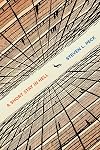
A Short Stay in Hell
by Steven L. Peck
On This Page
Description
An ordinary family man, geologist, and Mormon, Soren Johansson has always believed he'll be reunited with his loved ones after death in an eternal hereafter. Then, he dies. Soren wakes to find himself cast by a God he has never heard of into a Hell whose dimensions he can barely grasp: a vast library he can only escape from by finding the book that contains the story of his life.In this haunting existential novella, author, philosopher, and ecologist Steven L. Peck explores a subversive show more vision of eternity, taking the reader on a journey through the afterlife of a world where everything everyone believed in turns out to be wrong.
"Profound and disturbing, A SHORT STAY IN HELL is a perfect blend of science fiction, theology, and horror. A terrifying meditation on faith, human nature, and the relentless scope of eternity. It will haunt you, fittingly, for a very, very long time." – Dan Wells, author of I AM NOT A SERIAL KILLER
"An irresistible invention. Peck has somehow squeezed all of human experience, not to mention near-infinite expanses of space and time, into one miraculously slim novella. You won't be able to stop thinking about this book." – Ken Jennings, author of BRAINIAC and MAPHEAD
. show less
Tags
Recommendations


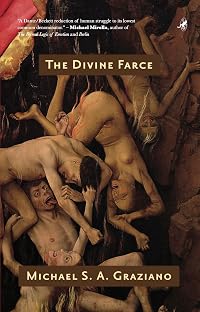
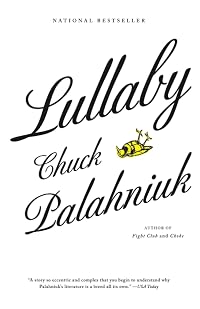
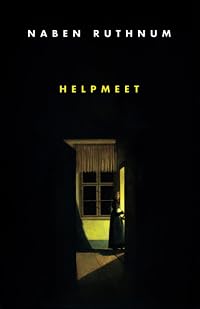

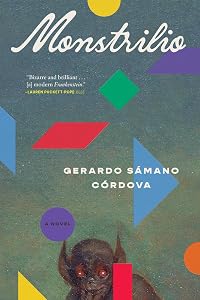







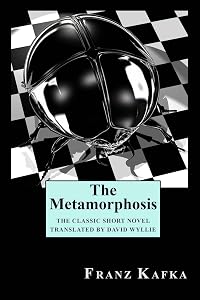
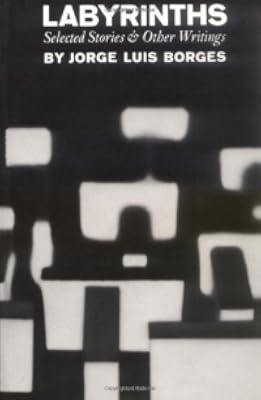
Member Recommendations
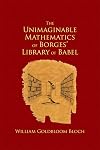
adamhindman This is a mathematical monograph aimed at lay people with college-level math under their belts, it is not fiction. But it is examining the same implications as Peck's story: what would such a universe as is described in Borges' story really be like?
Member Reviews
A Short Stay in Hell is one of those rare books that grows larger the more you think about it. The premise is simple: after his death, Soren Johansson discovers that the religion he devoted his life to was wrong and finds himself condemned to a vast library where he can only escape by finding the book that contains the story of his life.
What follows is less a horror novel than a philosophical thought experiment. This is not a book of jump scares or monsters. Instead, it explores questions about truth, identity, faith, certainty, choice, and what it means to be human when confronted with an impossible task.
What impressed me most is how many different ways this story can be read. It can be read as a meditation on religion, on the search show more for truth, on the nature of reality, on the choices that shape our lives, or on humanity's tendency to adapt to almost any circumstance. Every time I thought I understood what the book was about, another layer revealed itself.
Despite its bleak premise, the novella contains a surprising amount of dry humor and humanity. The characters continue to build routines, friendships, beliefs, and communities even in the most unimaginable of circumstances. That may be one of the book's most unsettling observations.
I would hesitate to call this horror. Weird literature feels like a better fit. The horror comes not from what happens, but from the ideas the book places in your mind and the questions it leaves behind. Long after finishing it, I found myself thinking about truth, probability, perfection, endings, and how our daily choices gradually become our lives.
At just over 100 pages, A Short Stay in Hell manages to contain more ideas than many novels five times its length. It is a book that rewards reflection, and I suspect every reader will find something different waiting for them on its shelves. show less
What follows is less a horror novel than a philosophical thought experiment. This is not a book of jump scares or monsters. Instead, it explores questions about truth, identity, faith, certainty, choice, and what it means to be human when confronted with an impossible task.
What impressed me most is how many different ways this story can be read. It can be read as a meditation on religion, on the search show more for truth, on the nature of reality, on the choices that shape our lives, or on humanity's tendency to adapt to almost any circumstance. Every time I thought I understood what the book was about, another layer revealed itself.
Despite its bleak premise, the novella contains a surprising amount of dry humor and humanity. The characters continue to build routines, friendships, beliefs, and communities even in the most unimaginable of circumstances. That may be one of the book's most unsettling observations.
I would hesitate to call this horror. Weird literature feels like a better fit. The horror comes not from what happens, but from the ideas the book places in your mind and the questions it leaves behind. Long after finishing it, I found myself thinking about truth, probability, perfection, endings, and how our daily choices gradually become our lives.
At just over 100 pages, A Short Stay in Hell manages to contain more ideas than many novels five times its length. It is a book that rewards reflection, and I suspect every reader will find something different waiting for them on its shelves. show less
This little novel has been stuck in my head (and my heart) for months now. It presents questions about the sense and scale of time and size that I still cannot wrap my head around. It's about being wrong, cosmically wrong, and having to accept it. It's about love, too. And loss. It made me think of my girl and if I ever show you this review, Bethany, I would look for you in the stacks. Forever.
So it turns out there is a God, & Hell is a real place for all the non-believers, & the one true faith is ... Zoroastrianism. Everyone else goes to Hell.
But, our hero, a 45 year old Mormon father & cancer victim, finds out that Hell is finite: not a place of eternal burning, but of "correction." He also learns there is more than 1 Hell. Different people go to different Hells. Soren seems to have lived a decent life, with the one fatal flaw of choosing the wrong religion. So he gets sent to the Library of Babel, a place that contains all books ever written, yet to be written, & all variations thereof.
And, at first blush, Hell doesn't seem so bad: everyone seems to be in their perfect body, you can order whatever you like to eat & it show more comes immediately, you owe nothing, you are not bound by Earthly obligations, you can drink to excess with no hangover, you can die... & you will come back the next day, perfect again. And... You are not alone. This is not a personal Hell. The trick is this: to get out, you must find the book containing the story of your life, in its perfect form - no errors, complete - and push it through a slot.
Given the size of the library, you know this isn't quite as easy as it sounds. But you don't know the real magnitude until someone opens a book, & sees a book full of punctuation. They're not sorting through just real books, or books about other people, or such books with errors. They must sort through any book possible, a Sisyphean task if there ever was one.
Soren realizes that humans will do what humans do, no matter where they are: love, learn, create order & structure, create chaos, doubt, believe ... But he also learns that without hope, it is all meaningless.
It's a short listen/read, but this book captures the big themes of life in a brief synopsis. Pick it up when you're in the mood for reflection on the nature of mankind. show less
But, our hero, a 45 year old Mormon father & cancer victim, finds out that Hell is finite: not a place of eternal burning, but of "correction." He also learns there is more than 1 Hell. Different people go to different Hells. Soren seems to have lived a decent life, with the one fatal flaw of choosing the wrong religion. So he gets sent to the Library of Babel, a place that contains all books ever written, yet to be written, & all variations thereof.
And, at first blush, Hell doesn't seem so bad: everyone seems to be in their perfect body, you can order whatever you like to eat & it show more comes immediately, you owe nothing, you are not bound by Earthly obligations, you can drink to excess with no hangover, you can die... & you will come back the next day, perfect again. And... You are not alone. This is not a personal Hell. The trick is this: to get out, you must find the book containing the story of your life, in its perfect form - no errors, complete - and push it through a slot.
Given the size of the library, you know this isn't quite as easy as it sounds. But you don't know the real magnitude until someone opens a book, & sees a book full of punctuation. They're not sorting through just real books, or books about other people, or such books with errors. They must sort through any book possible, a Sisyphean task if there ever was one.
Soren realizes that humans will do what humans do, no matter where they are: love, learn, create order & structure, create chaos, doubt, believe ... But he also learns that without hope, it is all meaningless.
It's a short listen/read, but this book captures the big themes of life in a brief synopsis. Pick it up when you're in the mood for reflection on the nature of mankind. show less
fiction, novella (dark humor, Mormon protagonist in a Zoroastrian version of Hell) - this one has a waitlist at my library, and I had figured perhaps the people on the waitlist were just curious library staffers (since the story is set in a library as Hell--all of the books are randomly generated characters/gibberish with the very rare word or sentence happening by chance), but there must also be some buzz because there are at least 30+ people on the waitlist, and it is a pretty quick read, so also quite a few library patrons who have heard of it somewhere.
This is a thought-provoking world carefully packed into a short story. I liked that it was sparing and was only as long as it needed to be, contained only what details it needed to show more have, and thus is a much more effective story than it might have otherwise been. show less
This is a thought-provoking world carefully packed into a short story. I liked that it was sparing and was only as long as it needed to be, contained only what details it needed to show more have, and thus is a much more effective story than it might have otherwise been. show less
More a thought experiment than a story, Steven L. Peck's A Short Stay in Hell takes the premise of Borges' famous story 'The Library of Babel' – a near-infinite library that contains not only every book that ever existed, but every book that ever could exist (including ones of complete gibberish) – and takes it to its logical end. Calculating that this would mean more books on shelves than there are electrons in the universe (pg. 92), Peck goes a great job of extrapolating what a 'Hell' composed of such a scenario would actually mean for one sentenced to it. The infinite totalitarian bleakness of Peck's novella is hard to describe, and genuinely terrifying.
What makes it more terrifying is its sheer capriciousness; those sentenced to show more this Hell do not know why they have, what they did wrong, nor does the task in front of them seem negotiable. (In order to escape this Hell, they must find the 'book of their life' from amongst the shelves and submit it.) On this front, A Short Stay in Hell is more of a mixed bag.
On one hand, the capriciousness of the task gives a sense of terrifying futility to their lot, a dose of stark existentialism that is daunting for the reader to ponder. However, the hastiness of some of the premise undercuts this and raises more questions than the short book can satisfactorily answer. A demon (yes, the sort with horns) glibly consigns people to this peculiar fate because they didn't follow the one true faith, but the implication that Zoroastrianism is the one truth faith means just about everyone who dies is consigned to Hell's torture by default and through no fault of their own. The task of finding the book is, by any reasonable measure, impossible; early on, it is noted that given the dimensions of the library even writing down the floor number it is on would be a longer number than the book could hold (pg. 2). It leads to a question, why would a God submit his people to this torture?
Of course, the idea of a capricious, or mad, or unfeeling God is in itself terrifying, particularly when such a God has sentenced you to an impossible eternal task that you cannot escape. But sometimes the questions raised by Peck's book felt like loopholes or oversights in the thought experiment, rather than implications, and that is before we even get onto some of the arbitrary particulars left unanswered (such as why everyone in this Hell is a white American – something remarked upon so often I assumed there would be a reason for it – or why they need food, or why the library resets every night).
I suppose the fact that the reader can be left alternately perplexed, frustrated or disturbed by the arbitrariness shows that Peck's Hell is working. Nevertheless, I had expected more resolution, or at least more in-depth consideration of the implications of Peck's world. Given the nature of the concept, I half-expected the 'solution' to be to submit any book – any of the gibberish on Hell's shelves – through the slot provided, because although each book was meaningless, so too was a life (from this existential perspective), and consequently a meaningless sequence of babble would be analogous to the 'story of your life'.
However, Peck leaves all of this on the table. The relentless questions that bobble up, futilely, might not be narratively satisfying, but the realisation that "we can't make a difference – all meaning has been subtracted" (pg. 65) is shown in its totality here. Peck has created a genuine Hell, one that shows the various hells that can be found in infinity, in belief, in time, in people, even in love. It's a profoundly disturbing, mind-destroying scenario, and one can only hope that if there is a god or power at work in the world, it is not cruel enough to create such a place. Peck's Hell is palatable only when safely ringfenced as fiction. show less
What makes it more terrifying is its sheer capriciousness; those sentenced to show more this Hell do not know why they have, what they did wrong, nor does the task in front of them seem negotiable. (In order to escape this Hell, they must find the 'book of their life' from amongst the shelves and submit it.) On this front, A Short Stay in Hell is more of a mixed bag.
On one hand, the capriciousness of the task gives a sense of terrifying futility to their lot, a dose of stark existentialism that is daunting for the reader to ponder. However, the hastiness of some of the premise undercuts this and raises more questions than the short book can satisfactorily answer. A demon (yes, the sort with horns) glibly consigns people to this peculiar fate because they didn't follow the one true faith, but the implication that Zoroastrianism is the one truth faith means just about everyone who dies is consigned to Hell's torture by default and through no fault of their own. The task of finding the book is, by any reasonable measure, impossible; early on, it is noted that given the dimensions of the library even writing down the floor number it is on would be a longer number than the book could hold (pg. 2). It leads to a question, why would a God submit his people to this torture?
Of course, the idea of a capricious, or mad, or unfeeling God is in itself terrifying, particularly when such a God has sentenced you to an impossible eternal task that you cannot escape. But sometimes the questions raised by Peck's book felt like loopholes or oversights in the thought experiment, rather than implications, and that is before we even get onto some of the arbitrary particulars left unanswered (such as why everyone in this Hell is a white American – something remarked upon so often I assumed there would be a reason for it – or why they need food, or why the library resets every night).
I suppose the fact that the reader can be left alternately perplexed, frustrated or disturbed by the arbitrariness shows that Peck's Hell is working. Nevertheless, I had expected more resolution, or at least more in-depth consideration of the implications of Peck's world. Given the nature of the concept, I half-expected the 'solution' to be to submit any book – any of the gibberish on Hell's shelves – through the slot provided, because although each book was meaningless, so too was a life (from this existential perspective), and consequently a meaningless sequence of babble would be analogous to the 'story of your life'.
However, Peck leaves all of this on the table. The relentless questions that bobble up, futilely, might not be narratively satisfying, but the realisation that "we can't make a difference – all meaning has been subtracted" (pg. 65) is shown in its totality here. Peck has created a genuine Hell, one that shows the various hells that can be found in infinity, in belief, in time, in people, even in love. It's a profoundly disturbing, mind-destroying scenario, and one can only hope that if there is a god or power at work in the world, it is not cruel enough to create such a place. Peck's Hell is palatable only when safely ringfenced as fiction. show less
My initial takeaway was that everything fresh and nuanced about the story was lifted from the Borges original and I walked away from the novella a little disappointed, but this story has really stayed with me and on further reflection I think it has something unique and interesting to offer.
This is one of a small number of books I've spent more time thinking about after the fact than it took to read. This is a great single-experience story where you can knock out the whole thing in one sitting. Definitely worth your time.
***Spoilers and some additional thoughts below***
I read The Library of Babel several years ago and was floored by how powerfully Borges communicates this sense of meaninglessness in a library that contains everything show more that can possibly be written. The perfect articulation of every truth ("the minutely detailed history of the future, the archangels' autobiographies…") exists, but is buried in an unfathomable mass of noise.
I was originally disappointed with A Short Stay in Hell, because it felt like Peck was just trying to "turn up the volume" on Borges' idea: 95 characters vs. the original 25, eternal life and perfect memory within the Library vs. a normal human span of years and a normal human recall, the Library as a capricious punishment for specific individuals vs. it being just the state of the universe that humans inhabit. But after some reflection, I don’t think that’s what’s going on here.
The Proficient Demon confides in Soren’s group that the people they see being tortured in a lake of lava are actors (and I read this as genuine), so one of the first things we learn about hell is that things are not always as they appear. Furthermore, we learn that hell is run by Ahura Mazda (“the wise god of judgement”) and its purpose is edification, not punishment. This does not strike me as being indicative of the careless, meaningless universe the Library seems to represent.
When Soren gets to the Library and we learn the rules, they come off like a head fake, with most rules being written in the style of a hotel notice, but rules 7 and 9 seem different:
7. Remember you are never really alone. Although it may feel like it for very long stretches of time.
9. Lastly, you are here to learn something. Don’t try to figure out what it is. This can be frustrating and unproductive.
Characters wonder what exactly a book that recounts their life story would contain. How detailed would it be and from whose perspective? How would you know it when you find it?
I don’t think the way out of hell has anything to do with a book. I think it has everything to do with Rachel. In this universe of meaningless, staggering repetition, the only thing special for Soren is Rachel, even after the eons that have passed since they were seperated. If hell is meant to instruct, if some lesson is meant to be drawn from these innumerable trillions of years of suffering with a perfect memory to recall every moment of it, it doesn’t make sense to me that the way out would be to find a book about yourself. Surely, you would have gained enough self-knowledge by then. The purpose of hell must be to meet someone, lose them in the vastness of the Library, and find them again. Maybe Dire Dan really was on a mission from God?
Soren, if you’re reading this—and because all possible combinations of text are contained within the library, you must be eventually—put down the books and go look for Rachel. I know she’s looking for you.
Final Thoughts:
* I hope the lady who was ostensibly sent to a hell full of bees made it out OK.
* 6.5/10; 0 - 10 scale, assuming a normal distribution of scores where every whole number above or below 5 is a standard deviation above or below the mean. show less
This is one of a small number of books I've spent more time thinking about after the fact than it took to read. This is a great single-experience story where you can knock out the whole thing in one sitting. Definitely worth your time.
***Spoilers and some additional thoughts below***
I read The Library of Babel several years ago and was floored by how powerfully Borges communicates this sense of meaninglessness in a library that contains everything show more that can possibly be written. The perfect articulation of every truth ("the minutely detailed history of the future, the archangels' autobiographies…") exists, but is buried in an unfathomable mass of noise.
I was originally disappointed with A Short Stay in Hell, because it felt like Peck was just trying to "turn up the volume" on Borges' idea: 95 characters vs. the original 25, eternal life and perfect memory within the Library vs. a normal human span of years and a normal human recall, the Library as a capricious punishment for specific individuals vs. it being just the state of the universe that humans inhabit. But after some reflection, I don’t think that’s what’s going on here.
The Proficient Demon confides in Soren’s group that the people they see being tortured in a lake of lava are actors (and I read this as genuine), so one of the first things we learn about hell is that things are not always as they appear. Furthermore, we learn that hell is run by Ahura Mazda (“the wise god of judgement”) and its purpose is edification, not punishment. This does not strike me as being indicative of the careless, meaningless universe the Library seems to represent.
When Soren gets to the Library and we learn the rules, they come off like a head fake, with most rules being written in the style of a hotel notice, but rules 7 and 9 seem different:
7. Remember you are never really alone. Although it may feel like it for very long stretches of time.
9. Lastly, you are here to learn something. Don’t try to figure out what it is. This can be frustrating and unproductive.
Characters wonder what exactly a book that recounts their life story would contain. How detailed would it be and from whose perspective? How would you know it when you find it?
I don’t think the way out of hell has anything to do with a book. I think it has everything to do with Rachel. In this universe of meaningless, staggering repetition, the only thing special for Soren is Rachel, even after the eons that have passed since they were seperated. If hell is meant to instruct, if some lesson is meant to be drawn from these innumerable trillions of years of suffering with a perfect memory to recall every moment of it, it doesn’t make sense to me that the way out would be to find a book about yourself. Surely, you would have gained enough self-knowledge by then. The purpose of hell must be to meet someone, lose them in the vastness of the Library, and find them again. Maybe Dire Dan really was on a mission from God?
Soren, if you’re reading this—and because all possible combinations of text are contained within the library, you must be eventually—put down the books and go look for Rachel. I know she’s looking for you.
Final Thoughts:
* I hope the lady who was ostensibly sent to a hell full of bees made it out OK.
* 6.5/10; 0 - 10 scale, assuming a normal distribution of scores where every whole number above or below 5 is a standard deviation above or below the mean. show less
Although the yellow-eyed Zoroastrian demon who sends the dead off to Hell at the beginning of this book never says so directly, there are enough hints as to the kind of Hell you get: for each of us, something appropriate to our interests or obsessions while alive. So for Soren Johansson, who always read a lot and loved books, it’s a vast library.
And I do mean vast because, though finite in size, the numbers involved here are so brain-frying this library might as well be infinitely big. This is in fact a novella-length reworking of Jorge Luis Borges’s short story The Library of Babel, and a Borges Library doesn’t just contain all the books ever written, it contains all possible books. Each volume is 410 pages long, forty show more lines per page, eighty characters per line and together they cover every possible combination of text, from “AAAA…” (i.e. 410 pages of nothing but capital As) to something like “////…” They’re arranged randomly on the shelves, so you’ve no idea where anything is; the shelves in stacks, the stacks on successive floors…endless floors… In this near-infinity it is Soren’s task (his punishment for not being a Zoroastrian I think, because he seems to have led a pretty blameless life otherwise) to search the stacks for the single volume which describes that life—finding it is what will release him from this hell.
Steven L Peck’s task of course is to somehow convince us (and by “us” I mean LibraryThingers everywhere who likewise read shed-loads of books, who think about books and love books the way we all do here) that this library could be a hell rather than a heaven. He does it though, in spades—the number of possible books is jaw-dropping. Early on for example: “I found this book around the 23⁴³⁹th day of my stay in Hell…” Even a professional mathematician would have to think long and hard about how to put into words a span of time such as this (phrases like “trillions of universes passing, one after another” don’t even make a dent in it). Likewise the scale of the building needed to house this collection—you could describe it in millimetres, or in billions of light-years, because in effect it makes no difference whatsoever. This story is about eternity and the true implications of phrases such as “eternal damnation”—or the “eternal life” of many another fantasy, or “eternal love”.
For Soren, no other escape is possible: he can’t kill himself, being already dead, and can’t even go mad—he’s kept horribly sane throughout. And yet, through it all there does remain the possibility of, somehow, finding that book of his life and being freed…perhaps with a more systematic search from the bottom floor up… So this is also about the extraordinary human capacity for hope, a hope that survives when all else has been lost, a hope that refuses to die—even in Hell.
[For anyone curious, the total number of possible books—all just 410 pages long, forty lines a page, eighty characters a line and using, say, about ninety-five keyboard-characters—is 95¹³¹²⁰⁰⁰. For comparison, the number of electrons in the entire visible universe is a “mere” 1.5⁸⁰. And the library itself? Roughly 7.16¹²⁹⁷³⁶⁹ light-years.] show less
And I do mean vast because, though finite in size, the numbers involved here are so brain-frying this library might as well be infinitely big. This is in fact a novella-length reworking of Jorge Luis Borges’s short story The Library of Babel, and a Borges Library doesn’t just contain all the books ever written, it contains all possible books. Each volume is 410 pages long, forty show more lines per page, eighty characters per line and together they cover every possible combination of text, from “AAAA…” (i.e. 410 pages of nothing but capital As) to something like “////…” They’re arranged randomly on the shelves, so you’ve no idea where anything is; the shelves in stacks, the stacks on successive floors…endless floors… In this near-infinity it is Soren’s task (his punishment for not being a Zoroastrian I think, because he seems to have led a pretty blameless life otherwise) to search the stacks for the single volume which describes that life—finding it is what will release him from this hell.
Steven L Peck’s task of course is to somehow convince us (and by “us” I mean LibraryThingers everywhere who likewise read shed-loads of books, who think about books and love books the way we all do here) that this library could be a hell rather than a heaven. He does it though, in spades—the number of possible books is jaw-dropping. Early on for example: “I found this book around the 23⁴³⁹th day of my stay in Hell…” Even a professional mathematician would have to think long and hard about how to put into words a span of time such as this (phrases like “trillions of universes passing, one after another” don’t even make a dent in it). Likewise the scale of the building needed to house this collection—you could describe it in millimetres, or in billions of light-years, because in effect it makes no difference whatsoever. This story is about eternity and the true implications of phrases such as “eternal damnation”—or the “eternal life” of many another fantasy, or “eternal love”.
For Soren, no other escape is possible: he can’t kill himself, being already dead, and can’t even go mad—he’s kept horribly sane throughout. And yet, through it all there does remain the possibility of, somehow, finding that book of his life and being freed…perhaps with a more systematic search from the bottom floor up… So this is also about the extraordinary human capacity for hope, a hope that survives when all else has been lost, a hope that refuses to die—even in Hell.
[For anyone curious, the total number of possible books—all just 410 pages long, forty lines a page, eighty characters a line and using, say, about ninety-five keyboard-characters—is 95¹³¹²⁰⁰⁰. For comparison, the number of electrons in the entire visible universe is a “mere” 1.5⁸⁰. And the library itself? Roughly 7.16¹²⁹⁷³⁶⁹ light-years.] show less
Members
- Recently Added By
Lists

Books Read in 2026
1,891 works; 66 members
Author Information
16+ Works 1,113 Members
Some Editions
Awards and Honors
Notable Lists
Work Relationships
Was inspired by
Inspired
Common Knowledge
- Original publication date
- 2012-03
- People/Characters
- Soren Johansson; Xandern (demon); Lester Green; Julia Hanson; Elliott Callington; Larisa Sims (show all 10); Bob "Biscuit"; Rachel Hasnick; Dire Dan; Wand
- Important places
- Hell
- First words
- Although I have loved many, there has been only one genuine love in my near-eternally stretched life – Rachel who fell to the bottom of the library with me.
- Last words
- (Click to show. Warning: May contain spoilers.)I'm really trying, and that will be enough.
- Blurbers
- Wells, Dan; Jennings, Ken
- Original language
- English
Classifications
Statistics
- Members
- 968
- Popularity
- 27,274
- Reviews
- 48
- Rating
- (4.01)
- Languages
- English, Turkish
- Media
- Paper, Audiobook, Ebook
- ISBNs
- 5
- ASINs
- 3