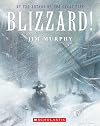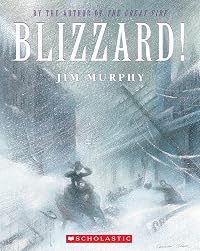
Blizzard!: The Storm That Changed America
by Jim Murphy
On This Page
Description
Presents a history, based on personal accounts and newspaper articles, of the massive snow storm that hit the Northeast in 1888, focusing on the events in New York City.Tags
Recommendations
















Member Reviews
... that changed America." ?áWell, here in Carson City NV we still don't get snowplows on the residential streets. ?áAnd many cities still don't have subways, notably Minneapolis & St. Paul, which get plenty of snow. ?áBut Boss Tweed lost the fight to avoid building an underground transit after this storm. ?áI'd hoped, while reading of all the horrors, all the frozen people, that another "change" would be to find ways to better shelter the poor of NYC, but apparently the time wasn't ripe for that reform.
Anyway, terrific book for all ages about 8 and up. ?áLots of material, but lots of primary document illustrations, too. ?áEngaging writing. ?áIncludes personal author's note, annotated bibliography, and index. show more ?áEvery school library should have a copy, because everybody needs to learn that Mother Nature will have her way, and we still can't predict her whims, much less control her." show less
Anyway, terrific book for all ages about 8 and up. ?áLots of material, but lots of primary document illustrations, too. ?áEngaging writing. ?áIncludes personal author's note, annotated bibliography, and index. show more ?áEvery school library should have a copy, because everybody needs to learn that Mother Nature will have her way, and we still can't predict her whims, much less control her." show less
Blizzard tells the story of the snow storm that hit the east coast in March of 1888, and how the devastating power of that storm killed hundreds of people and brought more than one large city to a complete standstill.
Murphy does a wonderful job of weaving facts, first-hand accounts and touching moments into this story. He tells not only the stories of the survivors, but also of those who died tragically, with compassion and attention to detail. He follows a small number of individuals throughout the story of the storm, and then follows up by telling how the storm pushed lawmakers to make very important changes in the ways the cities were run - this storm, for instance, was responsible for reforming the way electrical lines were strung show more (no more above ground), how many individuals a city employed for clean-up (thousands were hired for garbage and snow shoveling), and the subway, which before this had been a dream of one man who'd been unable to get enough support to make it a reality, suddenly had overwhelming support from all the voters who had been stranded on above ground transit during the storm.
Fascinating - recommended. show less
Murphy does a wonderful job of weaving facts, first-hand accounts and touching moments into this story. He tells not only the stories of the survivors, but also of those who died tragically, with compassion and attention to detail. He follows a small number of individuals throughout the story of the storm, and then follows up by telling how the storm pushed lawmakers to make very important changes in the ways the cities were run - this storm, for instance, was responsible for reforming the way electrical lines were strung show more (no more above ground), how many individuals a city employed for clean-up (thousands were hired for garbage and snow shoveling), and the subway, which before this had been a dream of one man who'd been unable to get enough support to make it a reality, suddenly had overwhelming support from all the voters who had been stranded on above ground transit during the storm.
Fascinating - recommended. show less
Kearsten says: Blizzard tells the story of a snow storm that hit the east coast in March of 1888, and how the devastating power of that storm killed hundreds of people and brought more than one large city to a complete standstill.
Murphy does a wonderful job of weaving facts, first-hand accounts and touching moments into this story. He tells not only the stories of the survivors, but also of those who died tragically, with compassion and attention to detail. He follows a small number of individuals throughout the story of the storm, and then follows up by telling how the storm pushed lawmakers to make very important changes in the ways the cities were run - this storm, for instance, was responsible for reforming the way electrical lines show more were strung (no more above ground), how many individuals a city employed for clean-up (thousands were hired for garbage and snow shoveling), and the subway, which before this had been a dream of one man who'd been unable to get enough support to make it a reality, suddenly had overwhelming support from all the voters who had been stranded on above-ground transit during the storm.
Fascinating - recommended. show less
Murphy does a wonderful job of weaving facts, first-hand accounts and touching moments into this story. He tells not only the stories of the survivors, but also of those who died tragically, with compassion and attention to detail. He follows a small number of individuals throughout the story of the storm, and then follows up by telling how the storm pushed lawmakers to make very important changes in the ways the cities were run - this storm, for instance, was responsible for reforming the way electrical lines show more were strung (no more above ground), how many individuals a city employed for clean-up (thousands were hired for garbage and snow shoveling), and the subway, which before this had been a dream of one man who'd been unable to get enough support to make it a reality, suddenly had overwhelming support from all the voters who had been stranded on above-ground transit during the storm.
Fascinating - recommended. show less
Kearsten says: Blizzard tells the story of the snow storm that hit the east coast in March of 1888, and how the devastating power of that storm killed hundreds of people and brought more than one large city to a complete standstill.
Murphy does a wonderful job of weaving facts, first-hand accounts and touching moments into this story. He tells not only the stories of the survivors, but also of those who died tragically, with compassion and attention to detail. He follows a small number of individuals throughout the story of the storm, and then follows up by telling how the storm pushed lawmakers to make very important changes in the ways the cities were run - this storm, for instance, was responsible for reforming the way electrical show more lines were strung (no more above ground), how many individuals a city employed for clean-up (thousands were hired for garbage and snow shoveling), and the subway, which before this had been a dream of one man who'd been unable to get enough support to make it a reality, suddenly had overwhelming support from all the voters who had been stranded on above ground transit during the storm.
Fascinating - recommended. show less
Murphy does a wonderful job of weaving facts, first-hand accounts and touching moments into this story. He tells not only the stories of the survivors, but also of those who died tragically, with compassion and attention to detail. He follows a small number of individuals throughout the story of the storm, and then follows up by telling how the storm pushed lawmakers to make very important changes in the ways the cities were run - this storm, for instance, was responsible for reforming the way electrical show more lines were strung (no more above ground), how many individuals a city employed for clean-up (thousands were hired for garbage and snow shoveling), and the subway, which before this had been a dream of one man who'd been unable to get enough support to make it a reality, suddenly had overwhelming support from all the voters who had been stranded on above ground transit during the storm.
Fascinating - recommended. show less
While this book is not a difficult read, there are so many ways this storm affected the US, not just at that time, but in the future too. A three day storm starting March 12, 1888 was not the worst snowstorm to ever hit the country nor was it to be the last. It's devistation would be profound. There would be storms which were greater, but America had learned her lessons about the need for city services, protecting the government and the president, expanding the knowledge and need for weather forecasting and services, and making sure communication lines and a train system would go underground. Quite and interesting little book. Lots of great pictures too.
It had been an unusually winter, so mild that Longfellow,
enjoying the warm sunshine, had just penned a poem
about dandelions. Two unusual weather patterns were about to combine and bring the East Coast to a standstill. For three days, beginning on March 12, 1888, one of the greatest blizzards in recorded American history was about
to paralyze everything.
Murphy, a Newberry Award winner, has combined the personal accounts of several individuals of different ages and social positions to bring a sense of "being there" to his account.
What made the storm even more unusual was that after having pounded the Northeast, the storm reversed course and plastered the same area again. Snow removal became impossible; trains became stuck for days, and show more soon
food was in short supply, prices rising commensurately
with demand. Shoveling was impossible, and soon tunnels needed to be dug to get anywhere. Sleighs could be seen moving down the street at a level with second-story windows.
Different ethnic and class groups fared differently.
Some needed money so badly and working conditions were so demanding that they walked miles in the blizzard, risking life and limb, to get to work.
There were spectacular feats of bravery and extraordinary examples of stupidity. After the storm, huge cakes of ice had formed on the river, and some bright little fellow got the idea of using a ladder to bridge the distance from shore to one of the large ice floes. He demonstrated how safe the
ice was and soon was making a mint by charging for the use of his ladder. Everything went well, with several hundred people gathering on the huge piece of ice, until the tide turned and the ice began to break up into small floes and float out to sea. Many managed to scramble ashore, but, sure enough, some refused to leave at the first signs of breakup, and they became stranded on increasingly small pieces. Finally, only one man, dressed quite nattily, remained stranded until a tug pushed its way through the ice to rescue him. The blizzard of 1888 killed some 800 people, and this does not include those who died from heart attacks or ancillary causes. The storm
changed the way the government viewed snow.
The economic hardship and losses were so substantial
that cities realized they could no longer afford to ignore snow removal. Even though 17,000 shovelers had been hired to clear streets, the task was haphazard at best. Electric lines were another problem. They had been strung on overhead poles
by numerous private utilities. Visions of live wires
snapping on mounds of snow and an electrocuted lineman hanging from a wire with blue flames coming from his mouth left indelible impressions on both citizens and politicians. Soon laws were passed requiring that wires be moved underground.
The Signal Corps, which had previously been given responsibility for weather reports, had its mandate given to a new agency, the Weather Bureau, which was also charged with
learning about what causes storms in order to better predict them. It remained a difficult task. A hurricane in Texas killed 6,000 several years later, despite predictions. Nature -- or God if you prefer to believe She actually pays attention to such things -- remains impossible to predict with complete accuracy. Storms, like life, remain
random and mysterious.
This is wonderful narrative history, seen through the eyes of numerous individuals. One gets a real sense for the ambiance of the time. show less
enjoying the warm sunshine, had just penned a poem
about dandelions. Two unusual weather patterns were about to combine and bring the East Coast to a standstill. For three days, beginning on March 12, 1888, one of the greatest blizzards in recorded American history was about
to paralyze everything.
Murphy, a Newberry Award winner, has combined the personal accounts of several individuals of different ages and social positions to bring a sense of "being there" to his account.
What made the storm even more unusual was that after having pounded the Northeast, the storm reversed course and plastered the same area again. Snow removal became impossible; trains became stuck for days, and show more soon
food was in short supply, prices rising commensurately
with demand. Shoveling was impossible, and soon tunnels needed to be dug to get anywhere. Sleighs could be seen moving down the street at a level with second-story windows.
Different ethnic and class groups fared differently.
Some needed money so badly and working conditions were so demanding that they walked miles in the blizzard, risking life and limb, to get to work.
There were spectacular feats of bravery and extraordinary examples of stupidity. After the storm, huge cakes of ice had formed on the river, and some bright little fellow got the idea of using a ladder to bridge the distance from shore to one of the large ice floes. He demonstrated how safe the
ice was and soon was making a mint by charging for the use of his ladder. Everything went well, with several hundred people gathering on the huge piece of ice, until the tide turned and the ice began to break up into small floes and float out to sea. Many managed to scramble ashore, but, sure enough, some refused to leave at the first signs of breakup, and they became stranded on increasingly small pieces. Finally, only one man, dressed quite nattily, remained stranded until a tug pushed its way through the ice to rescue him. The blizzard of 1888 killed some 800 people, and this does not include those who died from heart attacks or ancillary causes. The storm
changed the way the government viewed snow.
The economic hardship and losses were so substantial
that cities realized they could no longer afford to ignore snow removal. Even though 17,000 shovelers had been hired to clear streets, the task was haphazard at best. Electric lines were another problem. They had been strung on overhead poles
by numerous private utilities. Visions of live wires
snapping on mounds of snow and an electrocuted lineman hanging from a wire with blue flames coming from his mouth left indelible impressions on both citizens and politicians. Soon laws were passed requiring that wires be moved underground.
The Signal Corps, which had previously been given responsibility for weather reports, had its mandate given to a new agency, the Weather Bureau, which was also charged with
learning about what causes storms in order to better predict them. It remained a difficult task. A hurricane in Texas killed 6,000 several years later, despite predictions. Nature -- or God if you prefer to believe She actually pays attention to such things -- remains impossible to predict with complete accuracy. Storms, like life, remain
random and mysterious.
This is wonderful narrative history, seen through the eyes of numerous individuals. One gets a real sense for the ambiance of the time. show less
Short book that tells the history of a severe blizzard that hit the Northeastern US in March, 1888. Though the storm covered many states, from Virginia to Maine, the story is focused on the area around New York City. It contains stories of individuals who miraculously survived and many who did not. Back then, weather forecasting was still pretty primitive, and telegraph communications were easily disrupted. Near the end, the author recounts some of the improvements that were made in disaster planning as a result. It provides enough historic details to give readers a good idea about how people lived in those days and how different it is from today.
Members
- Recently Added By
Lists

Newbery Adjacent
747 works; 3 members

Books Read in 2024
4,623 works; 126 members

Robert F. Sibert Informational Book Medal
102 works; 1 member
Author Information

41+ Works 12,308 Members
Jim Murphy has written more than twenty-five books for young people. In addition to the Newbery Honor, which he received for The Great Fire, he has won many other awards, including the Robert F. Sibert Informational Book Award and a Boston Globe/Horn Book Honor. He is also the two-time winner of both the SCBWI Golden Kite Award and the NCTE Orbis show more Pictus Award Mr. Murphy lives with his family in Maplewood, New Jersey show less
Awards and Honors
Awards
Distinctions
Notable Lists
Common Knowledge
- Alternate titles
- Blizzard
- Original publication date
- 2000
- Important places
- New York, New York, USA
- Important events
- Disaster: Blizzard
- First words
- On Saturday, March 10, 1888, the weather from Maine on down to Maryland was clear and unusually warm.
- Quotations
- The first subway line in New York City opened in 1904 by August Belmont's Interborough Rapid Transit Company (the IRT), initially covered 22 miles and was an immediate success. Soon, it was carrying over 600,000 people a yea... (show all)r, in rain, summer heat, and, as Alfred Ely Beach had said all along, even during snowstorms (116).
- Last words
- (Click to show. Warning: May contain spoilers.)It is only a snowstorm, but it has downed us.
Classifications
Statistics
- Members
- 787
- Popularity
- 35,385
- Reviews
- 26
- Rating
- (3.81)
- Languages
- English
- Media
- Paper, Audiobook
- ISBNs
- 10
- ASINs
- 3