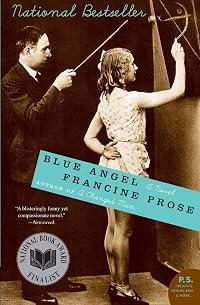
Blue Angel
by Francine Prose
On This Page
Description
The National Book Award Finalist from acclaimed New York Times bestselling author Francine Prose—now the major motion picture Submission “Screamingly funny … Blue Angel culminates in a sexual harassment hearing that rivals the Salem witch trials.” —USA Today It's been years since Swenson, a professor in a New England creative writing program, has published a novel. It's been even longer since any of his students have shown promise. Enter Angela Argo, a pierced, tattooed student show more with a rare talent for writing. Angela is just the thing Swenson needs. And, better yet, she wants his help. But, as we all know, the road to hell is paved with good intentions.Deliciously risque, Blue Angel is a withering take on today's academic mores and a scathing tale that vividly shows what can happen when academic politics collides with political correctness. show lessTags
Recommendations





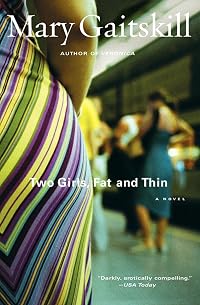
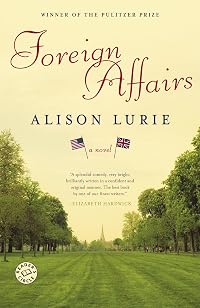
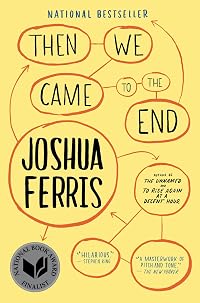

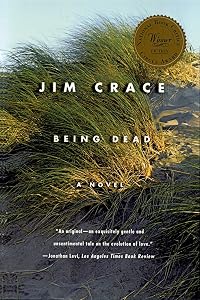
Member Recommendations
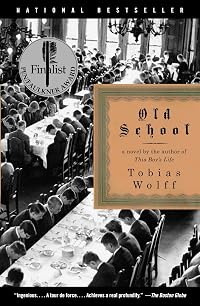
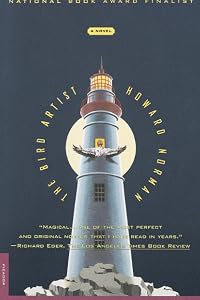
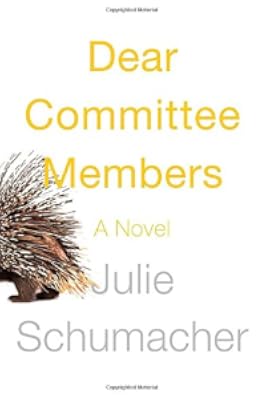
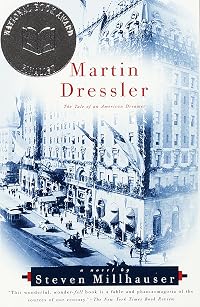
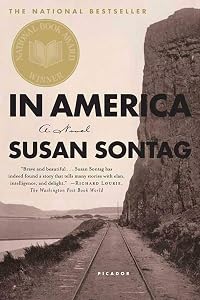
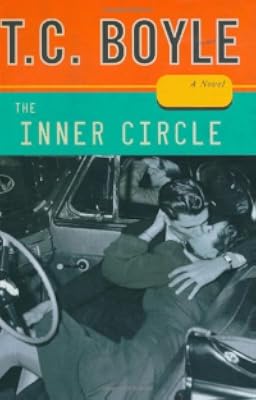
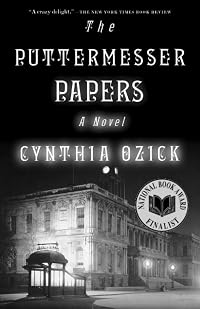
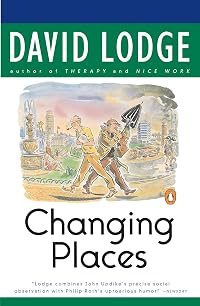
SqueakyChu Student-teacher sexual liasons
Member Reviews
I read nearly twenty years ago when I was going through a huge teacher-student erotic romance book phase. I'd begun to wonder about it lately, and was glad when a Goodreads member helped me find it again. The cover makes it clear this is supposed to be a dark comedy, if that makes sense. I certainly picked up on the first page that it was supposed to be a dark comedy. None of the jokes land at all. The title is such for a stupid, self-indulgent reason. The novel has several of my least favorite tropes and factors: racism, tokenism, misogyny, blaming and shaming domestic violence victims, cheating, novel within a novel, oh noetry within a novel, writing workshops within a novel, and being gratuitously shocking. Trigger warnings also show more include graphic descriptions of mentioned bestiality, necrotic bestiality, child sexual abuse and other child abuse. This book aged POORLY. Wow.
If readers want to skip to the sex, it only happens once and is on pages 168 to 169 in the edition I read. You are not missing anything else in the whole book. There's no real plot and everyone except Sherrie sucks. This book isn't racy at all. It's barely even sexual. There's no UST, no buildup, no relationship beforehand, and the professor literally thinks smugly, "I knew this would happen, just like I--" and flatly describes the foreplay in a run-on sentence for nearly a paragraph devoid of any eroticism. The sex is brief and seems dissatisfying for both parties, or such is the lackluster and hurried description. Wham bam thank you ma'am is an apt description.
In a "blink and you miss it" moment, Angela mentions her dorm-mates find her "insane" for having so many celeb photos. Keep dramatizing yourself, sweetie. When I was eighteen and in undergrad, my dorm-mate plastered a whole shared hallway plus shared bathroom with movie posters, comics, magazine ads featuring celebrities, a large blank paper for us all to draw on, and such. All shapes and sizes. The rest of us thought it was awesome. So your pictures are a non-issue. For the record, I'm goth and have been since I was twelve, and you're an alterna-teen but okay. It's not just how her professor described her, either. This annoyed me.
The dude whines a -lot-, and we spend the whole book inside his yammering, chatty, trying so hard to be deep but just being whiny and varying shades of lilac, violet, wisteria, and also some other purples so deep they're closer to black. Nothing freakin' happens in this book! This isn't a teacher-student book, it's a whiny middle-aged guy drooling and panting over a girl his daughter's age. The book keeps pointing out this fact. One of Angela's works is described as "Lolita" from Lolita's perspective. Twenty years later, "My Dark Vanessa" came out. Please read that one; it approaches the topic with the gravity it deserves.
When Swenson faces negative consequences, he cannot stop calling Angela a bitch and using other terrible language about women in general. I read a blurb that compared Swenson's hearing for sexual harassment to the Salem Witch Trials. Whoever made that comparison should never be respected again and never be able to be sexually aroused ever again. Why were all those students at the hearing? Why did it go on for so long? It was written just as blandly as the rest of the book. Angela tells lies upon lies at the hearing, and gets her friends to lie for her. I don't know why I was surprised, considering the tone of this book. I cheered Sherrie on when she was furious with her husband for manipulating a student into sex, and so glad when she informed him of a possible divorce. When he whined, I laughed.
This book is mean-spirited and later hateful. Not at all a satire or darkly comedic. It's just pointless. show less
If readers want to skip to the sex, it only happens once and is on pages 168 to 169 in the edition I read. You are not missing anything else in the whole book. There's no real plot and everyone except Sherrie sucks. This book isn't racy at all. It's barely even sexual. There's no UST, no buildup, no relationship beforehand, and the professor literally thinks smugly, "I knew this would happen, just like I--" and flatly describes the foreplay in a run-on sentence for nearly a paragraph devoid of any eroticism. The sex is brief and seems dissatisfying for both parties, or such is the lackluster and hurried description. Wham bam thank you ma'am is an apt description.
In a "blink and you miss it" moment, Angela mentions her dorm-mates find her "insane" for having so many celeb photos. Keep dramatizing yourself, sweetie. When I was eighteen and in undergrad, my dorm-mate plastered a whole shared hallway plus shared bathroom with movie posters, comics, magazine ads featuring celebrities, a large blank paper for us all to draw on, and such. All shapes and sizes. The rest of us thought it was awesome. So your pictures are a non-issue. For the record, I'm goth and have been since I was twelve, and you're an alterna-teen but okay. It's not just how her professor described her, either. This annoyed me.
The dude whines a -lot-, and we spend the whole book inside his yammering, chatty, trying so hard to be deep but just being whiny and varying shades of lilac, violet, wisteria, and also some other purples so deep they're closer to black. Nothing freakin' happens in this book! This isn't a teacher-student book, it's a whiny middle-aged guy drooling and panting over a girl his daughter's age. The book keeps pointing out this fact. One of Angela's works is described as "Lolita" from Lolita's perspective. Twenty years later, "My Dark Vanessa" came out. Please read that one; it approaches the topic with the gravity it deserves.
When Swenson faces negative consequences, he cannot stop calling Angela a bitch and using other terrible language about women in general. I read a blurb that compared Swenson's hearing for sexual harassment to the Salem Witch Trials. Whoever made that comparison should never be respected again and never be able to be sexually aroused ever again. Why were all those students at the hearing? Why did it go on for so long? It was written just as blandly as the rest of the book. Angela tells lies upon lies at the hearing, and gets her friends to lie for her. I don't know why I was surprised, considering the tone of this book. I cheered Sherrie on when she was furious with her husband for manipulating a student into sex, and so glad when she informed him of a possible divorce. When he whined, I laughed.
This book is mean-spirited and later hateful. Not at all a satire or darkly comedic. It's just pointless. show less
Blue Angel is nearly as mind-bendingly disturbing and impossible to put down as Gone Girl, but so much better. The small-scale drama of Professor Ted Swenson's dalliance with student Angela Argo at Vermont's Euston College resonates with all sorts of layered meanings, and goes down like a delicious milkshake spiked with ground-up glass. Francine Prose leaves no doubt that Angela is a fascinating sociopath, but she casts a much wider net than that. While leaving the reliability of Ted's perspective on the story a hanging question, Prose pokes wry fun at the mores of modern academia, and questions its (and our) assumptions about the balance of power in relationships and what constitutes a victim, while sprinkling plenty of titillating show more breadcrumbs on her trail. I deduct a half a star (which isn't possible on Goodreads, so a full star) for some overly predictable plot twists towards the end. show less
The novel Blue Angel by Francine Prose is a contemporary novel whose plot and tone are loosely based on the 1930 Marlene Dietrich tragicomedic German film, The Blue Angel. Its hapless protagonist is Ted Swenson, a creative writing professor at Euston, a small, second-tier, liberal arts college in Vermont. He's also published a successful semi-autobiographical novel, Blue Angel, and has been unproductively working on another one for years. But writer's block is the least of Swenson's problems. From an outside perspective, he seems to have it pretty good, a secure tenured position, a loving wife who he remains attracted to, a country home, a middle-class life. But at 47, he's bored and annoyed by his untalented students, loathes all but show more one of his professorial colleagues, seems not particularly suited to life in the New England boondocks and is otherwise ripe for a self-destructive mid-life crisis. Enter Angela Argo, a skinny, awkward, leather-clad and pierced, punkish student who can actually write. And the theme of her novel - yes you've got it - a liaison between a high school student and her teacher. Prose's strength is the humor she brings to describing the pretensions of academia, political correctness, and gender politics, and the fun she pokes at students and professors alike. But underneath the winks and nods and satire, is a sad and cautionary tale of self-destruction and confusion. As in Shakespeare, the line between tragedy and comedy is indeed thin. show less
The title of this novel comes from Josef von Sternberg's silent classic about an uptight middle-aged schoolteacher who's helplessly seduced by cabaret singer Marlene Dietrich; at the end, he's debased into playing a "slobbering clown". And thusly goes the inexorable journey of Prose's morally repugnant yet simultaneously lovable protagonist, Ted Swenson.
Swenson, a formerly critically acclaimed novelist, procrastinates on his next book while teaching creative writing at a second rate liberal arts school whose obsessive Puritanism has given forth to strict codes of sexual conduct and classes that ought to be named "Gender Warfare in the White Male's Novel". In the atmosphere of this moral panic, Swenson all too easily realizes himself to show more be an integral part of the false pieties that haunt this college campus like moral ghosts.
Though happily married to his wife Sherrie, his ensuing pseudo affair with his student Angela, as the title itself indicates, comes as no surprise. But, instead of meditating on predatory power structures and railing against patriarchy, Prose cleverly and humorously upends this trope. Prose satirically skewers some of our most cherished beliefs about literature and society itself: that men are inherently aggressors and that high intellect is positively correlated to high moral value. Swenson slowly, and passively, commits moral suicide, while Angela is no Nabokovian "nypmhette," but a calculating woman that has devised the protagonist's downfall to her own economical benefit.
In Blue Angel, Prose takes acerbic account of the nexus between political correctness and the reality of living life itself, and the results are both somber and hilarious. show less
Swenson, a formerly critically acclaimed novelist, procrastinates on his next book while teaching creative writing at a second rate liberal arts school whose obsessive Puritanism has given forth to strict codes of sexual conduct and classes that ought to be named "Gender Warfare in the White Male's Novel". In the atmosphere of this moral panic, Swenson all too easily realizes himself to show more be an integral part of the false pieties that haunt this college campus like moral ghosts.
Though happily married to his wife Sherrie, his ensuing pseudo affair with his student Angela, as the title itself indicates, comes as no surprise. But, instead of meditating on predatory power structures and railing against patriarchy, Prose cleverly and humorously upends this trope. Prose satirically skewers some of our most cherished beliefs about literature and society itself: that men are inherently aggressors and that high intellect is positively correlated to high moral value. Swenson slowly, and passively, commits moral suicide, while Angela is no Nabokovian "nypmhette," but a calculating woman that has devised the protagonist's downfall to her own economical benefit.
In Blue Angel, Prose takes acerbic account of the nexus between political correctness and the reality of living life itself, and the results are both somber and hilarious. show less
Francine Prose's novel is a well-written spoof of academia. She successfully parodies both the ersatz avant garde students and the politically-correct administration while leaving the hero (?) caught in the middle. Ted Swenson is a writer and professor but an unlikable hero; however, he seems almost sympathetic by the end of the story. At least he appears to have learned his lesson, or is that a mirage like many of the emotions displayed by his antagonist. Much of the book seems designed to tease the reader but the intelligence of the author shines through and carries the reader forward. A book worthy of your consideration.
By all appearances, Theodore "Ted" Swenson is living the sweet life. He's a tenured professor at Euston, a bucolic New England college; he's published a well-received novel; and his beautiful wife is smart, warm, and humorous. Ted's even managed to craftily pare down his teaching schedule and office hours to a bare minimum of acceptability. What more could a man wish for?
Of course, small irritations have a way of slowly rubbing the good life raw. Swenson's creative writing students are painfully mediocre. How, for instance, can Swenson have any reasonable chance of improving Danny Liebman's tortured short story in which a teenager, drunk and spurned by his girlfriend, indulges in sexual congress with a raw chicken by the light of the show more family fridge? In addition, Swenson's new novel, "The Black and the Black," seems to be permanently consigned to creative purgatory, and the campus administration's recent obsession with political correctness has been whipped into a frenzy by the Faculty-Student Women's Alliance, a group headed by Swenson's arch enemy, Lauren Healy, who is perpetually offended by Swenson's crime of owning a penis.
When Swenson finally stumbles upon a student with true talent, he can't believe his good fortune. Angela Argo is writing a novel, and it's good -- really good. Angela (an avid fan of Stendahl, by the way) is effusive in her praise of Swenson's first novel, and a series of office visits ensue. Thank heaven she's so physically unappealing. Swenson's avoided any scintilla of scandal for twenty years, and this skinny, scab-kneed waif with dirty hair, nose rings, and multiple lip piercings is about as far from a ripe freshman Lolita as he can imagine.
Well, life is full of surprises. I highly recommend this book. The fatuous rationalizations that Swenson manufactures with each escalating step of his inappropriate behavior, the predictable reaction of Swenson's "friends" and foes, and the haplessness of the human condition are all exposed with humor and pathos by Ms. Prose. Enjoy. show less
Of course, small irritations have a way of slowly rubbing the good life raw. Swenson's creative writing students are painfully mediocre. How, for instance, can Swenson have any reasonable chance of improving Danny Liebman's tortured short story in which a teenager, drunk and spurned by his girlfriend, indulges in sexual congress with a raw chicken by the light of the show more family fridge? In addition, Swenson's new novel, "The Black and the Black," seems to be permanently consigned to creative purgatory, and the campus administration's recent obsession with political correctness has been whipped into a frenzy by the Faculty-Student Women's Alliance, a group headed by Swenson's arch enemy, Lauren Healy, who is perpetually offended by Swenson's crime of owning a penis.
When Swenson finally stumbles upon a student with true talent, he can't believe his good fortune. Angela Argo is writing a novel, and it's good -- really good. Angela (an avid fan of Stendahl, by the way) is effusive in her praise of Swenson's first novel, and a series of office visits ensue. Thank heaven she's so physically unappealing. Swenson's avoided any scintilla of scandal for twenty years, and this skinny, scab-kneed waif with dirty hair, nose rings, and multiple lip piercings is about as far from a ripe freshman Lolita as he can imagine.
Well, life is full of surprises. I highly recommend this book. The fatuous rationalizations that Swenson manufactures with each escalating step of his inappropriate behavior, the predictable reaction of Swenson's "friends" and foes, and the haplessness of the human condition are all exposed with humor and pathos by Ms. Prose. Enjoy. show less
This is a wonderful recounting of how a slightly befuddled creative writing professor is hoodwinked by his more savvy, very talented student. What he thinks of as a bittersweet romance between the old guard and the up-and-coming talent she sees as merely a business transaction on her way to getting published. The novel is enthralling and well written with intriguing, very real characters. Anyone who has sat through a college creative writing workshop will wince and grin as they read those scenes in particular.
Members
- Recently Added By
Published Reviews
ThingScore 58
Francine Prose bietet ihren Lesern raffinierte und zugleich leichte Kost und knüpft im Hintergrund weitere Fäden. Sie versteht es, dem Leser eine ganze Reihe von Motiven anzubieten, ohne ihm den Raum für eigene Überlegungen und Interpretationen zu nehmen. Immer liegt ein ironischer Gestus über Proses Prosa, die von einer trügerischen Welt erzählt
added by Indy133
Before this novel of academic manners descends into a dark parody of the Salem witchhunt, it is very funny. If I have any criticism of this excellent novel, it is with the last section. Though written with sharpness and grace, the ending is too neat for the novel's complex social comedy, too grim for its playfulness.
added by unknown_zoso05
I trust I'm not spoiling anything for you if I reveal that a book called "Blue Angel" is about the young and heartless seducing the old and foolish. The erotic energy of the situation (writing as seduction and power trip, reading as willing submission) keeps "Blue Angel" hurtling ahead for perhaps its first half. And then, surprisingly, it becomes bleak and almost plodding.
added by unknown_zoso05
Lists

Best Contemporary Literary Fiction (Around the Last 30 Years)
388 works; 124 members

Best 21st Century Books (So Far)
679 works; 86 members

Best Campus Novels
99 works; 18 members

Best School Stories
219 works; 22 members

National Book Award Finalists - Fiction
377 works; 12 members

Writers as Characters in Fiction
120 works; 19 members

2000s decade
85 works; 7 members
USA Road Trip
50 works; 3 members

Books Set in Vermont
24 works; 4 members

2000s (the decade, not the century)
184 works; 11 members

Books Read in 2001
199 works; 4 members
Author Information

63+ Works 12,999 Members
Francine Prose was born on April 1, 1947. She graduated from Radcliffe College in 1968. She received the PEN Translation Prize in 1988 and received a Guggenheim fellowship in 1991. Francine Prose novel The Glorious Ones, has been adapted into a musical with the same title by Lynn Ahrens and Stephen Flaherty. It ran at the Mitzi E. Newhouse Theater show more at Lincoln Center in New York City in the fall of 2007. Prose has served as president of PEN American Center, a New York City based literary society of writers, editors, and translators that works to advance literature in 2007 and 2008. Prose novel, Blue Angel, a satire about sexual harassment on college campuses, was a finalist for the National Book Award. One of her novels, Household Saints, was adapted for a movie by Nancy Savoca. In 2014 her title Lovers at the Chameleon Club - Paris 1932, made The New York Times Best Seller List. (Bowker Author Biography) show less
Awards and Honors
Awards
Distinctions
Notable Lists
Common Knowledge
- Canonical title
- Blue Angel
- Original publication date
- 2000
- People/Characters
- Ted Swenson; Sherrie Swenson; Angela Argo
- Important places
- Euston College, Vermont, USA; Vermont, USA
- Dedication
- To Howie
- First words
- Swenson waits for his students to complete their private rituals, adjusting zippers and caps, arranging the pens and notebooks so painstakingly chosen to express their tender young selves, the fidgety ballets that signal thei... (show all)r weekly submission and reaffirm the social compact to be stuck in this room for an hour without real food or TV.
- Last words
- (Click to show. Warning: May contain spoilers.)But how strangely lighthearted he feels, what a relief it is to admit, even just for one moment, how much he will never know.
- Blurbers
- Spencer, Scott; Banks, Russell; Price, Richard
Classifications
Statistics
- Members
- 1,068
- Popularity
- 24,109
- Reviews
- 32
- Rating
- (3.30)
- Languages
- Dutch, English, French, German
- Media
- Paper, Audiobook, Ebook
- ISBNs
- 16
- ASINs
- 3