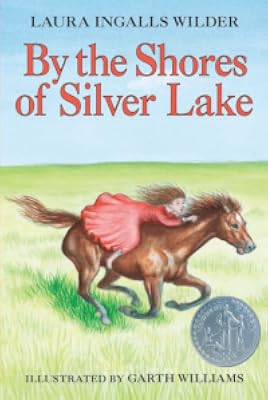
By the Shores of Silver Lake
by Laura Ingalls Wilder
Little House: The Laura Years (5), Little House Novels, Chronological Order (The Laura Years — book 20)
On This Page
Description
Ma and the girls follow Pa west by train where they make their home at a rough railroad camp and plan for their own homestead.Tags
Recommendations
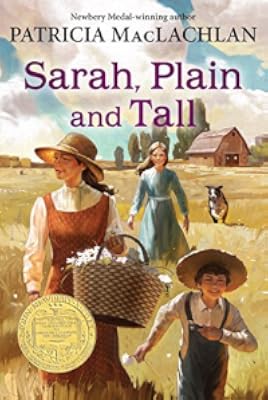
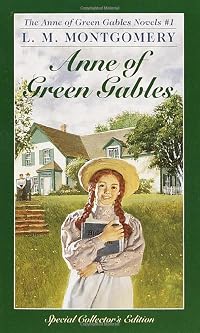
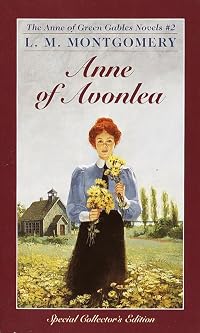

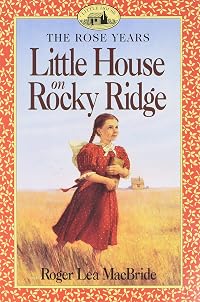
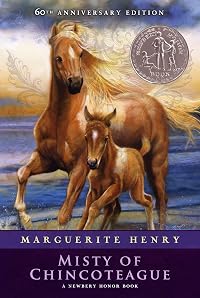
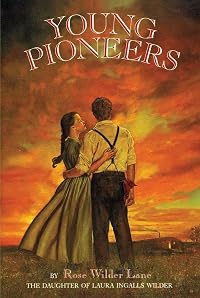
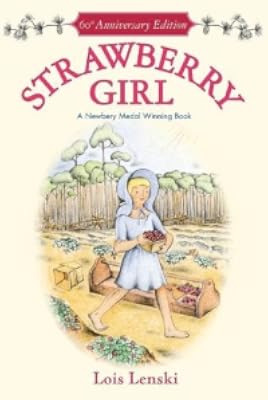
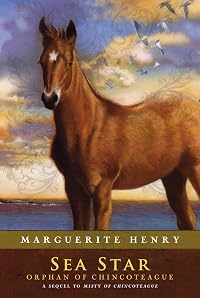





Member Recommendations


Member Reviews
I've been dipping into a reread of the Little House books for a while now (this time is the first, I'm quite sure, since childhood). They have a gentle lyricism to them that surprises me as an adult, and the pioneering details are a delight. It always strikes me now how very close to real, horrible disaster Laura and her family were so much of the time, and how careful the parents are to keep real knowledge of that horror from the children. In this one, for instance, spoiler the family lives the entire winter alone on the prairie with no one else around for hundreds of miles (and later just one other couple nearby). Even a minor medical issue or, say, a fire, would have meant death. And later, when homesteaders start showing up in the show more spring, the family boards them as there is nowhere else. Ma improvises a lock for the girls' bedroom and tells them not to come out in the morning until she calls for them. Because she doesn't want them around the "rough men." As an adult reader, I know that it isn't just hanging out with rough men that Ma is worried about it. Pa is also presented as the one who knows all (how does he know all that stuff?) and who can do no wrong. But reading between the lines, he's kind of cavalier and sometimes downright irresponsible with his family. Much of these books are chilling now, as well as fascinating and pleasant, overall. show less
This might be my favorite of the series so far. From the start of the book we know this is a time of change. Mary has gone blind from scarlet fever, the family rides a train for the first time, they move into a shanty in a railroad town, etc. I love Laura's adventurous spirit. Even when her path crosses with wolves, she's almost more concerned with their welfare than her own.
There are some intense parts in this book as well (SPOILERS AHEAD). The death of their sweet dog Jack, the confrontation of Pa on payday by angry workers, the moment when the youngest Ingalls daughter, Grace, goes missing, and a scuffle when Pa fights to place his claim for their homestead plot. Life on the prairie was not for the faint of heart.
I'm continually show more impressed with Pa's moral compass and the way he treated his wife and daughters. Even though Ma is quiet, he looks to her before making big decisions. They do not allow themselves to go into debt or take charity, but when an opportunity presents itself, like the chance to stay in the surveyor's house for the winter, they aren't too prideful to take it.
I've grown to love the Ingalls family already and can't believe it took me so long to read this series. show less
There are some intense parts in this book as well (SPOILERS AHEAD). The death of their sweet dog Jack, the confrontation of Pa on payday by angry workers, the moment when the youngest Ingalls daughter, Grace, goes missing, and a scuffle when Pa fights to place his claim for their homestead plot. Life on the prairie was not for the faint of heart.
I'm continually show more impressed with Pa's moral compass and the way he treated his wife and daughters. Even though Ma is quiet, he looks to her before making big decisions. They do not allow themselves to go into debt or take charity, but when an opportunity presents itself, like the chance to stay in the surveyor's house for the winter, they aren't too prideful to take it.
I've grown to love the Ingalls family already and can't believe it took me so long to read this series. show less
I forgot how depressing the beginning of this book is, but it picks up quickly. Laura's internal struggle between what she wants to do and what she's supposed to do, between the infinite metaphorical world of her heart and mind and the contained literal world that is her scope as a young woman in the nineteenth century is becoming more central to the stories. My eleven-year-old is re-reading this series again, and I know that her comments to me are just the very tiniest piece of what's going on in her mind about Laura. More and more I'm grateful that my daughter has such good literary friends to help her through her own growing-up.
On her first train ride, Laura tries to comprehend the view out the window: A telegraph wire swooped up and down beyond the window.... Beyond the wire, grasslands and fields and scattered farmhouses went by. They went so fast that Laura could not really look at them before they were gone. In one hour that train would go twenty miles -- as far as the horses traveled in a whole day." On a wagon trip across the wild empty prairie: "Noon ended too soon. Pa led the horses to drink from the creek, while Ma and Laura picked up the eggshells and bits of paper, to leave the place tidy." Laura has never ridden horseback: "Jean's pony seemed larger every minute. It was big and strong enough to kill Laura if it wanted to.... She was so scared to show more ride it that she had to try." Pa is excited about their new home: "'And best of all, Caroline, we're among the very first out here!' But all their talking did not mean anything to the enormous silence of that prairie." This is the one where there are finally hopes that Ma can have neighbors, the family can settle down, and Laura realizes that, since Mary is now blind, Laura is the daughter who will be a teacher in this generation. (Though I do always wonder why it couldn't be Carrie who follows in her mother's footsteps....) Mary is a bit of a prig - but it's probably her way of coping with her new disability. Ma still irons laundry every week - I suppose it's her pride, her way of clinging to her sense of self. Carrie and Grace are nondescript. Pa plays and sings a *lot* of songs, almost none of which I know.
(Of course this is my umpteenth reread, but, I believe, the first since I was a young teen.)" show less
(Of course this is my umpteenth reread, but, I believe, the first since I was a young teen.)" show less
The Ingalls family has seen both joy and hardship since the end of "On the Banks of Plum Creek". Mary has been left blind from a battle with scarlet fever, and a new sister, Grace, has been born. Pa decides to move to a railroad camp in the unsettled Dakota Territory to work as a bookkeeper to earn money. Eventually, Laura, her sisters, and Ma travel by train to join Pa at the spot he's claimed for their new home. They spend a long winter in the surveyor's house, and in the spring, Pa begins to build a store. It's the first building in what will become the town of De Smet. Finally, the Ingalls family's travels by covered wagon are over.
These are all starting to merge a bit. Laura, forever trying to get out of wearing her bonnet and wanting to be out on the prairie. Pa, always on with some new place to live that will be the right place this time.
What actually stands out about this one?
A surprising amount happens between the end of the last book and the start of this one. Everyone has had scarlet fever. Mary has gone blind! And an entire new baby has turned up mostly unremarked on.
There are a lot more people in this book. Some of them are even characters from previous books, managing to cross paths with the Ingalls again.
They go on a train! And Pa gets work helping out with the railroad! It felt like such an anachronism, after all the minimalist wilderness life, to have show more a train, and pay disputes, but I guess it isn’t, and all these things just live together.
Their luck hasn’t really changed. Pa just manages to get their claim in because his friend distracts someone into a fist fight. They get buried in snow while they sleep one night, Pa nearly gets lynched by an angry mob of railway workers, who don’t like being paid two weeks in arrears. Their final claim turns out to be full of mosquitos (well, it is next to a swamp.)
The description of the giant wolf in the moonlight, and the chapter about building the railway with everyone working like a machine are both stunningly good. show less
What actually stands out about this one?
A surprising amount happens between the end of the last book and the start of this one. Everyone has had scarlet fever. Mary has gone blind! And an entire new baby has turned up mostly unremarked on.
There are a lot more people in this book. Some of them are even characters from previous books, managing to cross paths with the Ingalls again.
They go on a train! And Pa gets work helping out with the railroad! It felt like such an anachronism, after all the minimalist wilderness life, to have show more a train, and pay disputes, but I guess it isn’t, and all these things just live together.
Their luck hasn’t really changed. Pa just manages to get their claim in because his friend distracts someone into a fist fight. They get buried in snow while they sleep one night, Pa nearly gets lynched by an angry mob of railway workers, who don’t like being paid two weeks in arrears. Their final claim turns out to be full of mosquitos (well, it is next to a swamp.)
The description of the giant wolf in the moonlight, and the chapter about building the railway with everyone working like a machine are both stunningly good. show less
Never my favorite. I think even as a child I sensed the desperation in Ma at having to move yet again, the family's unstable financial situation, Laura's struggle to become a young woman of purpose and meaning in a world that didn't expect that of her. Dark book, right from the early chapters when we learn Mary is blind, Laura's exposed to "rough men" with her "fast" cousin Lena, and she's forced to give away her childhood doll, Charlotte, that she later finds upended in an icy prairie pool. Lots of pain in this book.
Members
- Recently Added By
Lists

Best Newbery Honor Books
242 works; 32 members

NPRs Ultimate Backseat Bookshelf: 100 Must-Reads for kids 9-14
222 works; 30 members
Favorite Childhood Books
1,646 works; 518 members

Best Family Stories
241 works; 22 members

Childhood Favorites
427 works; 24 members
Honey For a Child's Heart
1,152 works; 25 members

Books About Girls
219 works; 17 members

Books about Frontier Life and Pioneers
55 works; 7 members
Ambleside Books
459 works; 18 members

Female Protagonist
1,056 works; 57 members

Bibliography for How to be a Heroine
148 works; 12 members

Books Set in South Dakota
9 works; 5 members

Literature of Honor for Boys
91 works; 3 members

Newbery Honor Books By Year - I - 1922-1980
199 works; 3 members

4th Grade Books
312 works; 5 members

One-room schools -- children's/young adult fiction
52 works; 5 members

Blindness experience -- children's/YA fiction and nonfiction
14 works; 2 members
Female Author
1,235 works; 67 members
Historical Fiction
889 works; 91 members
Literary Travelogue of the United States Challenge
133 works; 6 members

In or About the 1930s
198 works; 27 members

Books With Water Words in the Title
186 works; 12 members
Children's Literature 1900 - 1950 in order
413 works; 8 members

Books Read in 2023
5,547 works; 145 members

Books I've Read More Than Once
602 works; 49 members
Our Favorite Banned Books
138 works; 122 members

Ambleside Online Year 4
46 works; 1 member

HMS: Make Your Child a Lover of Books, Ages 7-9
52 works; 2 members

The Playful Pioneers
166 works; 1 member
Author Information

189+ Works 152,549 Members
Wilder was born near Pepin, Wisconsin; attended school in DeSmet, South Dakota; and became a teacher before she was 16, teaching for seven years in Dakota Territory schools. She and her husband, Almanzo Wilder, farmed near DeSmet for about nine years and then moved to Mansfield, Missouri, where they lived out the rest of their days. Wilder did not show more write her first book, Little House in the Big Woods, about her early years in Wisconsin, until late in life, on the urging of her daughter, Rose Wilder Lane. It was first published in 1932. She followed this with Farmer Boy (1933), a book about her husband's childhood in New York State. She then completed a series of books about her life as she and her family moved westward along the frontier. Little House on the Prairie (1935) records the family's move to Kansas. On the Banks of Plum Creek (1937) describes the family's move to Minnesota. By the Shores of Silver Lake (1939) records the family's move to South Dakota, as do the final three books in the series: The Long Winter, Little Town on the Prairie (1941), and These Happy Golden Years (1943), which ends with her marriage to Almanzo Wilder. Three of Wilder's books were published posthumously: On the Way Home, a diary of her trip to Mansfield; The First Four Years, an unfinished book about her first four years of marriage; and West from Home, letters she wrote on a visit to her daughter in San Francisco, none of them up to the quality of her earlier books. At her best, Wilder employs a clear, simple style, a wealth of fascinating detail, and a straightforward narrative style. Her tales of a strong, traditional frontier family that endures the hardships of the late eighteenth century are seen through the eyes of a child, which endears them to young readers. Her work is possibly the best example of historical realistic fiction for children. (Bowker Author Biography) show less
Some Editions
Awards and Honors
Series

Little House: The Laura Years
9 works (5)

Little House Novels, Chronological Order
4 works (The Laura Years — book 20)
Belongs to Publisher Series
Work Relationships
Is contained in
La petite maison de la prairie : Coffret 3 volumes : Tome 1, La petite maison de la prairie ; Tome 2, Au bord du ruisseau ; Tome 3, Sur les rives du lac by Laura Ingalls Wilder
By the Shores of Silver Lake/Farmer Boy/The First Four Years/Little House in the Big Woods/Little Town on the Prairie/The Long Winter/On the Banks of Plum Creek/These Happy Golden Years by Laura Ingalls Wilder
Little House on the Prairie / By the Shores of Silver Lake / Little Town on the Prairie by Laura Ingalls Wilder
Is abridged in
Common Knowledge
- Canonical title
- By the Shores of Silver Lake
- Original title
- By the Shores of Silver Lake
- Original publication date
- 1939 (1e édition originale américaine, Harper & Row) (1e é | dition originale amé | ricaine, Harper & Row); 1978 (1e traduction et édition français, Bibliothèque du Chat Perché, Flammarion) (1e traduction et é | dition franç | ais, Bibliothè | que du Chat Perché | , Flammarion)
- People/Characters
- Laura Ingalls Wilder; Charles Ingalls; Caroline Quiner Ingalls; Mary Ingalls; Carrie Ingalls; Grace Ingalls
- Important places
- De Smet, South Dakota, USA
- First words
- Laura was washing the dishes one morning when old Jack, lying in the sunshine on hthe doorstep, growled to tell her that someone was coming.
- Last words
- (Click to show. Warning: May contain spoilers.)Home! Home! Sweet, sweet hom, Be it ever so humble There is no place like home.
- Original language
- English
- Disambiguation notice
- ISBN 0064400034 is for Farmer Boy by Laura Wilder Ingalls.
Classifications
- Genres
- Children's Books, Fiction and Literature
- DDC/MDS
- 813.52 — Literature & rhetoric American literature in English American fiction in English 1900-1999 1900-1945
- LCC
- PZ7 .W6461 .B — Language and Literature Fiction and juvenile belles lettres Fiction and juvenile belles lettres Juvenile belles lettres
- BISAC
Statistics
- Members
- 12,144
- Popularity
- 708
- Reviews
- 77
- Rating
- (4.06)
- Languages
- 16 — Chinese, Danish, Dutch, English, Finnish, French, German, Hebrew, Indonesian, Italian, Japanese, Lithuanian, Norwegian (Bokmål), Portuguese, Spanish, Swedish
- Media
- Paper, Audiobook, Ebook
- ISBNs
- 85
- UPCs
- 2
- ASINs
- 72