
Sweet Tooth
by Ian McEwan
On This Page
Description
Recruited into MI5 against a backdrop of the Cold War in 1972, Cambridge student Serena Frome, a compulsive reader, is assigned to infiltrate the literary circle of a promising young writer whose politics align with those of the government, a situation that is compromised when she falls in love with him.Tags
Recommendations
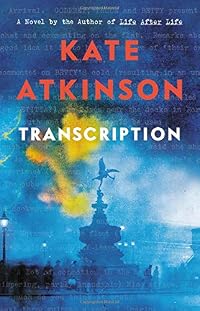
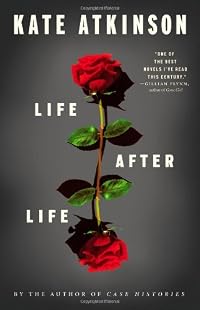
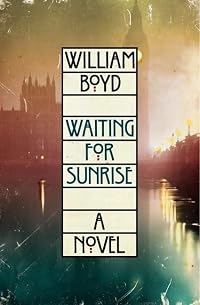
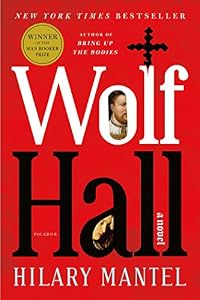



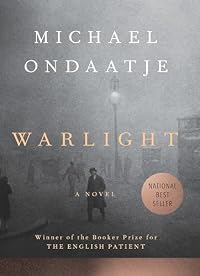
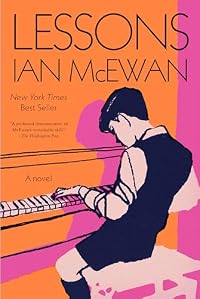
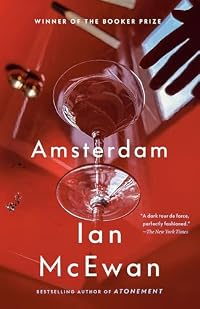
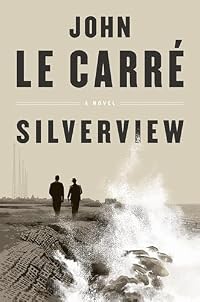





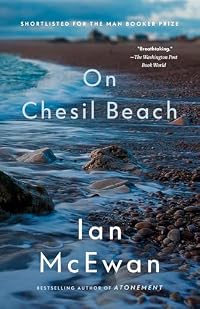
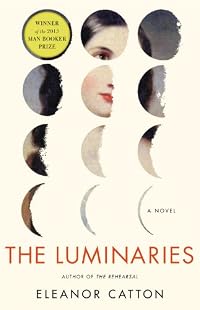
Member Recommendations
BookshelfMonstrosity A tense and enthralling historical thriller in which British Naval Intelligence officer Ian Fleming attempts to foil a Nazi plot to assassinate FDR, Churchill, and Stalin.
Member Reviews
Ian McEwan lo ha vuelto a hacer. Con ‘Operación Dulce’, McEwan se acerca a la novela de espías y al mundo de espejos que supone la creación literaria. Estamos en Inglaterra, en 1972. Serena Frome, la protagonista, es reclutada por el MI5, el Servicio Secreto Británico, mientras estudia matemáticas en la Universidad de Cambridge. Una vez instalada se la relacionará con la llamada Operación Dulce, cuyo objetivo radica en una prestación económica a jóvenes escritores, con miras a apoyar la imagen de Inglaterra. Pero Serena empieza a enamorarse de Tom Haley, escritor en ciernes al que ha de convencer para que acepte la "oferta" económica.
‘Operación Dulce’ es todo un esfuerzo por parte de Ian McEwan por explorar los show more límites entre realidad y ficción, además de una reflexión política y una mirada nostálgica a una época, turbulenta y convulsa, la de aquellos años 70 ingleses. Así, entre el romance, el thriller y la metaliteratura, con giro inesperado de lo más posmoderno (mención aparte a los estupendos relatos intercalados escritos por Tom Haley y que Serena debe leer y analizar), Ian McEwan logra de nuevo una excepcional novela. show less
‘Operación Dulce’ es todo un esfuerzo por parte de Ian McEwan por explorar los show more límites entre realidad y ficción, además de una reflexión política y una mirada nostálgica a una época, turbulenta y convulsa, la de aquellos años 70 ingleses. Así, entre el romance, el thriller y la metaliteratura, con giro inesperado de lo más posmoderno (mención aparte a los estupendos relatos intercalados escritos por Tom Haley y que Serena debe leer y analizar), Ian McEwan logra de nuevo una excepcional novela. show less
Despite swearing a few years ago that I was done with McEwan, here I am on book #14. And despite this sitting on my shelf for quite some time for that very reason, Sweet Tooth turned out to be a pleasant surprise, a return to McEwan's style that I enjoy.
The book jacket blurb refers to 'a web of spying' which felt quite misrepresentative of the novel. The protagonist, a young Cambridge graduate in the 1970s, is recruited into MI5 via an older professor with whom she was having an affair. However, this is not a James Bond-style novel; our main character is very low down on the MI5 ladder, working mainly on filing intelligence information about the Troubles, when she's given an additional job of vetting a young writer with potential for a show more literary programme funded by MI5 to influence the British educated class away from its increasingly anti-western position. The meeting with the would-be novelist sparks the beginning of a love affair, and the novel becomes much more focused on the story of their relationship, the development of her lover's writing career and the secret she is hiding from him in terms of her job and the real backers of his literary stipend.
It's a satisfying read reminiscent of the McEwan of old I used to enjoy. It's definitely not the best McEwan I've read, with an ending that left me indifferent, but it reminded me how enjoyable McEwan's prose can be was an enjoyable way to while away a few hours.
4 stars - a little forgettable, but satisfying enough for fans who are still working their way through his works. show less
The book jacket blurb refers to 'a web of spying' which felt quite misrepresentative of the novel. The protagonist, a young Cambridge graduate in the 1970s, is recruited into MI5 via an older professor with whom she was having an affair. However, this is not a James Bond-style novel; our main character is very low down on the MI5 ladder, working mainly on filing intelligence information about the Troubles, when she's given an additional job of vetting a young writer with potential for a show more literary programme funded by MI5 to influence the British educated class away from its increasingly anti-western position. The meeting with the would-be novelist sparks the beginning of a love affair, and the novel becomes much more focused on the story of their relationship, the development of her lover's writing career and the secret she is hiding from him in terms of her job and the real backers of his literary stipend.
It's a satisfying read reminiscent of the McEwan of old I used to enjoy. It's definitely not the best McEwan I've read, with an ending that left me indifferent, but it reminded me how enjoyable McEwan's prose can be was an enjoyable way to while away a few hours.
4 stars - a little forgettable, but satisfying enough for fans who are still working their way through his works. show less
McEwan can get inside the head of a character better than any author I know. Added to that is his uncanny ability to re-create time and place accurately. Espionage, MI5, Cold War, Northern Ireland, with all the 1970s political and cultural references. McEwan is an engaging writer with superb literary skill. Even though this is not John le Carré espionage, and not even my favourite McEwan, that doesn't prevent it from being a first-rate novel, and one with a fine twist in the tail.
I was hoping for a little more fizz from this book, combining as it does two of my favorite fictional milieus (the intelligence community and the literary "scene"), but although McEwan's writing is as polished and stylish as ever, the story ultimately falls flat. The metafictional dimensions of the plot, as well as the rather tediously clever ending, all feel a bit stale, and while I often enjoy the off-kilter perspective of an unreliable or suspect narrator, I do still prefer to be engaged by said narrator on some level as a character, which sadly was not the case with Miss Serena Frome ("rhymes with 'plume'").
After a rather sterile upbringing and a diffident college education, a young woman is recruited by the British secret service to help fight the Cold War of the 1970s. Little more than a glorified administrative assistant initially, she soon secures her first covert operations assignment involving the enlistment of a promising young novelist to produce pro-government literature under the code name of “Sweet Tooth”. She proves to be good at her job; perhaps too good, in fact, as her romantic involvement with the writer jeopardizes the entire project and leads to serious repercussions for both of them.
Such is the basic plot of Sweet Tooth, which combines the spy novel, the romance novel, the “books about books” novel, and show more historical fiction genres into a single volume. In terms of structure and literary invention, it is hard not to compare this book to McEwan’s previous masterpiece Atonement: Both are highly atmospheric period pieces narrated by a female protagonist that contain surprising plot twists at the end. Unfortunately, that comparison does not favor this more recent work, which I found to be the lesser of the two by a considerable margin.
So, what was lacking in Sweet Tooth? Soul, I think. Whereas Atonement told an emotionally engrossing and highly satisfying story in a very creative way, this book has none of the charm or heart of that earlier effort. Indeed, while it is hard to fault the author’s writing style or technical mastery of the subject matter, the clever-for-clever’s-sake nature of the story was often tedious and failed to resonate with me. At times, it seemed as if McEwan was more concerned about paying homage to various literary icons (e.g., Angus Wilson, Martin Amis) and the people who had helped his own career (e.g., Ian Hamilton) than telling a compelling tale. Those numerous references, along with other contrived plot devices—such as the implausible use of the famous “Monty Hall Problem” from probability theory—leave the reader with the impression that a celebrated artist has produced a self-serving, paint-by-numbers sketch that is unlikely to leave a lasting impression. show less
Such is the basic plot of Sweet Tooth, which combines the spy novel, the romance novel, the “books about books” novel, and show more historical fiction genres into a single volume. In terms of structure and literary invention, it is hard not to compare this book to McEwan’s previous masterpiece Atonement: Both are highly atmospheric period pieces narrated by a female protagonist that contain surprising plot twists at the end. Unfortunately, that comparison does not favor this more recent work, which I found to be the lesser of the two by a considerable margin.
So, what was lacking in Sweet Tooth? Soul, I think. Whereas Atonement told an emotionally engrossing and highly satisfying story in a very creative way, this book has none of the charm or heart of that earlier effort. Indeed, while it is hard to fault the author’s writing style or technical mastery of the subject matter, the clever-for-clever’s-sake nature of the story was often tedious and failed to resonate with me. At times, it seemed as if McEwan was more concerned about paying homage to various literary icons (e.g., Angus Wilson, Martin Amis) and the people who had helped his own career (e.g., Ian Hamilton) than telling a compelling tale. Those numerous references, along with other contrived plot devices—such as the implausible use of the famous “Monty Hall Problem” from probability theory—leave the reader with the impression that a celebrated artist has produced a self-serving, paint-by-numbers sketch that is unlikely to leave a lasting impression. show less
On one view, duplicity is the novelist’s stock-in-trade. As such, all novelists are spies, of a sort, and all novels spy novels. Or perhaps the doubleness of fiction makes all novels metafictional, and all novelists purveyors of metafictional theory. Or perhaps the hot pursuit of plot, that narrative drive, is equally meaningful whether one is chasing a real fox or a faux-fox. One or all these views might be held by Ian McEwan and in Sweet Tooth he puts them all into play.
Serena Frome, a beautiful young Cambridge graduate, is groomed by a Cambridge don to enter the British internal security service, MI5. It is 1972, a transitional year for the world economy as the OPEC embargo begins to bite, the coal miners’ union flexes its show more muscle, the Troubles in Northern Ireland are about to overwhelm the British mainland, a snap election leads to a change in government, and Serena Frome, against all good advice, falls in love. Unfortunately her love interest is also her work target, the writer T.H. Haley, and everything from that point forward (or possibly earlier) is not entirely as it seems.
This is rich ground for McEwan as he explores conflicting interests (taste?) in fiction. As Serena undergoes her own form of sentimental education, the reader glimpses snippets from T.H. Haley’s short stories and first novella that are eerily similar to McEwan’s own early work. These are just tasters, however, as McEwan slips from one style to another and back again; it’s a master class by a master craftsman, each sentence deliciously precise. It hardly matters that Serena’s inner conflict is less than fully believable, or that her external conflicts border on the preposterous. (Well, it might matter, but go with it and wait for the twist in the tail/tale at the end.)
For my own part, I do not believe that fiction is by nature duplicitous. I think that misunderstands the relationship between truth and fiction. That makes me less than sympathetic to McEwan’s metafictional theses. But such disagreement is no bar to recommending this finely constructed novel and whatever sweet truth it cares to impart. show less
Serena Frome, a beautiful young Cambridge graduate, is groomed by a Cambridge don to enter the British internal security service, MI5. It is 1972, a transitional year for the world economy as the OPEC embargo begins to bite, the coal miners’ union flexes its show more muscle, the Troubles in Northern Ireland are about to overwhelm the British mainland, a snap election leads to a change in government, and Serena Frome, against all good advice, falls in love. Unfortunately her love interest is also her work target, the writer T.H. Haley, and everything from that point forward (or possibly earlier) is not entirely as it seems.
This is rich ground for McEwan as he explores conflicting interests (taste?) in fiction. As Serena undergoes her own form of sentimental education, the reader glimpses snippets from T.H. Haley’s short stories and first novella that are eerily similar to McEwan’s own early work. These are just tasters, however, as McEwan slips from one style to another and back again; it’s a master class by a master craftsman, each sentence deliciously precise. It hardly matters that Serena’s inner conflict is less than fully believable, or that her external conflicts border on the preposterous. (Well, it might matter, but go with it and wait for the twist in the tail/tale at the end.)
For my own part, I do not believe that fiction is by nature duplicitous. I think that misunderstands the relationship between truth and fiction. That makes me less than sympathetic to McEwan’s metafictional theses. But such disagreement is no bar to recommending this finely constructed novel and whatever sweet truth it cares to impart. show less
In the early 1970s, a young woman has an affair with an older man who once worked in intelligence and who encourages her to get a job with MI5 before cruelly breaking up with her. Once there, she's given an assignment for a project code-named Sweet Tooth, a hearts-and-minds operation that involves channeling money towards writers the department believes are likely to produce works with anti-communist themes. But then she falls in love with the writer she's been lying to about her job and the source of his funding.
Honestly, I'm not remotely sure what to make of this one. I get the impression it's not one of the more well-regarded of McEwan's novels, and I would rank it last out of the ones I've read -- the others being Amsterdam, show more Atonement, The Comfort of Strangers, Enduring Love, On Chesil Beach, and Solar -- but, y'know, that's some pretty stiff competition and a hell of a list even to come last on. As always, I love McEwan's smooth prose and his precise grasp of human psychology. And there's some stories-within-stories stuff going on here that I generally enjoyed.
I'm less sure how I feel about his handling of the Cold War and the troubled state of the UK in the 70s, as it often feels like he's on the verge of actually having something to say about politics or history but never quite does so. Probably deliberately, but still. And I don't love the way the protagonist is so passively shaped by the men in her life, and so incapable of having any kind of meaningful relationship with a man without immediately wanting to sleep with him. Again, there are probably narrative or thematic reasons for at least some of that, but I'm not sure if those make me feel all that much better about it.
And I cannot for the life of me decide whether the ending is really clever and full of fascinating thematic resonance, or just utterly irritating. On reflection, I think the answer is both. Which is interesting, and it definitely says something that I was still thinking about it and what McEwan was doing with it after I read the last page and closed the book, but that doesn't mean I'm not also annoyed by it.
Anyway. Not sorry I read this. Not sure I'd recommend it. No idea how I'll feel looking back on it a month from now. show less
Honestly, I'm not remotely sure what to make of this one. I get the impression it's not one of the more well-regarded of McEwan's novels, and I would rank it last out of the ones I've read -- the others being Amsterdam, show more Atonement, The Comfort of Strangers, Enduring Love, On Chesil Beach, and Solar -- but, y'know, that's some pretty stiff competition and a hell of a list even to come last on. As always, I love McEwan's smooth prose and his precise grasp of human psychology. And there's some stories-within-stories stuff going on here that I generally enjoyed.
I'm less sure how I feel about his handling of the Cold War and the troubled state of the UK in the 70s, as it often feels like he's on the verge of actually having something to say about politics or history but never quite does so. Probably deliberately, but still. And I don't love the way the protagonist is so passively shaped by the men in her life, and so incapable of having any kind of meaningful relationship with a man without immediately wanting to sleep with him. Again, there are probably narrative or thematic reasons for at least some of that, but I'm not sure if those make me feel all that much better about it.
And I cannot for the life of me decide whether the ending is really clever and full of fascinating thematic resonance, or just utterly irritating. On reflection, I think the answer is both. Which is interesting, and it definitely says something that I was still thinking about it and what McEwan was doing with it after I read the last page and closed the book, but that doesn't mean I'm not also annoyed by it.
Anyway. Not sorry I read this. Not sure I'd recommend it. No idea how I'll feel looking back on it a month from now. show less
Members
- Recently Added By
Published Reviews
ThingScore 63
A satisfying spy novel with a literary twist provides both surprises and sly references to McEwan's early work
added by Nickelini
Ian McEwan has never been a spy (or, if he has, that fact remains classified), but of today's novelists he may be the most uniquely suited to the profession. He has a scientific, technical mind drawn to structural ploys and complicated scene engineering. . . . Mr. McEwan likes manipulating readers as much as plots. . . . Ultimately, like his bloodless previous novel, Solar (2010), there is show more little point to Sweet Tooth beyond Mr. McEwan's low-level authorial deceptions. . . . The book is soon overwhelmed by its own narrative ruse, which revealed in the final pages, is clever but not meaningful. show less
added by sgump
In playing these mirror games, Mr. McEwan seems to want to make the reader think about the lines between life and art, and the similarities between spying and writing. He also seems to want to make us reconsider the assumptions we make when we read a work of fiction. As usual his prose is effortlessly seductive. And he does a nimble job too of conjuring London in the 1970s — with its show more economic woes, worries about I.R.A. bombings and uneasy assimilation of the countercultural changes of the ’60s. These aspects of “Sweet Tooth” keep the reader trucking on through the novel, but alas they’re insufficient compensation for the story’s self-conscious contrivance and foreseeable conclusion. show less
added by ozzer
Lists

Best Books Set in London
157 works; 42 members

Top Five Books of 2015
811 works; 241 members

Books Read in 2016
4,666 works; 199 members

IMPAC Dublin Literary Award 2014 longlist
150 works; 3 members

KayStJ's to-read list
1,616 works; 11 members

living room bookshelf
150 works; 1 member

Finished in 2025
23 works; 1 member

Books With Body Parts in the Title
153 works; 9 members
Author Information

76+ Works 99,929 Members
Ian McEwan was born in Aldershot, England on June 21, 1948. He received a B.A. in English Literature from the University of Sussex and an M.A. in English Literature from the University of East Anglia. He writes novels, plays, and collections of short stories including In Between the Sheets, The Cement Garden, The Comfort of Strangers, The show more Innocent, Black Dogs, The Daydreamer, Enduring Love, Sweet Tooth, The Children Act and Nutshell. He has won numerous awards including the 1976 Somerset Maugham Award for First Love, Last Rites; the 1987 Whitbread Novel Award and the 1993 Prix Fémina Etranger for The Child in Time; the 1998 Booker Prize for Fiction for Amserdam; the 2002 W. H. Smith Literary Award, the 2003 National Book Critics' Circle Fiction Award, the 2003 Los Angeles Times Prize for Fiction, and the 2004 Santiago Prize for the European Novel for Atonement; and the 2006 James Tait Black Memorial Prize for Saturday. (Bowker Author Biography) show less
Some Editions
Awards and Honors
Awards
Distinctions
Notable Lists
Series
Belongs to Publisher Series
Common Knowledge
- Canonical title
- Sweet Tooth
- Original title
- Sweet Tooth
- Original publication date
- 2012 (1e édition originale anglaise) (1e édition originale anglaise); 2014-01 09(1e traduction et édition française, Du monde entier, Gallimard) (1e traduction et édition française, Du monde entier, Gallimard); 2015-10-08 (Réédition française, Folio, Gallimard) (Réédition française, Folio, Gallimard)
- People/Characters
- Serena Frome; Tony Canning; Thomas Haley; Maximilian Greatorex
- Important places
- London, England, UK; Cambridge, Cambridgeshire, England, UK
- Epigraph
- If only I had met, on this search, a single clearly evil person.
Timothy Garton Ash, The File - Dedication
- To Christopher Hitchens
1949-2011 - First words
- My name is Serena Frome (rhymes with plume) and almost forty years ago I was sent on a secret mission for the British Security Service. I didn't return safely. Within eighteen months of joining I was sacked, having disgra... (show all)ced myself and ruined my lover, though he certainly had a hand in his own undoing.
- Last words
- (Click to show. Warning: May contain spoilers.)Dearest Serena, it's up to you.
- Original language
- English
Classifications
Statistics
- Members
- 3,657
- Popularity
- 4,393
- Reviews
- 204
- Rating
- (3.51)
- Languages
- 17 — Catalan, Czech, Danish, Dutch, English, Finnish, French, German, Hebrew, Hungarian, Italian, Norwegian (Bokmål), Portuguese, Romanian, Spanish, Swedish, Turkish
- Media
- Paper, Audiobook, Ebook
- ISBNs
- 65
- ASINs
- 23