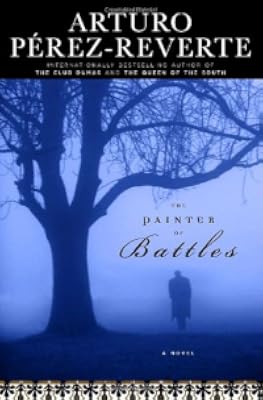
The Painter of Battles
by Arturo Pérez-Reverte
On This Page
Description
Faulques, a war photographer, witnessed most of the wars of the end of the 20th Century, but he was never able to capture the photo that would explain the chaos of the universe. Now, as continues to try to understand it, he starts painting a grand circular fresco on the inside wall of a tower on the Mediterranean, disturbed by the memories of a woman he can never forget, and an unexpected visit: a man who wants to kill him.Tags
Recommendations






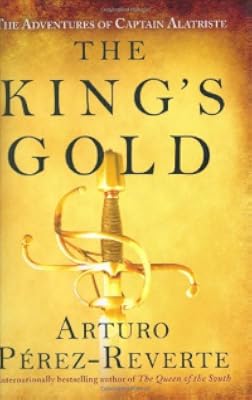





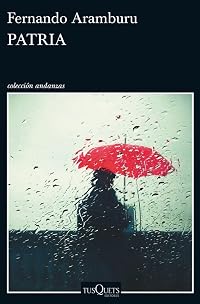
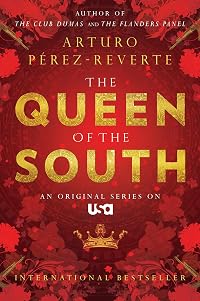
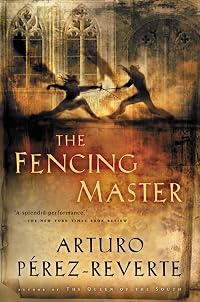



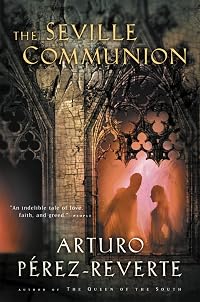

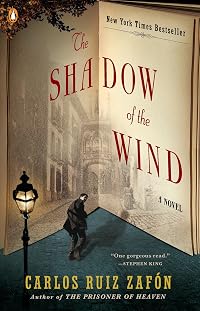



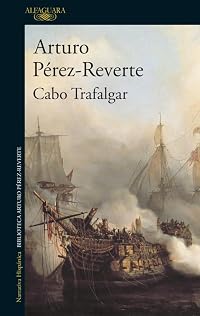

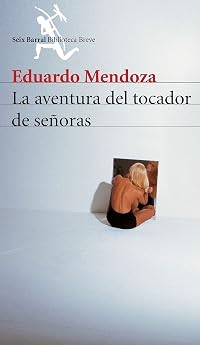



Member Recommendations

Member Reviews
Andres Faulques, is a former war photographer. His stark and moving pictures won him awards, but after the death of his lover, a fellow photographer, he decides to retire and to take up residence alone in an old watchtower by the sea. On the circular walls of the watchtower he is painting a grand mural. Taking his inspiration from the battle paintings by some of the world’s greatest artists displayed in museums around the world, he is attempting to capture the one image that has always eluded him; to encapsulate, in an instant, the meaning of war.
One day a stranger walks into his solitary life and announces that he has come to kill him. The man is a shadow from his past, Ivo Markovic, a former Croat soldier who was once the subject of show more a Faulques photograph, one of the myriad faces that enabled Faulques to become rich and famous. But what does the photograph bring Markovic? Defeat of the worst kind. Markovic survives ethnic cleansing, but not his thirst for revenge. However, Markovic will not kill the painter of battles right away.
“I need for us to talk first; I need to know you better, to be sure that you realize certain things. I want you to learn and understand . . . . After that, I’ll be able to kill you.”
But Pèrez-Reverte hasn't written a cat and mouse thriller. What he offers us instead is a crash course in the history of battle art alongside a lengthy philosophical debate. Whether or not its really possible to divorce ourselves from the horrors that surround us? Just because we don't see them doesn't mean that they aren't happening. What are the lasting effects on those that do see them? In many of the images that we see, the photographer, for his or her own protection, remains anonymous but what would happen if that photographer's identity were to be revealed? Faulques suffers from some unidentified illness. Will that take his life before Markovic does? What becomes of the people who are captured in these images, whether they be in print or in moving picture form? Is their exposure positive or negative? (Sorry for the puns). Does it take something away from them?
If you are looking for a book with plenty of action then this one isn't for you. In truth very little happens, and with one very brief exception, it consists of only two living characters. I did have a couple of minor gripes. I personally would like to have seen a separate appendix with the works of art mentioned listed so that I could google them up later and the author kept switching from Faulques to 'the painter of battles' with annoying frequency that I wondered if he was either being paid by the word or felt that he needed to constantly remind his reader what the title of the book was. But on the whole I found it a deep, thoughtful and powerful read that kept me gripped right to the end. show less
One day a stranger walks into his solitary life and announces that he has come to kill him. The man is a shadow from his past, Ivo Markovic, a former Croat soldier who was once the subject of show more a Faulques photograph, one of the myriad faces that enabled Faulques to become rich and famous. But what does the photograph bring Markovic? Defeat of the worst kind. Markovic survives ethnic cleansing, but not his thirst for revenge. However, Markovic will not kill the painter of battles right away.
“I need for us to talk first; I need to know you better, to be sure that you realize certain things. I want you to learn and understand . . . . After that, I’ll be able to kill you.”
But Pèrez-Reverte hasn't written a cat and mouse thriller. What he offers us instead is a crash course in the history of battle art alongside a lengthy philosophical debate. Whether or not its really possible to divorce ourselves from the horrors that surround us? Just because we don't see them doesn't mean that they aren't happening. What are the lasting effects on those that do see them? In many of the images that we see, the photographer, for his or her own protection, remains anonymous but what would happen if that photographer's identity were to be revealed? Faulques suffers from some unidentified illness. Will that take his life before Markovic does? What becomes of the people who are captured in these images, whether they be in print or in moving picture form? Is their exposure positive or negative? (Sorry for the puns). Does it take something away from them?
If you are looking for a book with plenty of action then this one isn't for you. In truth very little happens, and with one very brief exception, it consists of only two living characters. I did have a couple of minor gripes. I personally would like to have seen a separate appendix with the works of art mentioned listed so that I could google them up later and the author kept switching from Faulques to 'the painter of battles' with annoying frequency that I wondered if he was either being paid by the word or felt that he needed to constantly remind his reader what the title of the book was. But on the whole I found it a deep, thoughtful and powerful read that kept me gripped right to the end. show less
The Painter of Battles lives in a lighthouse, painting a mural of scenes of famous battles intermixed with personal horror from his own experiences. He is alone, until he is visited by a man from his past who comes to make him think about his life and his role in the atrocities that he experienced as a "tourist of disasters." The man has come to discuss and explore the nature of art as it relates to reality, the inexhaustible cruelty of man, and how war makes up a part of the human condition. He has also come to kill him. Very different from his other books, which are more in the vein of literary adventures or mysteries. This book feels personal to me. Mr. Reverte worked as a war correspondent/journalist in numerous, most likely show more hellish, locations. The fact that some of the stories related in this book may be real or at least mirror real events made them more chilling. I agree with one commentator who stated that reading this novel will change your reactions to what you see in images from datelines around the world. show less
El pintor de batallas
Arturo Pérez-Reverte
Publicado: 2006 | 202 páginas
Novela Drama
En una torre junto al Mediterráneo, en busca de la foto que nunca pudo hacer, un antiguo fotógrafo pinta un gran fresco circular en la pared: el paisaje intemporal de una batalla. Lo acompañan en la tarea un rostro que regresa del pasado para cobrar una deuda mortal, y la sombra de una mujer desaparecida diez años atrás. En torno a esos tres personajes, Arturo Pérez-Reverte ha escrito la más intensa y turbadora historia de su larga carrera de novelista. Deslumbrante de principio a fin, El pintor de batallas arrastra al lector, subyugado, a través de la compleja geometría del caos del siglo XXI: el arte, la ciencia, la guerra, el amor, la show more lucidez y la soledad, se combinan en el vasto mural de un mundo que agoniza. show less
Arturo Pérez-Reverte
Publicado: 2006 | 202 páginas
Novela Drama
En una torre junto al Mediterráneo, en busca de la foto que nunca pudo hacer, un antiguo fotógrafo pinta un gran fresco circular en la pared: el paisaje intemporal de una batalla. Lo acompañan en la tarea un rostro que regresa del pasado para cobrar una deuda mortal, y la sombra de una mujer desaparecida diez años atrás. En torno a esos tres personajes, Arturo Pérez-Reverte ha escrito la más intensa y turbadora historia de su larga carrera de novelista. Deslumbrante de principio a fin, El pintor de batallas arrastra al lector, subyugado, a través de la compleja geometría del caos del siglo XXI: el arte, la ciencia, la guerra, el amor, la show more lucidez y la soledad, se combinan en el vasto mural de un mundo que agoniza. show less
With "The Painter of Battles," Arturo Perez-Reverte, offers a complete change-of-pace from what he usually provides his readers. Rather than another of the action packed thriller/mystery/war stories for which he is so well known, he has written a rather introspective novel that relies on a several-day-long conversation between two men to engage his readers in a story of slowly building suspense and intrigue. Longtime fans of Mr. Perez-Reverte might be surprised and even a bit put off, by the style and plot of "The Painter of Battles," but those who stay with the story will be well-rewarded for their efforts.
Falques, an award-winning war photographer, has retired to an isolated tower in which he is painting a huge mural around one of its show more circular walls. The mural is intended to be both a presentation of everything he witnessed during his career and his understanding of what it is in the human psyche that allows ordinary men to destroy each other with such obvious relish. Falques, who has isolated himself from the community and surrounded himself with art books, is generally satisfied with the quality and progress of his efforts.
Everything changes, however, when Ivo Markovic appears from nowhere one day to announce very confidently that he is there to kill Falques – eventually. Before that happens, though, Markovic wants Falques to understand some things and there are things he wants to learn from Falques. Falques, of course, is at first startled by the intruder and his death threat but, after Markovic identifies himself, his appearance begins to make a certain kind of sense.
Markovic and Falques first crossed paths in one of the many wars Falques spent his lifetime recording when Markovic, in the midst of retreat with a handful of fellow battle survivors, is captured on film by Falques in a picture striking enough to add to the photographer’s fame. Unfortunately for Markovic, the photograph ends up having consequences neither man could have foreseen.
Falques, despite his aversion to sharing his thoughts with others, finds himself in a philosophical discussion of warfare, those who fight wars or take advantage of them, art history, and human nature that evolves over several days. The conversation is one between equals and both are somewhat surprised at what they learn from the other as the ultimate confrontation draws nearer and nearer.
"The Painter of Battles" is a literary novel that will have readers questioning their own attitudes toward warriors and warfare. It is so well written, in fact, that readers will likely find it difficult to determine which of the two men, if either, is the good guy and which the bad. Perez-Reverte provides a satisfying ending that allows each of us to decide for ourselves. show less
Falques, an award-winning war photographer, has retired to an isolated tower in which he is painting a huge mural around one of its show more circular walls. The mural is intended to be both a presentation of everything he witnessed during his career and his understanding of what it is in the human psyche that allows ordinary men to destroy each other with such obvious relish. Falques, who has isolated himself from the community and surrounded himself with art books, is generally satisfied with the quality and progress of his efforts.
Everything changes, however, when Ivo Markovic appears from nowhere one day to announce very confidently that he is there to kill Falques – eventually. Before that happens, though, Markovic wants Falques to understand some things and there are things he wants to learn from Falques. Falques, of course, is at first startled by the intruder and his death threat but, after Markovic identifies himself, his appearance begins to make a certain kind of sense.
Markovic and Falques first crossed paths in one of the many wars Falques spent his lifetime recording when Markovic, in the midst of retreat with a handful of fellow battle survivors, is captured on film by Falques in a picture striking enough to add to the photographer’s fame. Unfortunately for Markovic, the photograph ends up having consequences neither man could have foreseen.
Falques, despite his aversion to sharing his thoughts with others, finds himself in a philosophical discussion of warfare, those who fight wars or take advantage of them, art history, and human nature that evolves over several days. The conversation is one between equals and both are somewhat surprised at what they learn from the other as the ultimate confrontation draws nearer and nearer.
"The Painter of Battles" is a literary novel that will have readers questioning their own attitudes toward warriors and warfare. It is so well written, in fact, that readers will likely find it difficult to determine which of the two men, if either, is the good guy and which the bad. Perez-Reverte provides a satisfying ending that allows each of us to decide for ourselves. show less
One of the many reasons why I love Perez-Reverte's books is that they follow no set formula or pattern except that they are all off-beat in their own way. But this one pushes the envelope, I think—and in the end, after recovering from what is a very, very dark view of human nature, I think it is among his best, if not the best.
Perez-Reverte, before he took up writing full-time, was a war journalist; the list of those he covered includes Bosnia, Croatia, El Salvador, Lebanon, and the Sudan, among others. These are some of the bloodiest horrors of modern times, since too many of them were civil wars which are always the most vicious.
The protagonist in Painter of Battles is Faulkes who, until very recently, has been a war show more photojournalist. Like Perez-Reverte, Faulkes has covered all the major and most bloody wars of his lifetime, and has been very successful, winning prizes for individual photographs and publishing books of his photos. But he is now retired. In his youth, he studied painting, but abandoned that when he realized he was not a top-flight artist. But now, he has taken up painting once more, this time to create a vast mural on the inside of an abandoned tower, which he has bought, on one of Spain’s capes. No ordinary mural, it depicts war in the form of battles, both from the standpoint of those who fight them and of those who suffer from them. It isn’t pretty.
Then one day, as he is nearing completion, one of his old photographs walks into his life.
That’s the matrix that Perez-Reverte uses in what is basically a staggeringly dark reflection on human nature as revealed through war. I found it shattering.
There’s no escaping the speculation that this is the summing up of the author’s own experiences of 20th and 21st century horrors. I don’t see how anyone comes through such experiences truly whole. If the book is even a pale reflection of what happened to Perez-Revere, then he did not escape that fate.
Because of its emphasis on painting, the book describes a number of artists and their own paintings of battles; it left me very curious about these works, and I do intend to follow that curiosity up as best I can, living as I do in a country that has no major art museum where major works of art can be viewed. But I will do so as best as I can on the Internet and by means of books. At least that is a life-affirming result of reading a book which is not.
I personally view this as a major work, but it isn’t for everyone. show less
Perez-Reverte, before he took up writing full-time, was a war journalist; the list of those he covered includes Bosnia, Croatia, El Salvador, Lebanon, and the Sudan, among others. These are some of the bloodiest horrors of modern times, since too many of them were civil wars which are always the most vicious.
The protagonist in Painter of Battles is Faulkes who, until very recently, has been a war show more photojournalist. Like Perez-Reverte, Faulkes has covered all the major and most bloody wars of his lifetime, and has been very successful, winning prizes for individual photographs and publishing books of his photos. But he is now retired. In his youth, he studied painting, but abandoned that when he realized he was not a top-flight artist. But now, he has taken up painting once more, this time to create a vast mural on the inside of an abandoned tower, which he has bought, on one of Spain’s capes. No ordinary mural, it depicts war in the form of battles, both from the standpoint of those who fight them and of those who suffer from them. It isn’t pretty.
Then one day, as he is nearing completion, one of his old photographs walks into his life.
That’s the matrix that Perez-Reverte uses in what is basically a staggeringly dark reflection on human nature as revealed through war. I found it shattering.
There’s no escaping the speculation that this is the summing up of the author’s own experiences of 20th and 21st century horrors. I don’t see how anyone comes through such experiences truly whole. If the book is even a pale reflection of what happened to Perez-Revere, then he did not escape that fate.
Because of its emphasis on painting, the book describes a number of artists and their own paintings of battles; it left me very curious about these works, and I do intend to follow that curiosity up as best I can, living as I do in a country that has no major art museum where major works of art can be viewed. But I will do so as best as I can on the Internet and by means of books. At least that is a life-affirming result of reading a book which is not.
I personally view this as a major work, but it isn’t for everyone. show less
Arturo Perez-Reverte's The Painter of Battles is quite a different book from his others. It reminded me very much of Iain Pears' The Portrait (my review), in that it's told from rather a strange perspective and deals with the whole issue of an artist's relationship with their subjects.
War photographer-turned-painter Faulques just wishes to be left alone, but when the man from one of his most famous photographs shows up unannounced and declares he's there to kill, things take a meditative turn. There is much discussion of war and death, art and responsibility, power and the impact of events on those involved with them.
What there is not, for the most part, is much of anything happening. If you're looking for a rollicking read, don't look show more here. But this is a fascinating examination of some heady issues. It is not my favorite Perez-Reverte (I'm a Club Dumas partisan), but the writing is lovely and the book will certainly make you think.
http://philobiblos.blogspot.com/2009/08/book-review-painter-of-battles.html show less
War photographer-turned-painter Faulques just wishes to be left alone, but when the man from one of his most famous photographs shows up unannounced and declares he's there to kill, things take a meditative turn. There is much discussion of war and death, art and responsibility, power and the impact of events on those involved with them.
What there is not, for the most part, is much of anything happening. If you're looking for a rollicking read, don't look show more here. But this is a fascinating examination of some heady issues. It is not my favorite Perez-Reverte (I'm a Club Dumas partisan), but the writing is lovely and the book will certainly make you think.
http://philobiblos.blogspot.com/2009/08/book-review-painter-of-battles.html show less
This is an interesting and complex novel. It covers the life of a war photographer, his spectacular girlfriend, also a photographer, and a Serbian soldier whose family was tortured and killed as a result of a picture the photographer took. From the outset the mission of the Serb is to kill the photographer, but as the two of them talk, over and about a mural the photographer is painting, the Serb concludes that the photographer is already dead. An investigation into the nature of compulsive behavior and excellence in one field to the exclusion of everything else. Enjoyable, but not a page turner. It helps to read this with a computer nearby so that you can look up and see some of the war art that the author has the photographer show more describe. A very literate excursion. show less
Members
- Recently Added By
Lists

Llibres que he llegit el 2016
36 works; 1 member
Author Information

72+ Works 37,854 Members
Novelist and former journalist Arturo Pérez-Reverte Gutiérrez was born in Cartagena, Spain on November 25, 1951. He started his journalistic career writing for the Spanish newspaper Pueblo and later for Television Espanola - the Spanish state owned television, in the role of war correspondant. He worked as a war correspondent from 1973 to1994 show more before becoming a full-time writer. His first novel, El húsar, which was set in the Napoleonic Wars, was published in 1986, and he is well-known internationally for his popular Captain Alatriste fiction series, which takes place in 17th-century Europe. Pérez-Reverte has been elected to the Spanish Royal Academy. (Bowker Author Biography) show less
Some Editions
Awards and Honors
Series
Belongs to Publisher Series
btb (73935)
Common Knowledge
- Canonical title
- The Painter of Battles
- Original title
- El pintor de batallas
- Original publication date
- 2006
- People/Characters
- Andres Faulques; Ivo Markovic; Olvido Ferrara
- Important places
- Spain
- Important events
- Balkan Wars
- Epigraph
- Saint Augustine has seen that one labors in uncertainty at sea andin battles and in all the rest, but he has not seen the rules of the game. --Blaise Pascal, Pensees, 234
- First words
- He swam one hundred and fifty strokes out to sea and the same number back, as he did each morning, until he felt the round pebbles of the shore beneath his feet.
- Quotations
- A photograph is no longer a witness, it has become a part of the scene around us. Anyone can comfortably choose the parcel of horror he wishes to be moved by. (10)
From so much abuse, so much manipulation, it's been a long time since a picture was worth a thousand words. But that isn't your fault. It isn't the way you see things that's been devalued, it's the tools you use. There are ju... (show all)st too many photos, don't you agree? The world is saturated with photographs. (63)
There are no barbarians now, Falques. They are all inside us. And there aren't even ruins like those of the past... In a different time, she'd said--moving with care among chunks of cement and twisted iron, camera to her eye,... (show all) searching for the right framing--ruins were indestructible. Isn't that true? They stayed there for centuries and centuries, though people used the stones for their houses and the marble for their palaces. And then a Hubert Robert or a Magnasco came along with his easel and painted them. It isn't like that now. Just look at this. Our world creates rubble instead of ruins, and as soon as possible a bulldozer comes and everything disappears, ready to be forgotten. (107) - Last words
- (Click to show. Warning: May contain spoilers.)He wondered what he would find beyond the three hundred strokes.
Classifications
- Genres
- Fiction and Literature, General Fiction, Historical Fiction
- DDC/MDS
- 863.64 — Literature & rhetoric Spanish Literature Spanish fiction 20th Century 1945-2000
- LCC
- PQ6666 .E765 .P5613 — Language and Literature French, Italian, Spanish and Portuguese literatures Spanish literature Individual authors, 1961-2000
- BISAC
Statistics
- Members
- 1,161
- Popularity
- 21,601
- Reviews
- 43
- Rating
- (3.60)
- Languages
- 13 — Arabic, Danish, Dutch, English, Finnish, French, German, Italian, Polish, Portuguese, Russian, Slovak, Spanish
- Media
- Paper, Audiobook, Ebook
- ISBNs
- 46
- ASINs
- 9