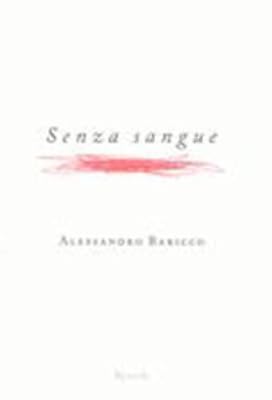
Without Blood
by Alessandro Baricco
On This Page
Description
An unforgettable fable about the brutality of war – and one girl's quest for revenge and healing, from the author of the acclaimed international bestseller Silk.When – in an unnamed place and time – Manuel Roca's enemies hunt him down to kill him, they fail to discover Nina, his youngest child, hidden in a hole beneath his farmhouse floor. After this carnage Tito, one of the murderers, discovers Nina's trapdoor. Enthralled by the sight of Nina's perfect innocence, he keeps quiet. By show more the time she has grown up, Nina's innocence will have bloomed into something else altogether, and one by one the wartime hunters will become the peacetime hunted. But not until a striking old woman calls upon a familiar old man selling newspapers in town can we know what Nina will ultimately make of her brutal legacy. show lessTags
Recommendations








Member Recommendations
Member Reviews
Alessandros Baricco's very brief novel Without Blood is divided into two parts. The first depicts events in an unnamed country caught up in violent conflict. Three men lay siege to a farmhouse, finally killing the owner, Manuel Roca, after a bloody firefight, along with his young son. One of the men discovers a trap door in the floor of the house, where Roca has stashed his daughter Nina. He opens the door and he and the girl exchange glances. The girl turns away and without a word he closes the door and leaves, not giving the girl up to his murderous companions. In the second part a woman of late middle age encounters an elderly man selling newspapers at a kiosk in an unnamed city. She convinces him to come with her, first to a cafe show more where they share a bottle of wine, and then to a hotel room where they sleep together. The woman is Nina and the man, whose name is Tito, is the last survivor of the team who killed her father some fifty years earlier. Their conversation--which begins at the kiosk, continues over wine, and ends in the hotel room--covers all manner of topics related to murder and killing and revenge and war. But the main question that Nina has for this man who helped to obliterate her family is Why? Without Blood is a strange, dreamlike little book. At 97 pages, it is too short for us to form any kind of bond with the characters (though we feel sympathy for Tito, who fears for his life when Nina confronts him, and then resigns himself to whatever fate awaits) but nonetheless leaves us thinking about war and its victims, and the capricious nature of mercy. In the end, Baricco succeeds in blurring the line between perpetrator and victim and manages to speak volumes about forgiveness. show less
I chanced upon this slim volume, lying hidden amidst a pile of "desperate-to-be-sold" books at the bookstore. The other books really looked like they deserved this desperation but there was something to Alessandro Baricco's Without Blood that made me pick it up.
There is a silken, mesmerizing quality to Without Blood. It begins with one of the most dramatic openings I have read - four men meet in a farmhouse, and settle an old feud with a former doctor. Nina, the doctor's daughter is the only one who survives the bloody massacre but that is only due to Tito, the youngest assassin who finds her hiding, and who in a moment of redemption spares her.
Fast forward 52 years later, and we find Nina meeting Tito. Through this conversation laced show more with delicate intrigue we are led to understand that Tito is the only survivor now - the others were murdered. You think the obvious - Tito is the next target. But Baricco is masterful - he draws us closer to an end that is neither predictable or common, but is wonderfully illuminating about the vastness of the human sphere. Complexly beautiful.
Without Blood can be read in just around 45 minutes or so, and it is well worth it if we can make space in our life for those 45 minutes. Because some moments from this book, especially the classic ending deserve a special memory in our time and space - they will last 52 years too. show less
There is a silken, mesmerizing quality to Without Blood. It begins with one of the most dramatic openings I have read - four men meet in a farmhouse, and settle an old feud with a former doctor. Nina, the doctor's daughter is the only one who survives the bloody massacre but that is only due to Tito, the youngest assassin who finds her hiding, and who in a moment of redemption spares her.
Fast forward 52 years later, and we find Nina meeting Tito. Through this conversation laced show more with delicate intrigue we are led to understand that Tito is the only survivor now - the others were murdered. You think the obvious - Tito is the next target. But Baricco is masterful - he draws us closer to an end that is neither predictable or common, but is wonderfully illuminating about the vastness of the human sphere. Complexly beautiful.
Without Blood can be read in just around 45 minutes or so, and it is well worth it if we can make space in our life for those 45 minutes. Because some moments from this book, especially the classic ending deserve a special memory in our time and space - they will last 52 years too. show less
Auf einem einsamen Bauernhof übt eine Gruppe von Männern grausame Rache. Sie töten einen Mann, der im Krieg Schreckliches getan hat. Wie nebenbei erwischt es auch den Sohn, nur die Tochter überlebt. Zwar wird die kleine Nina von einem der Mörder entdeckt, doch er verrät sie nicht. Jahrzehnte später steht sie wieder vor ihm. Der Mann fürchtet, dass ihn sein Schicksal nun einholen wird, denn die Mittäter von damals starben allesamt eines unnatürlichen Todes. Oder gibt es eine Chance, den Bann aus Rache und Tod zu durchbrechen?
The book opens in an old isolated farmhouse, with a father and his two children (a boy and a girl). The father goes and looks out of the window at the sound of a car engine. What happens next is a shocking act of violence, that leaves the father and son shot dead. The daughter (Nina) although hidden away is discovered by Tito, the youngest of the killers.
“The child turned her he
This Novel could so easily have become a tale of revenge, carrying on with the bloody path it first seems to be taking, but it becomes so much more, with it’s beautiful understated prose, placing it in a no mans land, in a time and place unstated. It’s myth and like myth it’s relevance is timeless & like myth it mines the human psyche.This book is 87 show more pages of viscerally shocking, mesmerising writing. It takes no time to read and yet its stark landscape will become a backdrop to your thoughts .
http://parrishlantern.blogspot.co.uk/2011/08/without-blood.html show less
“The child turned her he
This Novel could so easily have become a tale of revenge, carrying on with the bloody path it first seems to be taking, but it becomes so much more, with it’s beautiful understated prose, placing it in a no mans land, in a time and place unstated. It’s myth and like myth it’s relevance is timeless & like myth it mines the human psyche.This book is 87 show more pages of viscerally shocking, mesmerising writing. It takes no time to read and yet its stark landscape will become a backdrop to your thoughts .
http://parrishlantern.blogspot.co.uk/2011/08/without-blood.html show less
Net als met zijn novelle "Zijde" levert Barrico met "Zonder bloed" een werkje af dat condens is, erg filmisch en geschreven met een uitgepuurde taal maar zonder minimalistisch te worden. De setting (want je kan niet spreken van een echt verhaal) is een niet nader genoemd land na een niet nader genoemde oorlog in het eerste deel, en de ontmoeting jaren later tussen Nina en Tito in het tweede deel. Hier meer over zeggen zou het leesplezier bederven maar laat gezegd zijn dat ook deze novelle verrassend rijk en diepgaand is. Een citaat uit het einde van het boek kan niet anders dan zin opwekken om het zelf te gaan lezen. "Toen bedacht ze dat hoe onbegrijpelijk het leven ook is, je het waarschijnlijk doorbrengt met niets anders dan het show more verlangen om terug te keren naar de hel die je heeft voortgebracht, en om daar te leven aan de zijde van degene die je ooit uit die hel heeft gered." show less
Dec 10, 2010Dutch
Efter en borgerkrig, som ikke præciseres nærmere, men kunne være den spanske, opsøger nogle mænd Manuel Roca for at myrde ham. Mens Roca og hans dreng brutalt myrdes, ligger hans lille datter, Nina, skjult under gulvet. En af drabsmændene, Tito, opdager Nina, men skåner hendes liv. Halvtreds år efter opsøger Nina Tito, men men med hvilket motiv: hævn eller soning...?
En af Bariccos pointer er, at krigen æder sine børn, både de umiddelbare ofre og de soldater, som udfører meningsløse handlinger, som igen avler ny krig og meningsløshed.Og det uanset om de dækker sig ind bag 'Den Gode Sag'. Han bruger det greb, at det ikke opklares, hvilken side Manuel Roca og hans drabsmænd stod på i krigen - det er fuldstændigt show more ligegyldigt.
Det er ekstremt stramt fortalt på kun 93 sider, og der er ikke ét overflødigt ord i bogen. Det er velskrevet i yderste grad og en fantastisk lille bog, som jeg ikke tror jeg vil glemme igen, og som kan bæres at blive taget op igen gang på gang. show less
En af Bariccos pointer er, at krigen æder sine børn, både de umiddelbare ofre og de soldater, som udfører meningsløse handlinger, som igen avler ny krig og meningsløshed.Og det uanset om de dækker sig ind bag 'Den Gode Sag'. Han bruger det greb, at det ikke opklares, hvilken side Manuel Roca og hans drabsmænd stod på i krigen - det er fuldstændigt show more ligegyldigt.
Det er ekstremt stramt fortalt på kun 93 sider, og der er ikke ét overflødigt ord i bogen. Det er velskrevet i yderste grad og en fantastisk lille bog, som jeg ikke tror jeg vil glemme igen, og som kan bæres at blive taget op igen gang på gang. show less
Jun 20, 2010Danish
Members
- Recently Added By
Lists

Italian Literature
558 works; 42 members

Best Revenge Stories
69 works; 9 members
EU Fiction: 1950-2022
223 works; 70 members
Author Information

354 Works 14,651 Members
Series
Belongs to Publisher Series
Common Knowledge
- Canonical title
- Without Blood
- Original title
- Senza sangue
- Original publication date
- 2002
- People/Characters
- Nina
- Important places
- Piedmont, Italy
- First words*
- Der alte Bauernhof Mato Rujo lag dunkel in der Landschaft, hob sich schwarz ab vor dem Licht des Abends. Der einzige Fleck auf dem verlassenen Profil der Ebene.
- Quotations*
- Toen bedacht ze dat hoe onbegrijpelijk het leven ook is, je het
waarschijnlijk doorbrengt met niets anders dan het verlangen om terug te
keren naar de hel die je heeft voortgebracht, en om daar te leven aan de
zijde ... (show all)van degene die je ooit uit die hel heeft gered. - Last words*
- (Click to show. Warning: May contain spoilers.)Nina legte die Stirn an Pedro Cantos' Rücken. Sie schloß die Augen und schlief ein.
*Some information comes from Common Knowledge in other languages. Click "Edit" for more information.
Classifications
Statistics
- Members
- 740
- Popularity
- 38,072
- Reviews
- 14
- Rating
- (3.33)
- Languages
- 19 — Catalan, Czech, Danish, Dutch, English, Estonian, Finnish, French, German, Greek, Hungarian, Italian, Lithuanian, Polish, Portuguese, Russian, Spanish, Swedish, Thai
- Media
- Paper, Audiobook, Ebook
- ISBNs
- 48
- ASINs
- 7