Lingo
by Gaston Dorren
On This Page
Description
"Spins the reader on a whirlwind tour of sixty European languages and dialects, sharing quirky moments from their histories and exploring their commonalities and differences ... [and taking] us into today's remote mountain villages of Switzerland, where Romansh is still the lingua franca, to formerly Soviet Belarus, a country whose language was Russified by the Bolsheviks, to Sweden, where up until the 1960s polite speaking conventions required that one never use the word 'you' in show more conversation"--Amazon.com. show lessTags
Recommendations
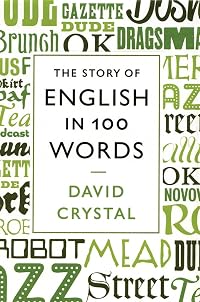
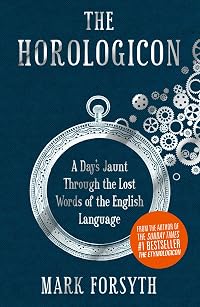
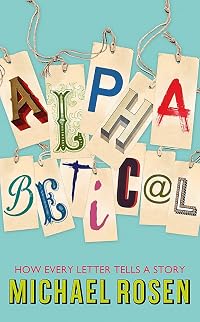
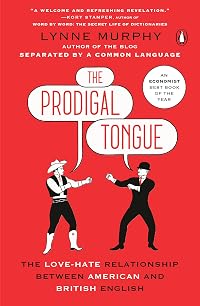

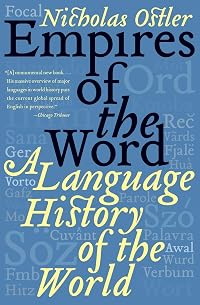

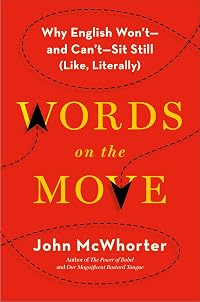
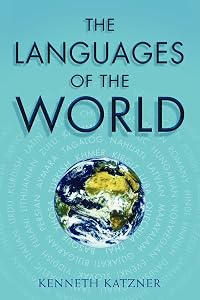
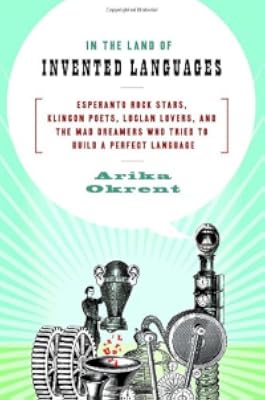



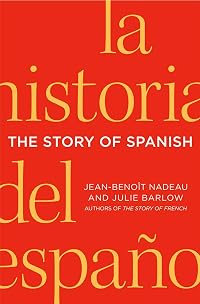
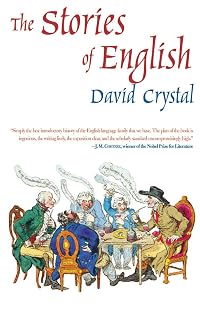
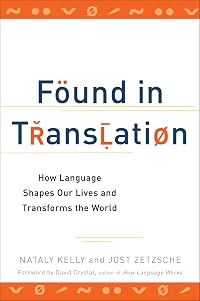

Member Recommendations
Member Reviews
In sixty brief chapters, Gaston Dorren's Lingo takes readers on a whirlwind tour of European languages, from the "big five" Romance languages (Spanish, French, Italian, Portuguese and Romanian), to more obscure tongues such as Slovene, Manx, and Gagauz.
The book is intended to be breezy, anecdotal and entertaining. Some chapters, such as the one on the extinction of the Dalmatian language, shine, but others fall flat. For example, the chapter on Ossetian, the so-called "tenth branch" on the Indo-European language family tree, is a mere four paragraphs long and gives readers very little idea what the language is like.
Moreover, in the chapter comparing English and Chinese, Dorren sets up a straw man argument that English became a world show more language because it is "simpler" than languages with gendered nouns, declensions, and mutations (a component of Welsh). Even though it lacks these features, English, with its weird spelling and pronunciation, is by no means simple, and I don't think anyone out there thinks English became an international language because of its own characteristics.
If you enjoy reading about languages, you may find this book worth picking up. Just don't expect too much from it. show less
The book is intended to be breezy, anecdotal and entertaining. Some chapters, such as the one on the extinction of the Dalmatian language, shine, but others fall flat. For example, the chapter on Ossetian, the so-called "tenth branch" on the Indo-European language family tree, is a mere four paragraphs long and gives readers very little idea what the language is like.
Moreover, in the chapter comparing English and Chinese, Dorren sets up a straw man argument that English became a world show more language because it is "simpler" than languages with gendered nouns, declensions, and mutations (a component of Welsh). Even though it lacks these features, English, with its weird spelling and pronunciation, is by no means simple, and I don't think anyone out there thinks English became an international language because of its own characteristics.
If you enjoy reading about languages, you may find this book worth picking up. Just don't expect too much from it. show less
Unlike many "linquistics for laypeople" books, this one successfully bridges the divide between hardcore language geeks and people who are just a bit curious, and it does so all while being incredibly witty, entertaining, and accessible.
Linguist Gaston Dorren takes us on a quick jaunt through the various languages and language groups spoken in Europe, spending just a few pages pointing out specific and sometimes quirky things about the grammar or history of each one. Given my longstanding fascination with language in all its forms, this sounds right up my alley, but I'm afraid I didn't enjoy it nearly as much as I expected to. Dorren's writing is often pretty dry, and his attempts at humor don't really land for me. And, by its very nature, the book is pretty disjointed and rather shallow. I'm not sorry I read it, and I did learn a few interesting facts, but it's not quite the entertaining linguistic tour that I was hoping for.
De-accessioned and bookcrossed July 2017
(29 December 2015)
Purporting to be a romp (OK, an “intriguing tour”) through the main and minor languages of Europe, this translated book is a bit of an oddity. It’s often simultaneously two detailed and not detailed enough, going into linguistic subtleties but then laughing at linguists, and then skating across whole languages and only giving them a paragraph at the end of their own chapter.
Then there were some big problems. It made a little more sense when I realised on reading the Acknowledgements that the author is Dutch and the book has been translated, because it’s a well-known fact that humour is practically untranslatable, but the chapter on Belarus(s)ian, made up of two invented show more addresses from the different sides of the dispute about which form of the language to adopt seemed in very poor taste, inflammatory and at best misguided. This was followed by a chapter on Luxembourgish written in the form of a fable, which was confusing and never actually explained which languages the author was talking about. Then there was a section later very carefully explaining how to read the Cyrillic alphabet based on the Greek, which even I, someone who likes an alphabet, skimmed.
There were good bits, and a nice pairing of a loan word plus a not-directly-translatable word that would be useful to have in English at the end of this chapter, but this was a bit patchy and in places downright uncomfortable. show less
(29 December 2015)
Purporting to be a romp (OK, an “intriguing tour”) through the main and minor languages of Europe, this translated book is a bit of an oddity. It’s often simultaneously two detailed and not detailed enough, going into linguistic subtleties but then laughing at linguists, and then skating across whole languages and only giving them a paragraph at the end of their own chapter.
Then there were some big problems. It made a little more sense when I realised on reading the Acknowledgements that the author is Dutch and the book has been translated, because it’s a well-known fact that humour is practically untranslatable, but the chapter on Belarus(s)ian, made up of two invented show more addresses from the different sides of the dispute about which form of the language to adopt seemed in very poor taste, inflammatory and at best misguided. This was followed by a chapter on Luxembourgish written in the form of a fable, which was confusing and never actually explained which languages the author was talking about. Then there was a section later very carefully explaining how to read the Cyrillic alphabet based on the Greek, which even I, someone who likes an alphabet, skimmed.
There were good bits, and a nice pairing of a loan word plus a not-directly-translatable word that would be useful to have in English at the end of this chapter, but this was a bit patchy and in places downright uncomfortable. show less
This book gives in one short volume a brief description of languages in Europe. It was interesting and fun to read. I enjoyed Dorren’s humor. The chapter on Bielorussian was hilarious, although, I wonder what Bielorussian speakers will think of it. I also wonder whether Esperanto speakers, in general, will be amused by his entry for “Esperinto” or accept his claim that Esperanto is not easier than other languages. Whichever it may be, I wish he had written a little about the history of Esperanto and its community of speakers. He does believe, however, that Esperanto could indeed serve as an international tool as well as any other language (even Estonian, for example). At any rate, he thinks Chinese will probably be the next show more language of choice for many. All in all, I enjoyed this book and would recommend it to readers interested in languages. show less
"The stories about Europe's scores of languages are compelling",, 25 December 2015
This review is from: Lingo: A Language Spotter's Guide to Europe (Hardcover)
An interesting tour around the languages of Europe, from Faroese to Armenian to sign language to Esperanto. The author looks at why some tongues remain untouched over centuries while others change out of all recognition; considers dying languages, looks at the work of various linguists and introduces a plethora of odd and interesting linguistic facts.
As he writes in the introduction, it is "a guidebook of sorts, but in no sense an encyclopedia...it is intended as the French so enticingly put it, as an amuse-bouche."
Generally a light and entertaining work - even those who are show more knowledgable on the subject of languages will find plenty here that they were unaware of. show less
This review is from: Lingo: A Language Spotter's Guide to Europe (Hardcover)
An interesting tour around the languages of Europe, from Faroese to Armenian to sign language to Esperanto. The author looks at why some tongues remain untouched over centuries while others change out of all recognition; considers dying languages, looks at the work of various linguists and introduces a plethora of odd and interesting linguistic facts.
As he writes in the introduction, it is "a guidebook of sorts, but in no sense an encyclopedia...it is intended as the French so enticingly put it, as an amuse-bouche."
Generally a light and entertaining work - even those who are show more knowledgable on the subject of languages will find plenty here that they were unaware of. show less
A fun little book. A trip through all the European languages using each one to illustrate language families, how they evolved, how they influenced each other and the many oddities and similarities between them. Not an in-depth analysis by any means, but full of interesting points and well written.
Members
- Recently Added By
Published Reviews
Are some languages worse than others? The question might sound silly, but in this entertaining exercise in "language tourism" (the book's original Dutch title), the author isn't frightened of making judgments. He thinks lenition – the habit in Welsh of "changing a word's first letter for no apparent reason" – is just "mindboggling", and generally that "Gaelic spelling is flawed … show more wasteful, arcane and outdated". The "ludicrous" variety of cases in Slovak amounts to "chaos", while Breton's system of naming numbers makes mental arithmetic unnecessarily difficult.
In the author's native Dutch, the gendering of nouns is changing in what he calls "a blatant act of linguistic sexism". (Everything that is not obviously a female living thing is a "he".) Nor will Anglophone readers of this edition feel smug after Dorren's excellent dissection of the illogicality of English, with its 20 different vowel sounds, impossible spelling and idiosyncratic formations. (Very reasonably, Dorren wonders: "Why does English say 'I want you to listen' rather than the more straightforward 'I want that you listen'?") show less
In the author's native Dutch, the gendering of nouns is changing in what he calls "a blatant act of linguistic sexism". (Everything that is not obviously a female living thing is a "he".) Nor will Anglophone readers of this edition feel smug after Dorren's excellent dissection of the illogicality of English, with its 20 different vowel sounds, impossible spelling and idiosyncratic formations. (Very reasonably, Dorren wonders: "Why does English say 'I want you to listen' rather than the more straightforward 'I want that you listen'?") show less
added by Cynfelyn
Author Information

11 Works 1,080 Members
Some Editions
Work Relationships
Is an adaptation of
Has the adaptation
Common Knowledge
- Canonical title
- Lingo
- Original title
- Lingua
- Original publication date
- 2014
- Epigraph
- "Two languages in one head? No one can live at that speed! Good Lord, man, you're asking the impossible." " But the Dutch speak four languages and they smoke marijuana." "Yes, but that's cheating." —Eddie Izzard 'Dress to... (show all) Kill'
- First words
- Introduction
What Europeans speak
The attitude of English speakers to foreign languages can be summed up thus: let's plunder, not learn them.
Once upon a time, thousands of years ago (nobody knows quite when), in a faraway land (nobody knows quite where), there was a language that no one speaks today and whose name has been forgotten, if it ever had one. - Last words
- (Click to show. Warning: May contain spoilers.)So if you want the best for your children and grandchildren, welcome the rise of China.
- Original language
- Dutch
- Disambiguation notice*
- herziene en uitgebreide uitgave van Taaltoerisme
*Some information comes from Common Knowledge in other languages. Click "Edit" for more information.
Classifications
- Genres
- Nonfiction, General Nonfiction, Travel
- DDC/MDS
- 306.44094 — Society, government, & culture Social sciences, sociology & anthropology Social Behavior - Dating, Marriage, Divorce Specific aspects of culture Language History Europe
- LCC
- P380 — Language and Literature Philology. Linguistics Language. Linguistic theory. Comparative grammar Linguistic geography
- BISAC
Statistics
- Members
- 564
- Popularity
- 52,532
- Reviews
- 16
- Rating
- (3.65)
- Languages
- 9 — Dutch, English, German, Galician, Italian, Polish, Russian, Spanish, Swedish
- Media
- Paper, Audiobook, Ebook
- ISBNs
- 18
- ASINs
- 6