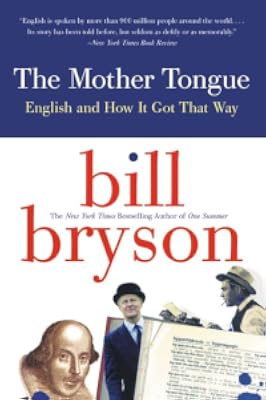
The Mother Tongue
by Bill Bryson
On This Page
Description
With dazzling wit and astonishing insight, Bill Bryson-the acclaimed author of The Lost Continent-brilliantly explores the remarkable history, eccentricities, resilience and sheer fun of the English language. From the first descent of the larynx into the throat (why you can talk but your dog can't), to the fine lost art of swearing, Bryson tells the fascinating, often uproarious story of an inadequate, second-rate tongue of peasants that developed into one of the world's largest growth show more industries. show lessTags
Recommendations




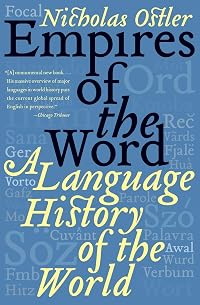

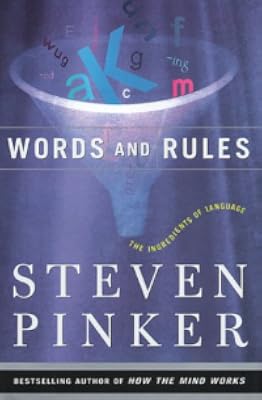
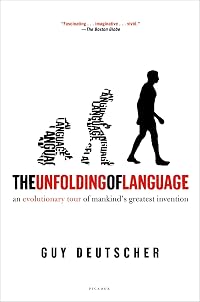

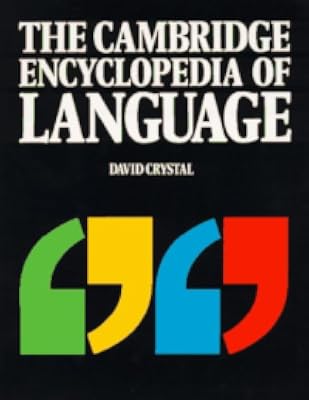



Member Recommendations

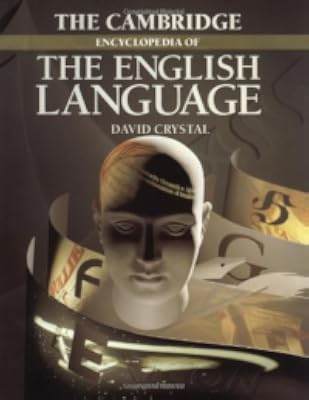
Mrs.Stansbury This is an academic version of 'Mother Tongue' this one covers about 85% of the same material but in much greater detail and depth. The maps and charts are fantastic.
10
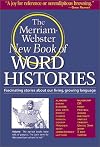

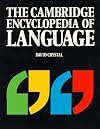
kevinashley Crystal's work is more scholarly in tone but he's an equally accessible writer - and more comprehensive and accurate. If English, rather than language in general, is your particular interest you may find his books on English more interesting (I haven't read those.)

Member Reviews
In its original sense, an amateur is one who plays for the love of the game. Bill Bryson is an amateur in that sense. He writes most often about the games he loves—travel and language, although lately, he has also been writing popular science books.
In his fourth book, The Mother Tongue (1991), he explains why he thinks English has become our closest approach to a universal language. First, he says, we borrow freely from other languages, giving everyone at least a slight sense of familiarity with it. He argues that its relative lack of diacritical marks and gendered constructions make English more accessible as a second language than one that is highly inflected. On the other hand, English has a vast vocabulary and a bewildering number show more of ways to say anything. It is the only language that needs books like the OED or Roget’s Thesaurus. A small word can have so many different uses that it sometimes takes the OED thousands of words to explain them.
Attempts to regularize English spelling and grammar have usually been misguided and counterproductive. Most efforts to make spelling consistent have been ignored for good reason. In the eighteenth century, we made a concerted effort to make English more like Latin. “Dryden,” Bryson says, “spoke for an age when he boasted that he often translated his sentences into Latin to help him decide how best to express them in English.” There have been calls for the establishment of a French-style Academy to regulate the evolution of the language, but Bryson says we are lucky they have been ignored: “Perhaps for our last words on the subject of usage we should turn to the last words of the venerable French grammarian Dominique Bonhours, who proved on his deathbed that a grammarian’s work is never done when he turned to those gathered loyally around him and whispered: ‘I am about to—or I am going to—die; either expression is used.’”
Along the way, Bryson tells us how freely Shakespeare coined new words, how many common last names came to be, and how curse words have evolved. Shakespeare coined more than 1,500 new words. Many last names come from job titles. For example, the guy who makes barrels, Bill the Cooper, becomes Bill Cooper. Fanny does not mean the same thing in England that it does in the States, and in England, the C-word was not always as indelicate as it is now. show less
In his fourth book, The Mother Tongue (1991), he explains why he thinks English has become our closest approach to a universal language. First, he says, we borrow freely from other languages, giving everyone at least a slight sense of familiarity with it. He argues that its relative lack of diacritical marks and gendered constructions make English more accessible as a second language than one that is highly inflected. On the other hand, English has a vast vocabulary and a bewildering number show more of ways to say anything. It is the only language that needs books like the OED or Roget’s Thesaurus. A small word can have so many different uses that it sometimes takes the OED thousands of words to explain them.
Attempts to regularize English spelling and grammar have usually been misguided and counterproductive. Most efforts to make spelling consistent have been ignored for good reason. In the eighteenth century, we made a concerted effort to make English more like Latin. “Dryden,” Bryson says, “spoke for an age when he boasted that he often translated his sentences into Latin to help him decide how best to express them in English.” There have been calls for the establishment of a French-style Academy to regulate the evolution of the language, but Bryson says we are lucky they have been ignored: “Perhaps for our last words on the subject of usage we should turn to the last words of the venerable French grammarian Dominique Bonhours, who proved on his deathbed that a grammarian’s work is never done when he turned to those gathered loyally around him and whispered: ‘I am about to—or I am going to—die; either expression is used.’”
Along the way, Bryson tells us how freely Shakespeare coined new words, how many common last names came to be, and how curse words have evolved. Shakespeare coined more than 1,500 new words. Many last names come from job titles. For example, the guy who makes barrels, Bill the Cooper, becomes Bill Cooper. Fanny does not mean the same thing in England that it does in the States, and in England, the C-word was not always as indelicate as it is now. show less
Where to begin? The Mother Tongue is a book which is not merely not good: it is maddeningly terrible, riddled with factual errors and utterly lacking in self-awareness. I don’t expect Bill Bryson to be clairvoyant, of course, and a book written in 1991 about the history of language can be forgiven for having predicted neither the rise of the internet nor the scientific breakthroughs that proved that modern humans and Neanderthals interbred. But even setting issues like that aside, there are so many mistakes here, both in Bryson’s discussion of the English language itself and in his characterisation of the other languages he uses as comparatives.
Bryson repeatedly shows that he doesn’t understand what he’s talking about when it show more comes to the English language. Take this for instance:
“A rich vocabulary carries with it a concomitant danger of verbosity, as evidenced by our peculiar affection for redundant phrases, expressions that say the same thing twice: beck and call, law and order, assault and battery, null and void…”
Except that none of these are examples of redundancy? A beck is a gesture and a call is verbal; a law is a codified rule and order is a lack of chaos, and so on. What we’ve got is a use of related ideas in order to create a broader overlapping concept. He generally shows a confused understanding of a lot of grammatical concepts/parts of speech, and is inconsistent in his conception of the relationship of spelling to spoken language.
Then again, he seems to think that Pennsylvania Dutch is a form of pidgin English, so perhaps that’s unsurprising!
To focus on the languages I know best out of those he discusses—Irish, Hiberno-English, and French—is to make me sigh heavily. His discussion of Irish and Hiberno-English was full of mistakes and condescension. He claims that Irish people pronounce the word “girl” as “gull” (I said “girl” to myself in a variety of Irish accents as I made a cup of tea just now to see if I could figure out where he was coming from, and nope), says that the phonetic rendering of “Taoiseach” in English is “tea-sack”, and more. Has Bryson ever spoken to an Irish person?
He repeatedly dings Irish (and even more so Welsh) for having spellings that are bizarre, strange, overly convoluted, etc, when what he should mean is that the Irish language attaches sound values to the Latin alphabet that are different from those used by English.
(And the clue is right there in the term ‘Latin alphabet’ that it wasn’t originally crafted for use by English speakers, either.)
(Also, Irish and Welsh orthography is far more internally consistent than is that of English—but Bryson only allows the features of English to be virtues.)
The final bit of assholery is that he excuses British imperialism in Ireland and its policies both direct and indirect aimed at the destruction of the Irish language on the basis that, well, it’s given him more English-language literature to enjoy.
Let me draw upon all of my Irishness here, Bill, to point out first the fact that translators exist; second, that Irish writers are not writing for you; and third, fuck you, you scuttering gobshite.
Bryson’s clearly lived in England long enough to have imbibed the British combativeness towards the French. He’s sneery enough towards the Académie Française to make me eyeroll even though I think the Académie is full of jackasses, and makes bizarre pronouncements about the French language that a quick look at the dictionary would have proved wrong. (The French don’t have the breadth of vocabulary to distinguish between “man” and “gentleman”, the way English speakers do, proclaims Bryson. “Homme” and “gentilhomme”? They can’t distinguish between “mind” and “brain”! Uh, “esprit” and “cerveau”?)
And then there’s the racism. His use of “we” oscillates throughout, from encompassing British people, to American people, to a kind of Anglo-American hybrid, but there’s always the underlying assumption that the English speaker who will pick this book up will be one of the two, and almost certainly white. He refers to Spanish as an “immigrant” language to the U.S. in comparison to English, when there have been Spanish speakers in what is now the U.S. for longer than there have been English speakers, I’m pretty sure. Then there’s a strong undercurrent throughout of racialising language, making it reflect something both innate and straight-jacketing about those who speak non-English languages—“Orientals”, for example, are “inscrutable” who just can’t do honest business like those straight-talkin’ Anglo-Saxons. Then there’s absolute bullshit like this discussion of Australia:
That’s some magic trick, to have a land which is both entirely uninhabited when the white folks show up but which also has indigenous people living there to just offer up words for colonisers to “borrow”!
Awful. Awful. I’m now retrospectively mad, five years later, that I once attended a talk by this man. Avoid.
The audiobook narrator was also bad. Not only did he clearly do little by way of preparatory work for discussion of the non-English words (I think I replayed his attempt at the Irish word “geimhreadh” 3 or 4 times because it was that bizarre), but also did things like repeatedly pronounce “short-lived” with the same I in “lived” as in “live music.” show less
Bryson repeatedly shows that he doesn’t understand what he’s talking about when it show more comes to the English language. Take this for instance:
“A rich vocabulary carries with it a concomitant danger of verbosity, as evidenced by our peculiar affection for redundant phrases, expressions that say the same thing twice: beck and call, law and order, assault and battery, null and void…”
Except that none of these are examples of redundancy? A beck is a gesture and a call is verbal; a law is a codified rule and order is a lack of chaos, and so on. What we’ve got is a use of related ideas in order to create a broader overlapping concept. He generally shows a confused understanding of a lot of grammatical concepts/parts of speech, and is inconsistent in his conception of the relationship of spelling to spoken language.
Then again, he seems to think that Pennsylvania Dutch is a form of pidgin English, so perhaps that’s unsurprising!
To focus on the languages I know best out of those he discusses—Irish, Hiberno-English, and French—is to make me sigh heavily. His discussion of Irish and Hiberno-English was full of mistakes and condescension. He claims that Irish people pronounce the word “girl” as “gull” (I said “girl” to myself in a variety of Irish accents as I made a cup of tea just now to see if I could figure out where he was coming from, and nope), says that the phonetic rendering of “Taoiseach” in English is “tea-sack”, and more. Has Bryson ever spoken to an Irish person?
He repeatedly dings Irish (and even more so Welsh) for having spellings that are bizarre, strange, overly convoluted, etc, when what he should mean is that the Irish language attaches sound values to the Latin alphabet that are different from those used by English.
(And the clue is right there in the term ‘Latin alphabet’ that it wasn’t originally crafted for use by English speakers, either.)
(Also, Irish and Welsh orthography is far more internally consistent than is that of English—but Bryson only allows the features of English to be virtues.)
The final bit of assholery is that he excuses British imperialism in Ireland and its policies both direct and indirect aimed at the destruction of the Irish language on the basis that, well, it’s given him more English-language literature to enjoy.
“We naturally lament the decline of these languages, but it's not an altogether undiluted tragedy. Consider the loss to English literature, if Joyce, Shaw, Swift, Yeats, Wilde, and Ireland's other literary masters have written in what inescapably a fringe language, their work will be as little known to us as those poets in Iceland or Norway, and that would be a tragedy indeed. No country has given the word incomparable literature per head of population than Ireland, and for that reason alone we might be excused to a small, "selfish" celebration that English was the language of her greatest writers.”
Let me draw upon all of my Irishness here, Bill, to point out first the fact that translators exist; second, that Irish writers are not writing for you; and third, fuck you, you scuttering gobshite.
Bryson’s clearly lived in England long enough to have imbibed the British combativeness towards the French. He’s sneery enough towards the Académie Française to make me eyeroll even though I think the Académie is full of jackasses, and makes bizarre pronouncements about the French language that a quick look at the dictionary would have proved wrong. (The French don’t have the breadth of vocabulary to distinguish between “man” and “gentleman”, the way English speakers do, proclaims Bryson. “Homme” and “gentilhomme”? They can’t distinguish between “mind” and “brain”! Uh, “esprit” and “cerveau”?)
And then there’s the racism. His use of “we” oscillates throughout, from encompassing British people, to American people, to a kind of Anglo-American hybrid, but there’s always the underlying assumption that the English speaker who will pick this book up will be one of the two, and almost certainly white. He refers to Spanish as an “immigrant” language to the U.S. in comparison to English, when there have been Spanish speakers in what is now the U.S. for longer than there have been English speakers, I’m pretty sure. Then there’s a strong undercurrent throughout of racialising language, making it reflect something both innate and straight-jacketing about those who speak non-English languages—“Orientals”, for example, are “inscrutable” who just can’t do honest business like those straight-talkin’ Anglo-Saxons. Then there’s absolute bullshit like this discussion of Australia:
“When the first inhabitants of the continent arrived in Botany Bay in 1788 they found a world teeming with flora, fauna, and geographical features such as they had never seen. “It is probably not too much to say,” wrote Otto Jespersen, “that there never was an instance in history when so many new names were needed.” Among the new words the Australians devised, many of them borrowed from the aborigines, were…”
That’s some magic trick, to have a land which is both entirely uninhabited when the white folks show up but which also has indigenous people living there to just offer up words for colonisers to “borrow”!
Awful. Awful. I’m now retrospectively mad, five years later, that I once attended a talk by this man. Avoid.
The audiobook narrator was also bad. Not only did he clearly do little by way of preparatory work for discussion of the non-English words (I think I replayed his attempt at the Irish word “geimhreadh” 3 or 4 times because it was that bizarre), but also did things like repeatedly pronounce “short-lived” with the same I in “lived” as in “live music.” show less
Bill Bryson recounts the history and development of the english language, with a bit of humour thrown in to ease the journey.
If I had to write a one-sentence summary of this book, that would be it. Inevitably, it's bit more complicated than that. If you are familiar with Bryson's work, the style here will be very familiar. He takes a wide view of the subject, but illustrates it selectively and takes a personal rather than scholarly view of the topic whilst still managing to be rigorous - to an extent. And he leavens it all with an irreverent view. It's never laugh-out-loud, and I don't think it's intended to be, but there's a good sprinkling of wry smiles and the writing style makes for very easy reading.
He devotes the first two show more chapters to the evolution of langauge in general before beginning to tackle the emergence of English from around 450AD in chapter 3. Throughout the book he wanders into the greater realm of comparative linguistics to illustrate the ways in which English is either very like other languages, or dissimilar from them. If you are a serious student of this topic, there may not be much to learn here and you'll find some of the generalisations positively annoying, but you'll probably still enjoy it. For others it is likely to be much more rewarding.
Even so, I felt mildly annoyed that, while he appears to take a very broad view of English against the background of language in general, Bryson seems too keen to defend it as something particularly special or elevated. His generalisations about what other languages are or are not capable of aren't always right and parts of the book - but only parts - seem to take a rather narrow view of English from the point of the US and the UK, the environments most familiar to him. His frequent disparaging remarks about Welsh are an example of this, and other reviewers have done a better job than I of showing how he can be both annoying and plain wrong about this and similar matters.
But the descriptions of what can otherwise be difficult concepts, such as his analysis of the ways in which words change over time, are very accessible and he crams a lot of fascinating detail in here about such things as the influence of Norman French, the ways in which words become acceptable, then disreputable, then acceptable again over time, and sometimes false perceptions by others over what are and aren't Americanisms; and those are just a few examples.
Overall an entertaining and often informative read, but hardly comprehensive. If you enjoy the aspects of the book that deal with langauge in a more general sense, I highly recommend David Crystal's Cambridge Encylopaedia of Language, or for that matter almost anything else by Crystal. show less
If I had to write a one-sentence summary of this book, that would be it. Inevitably, it's bit more complicated than that. If you are familiar with Bryson's work, the style here will be very familiar. He takes a wide view of the subject, but illustrates it selectively and takes a personal rather than scholarly view of the topic whilst still managing to be rigorous - to an extent. And he leavens it all with an irreverent view. It's never laugh-out-loud, and I don't think it's intended to be, but there's a good sprinkling of wry smiles and the writing style makes for very easy reading.
He devotes the first two show more chapters to the evolution of langauge in general before beginning to tackle the emergence of English from around 450AD in chapter 3. Throughout the book he wanders into the greater realm of comparative linguistics to illustrate the ways in which English is either very like other languages, or dissimilar from them. If you are a serious student of this topic, there may not be much to learn here and you'll find some of the generalisations positively annoying, but you'll probably still enjoy it. For others it is likely to be much more rewarding.
Even so, I felt mildly annoyed that, while he appears to take a very broad view of English against the background of language in general, Bryson seems too keen to defend it as something particularly special or elevated. His generalisations about what other languages are or are not capable of aren't always right and parts of the book - but only parts - seem to take a rather narrow view of English from the point of the US and the UK, the environments most familiar to him. His frequent disparaging remarks about Welsh are an example of this, and other reviewers have done a better job than I of showing how he can be both annoying and plain wrong about this and similar matters.
But the descriptions of what can otherwise be difficult concepts, such as his analysis of the ways in which words change over time, are very accessible and he crams a lot of fascinating detail in here about such things as the influence of Norman French, the ways in which words become acceptable, then disreputable, then acceptable again over time, and sometimes false perceptions by others over what are and aren't Americanisms; and those are just a few examples.
Overall an entertaining and often informative read, but hardly comprehensive. If you enjoy the aspects of the book that deal with langauge in a more general sense, I highly recommend David Crystal's Cambridge Encylopaedia of Language, or for that matter almost anything else by Crystal. show less
The language that we speak is akin to breathing. What I mean to say is you really don't thinking about breathing in or breathing out. You just do it. Same with talking. Most of us don't think often or long enough about the words we use. Even less of us think about where those words came from in the first place. Language is a powerful tool, used for good, evil or even just plain fun. Think about how lawyers can twist an innocent person's words into an admission of guilt. Crossword puzzles are counting on you to think of the wrong use or meaning of a word when you are trying to fill in the squares. Jokes are often based on word play: either funny or groan-worthy puns. Words matter. When words are strung together to form sentences, they show more mean even more. Bryson's Mother Tongue is nothing short of a run-on sentence about language facts. Page after page after page of witticisms about words. An onslaught of linguistic trivia. That is not to say I did not enjoy Mother Tongue. I found it fascinating to learn that Robert Lowth simply didn't care for the pairing of "you" and "was" and demanded it be changed to "you were." Explanation for some grammatical rules "they are because they are" is the equivalent of a parent saying "because I said so." I enjoyed learning that the word asparagus comes from the combined words sparrow and grass and that al fresco in Italian does not mean being outside, but rather, in prison. It reminded me of runner and anthropologist Dr. Tommy 'Rivs' Puzey. He taught me that you have to be careful how you pronounce Machu Picchu. The wrong emphasis could mean something completely different. Just make sure you pronounce the second 'c' in Picchu. show less
Intriguing! This is definitely a book for people who have wondered why British and American English are so different, and how English evolved from German in the first place. Not as witty as Bryson's other books, but it is entertaining and clearly well researched. In fact, it seems like it must have been exhaustively researched to give so many examples with such depth. (Some of which, honestly, got a tiny bit tedious. After the third or fourth example the point is made without needing a list of ten more. But it's a minor annoyance and it's easy to skim the remaining examples).My favorite part of the book was comparing the dialects in America with the dialects in Britian. I loved the section in which British people complained about show more American English and about awful American words (that turned out to be of British origin). Take that!I also learned a lot of English-based slang from other languages. Awesome. show less
Bryson does a quick history of the English language, hitting most of the salient points and digressing (as he is wont to do--and as he excels) into interesting side topics (such as variant vocab between the US and the UK, slang, place names, and so on). A good read, and should be pleasant and generally informative to anyone not well-versed in the HotEL (alternately, and affectionately, acronymed as "HEL" by many of us who were taking a two-semester course in it as a course overload to fulfill a second foreign language requirement during PhD school). As someone reasonably well-informed on the subject, I was sometimes irritated by the brevity of his discussion (because it left important distinctions unsatisfactorily explored) and by his show more near-universal opinion that prescriptivism is bad, bad, bad. (I usually consider myself a descriptivist, if I consider myself anything at all in this fight, but some of the "rules" make a good deal more sense than he was willing to allow them, if you think carefully about the logic involved and care about precision.) The discussion occasionally felt dated (the book was published in 1990) when discussing regionalisms and the likelihood of Americans understanding Brits and vice versa (an awful lot of flattening of regional language difference and exchange of vocab can happen in twenty-two years). A much better read than I think I am making it sound--I enjoyed the book, just wished I had the man on the other side of the dinner table so I could "yeah, but" at him instead of just shaking my fist at the book. show less
It is a _wonderful_ book. There are things he got just plain wrong, but they don't materially detract from what he's saying. I spend a lot of time looking at the OED after reading a chapter or two. Things like the many and rapidly changing meanings of 'nice' - Good Omens only mentions _one_ variant, Bryson lists 7-8 within two centuries. The real way the 'Great Vowel Shift' worked, the _last_ great surge of coinages in English (encompassing Shakespeare's time), why we have some of our weird spellings (they're phonetic! We just abandoned the pronunciation for which they were phonetic...) - lots of fascinating bits. If you like etymology or are curious about the oddities of English, you should read this book.
Members
- Recently Added By
Lists

Etymology
26 works; 7 members

Top Five Books of 2022
736 works; 272 members

Bret Victor's Five-Star List
46 works; 5 members

What're you reading? ..Words, words words.
11 works; 2 members

Books Read in 2013
1,630 works; 51 members

Books With Body Parts in the Title
153 works; 9 members
Books Read in 2018
4,360 works; 110 members

Carole's List
445 works; 13 members

Books With Family Relationships in the Title
44 works; 4 members

A Good Read (Radio 4)
221 works; 1 member

Great Books About Language
73 works; 48 members
Author Information

70+ Works 136,293 Members
Bill Bryson was born in Des Moines, Iowa on December 8, 1951. In 1973, he went backpacking in England, where he eventually decided to settle. He wrote for the English newspapers The Times and The Independent, as well as supplementing his income by writing travel articles. He moved back to the United States in 1995. His first travel book, The Lost show more Continent: Travels in Small-Town America, was published in 1989. His other books include I'm a Stranger Here Myself, In a Sunburned Country, Bill Bryson's Dictionary of Troublesome Words, Neither Here nor There: Travels in Europe, Made in America, The Mother Tongue, Bill Bryson's African Diary, A Short History of Nearly Everything, At Home: A Short History of Private Life, Walk About, and Seeing Further: The Story of Science, Discovery, the Genius of the Royal Society. A Walk in the Woods was adapted into a movie starring Robert Redford and Nick Nolte. Bryson's titles, The Road to Little Dribbling: Adventures of an American in Britain, Notes from a Small Island and Neither Here Nor There made the New York Times bestseller list in 2016. (Bowker Author Biography) show less
Some Editions
Awards and Honors
Notable Lists
Work Relationships
Is contained in
Has the adaptation
Has as a student's study guide
Common Knowledge
- Canonical title*
- The Mother Tongue
- Original title
- The Mother Tongue: English And How It Got That Way
- Alternate titles
- Mother Tongue: The Story of the English Language; Mother Tongue: The English Language
- Original publication date
- 1990
- Dedication
- To Cynthia
- First words
- More than 300 million people in the world speak English and the rest, it sometimes seems, try to.
- Last words
- (Click to show. Warning: May contain spoilers.)If we should be worrying about anything to do with the future of English, it should be not that the various strands will drift apart but that they will grow indistinguishable. And what a sad, sad loss that would be.
- Blurbers
- Hochburg, Burt; Taylor, Robert; Holley, Fred S.
- Original language
- English
- Disambiguation notice
- It appears that there is no canonical title, but two distinct titles. If the canoncial title field is left blank, LibraryThing will continue to use the democratic method for populating everyone’s ‘your books’ listing (... (show all)and maybe elsewhere) with the most commonly used title on LibraryThing. On 20 Jan 2014 Bill Bryson’s home page showed two distinct editions, the UK edition and the US edition, with two distinct titles. It appears that the US edition was published first but not verified.
US edition - The Mother Tongue - English And How It Got That Way – 1 June 1990 (??)
UK edition - Mother Tongue: The Story of the English Language – 1 Oct 1990 (??)
A 1991 UK edition was titled Mother Tongue: The English Language
*Some information comes from Common Knowledge in other languages. Click "Edit" for more information.
Classifications
Statistics
- Members
- 8,411
- Popularity
- 1,312
- Reviews
- 163
- Rating
- (3.86)
- Languages
- Albanian, English, French, Norwegian
- Media
- Paper, Audiobook, Ebook
- ISBNs
- 28
- ASINs
- 45