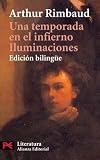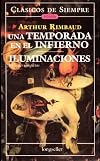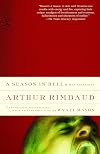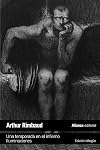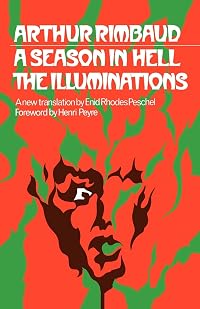
A Season in Hell / The Illuminations
by Arthur Rimbaud
On This Page
Description
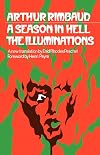
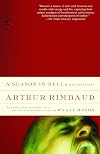
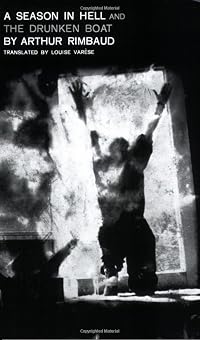
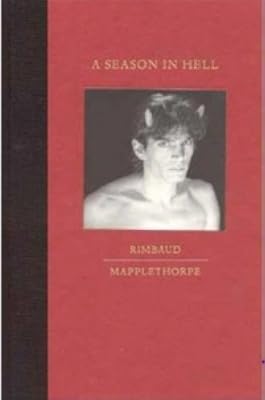
Translated, edited and with an Introduction by Wyatt Mason “The definitive translation for our time.” –Edward Hirsch From Dante’s Inferno to Sartre’s No Exit, writers have been fascinated by visions of damnation. Within that rich literature of suffering, Arthur Rimbaud’s A Season in Hell–written when the poet was nineteen–provides an astonishing example of the grapple with self. As a companion to Rimbaud’s journey, readers could have no better guide than Wyatt Mason. One of show more our most talented young translators and critics, Mason’s new version of A Season in Hell renders the music and mystery of Rimbaud’s tale of Hell on Earth with exceptional finesse and power. This bilingual edition includes maps, a helpful chronology of Rimbaud’s life, and the unfinished suite of prose poems, Illuminations. With A Season in Hell, they cement Rimbaud’s reputation as one of the foremost, and most influential, writers in French literature. show lessTags
Recommendations








Member Reviews
A Season in Hell & Illuminations was a book that I was introduced to in the dead of night. I was handed the text and asked to read and, being me, proceeded to open to random pages and read aloud in an impassioned tone. When read like this - in the middle of the night with all of its magic and attractions, the text is like fire.
Rimbaud's words alternatively scorch and caress, they raise up the most enlivened fancies and play out dark fantasies unlike anything else one could ever be exposed to. Rimbaud becomes the Father of all that is brutal and metal, he becomes the embodiment of debauchery and dark poetry; in this light he is pure electricity, and being that, strange, mysterious, and wonderful.
In the light of day, his prose loses some show more of that intensity. He becomes something tamer, better understood. In light of the preface, Rimbaud runs the risk of even failing to be purely Rimbaudian - he is human, after all, and simply a man, behind a desk, writing... I feel he loses his allure in this light, rather than gains it. Yes, he is human, but the legend is so much more fun and eagerly traced...?
I struggle between giving this novel three stars or four - in the right conditions, he is truly incredible and quite the beloved read. For now, I shall settle with three, and perhaps increase upon a later date. show less
Rimbaud's words alternatively scorch and caress, they raise up the most enlivened fancies and play out dark fantasies unlike anything else one could ever be exposed to. Rimbaud becomes the Father of all that is brutal and metal, he becomes the embodiment of debauchery and dark poetry; in this light he is pure electricity, and being that, strange, mysterious, and wonderful.
In the light of day, his prose loses some show more of that intensity. He becomes something tamer, better understood. In light of the preface, Rimbaud runs the risk of even failing to be purely Rimbaudian - he is human, after all, and simply a man, behind a desk, writing... I feel he loses his allure in this light, rather than gains it. Yes, he is human, but the legend is so much more fun and eagerly traced...?
I struggle between giving this novel three stars or four - in the right conditions, he is truly incredible and quite the beloved read. For now, I shall settle with three, and perhaps increase upon a later date. show less
if the term 'life-changing experience' wasn't over-used, I would use it here. This is everything I look for in poetry: such introspection that the madcap behind the poetry knew the only way to escape his mental torture was to stop poetry all together. Rimbaud's walloping world through drudgery, lust, manure, and all the love only of a wanderer of epic proportions could hold is poetic alienation at its finest moments.
Rimbaud skillfully draws the reader into the world of damnation, the world of the self. He confronts the essence of nihilism and self-loathing in this remarkable poem, composed at the astonishing age of 19. Like Dante, Milton, and perhaps Pound, Rimbaud is able to bend the language to engage the reader in a transcendental understanding of the human condition and psyche.
There are poems in here of promethean beauty that prefigure the rebellious spirit of French artistic bohemians in the dawn of the 20th century:
"Long ago, if my memory serves, life was a feast where every heart was open, where every wined flowed. One night, I sat Beauty on my knee.-And I found her bitter.-And I
hurt her.
I took arms against justice.
I fled, entrusting my show more treasure to you, o witches, o misery, o hate.
I snuffled any hint of human hope from my consciousness. I made the muffled leap of a wild beast into any hint of joy, to strangle it. (3).
This is an altogether excellent edition of Season and Hell and Illuminations, with a lucid and stark translation by Wyatt Mason. The Modern English library has also included the original French text, complete with a chronology of the poet's life and comprehensive facsimiles of the original texts for true bookworms who want to look at Rimbaud's corrections. show less
There are poems in here of promethean beauty that prefigure the rebellious spirit of French artistic bohemians in the dawn of the 20th century:
"Long ago, if my memory serves, life was a feast where every heart was open, where every wined flowed. One night, I sat Beauty on my knee.-And I found her bitter.-And I
hurt her.
I took arms against justice.
I fled, entrusting my show more treasure to you, o witches, o misery, o hate.
I snuffled any hint of human hope from my consciousness. I made the muffled leap of a wild beast into any hint of joy, to strangle it. (3).
This is an altogether excellent edition of Season and Hell and Illuminations, with a lucid and stark translation by Wyatt Mason. The Modern English library has also included the original French text, complete with a chronology of the poet's life and comprehensive facsimiles of the original texts for true bookworms who want to look at Rimbaud's corrections. show less
If I had to name a favorite poet, it would probably be Arthur Rimbaud. His work is rich with imagery and meaning, each poem holding an entire story. Even better is the way this collection works as a whole, reading like an epic saga. It's a rare thing when I enjoy sitting down to read poetry, but I would happily return to this book time and again.
The only book I actually enjoyed from my 19th Century French Literature class in college.
Intro by Paul Claudel.
one of the rare French lit books I kept from my college days
one of the rare French lit books I kept from my college days
Ratings
Members
- Recently Added By
Lists

Books We Love to Reread
688 works; 296 members

The Five Books That Represent Us
391 works; 148 members
Author Information

460+ Works 10,521 Members
Arthur Rimbaud, 1854-1891 Arthur Rimbaud was born October 20, 1854. He was the son of an army captain who deserted his family when Arthur was six years old. He attended a provincial school in Charleville, a town in northeastern France, and was a brilliant student until the Franco-Prussian war. It was then Rimbaud turned rebel and fled his home. As show more a boy, Rimbaud wrote some of the most remarkable poetry of the 19th century. His rhythmic experiments in his prose poems "Illuminations" (1886; eng.trans.,1932) identified him as one of the creators of free verse. Synesthesia, (the description of one sense experience in terms of another), was popularized by his "Sonnet of the Vowels" (1871;Eng. Trans., 1966) where each vowel is assigned a color. After Rimbaud fled his home in July 1870, a year of drifting followed. During this time, he had sent some poems to Paul Verlaine. In 1871, he was invited to Paris where Verlaine rejected him as a drunk. In spite of that, he and Verlaine became lovers and the relationship continued sporadically over two years and formed the core of disillusionment in "A Season in Hell." After the affair ended, Rimbaud abandoned his writing. At the time he was not yet 20 years old. Rimbaud transformed himself becoming a trader and gunrunner in Africa. On November 10, 1891, he died in Marseille following the amputation of his cancerous right leg. (Bowker Author Biography) Arthur Rimbaud (1854-1891), poet and adventurer who gave up poetry at age 20, remains one of the most influential and iconic of modern writers. (Publisher Provided) show less
Some Editions
Series
Belongs to Publisher Series
Common Knowledge
Classifications
Statistics
- Members
- 545
- Popularity
- 54,510
- Reviews
- 6
- Rating
- (4.06)
- Languages
- 12 — Catalan, Czech, Dutch, English, Estonian, Finnish, French, Italian, Portuguese (Portugal), Russian, Spanish, Turkish
- Media
- Paper, Ebook
- ISBNs
- 36
- ASINs
- 5