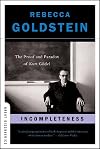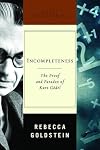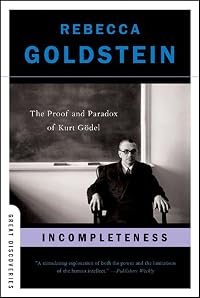
Incompleteness: The Proof and Paradox of Kurt Gödel
by Rebecca Goldstein
On This Page
Description
"An introduction to the life and thought of Kurt Gödel, who transformed our conception of math forever"--Provided by publisher.Tags
Recommendations



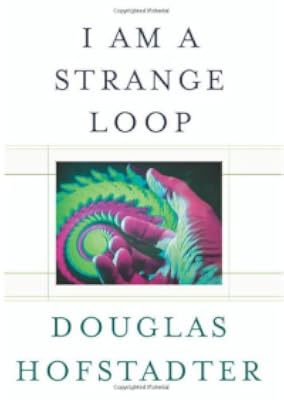
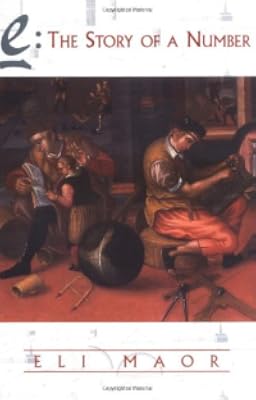
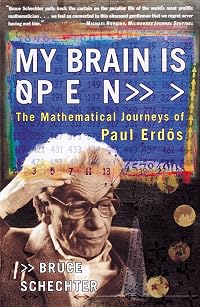
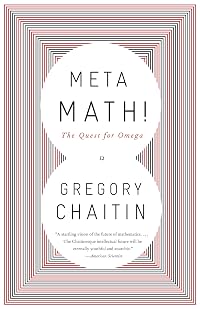





Member Recommendations
Member Reviews
This book is an intellectual biography of one of the greatest mathematicians and logicians of the 20th century. Gödel single-handedly derailed the Hilbert-Russell program of putting mathematical proof on to a purely mechanistic (formal) basis. He showed that in any formal system that includes arithmetic, there will be true propositions that cannot be proved within that formal system. There is much more to it than that, but the primary implication is that mathematical truth exists apart from how humans conceive of it. In other words, mathematicians *discover* mathematical truth; they do not *invent* it. This makes him a Platonist; something in common with another famous mathematician of our day: Roger Penrose. Goldstein puts her show more considerable literary talents into putting Gödel's life into historical perspective. Gödel was Czech, but was educated in Vienna during the late 1920s and 1930s. He fled Nazi Austria in 1938, required to exit the country eastward, traveled on the Transsiberian Railway to Japan, then by boat to San Francisco, and finally by train to Princeton University, where he became a member of the Institute for Advanced Study, where Einstein also was. The two of them formed a famous friendship, although Gödel was paranoid, and eventually died of complications from malnutrition in 1978. The book is eminently readable and the most valuable aspect is that she puts Gödel into context, explaining why he pursued the questions that he did and how that impacted and influenced the thinkers around him. The book is based not only on Gödel's published and unpublished works, but also on interviews with those who knew him personally. For those of us who apply formal systems to other domains than mathematics (in my case, linguistics), Gödel's work in an important caution about the limits of the method we use, as well as being instructive about the nature of those methods. show less
“It is really not so surprising that Wittgenstein would dismiss Gödel’s result with a belittling description like ‘logische Kunstücke,’ logical conjuring tricks, patently devoid of the large metamathematical import that Gödel and other mathematicians presumed his theorems had. Gödel’s proof, the very possibility of a proof of its kind, is forbidden on the grounds of Wittgensteinian tenets that remained constant through the transformation from ‘early’ to ‘later’ Wittgenstein, where early Wittgenstein had a monolithic view of language and its rules and later Wittgenstein fractured language into self-contained language-games, each functioning according to its own set of rules. He was adamant on the impossibility of show more being able to speak about a formal language in the way that Gödel’s proof does.”
In “Incompleness - The proof and Paradox of Kurt Gödel” by Rebecca Goldstein
Wittgenstein: “Hi Kurt, as you appear to be a professional mathematician working in the field, and after having written my “Tractatus Logico-Philosophicus”, I wonder if you can confirm whether these points are true, points I always wondered about whenever I read on articles connected to the work of Cantor, you and Cohen:
1) Primary school arithmetic has never been proved to be consistent, so theoretically a snotty kid could one day do correct arithmetic manipulations which lead to the result 0=1 i.e. Maths cannot currently prove this won't happen?
2) Your 2nd incompleteness theorem states roughly that a proof of the consistency of a consistent system which includes arithmetic does not exist in the language of that system. Now maybe there exists a proof of the consistency of system A (CON(A)) in the language of system B, but if system B again includes arithmetic you don't know if CON(B) is true and therefore cannot trust the proof of CON(A) in system B, and so on. But is it possible that CON(A) could be proved to be true without any dependencies by some wholly other method?”
Gödel: ”From 1) Commutative law:
For addition: a + b = b + a, ergo unless one creates a new or addendum to this law, one unit will never equal zero. Remember when Euclid's parallel line axiom was changed and the math, based on these new axioms, was useful for spheres and hyperspheres? Same thing “me “thinks. I'm a Computer Scientist with a minor in Physics though. What the hell do I know?"
Wittgenstein: “But you are assuming the axioms are consistent. Gödel said that a system which is powerful enough to include arithmetic cannot prove its own consistency. Given, then, we can't prove the consistency of the axioms, we may end up with a contradiction, e.g. 1=0. (In the case of Geometry, Euclid's axioms have been shown to be consistent, so the situation is different to that of arithmetic.)
Gödel: “A system cannot prove itself GIVEN the axioms in the system. It would need new axioms to prove these old axioms. But the new axioms would need newer axioms. And so on. Isn't this what you proved? We are always at least an axiom away from a house built on rock. Euclid's axioms have the same problem. Or maybe I'm wrong.”
Wittgenstein: “The question is about consistency of a set of axioms. If system A can handle arithmetic then a proof of system A's consistency cannot be provided from system A's axioms. Maybe a proof of A's consistency can be provided in system B, but then the question becomes can we trust that proof given we can't prove the consistency of B from its own axioms, and so on. All of which means that the consistency of elementary school arithmetic has never been proven, and so the appearance of a contradiction has not been ruled out mathematically. I don't think this applies in the case of Euclid's axioms. I believe they have been shown to be consistent.”
Gödel: “What the hell Wittgenstein????”
NB: This conversation took place in German. This dialectic is presented in translation, because my blog friends would complain about it.
The trouble with philosophy is that it is the residue of thought that cannot be answered elsewhere. Thales postulating that everything is made of water is physics as much as metaphysics (albeit a physics founded on pure speculation). Eventually though physics got its act together, developed its own rules and methodologies and never looked back. All the better for physics but it left philosophy somewhat diminished. Every discipline, pretty much, has its origins in philosophy. Philosophy is, in a sense, just science that hasn't got its act together yet. That is why the history of philosophy is so fascinating and so much modern philosophy (including Wittgenstein; "Philosophical Investigations" disproves the Tractatus and dissolves philosophy completely) is pretty sterile stuff.
It sounds rather Wittgenstein was possessed was a very strange case of the Kierkegaardian Malady in its distinction between not believing in Gödel's theorems and having faith in Math (in a Kierkegaardian sense the same as believing in God and having Faith in God at the same time; but then Kierkgaard knocks the socks off Wittgenstein any time of the day).
Bottom-line: Goldstein’s take both on Gödel and Wittgenstein’s opposing views is one of the best I’ve ever read. Her explanation on the concrete way Gödel went about proving both theorems is much better than Newman’s and Nagel’s book . show less
In “Incompleness - The proof and Paradox of Kurt Gödel” by Rebecca Goldstein
Wittgenstein: “Hi Kurt, as you appear to be a professional mathematician working in the field, and after having written my “Tractatus Logico-Philosophicus”, I wonder if you can confirm whether these points are true, points I always wondered about whenever I read on articles connected to the work of Cantor, you and Cohen:
1) Primary school arithmetic has never been proved to be consistent, so theoretically a snotty kid could one day do correct arithmetic manipulations which lead to the result 0=1 i.e. Maths cannot currently prove this won't happen?
2) Your 2nd incompleteness theorem states roughly that a proof of the consistency of a consistent system which includes arithmetic does not exist in the language of that system. Now maybe there exists a proof of the consistency of system A (CON(A)) in the language of system B, but if system B again includes arithmetic you don't know if CON(B) is true and therefore cannot trust the proof of CON(A) in system B, and so on. But is it possible that CON(A) could be proved to be true without any dependencies by some wholly other method?”
Gödel: ”From 1) Commutative law:
For addition: a + b = b + a, ergo unless one creates a new or addendum to this law, one unit will never equal zero. Remember when Euclid's parallel line axiom was changed and the math, based on these new axioms, was useful for spheres and hyperspheres? Same thing “me “thinks. I'm a Computer Scientist with a minor in Physics though. What the hell do I know?"
Wittgenstein: “But you are assuming the axioms are consistent. Gödel said that a system which is powerful enough to include arithmetic cannot prove its own consistency. Given, then, we can't prove the consistency of the axioms, we may end up with a contradiction, e.g. 1=0. (In the case of Geometry, Euclid's axioms have been shown to be consistent, so the situation is different to that of arithmetic.)
Gödel: “A system cannot prove itself GIVEN the axioms in the system. It would need new axioms to prove these old axioms. But the new axioms would need newer axioms. And so on. Isn't this what you proved? We are always at least an axiom away from a house built on rock. Euclid's axioms have the same problem. Or maybe I'm wrong.”
Wittgenstein: “The question is about consistency of a set of axioms. If system A can handle arithmetic then a proof of system A's consistency cannot be provided from system A's axioms. Maybe a proof of A's consistency can be provided in system B, but then the question becomes can we trust that proof given we can't prove the consistency of B from its own axioms, and so on. All of which means that the consistency of elementary school arithmetic has never been proven, and so the appearance of a contradiction has not been ruled out mathematically. I don't think this applies in the case of Euclid's axioms. I believe they have been shown to be consistent.”
Gödel: “What the hell Wittgenstein????”
NB: This conversation took place in German. This dialectic is presented in translation, because my blog friends would complain about it.
The trouble with philosophy is that it is the residue of thought that cannot be answered elsewhere. Thales postulating that everything is made of water is physics as much as metaphysics (albeit a physics founded on pure speculation). Eventually though physics got its act together, developed its own rules and methodologies and never looked back. All the better for physics but it left philosophy somewhat diminished. Every discipline, pretty much, has its origins in philosophy. Philosophy is, in a sense, just science that hasn't got its act together yet. That is why the history of philosophy is so fascinating and so much modern philosophy (including Wittgenstein; "Philosophical Investigations" disproves the Tractatus and dissolves philosophy completely) is pretty sterile stuff.
It sounds rather Wittgenstein was possessed was a very strange case of the Kierkegaardian Malady in its distinction between not believing in Gödel's theorems and having faith in Math (in a Kierkegaardian sense the same as believing in God and having Faith in God at the same time; but then Kierkgaard knocks the socks off Wittgenstein any time of the day).
Bottom-line: Goldstein’s take both on Gödel and Wittgenstein’s opposing views is one of the best I’ve ever read. Her explanation on the concrete way Gödel went about proving both theorems is much better than Newman’s and Nagel’s book . show less
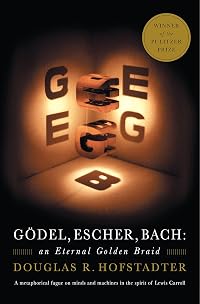
I completed my mini-vacation from fiction with this biography of Kurt Gödel, who proved the incompleteness of arithmetic. I´ve had Gödel and his incompleteness theorems stuck in my head since my senior year of high school, when I was really into math and read Douglas Hofstadter´s Gödel, Escher, Bach: an Eternal Golden Braid. It´s a really cool book that examines music, art, math, paradoxes, computers, and a bunch of other stuff that I don´t remember very well. It introduced me to Gödel and his monumental proof of the incompleteness of arithmetic and of any other formal system of a sufficient level of complexity. After reading it, I recalled bits and pieces of Gödel´s incompleteness theorems from time to time, boiling them down show more in my mind to the idea that there is no system sufficiently complex as to be able to represent itself using its own language. I found this book fortuitously at the library, while I was watching my girlfriend´s stuff as she went to get a drink of water. I saw a book on the shelf and pulled it randomly, and when I saw it was about Gödel, I got very excited and checked it out. I was inspired by what I read, and have spent the past few days sharing tidbits of Gödel´s work and its implications to my friends.
This book is very different than Hofstadter´s in its examination of Gödel´s proof. Gödel created as system of numbering where mathematical units and processes were represented by numbers, so that the statements that he uses to prove the incompleteness of complex systems are both mathematical statements in and of themselves, and also representative of other arithmetical statements. In this way, he is able to use math to talk about math. Hofstadter introduces the reader to Gödel numbering and uses it to show what Gödel proved: I can remember creating a cheat sheet of Gödel numbers that I used while reading GEB. Goldstein, on the other hand, uses a very basic representation of Gödel numbering so that the reader can get the gist of what Gödel is doing. Her section on the incompleteness proofs is not as in-depth as Hofstadter´s, but she provides much more anecdotal and background information. She looks at the environment that Gödel was a part of in interwar Vienna and the different currents of philosophical and metamathematical thinking that were prevalent at the time, so that the reader can better understand just how significant Gödel´s incompleteness proof was, and how fundamentally it altered the foundations of logic and mathematics. After taking the reader through the basic steps that Gödel followed in the first and second parts of his proof, Goldstein examines the implications of his work in fields like logic, computing, artificial intelligence, and even psychopathology. She bookends all of this with anecdotes about Gödel´s time at the Institute for Advanced Study in Princeton, drawing the reader in with stories of Gödel´s friendship with Albert Einstein, who once said that he came to Princeton for the privilege of being able to take a daily walk with Kurt Gödel. After reading this book, it´s easy to see how even a man as brilliant as Einstein would be inspired and amazed by the mind of Gödel, and I think the author did a great job of conveying just how amazing he was.
I really enjoyed this book, and appreciated being able to refresh and deepen my knowledge about Kurt Gödel. It was sad, because it showed how intellectually lonely he felt: like Einstein, he thought that his proofs were manipulated and used to defend viewpoints on math and knowledge that were very much the opposite of his own. He found very few people in his life who understood him how he wished to be understood, and was intellectually lonely, even in a building full of geniuses of their fields at the Institute for Advanced Study. I like biographies of mathematicians because they give the reader a window into minds that are very different than normal human minds. Gödel certainly had trouble relating with other people, and I like thinking that he would have appreciated this book and its attempt to convey what he truly thought and believed in a way that he himself couldn´t express during his life. show less
This book is very different than Hofstadter´s in its examination of Gödel´s proof. Gödel created as system of numbering where mathematical units and processes were represented by numbers, so that the statements that he uses to prove the incompleteness of complex systems are both mathematical statements in and of themselves, and also representative of other arithmetical statements. In this way, he is able to use math to talk about math. Hofstadter introduces the reader to Gödel numbering and uses it to show what Gödel proved: I can remember creating a cheat sheet of Gödel numbers that I used while reading GEB. Goldstein, on the other hand, uses a very basic representation of Gödel numbering so that the reader can get the gist of what Gödel is doing. Her section on the incompleteness proofs is not as in-depth as Hofstadter´s, but she provides much more anecdotal and background information. She looks at the environment that Gödel was a part of in interwar Vienna and the different currents of philosophical and metamathematical thinking that were prevalent at the time, so that the reader can better understand just how significant Gödel´s incompleteness proof was, and how fundamentally it altered the foundations of logic and mathematics. After taking the reader through the basic steps that Gödel followed in the first and second parts of his proof, Goldstein examines the implications of his work in fields like logic, computing, artificial intelligence, and even psychopathology. She bookends all of this with anecdotes about Gödel´s time at the Institute for Advanced Study in Princeton, drawing the reader in with stories of Gödel´s friendship with Albert Einstein, who once said that he came to Princeton for the privilege of being able to take a daily walk with Kurt Gödel. After reading this book, it´s easy to see how even a man as brilliant as Einstein would be inspired and amazed by the mind of Gödel, and I think the author did a great job of conveying just how amazing he was.
I really enjoyed this book, and appreciated being able to refresh and deepen my knowledge about Kurt Gödel. It was sad, because it showed how intellectually lonely he felt: like Einstein, he thought that his proofs were manipulated and used to defend viewpoints on math and knowledge that were very much the opposite of his own. He found very few people in his life who understood him how he wished to be understood, and was intellectually lonely, even in a building full of geniuses of their fields at the Institute for Advanced Study. I like biographies of mathematicians because they give the reader a window into minds that are very different than normal human minds. Gödel certainly had trouble relating with other people, and I like thinking that he would have appreciated this book and its attempt to convey what he truly thought and believed in a way that he himself couldn´t express during his life. show less
This is a great book to learn more about "Goedel's Proof" (actually two proofs, or actually three proofs if you count his Ph. D. thesis on predicate calculus). The incompleteness of mathematics is an astounding concept -- it's so astounding, that you are left breathless, not even sure what the whole thing means. Does this mean that God exists? Actually, Goedel himself toyed with variations of the ontological proof. The incompleteness of mathematics is just really hard to wrap your brain around; it's not just understanding the proof that is hard, but just figuring out What It All Means. Goedel didn't know (or didn't tell us), and we're still trying to figure it out today. There is so much more to reality than science and logic can show more explain, and we don't need metaphysics to see this -- all we need, actually, is mathematics. Go Plato! This is what the author conveys so well.I read this book and "A World Without Time" by Palle Yourgrau at the same time. They are both quite good books and, as written by academic philosophers, generally mitigate my general negative opinion of academic philosophy. If you are interested in Goedel's ideas about "time travel" then read the book by Palle Yourgrau. If you are more interested in the proof itself, read this book, which goes into more detail. But really you should read both, because unlike some philosophers from Austria that I could name (ahem! cough, cough!), they actually take the time to try to explain things to you.What I liked most about this book was the anecdotes about Goedel and those around him. She gives a fairly complete account of a really interesting anecdote, which I will have to blog about at some point, concerning Goedel's becoming an American citizen. Goedel indignantly protested that the constitution had a contradiction in it that would allow a dictator to take over! Also, the accounts of the personal relationships between the people in the Vienna Circle really helped me to understand the very different ideas which they and Goedel were respectively trying to articulate. The main negative of the book, which is also paradoxically a strong positive, is its treatment of Wittgenstein. This book is fair towards both Wittgenstein and Goedel, but makes a lot more sense out of Wittgenstein than I think he deserves. I will spare you the comparisons with livestock agriculture and the waste products thereof. What bothers me about Wittgenstein is his condescension and failure to explain things -- being deliberately enigmatic. Yeah, sure, he might be a genius, but why should I read someone who clearly doesn't want to talk to me, or apparently anyone else? This seems like the philosophical equivalent of the medieval practice of self-flagellation. On the other hand, the author actually makes more sense out of Wittgenstein than anyone else I've heard, and the anecdotes about Wittgenstein are helpful in describing the intellectual scene around the Vienna Circle. So paradoxically, I now feel more sympathy with Wittgenstein than I did before. But not agreement with W. -- I'm with Goedel on this one. Wittgenstein rejected Goedel's proof, and this book makes it fairly clear that Wittgenstein never really understood it and somehow wanted to dodge the conclusions with condescending statements about having, somehow, transcended it all. But what is more amazing than that Wittgenstein rejected Goedel, was that Goedel, a master logician, who should be the hero of all the "analytic" philosophers in the U. S. A. -- since he proved something really significant about logic and mathematics that rivals or exceeds Aristotle -- is hardly even regarded as a philosopher at all, a fact which reveals the shallowness of modern academic philosophy.I found the explanation of "Goedel's proof" of the incompleteness of mathematics (actually two proofs, as it turns out) to be quite accessible. However, I should warn you, I went to graduate school in philosophy, and took one logic class in which Goedel's proof was discussed. Unfortunately, it was not the proof that I wanted to learn about, the incompleteness of mathematics, but the completeness and consistency of what the author calls "limpid logic," a nice turn of phrase. I think that this is going to be over a lot of people's heads. But even if it is, it will at least convey what Goedel's proof means, which is actually in some ways harder than following the formal proof itself, although that's hard enough. show less
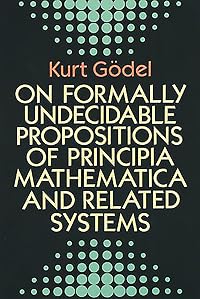
A very engrossing book on Kurt Gödel. It covers his life and the Incompleteness Proof that he formulated, making it understandable. I have read Kurt Gödel's proof, but as I said in my review of that book, I did not really understand it. Maybe now I will return to that book.
Anyway, there are a number of things I did know about Gödel, but some things I did not. I remembered the Einstein-Gödel friendship, but I did not realize that his Incompleteness Proofs were taken the wrong way: that is, they were not intended to turn the world of mathematics upside-down per se, but rather to be an ironclad answer to the members of the Vienna Circle that supported Positivist Views.
In any case, I would really like to find more books in this Great show more Discoveries series. Hopefully, they are all as good as this one. show less
Anyway, there are a number of things I did know about Gödel, but some things I did not. I remembered the Einstein-Gödel friendship, but I did not realize that his Incompleteness Proofs were taken the wrong way: that is, they were not intended to turn the world of mathematics upside-down per se, but rather to be an ironclad answer to the members of the Vienna Circle that supported Positivist Views.
In any case, I would really like to find more books in this Great show more Discoveries series. Hopefully, they are all as good as this one. show less
Goldstein gives us a tour of the philosophic landscape at the 20th century's quarter-century. And in a way I appreciated; it enabled me to relate the familiar names in those human terms: who liked whom and why. The Vienna Circle was the "in" group of the day. So, the politics played out there lived into the present at the Institute for Advanced Studies in Princeton. I'm a rank amateur philosopher, so her treatment of Wittgenstein, Hilbert, Russell, Schlick (the one who I hadn't known of before) .. enabled me, in ways reading secondary philosophic reading had not done for me before, to place those individuals theories in perspective. For example, "early" vs "late" Wittgenstein. If you know Wittgenstein, your cocktail conversation forces show more you to pick "early" or "late" depending on the tilt of the table.
Goldstein cured me of that. While you'd think she's effectively bashing Wittgenstein, she leads you to realize, in ways not available to either Godel or Wittgenstein, they had more in common that they, or any contemporaries could see. And maybe the temporal element is what kept them from seeing it. Enter Einstein.
(to be continued)... show less
Goldstein cured me of that. While you'd think she's effectively bashing Wittgenstein, she leads you to realize, in ways not available to either Godel or Wittgenstein, they had more in common that they, or any contemporaries could see. And maybe the temporal element is what kept them from seeing it. Enter Einstein.
(to be continued)... show less
The mind of a mathematician must be a horrible place to be. It must also be a difficult thing to dissect, but Rebecca Goldstein did so fabulously. As is my preference for reading, I picked this book up for the biographical information, yet found myself studying the technical breakdown of the incompleteness theory. I don't know how well it set in my mind, but my curiosity was piqued. I will definitely look into it more.
One thing that bothered me a little, and I read this in anothe...moreThe mind of a mathematician must be a horrible place to be. It must also be a difficult thing to dissect, but Rebecca Goldstein did so fabulously. As is my preference for reading, I picked this book up for the biographical information, yet found myself show more studying the technical breakdown of the incompleteness theory. I don't know how well it set in my mind, but my curiosity was piqued. I will definitely look into it more.
One thing that bothered me a little, and I read this in another review as well, was the overabundance of Wittgenstein. I never really liked him, what little I have heard about him, and Goldstein bolstered that opinion here.
What amazes me the most now that I have read several books about reclusive, paranoid, egotistical geniuses is how down-to-earth Albert Einstein was. It could be one of the reasons he is so well remembered, if not understood, by the masses, while Godel has been all but forgotten. show less
One thing that bothered me a little, and I read this in anothe...moreThe mind of a mathematician must be a horrible place to be. It must also be a difficult thing to dissect, but Rebecca Goldstein did so fabulously. As is my preference for reading, I picked this book up for the biographical information, yet found myself show more studying the technical breakdown of the incompleteness theory. I don't know how well it set in my mind, but my curiosity was piqued. I will definitely look into it more.
One thing that bothered me a little, and I read this in another review as well, was the overabundance of Wittgenstein. I never really liked him, what little I have heard about him, and Goldstein bolstered that opinion here.
What amazes me the most now that I have read several books about reclusive, paranoid, egotistical geniuses is how down-to-earth Albert Einstein was. It could be one of the reasons he is so well remembered, if not understood, by the masses, while Godel has been all but forgotten. show less
Members
- Recently Added By
Lists

al.vick-wishlist-science and nature
83 works; 1 member
Author Information

15+ Works 3,750 Members
Rebecca Goldstein graduated summa cum laude from Barnard College and received her Ph.D. from Princeton University in the philosophy of science. She has taught philosophy at Barnard. She lives in Cambridge, Massachusetts. (Bowker Author Biography)
Series
Belongs to Publisher Series
Work Relationships
Common Knowledge
- Canonical title
- Incompleteness: The Proof and Paradox of Kurt Gödel
- Original publication date
- 2005
- People/Characters
- Kurt Gödel; Alan Turing
Classifications
Statistics
- Members
- 826
- Popularity
- 33,357
- Reviews
- 22
- Rating
- (3.80)
- Languages
- 9 — Czech, English, German, Greek, Italian, Portuguese, Spanish, Swedish, Turkish
- Media
- Paper, Audiobook, Ebook
- ISBNs
- 17
- ASINs
- 3