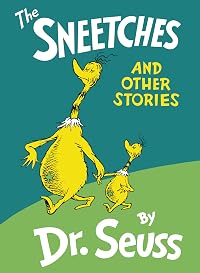
The Sneetches and Other Stories
by Dr. Seuss
On This Page
Description
Includes four humorous verse fantasies: The Sneetches, The Zax, The Many Daves, and What was I Scared of?Tags
Recommendations

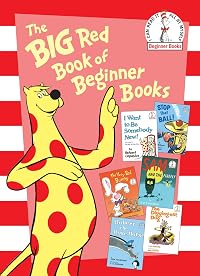
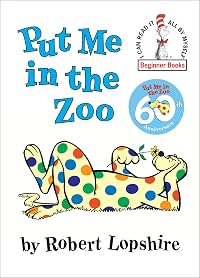
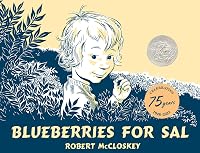
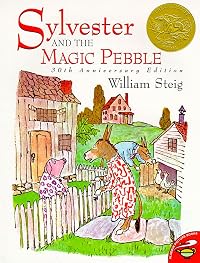
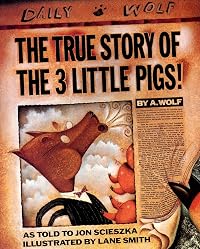
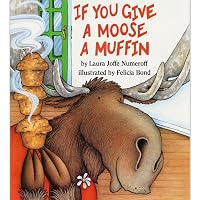
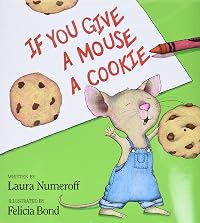
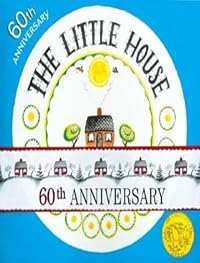

Member Recommendations

Member Reviews
Obviously the whole point of this book is to instill positive morals (much in the same vein as Yurtle the Turtle and Other Stories), but what made this book more successful for me is the fact that the stories are so much more outrageous. Instead of relying on relatively mundane turtles as the protagonists, Seuss' Sneetches take their ridiculous racism to a whole new level of insanity, which serves to further underscore the absolute ridiculousness of bigotted behavior in real life.
This book is a collection of short stories by famed and beloved children's author Dr. Seuss. The title story is about creatures named Sneetches who dislike each other based on whether or not they have stars on their bellies. This is clearly a metaphor for race/ethnic/gender relations, in which some folks think they are better than others because of arbitrary details at birth. Dr. Seuss tackles this as only he can, showing how ridiculous this situation is by having the Sneetches end up in a round-and-round battle of adding and removing stars to their bellies to prove who is the best. I remember how even as a child I "got" this story's deeper meaning almost immediately.
Next comes "The Zax," a story about two creatures who refuse to budge show more in their ways, even as the world grows around them. This could be a morality tale for anyone too stubborn, but based on when this book was published and Dr. Seuss's past in writing political cartoons, I assume this is meant to be symbolic of the Cold War.
The third story, "Too Many Daves," is the silliest - and in my opinion, weakest - of the stories collected here. It's about a woman who names all 23 of her sons Dave and comes to regret this later. Other than presaging George Foreman's progeny, this story is just sort of a throwaway one.
Finally comes the story "What Was I Scared Of?" in which, again, Dr. Seuss uses a seemingly ridiculous story to talk about tolerance and acceptance. In it, a Seussian creature keeps coming across a pair of empty pants when out running errands and such. At first the creature is terrified, until he/she realizes that the pants are just as afraid of him/her! Then the two become friendly. Again, even as a child, I understood that Dr. Seuss was presenting a story about how people may look or dress differently but you can still become friends with them if you learn to get past your initial unease.
I shared this book with my 5-year-old niece, who seemed to enjoy it, being a big Dr. Seuss fan like me. I was glad to find that, despite having not picked up this title in probably 20 years or more, it was exactly as I remembered it. This is a fantastic book for talking about deep topics while having some fun with the absurdities of Seuss's language and art. show less
Next comes "The Zax," a story about two creatures who refuse to budge show more in their ways, even as the world grows around them. This could be a morality tale for anyone too stubborn, but based on when this book was published and Dr. Seuss's past in writing political cartoons, I assume this is meant to be symbolic of the Cold War.
The third story, "Too Many Daves," is the silliest - and in my opinion, weakest - of the stories collected here. It's about a woman who names all 23 of her sons Dave and comes to regret this later. Other than presaging George Foreman's progeny, this story is just sort of a throwaway one.
Finally comes the story "What Was I Scared Of?" in which, again, Dr. Seuss uses a seemingly ridiculous story to talk about tolerance and acceptance. In it, a Seussian creature keeps coming across a pair of empty pants when out running errands and such. At first the creature is terrified, until he/she realizes that the pants are just as afraid of him/her! Then the two become friendly. Again, even as a child, I understood that Dr. Seuss was presenting a story about how people may look or dress differently but you can still become friends with them if you learn to get past your initial unease.
I shared this book with my 5-year-old niece, who seemed to enjoy it, being a big Dr. Seuss fan like me. I was glad to find that, despite having not picked up this title in probably 20 years or more, it was exactly as I remembered it. This is a fantastic book for talking about deep topics while having some fun with the absurdities of Seuss's language and art. show less
With obvious allusions to the Holocaust and Nazi Germany, this story does a great job of scaling it down to discuss discrimination with students. The colors and uniformity of the story show that we truly do not have that much that divides us, it is all artificial. I also love how it gets so much more chaotic near the end but it is still beautiful and the sneetches end up happier than ever because of it.
As a mom of young children, I find The Sneetches and Other Stories to be an absolute treasure that perfectly captures Dr. Seuss's genius for teaching profound life lessons through playful rhymes and whimsical characters. The title story about the star-bellied and plain-bellied Sneetches has sparked wonderful conversations with my little ones about acceptance, prejudice, and the silliness of judging others based on appearances – concepts that can be challenging to discuss with young children but are presented here in a way that just clicks. My kids particularly love "Too Many Daves" and "What Was I Scared Of?" which never fail to get giggles at bedtime, while I appreciate how these tales, along with "The Zax," teach important messages show more about individuality, facing fears, and the importance of compromise without ever feeling preachy. While some Dr. Seuss books can feel a bit long for bedtime reading, these stories are perfectly paced for young attention spans, and the vibrant illustrations keep my children engaged while spotting new details with each reading. show less
I've been a huge fan of Dr. Seuss since I was a child, but until I read The Lorax for the first time a few years ago, I had never realized that he was an author with the heart of an activist. Much like The Lorax, The Sneetches and Other Stories tackles mature themes in a non-threatening, even humorous, way that kids can understand. All four stories in the book have the underlying message of tolerance, acceptance and compromise with those who are different from us or with whom we may not see eye to eye.
In The Sneetches, we have the story of how the Star-Belly Sneetches think they are better than the Plain-Belly Sneetches, and as a result, the Plain-Belly Sneetches are excluded from the Star-Belly Sneetches's activities. That is until show more Sylvester McMonkey McBean comes to town with his magical machine that adds or removes stars, creating utter chaos, and eventually rendering stars irrelevant. I really liked this story about how our differences don't really matter. The illustrations are cute, and I was especially moved by how incredibly sad the Plain-Belly Sneetches looked when they were being shut out.
In The Zax, we have two Zaxes who each have their own way of thinking and both absolutely refuse to alter their course. This leaves them at a stubborn impasse as the world goes on around them. I thought this was a great story about the importance of compromise.
Too Many Daves is about a mother who named all of her twenty-three sons Dave. I have to admit that I wasn't entirely certain of the meaning behind this one, but I think it was about how we are all the same and yet each one of us is also unique.
Last but not least, in What Was I Scared of? the cute, little, nameless protagonist is afraid of a pair of pants that walks around by itself, because it's so different than anything he's ever seen before. When he realizes that the pants are as scared of him as he is of them, the two are able to offer comfort to one another and become friends. I thought this was another great story about the importance of accepting those who are different from ourselves.
Overall, The Sneetches and Other Stories was an enjoyable book that managed to address some serious issues in a fun, easy to understand way. I highly recommend it for “kids” of all ages. show less
In The Sneetches, we have the story of how the Star-Belly Sneetches think they are better than the Plain-Belly Sneetches, and as a result, the Plain-Belly Sneetches are excluded from the Star-Belly Sneetches's activities. That is until show more Sylvester McMonkey McBean comes to town with his magical machine that adds or removes stars, creating utter chaos, and eventually rendering stars irrelevant. I really liked this story about how our differences don't really matter. The illustrations are cute, and I was especially moved by how incredibly sad the Plain-Belly Sneetches looked when they were being shut out.
In The Zax, we have two Zaxes who each have their own way of thinking and both absolutely refuse to alter their course. This leaves them at a stubborn impasse as the world goes on around them. I thought this was a great story about the importance of compromise.
Too Many Daves is about a mother who named all of her twenty-three sons Dave. I have to admit that I wasn't entirely certain of the meaning behind this one, but I think it was about how we are all the same and yet each one of us is also unique.
Last but not least, in What Was I Scared of? the cute, little, nameless protagonist is afraid of a pair of pants that walks around by itself, because it's so different than anything he's ever seen before. When he realizes that the pants are as scared of him as he is of them, the two are able to offer comfort to one another and become friends. I thought this was another great story about the importance of accepting those who are different from ourselves.
Overall, The Sneetches and Other Stories was an enjoyable book that managed to address some serious issues in a fun, easy to understand way. I highly recommend it for “kids” of all ages. show less
This book made me think of different things, when I re-read it at different times in my life. The text was the same, but its meaning shifted, like light distorted through the prism of new experiences.
Racism
Let's start with the obvious. On its simplest level, this is a parable about racism. The Sneetches are bird-like creatures whose society is stratified, with class divisions between those with stars on their bellies and those without. An opportunist- Sylvester McMonkey McBean (SMM)- fleeces the Sneetches by offering procedures to either add or remove stars from their bellies. In the end, he splits town, leaving the bewildered and penniless Sneetches blinking dumbly at one another, in various states of confused belly adornment. I think show more it is easy for kids to see that the presence or not of a star has little to say about a Sneetch’s inner worth. With luck (and perhaps some parental assistance) kids should be able to synthesize the conclusion that skin color and other bodily features are not an indicator of a person’s character or value. Nice. A good lesson, well-learned.
Second Reading
But then… the presence of a star or not is not quite the same as ethnicity. In the beginning, some Sneetches had natural stars and some did not. A racism existed among them, which they only "resolved" because the hallmark of race- the star- became too fluid and commodified to represent a genetic heritage. The Sneetches didn't really "solve" racism. It's more like they lost their grip on it. The pat ending seems a bit suspect. Did they really recognize the error of their ways? I don't know.
Tattoos and Body Modification
The ease with which stars were applied or removed also calls into question whether Suess was ever really talking about race. I kind of think he was, but maybe it was just more generally about appearances. That is a very different conversation. Sylvester McBean's devices allowed every Sneetch to determine for himself whether he bore a star on his belly or not. In this sense, stars were like tattoos... kind of a ventral tramp stamp of the Suess universe. If we're talking about tattoos, does the lesson still apply that physical appearances don’t reflect one’s innermost value? That’s a nice sentiment, and my first inclination is to say they don't… but it gets a little dicey. How one chooses to decorate himself can be a powerful statement about his character or judgment.
This new context completely changes the story's end. Now it’s a cautionary tale about vanity. The Sneetches bankrupted themselves on a fashion fad. The story turned from deconstructing prejudices based on race to somewhat supporting the idea that poor choices about personal cosmetics/body adornment reflect poor insight or judgment. Which, surprisingly, leads me to...
Homosexuality is Not a Choice (or, "my first crush")
Whoa! How did we get here? These are very controversial waters, but having raised the subjects of prejudice and choice, I think I almost have to address homosexuality. It's an age-old prejudice with a twist, because some people think it's a choice (to be gay). That treats homosexuality the same as a tattoo, which I don't think it is. I think it's more akin to race- something inherent which cannot be altered. I'm not gay, but I don't need to be to believe that sexual preferences and attractions are hardwired into our brain from a very young age... long before one gets around to learning about sex, relationships or the rest. How do I know?
1) First-hand testimony: I have a friend who says he knew he was gay from grade school. So I did a Google search with the phrase "knew I was gay from a young age". There are a ton of blogs out there to that effect. It appears to be a very common sentiment- not all-pervasive (look at Meridith Baxter Birney) but common enough to bear consideration. People know. In fact, it would be weird to think somebody didn't know who they were attracted to, and had to sit down and "decide" they would be attracted to "A" but not "B". That wouldn't even really be "attraction" in my book- something different.
2) Personal experience: I knew I liked girls before I actually knew whatall was involved with sex. The attraction didn't have anything to do with the mechanics of intercourse; I wanted to be around the girls I thought were pretty. I know I never made a decision to be heterosexual; it just happened. I was debating whether to share this story, but what the hell: my first big crush (if you can call it that in kindergarten) was a girl named Emily, who -among other things- was ethnic Chinese. She was like the pinnacle of beauty in my kindergarten mind. Also, she was nice to me. That always helps, although I've made exceptions in my past on that count (to my detriment). My young affections must have been obvious and memorable, because twenty-five years later, on meeting my Japanese fiancé, my mom told her "Oh, I always knew Brian would marry an [Asian*] girl, ever since Emily." (* actually Mom said "Oriental", because she's oldschool and doesn't know it's faux pas**)
Urngh... "thanks", Mom.
(** actually, my wife didn't know it is faux pas, so no harm done, I suppose) Well, who knows what Mom really knew. I married my wife for the totality of her person... but it is fair to say that before I knew her, I was inclined to go talk to her because I found her attractive. There are probably 150 wrong ways you can take that story, but my only point is that these patterns of attraction are established at a very young age. Some patterns are easier to spot than others, but we all have them. So there you have it; the heart wants what the heart wants.
Laboratory Medicine
If you aren't interested in clinical chemistry or laboratory medicine, you might want to skip this part. Clinical chemistry is the science of measuring different substances in body fluids: blood sugar, hormone levels, the concentration of various substances in urine, etc. In modern laboratories, those tests are all automated, but different machines use different methodologies, which each have their own strengths and weaknesses. The chemists who develop those machines have devised brilliant strategies to link concentrations of various ions to electrical, colormetric, or other easily-measured signals. What does this have to do with the Sneetches? (I can hear you saying that through the monitor) In the Sneetch story, the Sneetches wanted to rely on the appearance of a star as a signal for quality of character. It's all about measuring one thing, and trying to extrapolate conclusions about some completely different thing. We do it all the time in laboratory medicine, and there are strategies to help determine how reliable those sort of tests are.
Taken as a parable about racism, the Sneetch story warns that physical appearances are a poor indicator of character, because they lack SENSITIVITY (i.e. some truly good people may not have "the right look"). Taken as a story more about body adornment, the story warns that physical appearances are a poor indicator of character, because they lack SPECIFICITY (i.e. all of the Sneetches acted stupidly, but only some of them had the star). If you really want to get into more detail about this, click on the spoiler, but I realize this may not be everybody's cup of tea, so I'll spare the rest of you from a long boring monologue about predictive values of lab tests.
==================================
ELABORATION ON SPECIFICITY, SENSITIVITY, POSITIVE AND NEGATIVE PREDICTIVE VALUES OF TESTS
Ugh… this is a little bit off track, but I should explain:
So whenever you have a test, you are relying on some signal to tell you about reality. Unfortunately, no test is perfect, and when you start discussing imperfect tests, you need to recognize that what the test says may not necessarily represent reality. So if we use a test to look for the presence of “X”, there are four possible outcomes:
1) the test is POSITIVE, and “X” REALLY IS PRESENT. This is called a TRUE POSITIVE (TP)
2) the test is NEGATIVE, and “X” REALLY IS NOT PRESENT. This is called a TRUE NEGATIVE (TN)
3) the test is POSITIVE, but “X” REALLY IS NOT PRESENT. This is called a FALSE POSITIVE (FP)
4) the test is NEGATIVE, but “X”REALLY IS PRESENT. This is called a FALSE NEGATIVE (FN)
Let's pick up the Sneetch example now. The whole prejudice theme is based on the idea that somebody can be very good, even if they look a way that (misguided) society teaches is "bad".
So that means that you're missing what you're looking for. You're looking for good character, and your test is "good" appearance.
Going back to our terms:
1) TRUE POSITIVE= person has a "good look" and a good character
2) TRUE NEGATIVE= person has a "bad look" and a bad character
3) FALSE POSITIVE= person has a "good look" but a bad character
4) FALSE NEGATIVE= person has a "bad look" but a good character
So bear with me... I want to discuss four ways of assessing a test.
The terms SENSITIVITY and SPECIFICITY, POSITIVE PREDICTIVE VALUE, and NEGATIVE PREDICTIVE VALUE are rigidly defined mathematical definitions calculated from the above. They describe how likely a given test is to represent reality.
In plain language, SENSITIVITY tells you if something is truly positive, how likely you test will be to detect it. For our example, it tells you that if somebody has a good character, how likely they are to have a "good" look. That's the point of the first interpretation of the Sneetch story: you shouldn't treat people poorly based on their looks, because they might actually be good people, even if they don't have the "right" look to you.
In plain language, SPECIFICITY tells you if something is truly negative, how likely it is the test will be negative. For our example, it tells you what percentage of bad characters really have a "bad" look. That's what the second interpretation is getting at: all of the Sneetches acted stupidly, but some of them still had a "good" look.
In plain language, POSITIVE PREDICTIVE VALUE tells you how likely a positive test is to really be a true positive. For our example, it tells you what percentage of characters with a "good" look are actually good people.
In plain language, NEGATIVE PREDICTIVE VALUE tells you how likely a negative test is to really be a true negative. For our example, it tells you what percentage characters with a "bad" look are actually bad people.
==================================
That's important, because even though they are two sides of the same very thin coin, the first interpretation stresses the good in people, and the second interpretation is much more weary of human nature, and preoccupied with detecting the bad.
And it gets even more twisted...
This story has a character who has gone unexamined so far: Sylvester McMonkey McBean. What's up with that name, anyhow? It's pretty common knowledge that the "Mc-" prefix is associated with Scottish surnames. And it may not be as commonly known as it used to be, but an older stereotype of the Scots is that they're cheapskates.
Sylvester McMonkey McBean's mercenary entrepreneurialism seems to play into that image. Could it be that Seuss's little morality play about the evils of racism is actually propagating a negative stereotype? My first response to that would be "Lighten up". It's a fairly harmless cliché, more of a joke than anything, and I don't perceive that the Scots have been aggrieved in the same way that true victims of racism have (e.g. African Americans or Native Americans). ...But that idea is a bit murky around the edges, because I sympathize with Native Americans who dislike the portrayal of Indians on sports logos, even though I suspect they are mostly intended harmlessly, or even as a misguided form of homage:
(Cleveland Indians baseball)
My threshold for sympathy is lower for Indians than for Scots, because I'm more attuned to the injustices Native Americans have suffered these past 400 years than prejudices targeted against Scots[Edit: but I have since been informed there have also been against Scots] But I'm not sure my thresholds should be any different for these two groups, because basing my idea of what is racist on past injustices strips my idealism of any protective function... as if I'm not willing to accept that a group deserves protection from racism until they've already been afflicted... and that doesn't sit right with me either. This is something with no easy answers (except the cheapskate Scots; that's easy) that we're all going to have to work through together.
Greed is Good?
Besides his implied Scottish heritage, the other striking thing about Sylvester McMonkey McBean is that he's the only primate in the Sneetch story. Check it out: he's even got "Monkey" in his name! He's human, and his contribution to the story is that very human invention: commerce. He fans the flame of the Sneetches' pre-existing racism to his own benefit. In the end, the Sneetches learn the error of their ways. Is this the voice of Gordon Gekko speaking? "Greed is Good"? The amoral market eradicated racism by bringing all Sneetches to the same level (abject poverty)? That seems like an interpretation that the Alex P. Keatons of the world would revel in, but it rings hollow. Sylvester McMonkey McBean couldn't give a damn if the Sneetches rid themselves of racism or not. In fact, he'd probably be happier if they didn't- then he could return with his machines once they managed to rebuild their savings. He's a symbol for Madison Avenue- turning a profit from the exploitation of insecurities about one's physical appearance. I'm sure he would defend that he's only giving consumers what they want, but their wants are manufactured by him, and when they consume his product, they aren't really any happier. To clarify, racism was extant before commerce; commerce was not the cause of it, but it should also not be credited as the solution in this book. I don't think Suess intended it to be; an anticonsumerist feeling permeates the book, and that's probably a good thing for kids to hear.
So, to wrap up: I think this is a wonderful book for children and adults. It addresses a lot of hard issues in an endearing, simplistic way. It should probably be on everybody's bookshelf. show less
Racism
Let's start with the obvious. On its simplest level, this is a parable about racism. The Sneetches are bird-like creatures whose society is stratified, with class divisions between those with stars on their bellies and those without. An opportunist- Sylvester McMonkey McBean (SMM)- fleeces the Sneetches by offering procedures to either add or remove stars from their bellies. In the end, he splits town, leaving the bewildered and penniless Sneetches blinking dumbly at one another, in various states of confused belly adornment. I think show more it is easy for kids to see that the presence or not of a star has little to say about a Sneetch’s inner worth. With luck (and perhaps some parental assistance) kids should be able to synthesize the conclusion that skin color and other bodily features are not an indicator of a person’s character or value. Nice. A good lesson, well-learned.
Second Reading
But then… the presence of a star or not is not quite the same as ethnicity. In the beginning, some Sneetches had natural stars and some did not. A racism existed among them, which they only "resolved" because the hallmark of race- the star- became too fluid and commodified to represent a genetic heritage. The Sneetches didn't really "solve" racism. It's more like they lost their grip on it. The pat ending seems a bit suspect. Did they really recognize the error of their ways? I don't know.
Tattoos and Body Modification
The ease with which stars were applied or removed also calls into question whether Suess was ever really talking about race. I kind of think he was, but maybe it was just more generally about appearances. That is a very different conversation. Sylvester McBean's devices allowed every Sneetch to determine for himself whether he bore a star on his belly or not. In this sense, stars were like tattoos... kind of a ventral tramp stamp of the Suess universe. If we're talking about tattoos, does the lesson still apply that physical appearances don’t reflect one’s innermost value? That’s a nice sentiment, and my first inclination is to say they don't… but it gets a little dicey. How one chooses to decorate himself can be a powerful statement about his character or judgment.
This new context completely changes the story's end. Now it’s a cautionary tale about vanity. The Sneetches bankrupted themselves on a fashion fad. The story turned from deconstructing prejudices based on race to somewhat supporting the idea that poor choices about personal cosmetics/body adornment reflect poor insight or judgment. Which, surprisingly, leads me to...
Homosexuality is Not a Choice (or, "my first crush")
Whoa! How did we get here? These are very controversial waters, but having raised the subjects of prejudice and choice, I think I almost have to address homosexuality. It's an age-old prejudice with a twist, because some people think it's a choice (to be gay). That treats homosexuality the same as a tattoo, which I don't think it is. I think it's more akin to race- something inherent which cannot be altered. I'm not gay, but I don't need to be to believe that sexual preferences and attractions are hardwired into our brain from a very young age... long before one gets around to learning about sex, relationships or the rest. How do I know?
1) First-hand testimony: I have a friend who says he knew he was gay from grade school. So I did a Google search with the phrase "knew I was gay from a young age". There are a ton of blogs out there to that effect. It appears to be a very common sentiment- not all-pervasive (look at Meridith Baxter Birney) but common enough to bear consideration. People know. In fact, it would be weird to think somebody didn't know who they were attracted to, and had to sit down and "decide" they would be attracted to "A" but not "B". That wouldn't even really be "attraction" in my book- something different.
2) Personal experience: I knew I liked girls before I actually knew whatall was involved with sex. The attraction didn't have anything to do with the mechanics of intercourse; I wanted to be around the girls I thought were pretty. I know I never made a decision to be heterosexual; it just happened. I was debating whether to share this story, but what the hell: my first big crush (if you can call it that in kindergarten) was a girl named Emily, who -among other things- was ethnic Chinese. She was like the pinnacle of beauty in my kindergarten mind. Also, she was nice to me. That always helps, although I've made exceptions in my past on that count (to my detriment). My young affections must have been obvious and memorable, because twenty-five years later, on meeting my Japanese fiancé, my mom told her "Oh, I always knew Brian would marry an [Asian*] girl, ever since Emily." (* actually Mom said "Oriental", because she's oldschool and doesn't know it's faux pas**)
Urngh... "thanks", Mom.
(** actually, my wife didn't know it is faux pas, so no harm done, I suppose) Well, who knows what Mom really knew. I married my wife for the totality of her person... but it is fair to say that before I knew her, I was inclined to go talk to her because I found her attractive. There are probably 150 wrong ways you can take that story, but my only point is that these patterns of attraction are established at a very young age. Some patterns are easier to spot than others, but we all have them. So there you have it; the heart wants what the heart wants.
Laboratory Medicine
If you aren't interested in clinical chemistry or laboratory medicine, you might want to skip this part. Clinical chemistry is the science of measuring different substances in body fluids: blood sugar, hormone levels, the concentration of various substances in urine, etc. In modern laboratories, those tests are all automated, but different machines use different methodologies, which each have their own strengths and weaknesses. The chemists who develop those machines have devised brilliant strategies to link concentrations of various ions to electrical, colormetric, or other easily-measured signals. What does this have to do with the Sneetches? (I can hear you saying that through the monitor) In the Sneetch story, the Sneetches wanted to rely on the appearance of a star as a signal for quality of character. It's all about measuring one thing, and trying to extrapolate conclusions about some completely different thing. We do it all the time in laboratory medicine, and there are strategies to help determine how reliable those sort of tests are.
Taken as a parable about racism, the Sneetch story warns that physical appearances are a poor indicator of character, because they lack SENSITIVITY (i.e. some truly good people may not have "the right look"). Taken as a story more about body adornment, the story warns that physical appearances are a poor indicator of character, because they lack SPECIFICITY (i.e. all of the Sneetches acted stupidly, but only some of them had the star). If you really want to get into more detail about this, click on the spoiler, but I realize this may not be everybody's cup of tea, so I'll spare the rest of you from a long boring monologue about predictive values of lab tests.
==================================
ELABORATION ON SPECIFICITY, SENSITIVITY, POSITIVE AND NEGATIVE PREDICTIVE VALUES OF TESTS
Ugh… this is a little bit off track, but I should explain:
So whenever you have a test, you are relying on some signal to tell you about reality. Unfortunately, no test is perfect, and when you start discussing imperfect tests, you need to recognize that what the test says may not necessarily represent reality. So if we use a test to look for the presence of “X”, there are four possible outcomes:
1) the test is POSITIVE, and “X” REALLY IS PRESENT. This is called a TRUE POSITIVE (TP)
2) the test is NEGATIVE, and “X” REALLY IS NOT PRESENT. This is called a TRUE NEGATIVE (TN)
3) the test is POSITIVE, but “X” REALLY IS NOT PRESENT. This is called a FALSE POSITIVE (FP)
4) the test is NEGATIVE, but “X”REALLY IS PRESENT. This is called a FALSE NEGATIVE (FN)
Let's pick up the Sneetch example now. The whole prejudice theme is based on the idea that somebody can be very good, even if they look a way that (misguided) society teaches is "bad".
So that means that you're missing what you're looking for. You're looking for good character, and your test is "good" appearance.
Going back to our terms:
1) TRUE POSITIVE= person has a "good look" and a good character
2) TRUE NEGATIVE= person has a "bad look" and a bad character
3) FALSE POSITIVE= person has a "good look" but a bad character
4) FALSE NEGATIVE= person has a "bad look" but a good character
So bear with me... I want to discuss four ways of assessing a test.
The terms SENSITIVITY and SPECIFICITY, POSITIVE PREDICTIVE VALUE, and NEGATIVE PREDICTIVE VALUE are rigidly defined mathematical definitions calculated from the above. They describe how likely a given test is to represent reality.
In plain language, SENSITIVITY tells you if something is truly positive, how likely you test will be to detect it. For our example, it tells you that if somebody has a good character, how likely they are to have a "good" look. That's the point of the first interpretation of the Sneetch story: you shouldn't treat people poorly based on their looks, because they might actually be good people, even if they don't have the "right" look to you.
In plain language, SPECIFICITY tells you if something is truly negative, how likely it is the test will be negative. For our example, it tells you what percentage of bad characters really have a "bad" look. That's what the second interpretation is getting at: all of the Sneetches acted stupidly, but some of them still had a "good" look.
In plain language, POSITIVE PREDICTIVE VALUE tells you how likely a positive test is to really be a true positive. For our example, it tells you what percentage of characters with a "good" look are actually good people.
In plain language, NEGATIVE PREDICTIVE VALUE tells you how likely a negative test is to really be a true negative. For our example, it tells you what percentage characters with a "bad" look are actually bad people.
==================================
That's important, because even though they are two sides of the same very thin coin, the first interpretation stresses the good in people, and the second interpretation is much more weary of human nature, and preoccupied with detecting the bad.
And it gets even more twisted...
This story has a character who has gone unexamined so far: Sylvester McMonkey McBean. What's up with that name, anyhow? It's pretty common knowledge that the "Mc-" prefix is associated with Scottish surnames. And it may not be as commonly known as it used to be, but an older stereotype of the Scots is that they're cheapskates.
Sylvester McMonkey McBean's mercenary entrepreneurialism seems to play into that image. Could it be that Seuss's little morality play about the evils of racism is actually propagating a negative stereotype? My first response to that would be "Lighten up". It's a fairly harmless cliché, more of a joke than anything, and I don't perceive that the Scots have been aggrieved in the same way that true victims of racism have (e.g. African Americans or Native Americans). ...But that idea is a bit murky around the edges, because I sympathize with Native Americans who dislike the portrayal of Indians on sports logos, even though I suspect they are mostly intended harmlessly, or even as a misguided form of homage:
(Cleveland Indians baseball)
My threshold for sympathy is lower for Indians than for Scots, because I'm more attuned to the injustices Native Americans have suffered these past 400 years than prejudices targeted against Scots
Greed is Good?
Besides his implied Scottish heritage, the other striking thing about Sylvester McMonkey McBean is that he's the only primate in the Sneetch story. Check it out: he's even got "Monkey" in his name! He's human, and his contribution to the story is that very human invention: commerce. He fans the flame of the Sneetches' pre-existing racism to his own benefit. In the end, the Sneetches learn the error of their ways. Is this the voice of Gordon Gekko speaking? "Greed is Good"? The amoral market eradicated racism by bringing all Sneetches to the same level (abject poverty)? That seems like an interpretation that the Alex P. Keatons of the world would revel in, but it rings hollow. Sylvester McMonkey McBean couldn't give a damn if the Sneetches rid themselves of racism or not. In fact, he'd probably be happier if they didn't- then he could return with his machines once they managed to rebuild their savings. He's a symbol for Madison Avenue- turning a profit from the exploitation of insecurities about one's physical appearance. I'm sure he would defend that he's only giving consumers what they want, but their wants are manufactured by him, and when they consume his product, they aren't really any happier. To clarify, racism was extant before commerce; commerce was not the cause of it, but it should also not be credited as the solution in this book. I don't think Suess intended it to be; an anticonsumerist feeling permeates the book, and that's probably a good thing for kids to hear.
So, to wrap up: I think this is a wonderful book for children and adults. It addresses a lot of hard issues in an endearing, simplistic way. It should probably be on everybody's bookshelf. show less
The story I read for this reading log is called The Sneetches by Dr. Seuss. I really enjoyed this story, and have since my early years as a reader. The message of this story is about diversity, and why everyone should treat others equally. This is a very important message for children today to be thinking about.
There are many reasons that this story is so enjoyable. Firstly, the authors writing flows so well, and is so descriptive. In the beginning of the story, the reader is seeing how the Plain-Belly Sneetches are being excluded from the events of the Star-Belly Sneetches, who are considered the best Sneetches. “They left them out in the cold, in the dark of the beaches.” These words paired with the illustrations, show how the show more Plain-Belly Sneetches are feeling excluded and sad, just because of their physical appearance of having no star.
Furthermore, the writing flows very well for a reader of any age because of the consistent rhyming patterns. “My friends,” he announced in a voice clear and keen, “My name is Sylvester McMonkey McBean. And I’ve heard of your troubles. I’ve heard you’re unhappy. But I can fix that. I’m the Fix-it-Up Chappie.” These two sentences show clear rhymes, and this is the same with every sentence pair throughout the entire story.
Finally, the story is definitely broadening perspectives and the thoughts of children’s minds. As the Sneetches go back and forth through a machine, having stars put on and taken off, they realize that it doesn’t matter if they have a star, and that all Sneetches are the best Sneetches. “That day, all the Sneetches forgot about stars. And whether they had one, or not, upon thars.” The message shows that one’s physical appearance or traits don’t define them, but it is what is on the inside. This is a tough issue that creates an important lesson for children to read about in a fun and engaging manner. show less
There are many reasons that this story is so enjoyable. Firstly, the authors writing flows so well, and is so descriptive. In the beginning of the story, the reader is seeing how the Plain-Belly Sneetches are being excluded from the events of the Star-Belly Sneetches, who are considered the best Sneetches. “They left them out in the cold, in the dark of the beaches.” These words paired with the illustrations, show how the show more Plain-Belly Sneetches are feeling excluded and sad, just because of their physical appearance of having no star.
Furthermore, the writing flows very well for a reader of any age because of the consistent rhyming patterns. “My friends,” he announced in a voice clear and keen, “My name is Sylvester McMonkey McBean. And I’ve heard of your troubles. I’ve heard you’re unhappy. But I can fix that. I’m the Fix-it-Up Chappie.” These two sentences show clear rhymes, and this is the same with every sentence pair throughout the entire story.
Finally, the story is definitely broadening perspectives and the thoughts of children’s minds. As the Sneetches go back and forth through a machine, having stars put on and taken off, they realize that it doesn’t matter if they have a star, and that all Sneetches are the best Sneetches. “That day, all the Sneetches forgot about stars. And whether they had one, or not, upon thars.” The message shows that one’s physical appearance or traits don’t define them, but it is what is on the inside. This is a tough issue that creates an important lesson for children to read about in a fun and engaging manner. show less
Members
- Recently Added By
Lists

Favorite Childhood Books
1,646 works; 518 members

Blue Pyramid 1,276 Best Books of All Time
1,248 works; 32 members

Sonlight Books
1,487 works; 25 members

1960s
281 works; 16 members

1970s
657 works; 23 members

Top Five Books of 2024
795 works; 264 members

Written and Illustrated By
805 works; 1 member
Author Information

798+ Works 359,129 Members
Theodor Seuss Geisel was born in Springfield, Massachusetts on March 2, 1904. He wrote and illustrated more than 45 picture books under the pseudonym Dr. Seuss. His first picture book, And to Think That I Saw It on Mulberry Street, was published in 1937. His other books included The Cat in the Hat, The Butter-Battle Book, The Lorax, The Bippolo show more Seed and Other Lost Stories, Fox in Socks: Dr. Seuss's Book of Tongue Tanglers, What Pet Should I Get?, and Oh, the Places You'll Go. In 1984, he received a Pulitzer Prize for his contributions to children's literature. He died of oral cancer on September 24, 1991 at the age of 87. (Bowker Author Biography) show less
Some Editions
Series
Belongs to Publisher Series
Work Relationships
Common Knowledge
- Canonical title
- The Sneetches and Other Stories
- Original publication date
- 1961
- People/Characters
- Mrs McCave; Dave; Sneeches; Star-Belly Sneeches; Plain-Belly Sneeches; Sylvester McMonkey McBean (show all 9); North-Going Zax; South-Going Zax; Empty Pants
- Related movies
- Dr. Seuss on the Loose (1973 | IMDb)
- First words
- Now, the Star-Belly Sneetches
Had bellies with stars. - Last words
- (Click to show. Warning: May contain spoilers.)And we both say "Hi!"
Classifications
Statistics
- Members
- 5,462
- Popularity
- 2,455
- Reviews
- 93
- Rating
- (4.34)
- Languages
- 7 — Chinese, Dutch, English, Italian, Farsi/Persian, Spanish, Swedish
- Media
- Paper, Ebook
- ISBNs
- 41
- UPCs
- 1
- ASINs
- 18