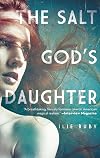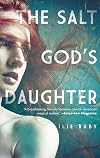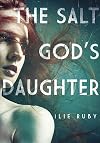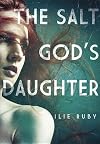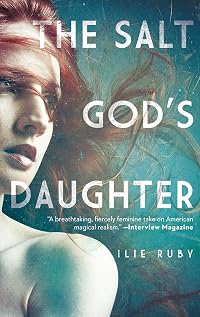
The Salt God's Daughter
by Ilie Ruby 
On This Page
Description
"Beautifully evokes scenes of two girls adrift in the . . . bohemian beach culture . . . a breathtaking, fiercely feminine take on American magical realism." —Interview MagazineSet in Long Beach, California, beginning in the 1970s, The Salt God's Daughter follows Ruthie and her older sister Dolly as they struggle for survival in a place governed by an enchanted ocean and exotic folklore. Guided by a mother ruled by magical, elaborately-told stories of the full moons, which she draws from show more The Old Farmer's Almanac, the two girls are often homeless, often on their own, fiercely protective of each other, and unaware of how far they have drifted from traditional society as they carve a real life from their imagined stories.
Imbued with a traditional Scottish folktale and hints of Jewish mysticism, The Salt God's Daughter examines the tremulous bonds between sisters and the enduring power of maternal love—a magical tale that presents three generations of extraordinary women who fight to transcend a world that is often hostile to those who are different.
"Indeed, Ruby has written a complicated, multi-layered work that shifts shapes to bridge the relationship between tragedy and redemption." —The Huffington Post
"Three generations of indelibly original women wrestle with the confines of their lives against a shimmering backdrop of magic, folklore, and deep-buried secrets . . . To say I loved this book is an understatement." —Caroline Leavitt, New York Times–bestselling author
"The selkie myth lies at the heart of Ruby's second novel . . . This is a bewitching tale of lives entangled in lushly layered fables of the moon and sea." —Kirkus Reviews. show less
Tags
Recommendations






















Member Recommendations
Member Reviews
The Salt God's Daughter by Ilie Ruby follows three generations of women in California. Set mainly in Long Beach, the novel opens in 2001 with Ruthie's daughter, Naida, and then jumps back to 1972 and follows Naida's grandmother, Diana Gold and her two daughters, Ruthie and Dolly, to the present. Diana raises her daughters on the road, living out of her station wagon, based on what she sees in the Old Farmer's Almanac and the phase of the moon. Many of her inventive names for the moon's phases are tailored to fit their situation. The women keep returning to Dr. Brownstein's beach hotel, which later becomes a retirement home, in Long Beach.
The Salt God's Daughter is an atmospheric novel that explores the complex relationship and love show more between mothers and daughters while portraying the female experience. It is also about being different, a non-conformist to the world and how violence and bullies can influence a person's self esteem. Always present is a tantalizing pull toward the sea or repulsion from it, depending upon the character. There are also several heartbreaking passages where the characters bear painful, life changing experiences.
The Salt God's Daughter is not a light read. This is a multi-layered novel with many complexities woven into the plot. Folklore, magic realism, mysticism, and mythology infuse the whole novel with a dream-like quality. Certainly having a character named Diana following the phases of the moon so closely is no coincidence. (Diana, a huntress, is the Roman goddess of the moon, nature, fertility and childbirth.) And, while the women are Jewish, that fact was simply another tradition that was ultimately tied into all sorts of other belief systems, including Celtic lore.
Ultimately, this is a beautifully written novel that will have many readers turning back to relish a sentence or paragraph again. While admittedly I also had to turn back a few times because I got lost in the mythology (magic realism can trip me up), that didn't deter me from the pure joy I felt in reading such a finely crafted novel. Even though I normally try to avoid magic realism, this novel was the exception to my rule as I enjoyed it immensely.
Very Highly Recommended - one of the best
It is very evident that Ilie Ruby is a painter, as well as an author, in her descriptions of Ruthie painting. She is also the author of the critically-acclaimed novel, The Language of Trees, which debuted in 2010 and was selected as a Target Emerging Author’s Pick and a First Magazine for Women Reader’s Choice.
Disclosure: My copy was courtesy of Spark Point Studio for review purposes. show less
The Salt God's Daughter is an atmospheric novel that explores the complex relationship and love show more between mothers and daughters while portraying the female experience. It is also about being different, a non-conformist to the world and how violence and bullies can influence a person's self esteem. Always present is a tantalizing pull toward the sea or repulsion from it, depending upon the character. There are also several heartbreaking passages where the characters bear painful, life changing experiences.
The Salt God's Daughter is not a light read. This is a multi-layered novel with many complexities woven into the plot. Folklore, magic realism, mysticism, and mythology infuse the whole novel with a dream-like quality. Certainly having a character named Diana following the phases of the moon so closely is no coincidence. (Diana, a huntress, is the Roman goddess of the moon, nature, fertility and childbirth.) And, while the women are Jewish, that fact was simply another tradition that was ultimately tied into all sorts of other belief systems, including Celtic lore.
Ultimately, this is a beautifully written novel that will have many readers turning back to relish a sentence or paragraph again. While admittedly I also had to turn back a few times because I got lost in the mythology (magic realism can trip me up), that didn't deter me from the pure joy I felt in reading such a finely crafted novel. Even though I normally try to avoid magic realism, this novel was the exception to my rule as I enjoyed it immensely.
Very Highly Recommended - one of the best
It is very evident that Ilie Ruby is a painter, as well as an author, in her descriptions of Ruthie painting. She is also the author of the critically-acclaimed novel, The Language of Trees, which debuted in 2010 and was selected as a Target Emerging Author’s Pick and a First Magazine for Women Reader’s Choice.
Disclosure: My copy was courtesy of Spark Point Studio for review purposes. show less
I read this book from start to finish in one sitting, finding the writing to be as bewitching as a siren's song. Two little girls and their troubled mother open up the first half of the book by following the paths of named moons and scattered stars as they chase the dreams of a home by the sea. The hunger, abandonment, and difficult life was a fascinating read. The second half ages with the daughter Ruth and eventually her own child. I would have rated the book five stars if not for a bittersweet sadness that permeated the last chapters. Review soon.
I've been very fortunate over the past several weeks to read a number of wonderful books that take folk tales, fairy tales, mythology as their heart. The Salt God's Daughter is one of those books. Ruby's story, based on the Celtic tradition of the selkie - uncanny creatures who appear as seals on the sea, but can shed their skins and walk when on land. Traditional tales of the selkie often lead to tragedy as a selkie and human fall in love (or not) and make a life together. It's the "making a life together" element that's tricky since often this part happens because the human partner steals and hides the selkie's skin so s/he cannot go back to the sea. I know you're thinking of The Little Mermaid (the Disney version). Stop. This show more folklore is a lot more complex and dark than anything anyone from Disney ever conjured.
The Salt God's Daughter is also about mother/daughter relationships. As a daughter I know how conflicted and complex these relationships are. Ruby weaves a tale of mothers and daughters and their bonds. Rich in imagery of the sea and of the moon, The Salt God's Daughter is a great follow-up to Ruby's first novel, The Language of Trees. Ruby has a talent for threading disparate parts of story into a coherent whole and I am glad to say that her sophomore effort is just as wise and wonderful as her first. Highly recommended. show less
The Salt God's Daughter is also about mother/daughter relationships. As a daughter I know how conflicted and complex these relationships are. Ruby weaves a tale of mothers and daughters and their bonds. Rich in imagery of the sea and of the moon, The Salt God's Daughter is a great follow-up to Ruby's first novel, The Language of Trees. Ruby has a talent for threading disparate parts of story into a coherent whole and I am glad to say that her sophomore effort is just as wise and wonderful as her first. Highly recommended. show less
The seem to be a book that you either loved, or loathed. I actually did both. There were parts of this book that were wonderful, but as a whole, I felt it was too disjointed and painful to read.
It’s told in three parts; the first part is about Ruth’s childhood with her abusive/inspired homeless mother Diana and her sister Dolly. The second part is about Ruth’s adolescence and young motherhood, and includes her romance with a man she dubs the Salt God, who may or may not be a selkie. The third part is about Naida, Ruth’s daughter, and her youth and adolescence. There’s also a prologue and epilogue, which to me only muddled the book, rather than clarifying or tying it together.
The theme, I believe, is that a girl’s first love show more is her mother; certainly most of the book, including the last third, is about the relationship between mothers and daughters.
What I liked about this:
Mother Diana was obsessed with the phases of the moon, with the almanac, and trying to tie them to what had happened, and what she believed was going to happen, in their lives. She and the almanac called the moon different names: the Hunger Moon, the Wolf Moon, the Harvest Moon, and told stories and myths for how it related to the earth; sometimes it was a sibling, sometimes it was a child, sometimes it was the spouse of the earth.
I like that it was set in local areas to Southern California, and loaded with details. The Belmont Shore area of Long Beach, the Santa Ana winds, the Oxnard strawberry fields, the desert areas, the artfully disguised Long Beach oil derricks, the seals and the bougainvillea. This gave the book a very rich, sensual texture.
There were wonderful details about the time era: the green station wagon that Diana dubbed The Big Ugly, the obsession with soap opera General Hospital, and the theme of Luke and Laura and rape, the elaborations about the toys and the clothes.
I liked the recurring theme of the selkies, magical creatures who are generally seals at sea, but who can remove a magic cloak, and take on human form, on land. Ruth’s lover, Graham, seems to have all the characteristics of a selkie; it seems Ruth both wants to believe he is, and that he is not.
What I didn’t like about this:
The editor(s) should be shot, or at least flogged. There were so many distractions that were not cleaned up, so many doors that were opened that led nowhere, and so many bad grammar and spelling mistakes that totally ripped me out of the story.
For example, there’s a legend that the waterhorse (a legendary sea creature) causes earthquakes deep under the sea, by a shifting of tectonic plates. In the Salt God’s daughter, this is referenced three or four times. Except it’s always spelled as “Teutonic plates.” WTF is a Teutonic plate, and what does German crockery have to do with anything? Somebody serves up brisket in one place, and “briscuit” in another.
Ruth’s apartment at Wild Acres seem to be whatever size you wanted to be. At one point it’s a studio apartment with a Murphy bed (the kind of folds up and down from the wall). Graham wants her to place his tokens under the mattress, which makes no sense for bed that’s folded up, because wouldn’t they fall out? Oh but now it seems like a much bigger apartment, with a separate bedroom and a walk-in closet, although she hasn’t moved. She also has the biggest clawfoot bathtub in the history of clawfoot bathtubs; she’s 5'10", Graham is enough bigger to pick her up and carry her, yet there’s room not just for both of them to squeeze into the bathtub, but for them to comfortably play in it? He arrives at her apartment wearing jeans and a white shirt; both are dry, but he’s carrying his wetsuit which is still dripping.
When Graham returns in October, he puts down his bag, and two lines later, he puts it down again. Ruth is the only person caring for the elderly residents of Wild Acres, but she can take off for a couple of days here and there, or go off painting for hours, without any mention of who else might be covering her duties? And later, she takes on a job at a restaurant - how, why?
There is language that is beautiful and evocative. “I liked a soft shade of lavender that wanted both to be seen and to remain quiet.” Yet the language was not consistent. There were sections where Ruth/the narrator spoke in a very young, childish voice, “hugest, nauseous (rather than nauseated),” and in the same paragraph would break into a phrase like, “deep-seated neglect with stunning moments of maternal protection.”
The horrible, mentally ill?, alcoholic mother Diana was very hard to take. She abandons them to go off with her boyfriends, she abandons them, period, driving off to “teach Ruthie a lesson,” she tells them, “you kids have absolutely ruined my life,” she feeds them crap, when she feeds them at all, she lies about homeschooling them, uses them for child labor in the strawberry fields, and harvesting trash. I fully understand get that young children will accept whatever abnormal circumstances occur in their childhoods, and at the time, think nothing of it. But later, only Dolly is angry at Diana, and only because Diana has somehow signed a DNR and abandoned them via death. Ruth never seems to feel angry at her mother at all.
Ruth is raped as a very young teenager, and this trauma affects her for years. This part of the story is told very well, and I understand Graham’s part in helping her heal and supporting her past this, while at the same time, being someone who rips the scabs off her abandonment wounds. Lovers can be like that.
Yet there’s a throwaway part of the story; at 18 Ruth marries a man who’s alcoholic and who beats her. She divorces him by 19 (and has no trouble getting a divorce, even though the abusive husband is an attorney). It’s all covered in a few paragraphs and never referenced again - she seemingly is never haunted by these experiences again, never thinks about them, the ex never shows up to cause trouble.. This makes no sense.
There’s also the painting - Ruth learns to paint, she’s good at it, she loves it - and then she drops it. We never see Ruth do anything for herself that feeds her own soul; she is nobody except in relation to her mother, her sister, the old people at Wild Acres, to Graham, to her daughter. Who is Ruth? How has she learned/grown/changed?
All in all, this was a very interesting read, and I felt like it had so much potential, but I still cannot say it was a good book. I hope the author goes on to write more, and I hope she works with a better crit group and editor. show less
It’s told in three parts; the first part is about Ruth’s childhood with her abusive/inspired homeless mother Diana and her sister Dolly. The second part is about Ruth’s adolescence and young motherhood, and includes her romance with a man she dubs the Salt God, who may or may not be a selkie. The third part is about Naida, Ruth’s daughter, and her youth and adolescence. There’s also a prologue and epilogue, which to me only muddled the book, rather than clarifying or tying it together.
The theme, I believe, is that a girl’s first love show more is her mother; certainly most of the book, including the last third, is about the relationship between mothers and daughters.
What I liked about this:
Mother Diana was obsessed with the phases of the moon, with the almanac, and trying to tie them to what had happened, and what she believed was going to happen, in their lives. She and the almanac called the moon different names: the Hunger Moon, the Wolf Moon, the Harvest Moon, and told stories and myths for how it related to the earth; sometimes it was a sibling, sometimes it was a child, sometimes it was the spouse of the earth.
I like that it was set in local areas to Southern California, and loaded with details. The Belmont Shore area of Long Beach, the Santa Ana winds, the Oxnard strawberry fields, the desert areas, the artfully disguised Long Beach oil derricks, the seals and the bougainvillea. This gave the book a very rich, sensual texture.
There were wonderful details about the time era: the green station wagon that Diana dubbed The Big Ugly, the obsession with soap opera General Hospital, and the theme of Luke and Laura and rape, the elaborations about the toys and the clothes.
I liked the recurring theme of the selkies, magical creatures who are generally seals at sea, but who can remove a magic cloak, and take on human form, on land. Ruth’s lover, Graham, seems to have all the characteristics of a selkie; it seems Ruth both wants to believe he is, and that he is not.
What I didn’t like about this:
The editor(s) should be shot, or at least flogged. There were so many distractions that were not cleaned up, so many doors that were opened that led nowhere, and so many bad grammar and spelling mistakes that totally ripped me out of the story.
For example, there’s a legend that the waterhorse (a legendary sea creature) causes earthquakes deep under the sea, by a shifting of tectonic plates. In the Salt God’s daughter, this is referenced three or four times. Except it’s always spelled as “Teutonic plates.” WTF is a Teutonic plate, and what does German crockery have to do with anything? Somebody serves up brisket in one place, and “briscuit” in another.
When Graham returns in October, he puts down his bag, and two lines later, he puts it down again. Ruth is the only person caring for the elderly residents of Wild Acres, but she can take off for a couple of days here and there, or go off painting for hours, without any mention of who else might be covering her duties? And later, she takes on a job at a restaurant - how, why?
There is language that is beautiful and evocative. “I liked a soft shade of lavender that wanted both to be seen and to remain quiet.” Yet the language was not consistent. There were sections where Ruth/the narrator spoke in a very young, childish voice, “hugest, nauseous (rather than nauseated),” and in the same paragraph would break into a phrase like, “deep-seated neglect with stunning moments of maternal protection.”
The horrible, mentally ill?, alcoholic mother Diana was very hard to take. She abandons them to go off with her boyfriends, she abandons them, period, driving off to “teach Ruthie a lesson,” she tells them, “you kids have absolutely ruined my life,” she feeds them crap, when she feeds them at all, she lies about homeschooling them, uses them for child labor in the strawberry fields, and harvesting trash. I fully understand get that young children will accept whatever abnormal circumstances occur in their childhoods, and at the time, think nothing of it. But later, only Dolly is angry at Diana, and only because Diana has somehow signed a DNR and abandoned them via death. Ruth never seems to feel angry at her mother at all.
Ruth is raped as a very young teenager, and this trauma affects her for years. This part of the story is told very well, and I understand Graham’s part in helping her heal and supporting her past this, while at the same time, being someone who rips the scabs off her abandonment wounds. Lovers can be like that.
Yet there’s a throwaway part of the story; at 18 Ruth marries a man who’s alcoholic and who beats her. She divorces him by 19 (and has no trouble getting a divorce, even though the abusive husband is an attorney). It’s all covered in a few paragraphs and never referenced again - she seemingly is never haunted by these experiences again, never thinks about them, the ex never shows up to cause trouble.. This makes no sense.
There’s also the painting - Ruth learns to paint, she’s good at it, she loves it - and then she drops it. We never see Ruth do anything for herself that feeds her own soul; she is nobody except in relation to her mother, her sister, the old people at Wild Acres, to Graham, to her daughter. Who is Ruth? How has she learned/grown/changed?
All in all, this was a very interesting read, and I felt like it had so much potential, but I still cannot say it was a good book. I hope the author goes on to write more, and I hope she works with a better crit group and editor. show less
poetic, lots of symbolism/imagery, may be interesting book club choice, many discussion possibilities. men almost completely absent from book.
encompasses three generations of women, the eldest is a chaotic, possibly alcoholic mother, her daughter struggles to overcome the difficulties faced in her young life, and the youngest becomes obsessed with finding her father. Although love and romance have their place here, this book is pretty much all about the women with men hardly having any presence at all, just slipping in here and there when needed. It is a slower paced, almost poetic book with lots of symbolism and imagery, including a twist on the selkie myth of mysterious seal women who can shed their skin to become human.
encompasses three generations of women, the eldest is a chaotic, possibly alcoholic mother, her daughter struggles to overcome the difficulties faced in her young life, and the youngest becomes obsessed with finding her father. Although love and romance have their place here, this book is pretty much all about the women with men hardly having any presence at all, just slipping in here and there when needed. It is a slower paced, almost poetic book with lots of symbolism and imagery, including a twist on the selkie myth of mysterious seal women who can shed their skin to become human.
The Salt God's Daughter is a beautifully written novel about mothers, daughters and sisters and the bonds that tie them together.
Sisters Ruthie and Dolly are raised by their eccentric and many times irrational mother, Diana. Diana is always struggling to stay afloat as a single mom.
At first you see the story through the eyes of a young Ruthie and many of these scenes are heart wrenching as the girls live a nomadic life, living out of a car with their unstable mother. The magical realism and the mythology infused into the novel made this for a dream-like read.
As roles are reversed, the girls have to care for their mother. Diana is an alcoholic who suffers from bouts of depression and mania. Always on the road, staying in motels from time show more to time, these three are at the mercy of help from others. Diana often tells the girls how they ruined her life, she blames them for her losses.
The narrative is beautiful and some passages stole my breath away.
The story goes from past to present, as Ruthie takes us through the years of her life. Ruthie finds love one day, a complicated affair with a fisherman who comes and goes from her life. She calls him the Salt God.
Ruthie has a daughter, Naida, whom she refers to from time to time, until the latter half of the novel when the child is born and the story begins to revolve around Naida's life. This is the first time I've seen my name in a novel, as it is not a common name and I was pleasantly surprised.
Bullying becomes a theme in the novel as Naida is harassed by some of her classmates due to her having a webbed foot. They call her the "Frog Witch".
I liked Naida's character best, this is a girl who was in love with the ocean, who believed she could breathe under water and who was always searching for her father. The bullying scenes and Naida's inner monologue over them were particularly heart breaking. I also liked Ruthie's character and the bond between this mother and daughter. The story spans three generations of these women's lives, Diana, Ruthie and Naida.
I recommend The Salt God's Daughter to fans of magical realism and stories that are heart breaking, but showcase the strength of the human spirit as well.
disclaimer:
This review is my honest opinion. I did not receive any type of compensation for reading and reviewing this book. I am under no obligation to write a positive review. I won a copy of The Salt God's Daughter online. show less
Sisters Ruthie and Dolly are raised by their eccentric and many times irrational mother, Diana. Diana is always struggling to stay afloat as a single mom.
At first you see the story through the eyes of a young Ruthie and many of these scenes are heart wrenching as the girls live a nomadic life, living out of a car with their unstable mother. The magical realism and the mythology infused into the novel made this for a dream-like read.
As roles are reversed, the girls have to care for their mother. Diana is an alcoholic who suffers from bouts of depression and mania. Always on the road, staying in motels from time show more to time, these three are at the mercy of help from others. Diana often tells the girls how they ruined her life, she blames them for her losses.
The narrative is beautiful and some passages stole my breath away.
The story goes from past to present, as Ruthie takes us through the years of her life. Ruthie finds love one day, a complicated affair with a fisherman who comes and goes from her life. She calls him the Salt God.
Ruthie has a daughter, Naida, whom she refers to from time to time, until the latter half of the novel when the child is born and the story begins to revolve around Naida's life. This is the first time I've seen my name in a novel, as it is not a common name and I was pleasantly surprised.
Bullying becomes a theme in the novel as Naida is harassed by some of her classmates due to her having a webbed foot. They call her the "Frog Witch".
I liked Naida's character best, this is a girl who was in love with the ocean, who believed she could breathe under water and who was always searching for her father. The bullying scenes and Naida's inner monologue over them were particularly heart breaking. I also liked Ruthie's character and the bond between this mother and daughter. The story spans three generations of these women's lives, Diana, Ruthie and Naida.
I recommend The Salt God's Daughter to fans of magical realism and stories that are heart breaking, but showcase the strength of the human spirit as well.
disclaimer:
This review is my honest opinion. I did not receive any type of compensation for reading and reviewing this book. I am under no obligation to write a positive review. I won a copy of The Salt God's Daughter online. show less
From Lilac Wolf and Stuff
The Salt God's Daughter isn't an overly long book, but it is full of poetic and descriptive writing. The story itself is gripping and I enjoyed the writing. But I do want to give fair warning, it does get wordy. Now you just have to decide if you like that or not. I thought it was beautiful and moved quickly through the tale.
It's split into two parts. The first part tells the story of Ruthie's childhood, which was mostly unsupervised and spent homeless and traveling. Ruthie grows up to give birth to Naida and swears her daughter will never question her love. Ruthie has a terrible fear of water, yet lives near the ocean. Her daughter, Naida, loves the Ocean completely.
There were plenty of happy moments within the show more story, but you spend a lot of time with your heart breaking for Ruthie and Naida. The author doesn't pretend that it's all rosy when you are considered to be on the fringe of society. If you are different, you are a target.
There is a hint of magic in this tale with the tale of the people with animal skins who live in the water, never really belonging on land or to the sea. Ruthie's mother was obsessed with the moon and drawn to the ocean. It wasn't presented in a way to be "true" but it is never quite written off either. I truly loved all the mini-tales within this book. I was sorry to finish. show less
The Salt God's Daughter isn't an overly long book, but it is full of poetic and descriptive writing. The story itself is gripping and I enjoyed the writing. But I do want to give fair warning, it does get wordy. Now you just have to decide if you like that or not. I thought it was beautiful and moved quickly through the tale.
It's split into two parts. The first part tells the story of Ruthie's childhood, which was mostly unsupervised and spent homeless and traveling. Ruthie grows up to give birth to Naida and swears her daughter will never question her love. Ruthie has a terrible fear of water, yet lives near the ocean. Her daughter, Naida, loves the Ocean completely.
There were plenty of happy moments within the show more story, but you spend a lot of time with your heart breaking for Ruthie and Naida. The author doesn't pretend that it's all rosy when you are considered to be on the fringe of society. If you are different, you are a target.
There is a hint of magic in this tale with the tale of the people with animal skins who live in the water, never really belonging on land or to the sea. Ruthie's mother was obsessed with the moon and drawn to the ocean. It wasn't presented in a way to be "true" but it is never quite written off either. I truly loved all the mini-tales within this book. I was sorry to finish. show less
Members
- Recently Added By
Published Reviews
added by IlieRuby
Lists

BingoDOG - Books With Mythical Creatures
57 works; 15 members
Author Information
3 Works 276 Members
Ilie Ruby is a LibraryThing Author, an author who lists their personal library on LibraryThing.
Common Knowledge
- Original publication date
- 2012
Classifications
Statistics
- Members
- 92
- Popularity
- 349,861
- Reviews
- 7
- Rating
- (3.34)
- Languages
- English
- Media
- Paper, Audiobook, Ebook
- ISBNs
- 4
- ASINs
- 1