
Earth Is Room Enough
by Isaac Asimov
On This Page
Description
Once upon a time, Hazel and Jack were best friends. They had been best friends since they were six, spending hot Minneapolis summers and cold Minneapolis winters together, dreaming of Hogwarts and Oz, superheroes and baseball. Now that they were eleven, it was weird for a boy and a girl to be best friends. But they couldn't help it--Hazel and Jack fit, in that way you only read about in books. And they didn't fit anywhere else. And then, one day, Jack just stopped talking to Hazel. And while show more her mom tried to tell her that this sometimes happens to friends at this age, Hazel had read enough stories to know that it's never that simple. And it turns out she was right. Jack's heart had been frozen, and he was taken into the woods by a woman dressed in white to live in a palace made of ice. Now it's up to Hazel to venture into the woods after him. show lessTags
Recommendations















Member Recommendations
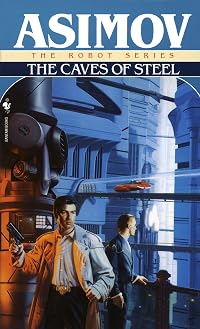
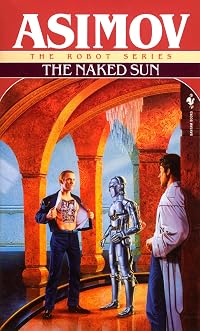
mackviking these book explore little imagined conrers of human interactions while cracking the nutshell of our basic collective thinking to expose meaty substrate of our beliefs
Member Reviews
There's a peculiar charm to Golden Age SF, perhaps especially in its short stories. This collection is a prime example. On the one hand, the details are hopelessly antique; nobody in 2011 can possibly consider the technology or science realistic. The themes and ideas, though... those have a bizarre, almost eerie resonance.
For example, "The Fun They Had" treats electronic books as the norm, a simple fact of life accessible to any child...something we're still struggling with over fifty years later. Aside from its anachronistic Multivac, though, "The Franchise" could have been written last month as a commentary on modern political campaigns.
There's a lot of good fiction being written now, but sometimes there's just no substitute for the show more old masters. show less
For example, "The Fun They Had" treats electronic books as the norm, a simple fact of life accessible to any child...something we're still struggling with over fifty years later. Aside from its anachronistic Multivac, though, "The Franchise" could have been written last month as a commentary on modern political campaigns.
There's a lot of good fiction being written now, but sometimes there's just no substitute for the show more old masters. show less
I sometimes joke that Isaac Asimov is my intellectual father: although that's not that far from the truth. His essays, pro-reason and pro-science, had a huge influence upon me growing up. He's probably best known for his science fiction novels, but I think his best fiction by far is to be found in his short stories. There are 15 short stories here in this 1957 anthology. Below I name my three favorites:
1) "The Dead Past" - This is my favorite Asimov story, not just of the collection, but of any I've read. It might very well have been the first Asimov, maybe even the first work of science fiction, I ever read, and it's amazing, because it forever shifted my perception of the meaning of time. And more than that, it's psychologically show more penetrating and emotionally moving in ways Asimov rarely managed.
2) "The Fun They Had" - The irony in this light-hearted story of computer-schooled children is smile-worthy. One of Asimov's most anthologized stories.
3) "Dreaming is a Private Thing" - This is something of an allegory for creative writing in general, but it's one story that really stayed with me, that I recognized just from the title, and even had imagery so vivid and memorable I immediately recognized it.
I'd probably recommend Isaac Asimov: The Complete Stories, Volume One as an introduction to Asimov's fiction over this one--that book includes the content of Earth is Enough but this book is definitely full of memorable classics. Some details in the stories are dated, certainly, especially in social matters. Asimov considered himself a feminist and he created one of the most brilliant female characters in science fiction in robotologist Susan Calvin (featured in "Satisfaction Guaranteed"). But in these stories that men make all the important decisions, both at work and home, is taken for granted. Central planning--done by computers, of course--is also taken for granted as the wave of the future. But what struck me nevertheless is how well these stories held up, and how memorable they are. With many here I only had to see the title to remember the story--even though it had been decades. With others it didn't take many pages for them to come back to me. The ideas are clever, the twists unforgettable. show less
1) "The Dead Past" - This is my favorite Asimov story, not just of the collection, but of any I've read. It might very well have been the first Asimov, maybe even the first work of science fiction, I ever read, and it's amazing, because it forever shifted my perception of the meaning of time. And more than that, it's psychologically show more penetrating and emotionally moving in ways Asimov rarely managed.
2) "The Fun They Had" - The irony in this light-hearted story of computer-schooled children is smile-worthy. One of Asimov's most anthologized stories.
3) "Dreaming is a Private Thing" - This is something of an allegory for creative writing in general, but it's one story that really stayed with me, that I recognized just from the title, and even had imagery so vivid and memorable I immediately recognized it.
I'd probably recommend Isaac Asimov: The Complete Stories, Volume One as an introduction to Asimov's fiction over this one--that book includes the content of Earth is Enough but this book is definitely full of memorable classics. Some details in the stories are dated, certainly, especially in social matters. Asimov considered himself a feminist and he created one of the most brilliant female characters in science fiction in robotologist Susan Calvin (featured in "Satisfaction Guaranteed"). But in these stories that men make all the important decisions, both at work and home, is taken for granted. Central planning--done by computers, of course--is also taken for granted as the wave of the future. But what struck me nevertheless is how well these stories held up, and how memorable they are. With many here I only had to see the title to remember the story--even though it had been decades. With others it didn't take many pages for them to come back to me. The ideas are clever, the twists unforgettable. show less
A decent collection of short stories, all taking place on Earth in the future. Some of these have appeared in other collections before, particularly the ones concerning computers or robots, those have appeared in 'I Robot' among others. For me, 'The Dead Past' was the best with 'Franchise' next. The two poems he included about himself and his writing process were not good.
A series of short stories that are written in the mid 1950's and often set in 2000-2010. Some are quite short and humourous, others are sort of novellas. Everyone will have their favourites in here but two stand out for me.
The Dead Past - is set in the year 2000+ and is a discussion of academia which has the quest of a chronoscope (a sort of time machine viewer). It is amazing to me how Asimov was able to predict research financial structuring 60 years in the future along with the problems and frustrations of academic research. The ending is amazing...I won't spoil it but I saw the scenario to be like posting something on the internet and unable to stop it from going viral.
Franchise - a story about the use of a computer to decide the show more election of a USA president in Nov 4,2008. Not very far off the mark for a 60 year old prediction when you consider polls and how fast results are published today after a few voting polls are received.
Asimov had a great talent in creating believable scenarios that stand the test of time. show less
The Dead Past - is set in the year 2000+ and is a discussion of academia which has the quest of a chronoscope (a sort of time machine viewer). It is amazing to me how Asimov was able to predict research financial structuring 60 years in the future along with the problems and frustrations of academic research. The ending is amazing...I won't spoil it but I saw the scenario to be like posting something on the internet and unable to stop it from going viral.
Franchise - a story about the use of a computer to decide the show more election of a USA president in Nov 4,2008. Not very far off the mark for a 60 year old prediction when you consider polls and how fast results are published today after a few voting polls are received.
Asimov had a great talent in creating believable scenarios that stand the test of time. show less
nice collection of short stories, some better than others and many dated technologically (punch cards with super powerful multivac etc). Asimov gets quickly to the point with an interesting premise and conclusion without a lot of wasted time and develops the stories with just the right amount of flesh.
When I was young I enjoyed Asimov's stories a lot. I almost always found them smart and clever. His later work didn't thrill me and I suppose I outgrew him also. He was an incredibly prolific author and there are a lot of stories I have never read. This collection published in 1957 is one of them.
There are a lot of stories in this collection:
7 • The Dead Past • (1956) • novelette
55 • The Foundation of S.F. Success • (1954) • poem
57 • Franchise • (1955) • shortstory
75 • Gimmicks Three • (1956) • shortstory
83 • Kid Stuff • (1953) • shortstory
97 • The Watery Place • (1956) • shortstory
103 • Living Space • (1956) • shortstory
119 • The Message • (1956) • shortstory
121 • Satisfaction show more Guaranteed • (1951) • shortstory
137 • Hell-Fire • (1956) • shortstory (variant of Hell Fire)
139 • The Last Trump • (1955) • shortstory
157 • The Fun They Had • (1951) • shortstory
161 • Jokester • (1956) • shortstory
175 • The Immortal Bard • (1954) • shortstory
179 • Someday • (1956) • shortstory
189 • The Author's Ordeal • (1957) • poem
193 • Dreaming Is a Private Thing • (1955) • shortstory
These science fiction stories are all set on earth. That is where the title comes from. The subtitle of the book is "Science Fiction Tales of Our Own Planet." The 15 stories and 2 poems were first published in a wide variety of science fiction magazines primarily in 1956, with the earliest from 1951 as can be seen in the dates listed above. This is an OK collection of stories that I enjoyed reading, although they really feel dated. On the downside here, Asimov's humor always fell flat, very flat, with me.
There are only a couple stories that I can say I really enjoyed. My favorite stories here start with the first one, "The Dead Past." I've read this a long time before (I even have the 1956 magazine copy of Astounding in which it first appeared) but that didn't spoil my enjoyment. An older professor of ancient history wants access to a time viewer and super-computer to further his research on Carthage. That is how it starts but it rather quickly runs away from that. The story was set in what is our present. The technology here is way off the mark but the political and social ramifications are spot on. This was the longest story by far. Other favorites here were "Living Space," and "Satisfaction Guaranteed." There are several stories I'd call clunkers, but passable, and the two poems ... blah.
I would only recommend this collection to Asimov fans and those who enjoy old-time science fiction stories. show less
There are a lot of stories in this collection:
7 • The Dead Past • (1956) • novelette
55 • The Foundation of S.F. Success • (1954) • poem
57 • Franchise • (1955) • shortstory
75 • Gimmicks Three • (1956) • shortstory
83 • Kid Stuff • (1953) • shortstory
97 • The Watery Place • (1956) • shortstory
103 • Living Space • (1956) • shortstory
119 • The Message • (1956) • shortstory
121 • Satisfaction show more Guaranteed • (1951) • shortstory
137 • Hell-Fire • (1956) • shortstory (variant of Hell Fire)
139 • The Last Trump • (1955) • shortstory
157 • The Fun They Had • (1951) • shortstory
161 • Jokester • (1956) • shortstory
175 • The Immortal Bard • (1954) • shortstory
179 • Someday • (1956) • shortstory
189 • The Author's Ordeal • (1957) • poem
193 • Dreaming Is a Private Thing • (1955) • shortstory
These science fiction stories are all set on earth. That is where the title comes from. The subtitle of the book is "Science Fiction Tales of Our Own Planet." The 15 stories and 2 poems were first published in a wide variety of science fiction magazines primarily in 1956, with the earliest from 1951 as can be seen in the dates listed above. This is an OK collection of stories that I enjoyed reading, although they really feel dated. On the downside here, Asimov's humor always fell flat, very flat, with me.
There are only a couple stories that I can say I really enjoyed. My favorite stories here start with the first one, "The Dead Past." I've read this a long time before (I even have the 1956 magazine copy of Astounding in which it first appeared) but that didn't spoil my enjoyment. An older professor of ancient history wants access to a time viewer and super-computer to further his research on Carthage. That is how it starts but it rather quickly runs away from that. The story was set in what is our present. The technology here is way off the mark but the political and social ramifications are spot on. This was the longest story by far. Other favorites here were "Living Space," and "Satisfaction Guaranteed." There are several stories I'd call clunkers, but passable, and the two poems ... blah.
I would only recommend this collection to Asimov fans and those who enjoy old-time science fiction stories. show less
This is the first Asimov I read , which I did as a 14 year old. I remember to this day ( some 40 years later) that I was blown away by the stories. Not so much by the writing but by the ideas embodied in the stories.
I have read some the stories in more recent years and whilst I understand why I have those memories, I am not sure I have the same reaction , yet I still rate a 5 star.
I went on to read a lot of Asimov, but few reached the height of this one
Big ship
24 September 2014
I have read some the stories in more recent years and whilst I understand why I have those memories, I am not sure I have the same reaction , yet I still rate a 5 star.
I went on to read a lot of Asimov, but few reached the height of this one
Big ship
24 September 2014
Members
- Recently Added By
Author Information

Isaac Asimov was born in Petrovichi, Russia, on January 2, 1920. His family emigrated to the United States in 1923 and settled in Brooklyn, New York, where they owned and operated a candy store. Asimov became a naturalized U.S. citizen at the age of eight. As a youngster he discovered his talent for writing, producing his first original fiction at show more the age of eleven. He went on to become one of the world's most prolific writers, publishing nearly 500 books in his lifetime. Asimov was not only a writer; he also was a biochemist and an educator. He studied chemistry at Columbia University, earning a B.S., M.A. and Ph.D. In 1951, Asimov accepted a position as an instructor of biochemistry at Boston University's School of Medicine even though he had no practical experience in the field. His exceptional intelligence enabled him to master new systems rapidly, and he soon became a successful and distinguished professor at Columbia and even co-authored a biochemistry textbook within a few years. Asimov won numerous awards and honors for his books and stories, and he is considered to be a leading writer of the Golden Age of science fiction. While he did not invent science fiction, he helped to legitimize it by adding the narrative structure that had been missing from the traditional science fiction books of the period. He also introduced several innovative concepts, including the thematic concern for technological progress and its impact on humanity. Asimov is probably best known for his Foundation series, which includes Foundation, Foundation and Empire, and Second Foundation. In 1966, this trilogy won the Hugo award for best all-time science fiction series. In 1983, Asimov wrote an additional Foundation novel, Foundation's Edge, which won the Hugo for best novel of that year. Asimov also wrote a series of robot books that included I, Robot, and eventually he tied the two series together. He won three additional Hugos, including one awarded posthumously for the best non-fiction book of 1995, I. Asimov. "Nightfall" was chosen the best science fiction story of all time by the Science Fiction Writers of America. In 1979, Asimov wrote his autobiography, In Memory Yet Green. He continued writing until just a few years before his death from heart and kidney failure on April 6, 1992. (Bowker Author Biography) show less
Some Editions
Series
Belongs to Publisher Series
Work Relationships
Is contained in
Contains
Common Knowledge
- Canonical title
- Earth Is Room Enough
- Original title
- Earth Is Room Enough
- Original publication date
- 1957
- People/Characters
- Multivac; Arnold Potterley; Sterbinski; Thaddeus Araman; Jonas Foster; Ralph Nimmo (show all 39); Mrs. Potterley; Edward Gibbon; Thucydides; Norman Muller; Isidore Welby; Shapur; Jan Prentiss; Bart Cameron (Sheriff); Clarence Rimbro; Bill Ching; Alec Mishnoff; Berg; George Kilroy; TN-3 (Tony); Claire Belmont; Alvin Horner; Joseph Vincenzo; The Devil; God; Etheriel; R. E. Mann; Tommy; Margie; Noel Meyerhof; Phineas Welch; Scott Robertson; Archimedes of Syracuse; Isaac Newton; Galileo Galilei; William Shakespeare; Bard {computer}; Jesse Weill; Larry Belmont
- Important places
- Carthage; Twin Gulch, Idaho, USA; Venus; Venice, Veneto, Italy; Earth; Germany [Nazi] (show all 10); North Africa; Oran, Algeria; Los Alamos, New Mexico, USA; Dreams, Inc.
- Important events
- Industrial Revolution; World War II; Resurrection of the Dead
- Dedication
- To Those Admirable and Amiable Gentlemen Who
First Occasioned the Publication of These Stories:
Anthony Boucher...Howard Browne...John
Campbell...Horace Gold...Robert Lowndes...
Leo Margulies...Ray Palmer...James ... (show all)Quinn...
Larry Shaw...Russ Winterbotham - First words
- Arnold Potterley, Ph.D., was a Professor of Ancient History. (The Dead Past)
- Last words
- (Click to show. Warning: May contain spoilers.)"I'm sorry for all of them. Through the years, I've found out one thing. It's their business; making people happy. Other people."
- Original language*
- Inglés
*Some information comes from Common Knowledge in other languages. Click "Edit" for more information.
Classifications
Statistics
- Members
- 1,803
- Popularity
- 12,062
- Reviews
- 20
- Rating
- (3.64)
- Languages
- 7 — Danish, English, French, German, Italian, Spanish, Turkish
- Media
- Paper, Audiobook, Ebook
- ISBNs
- 22
- ASINs
- 48