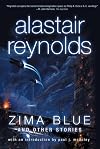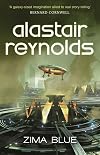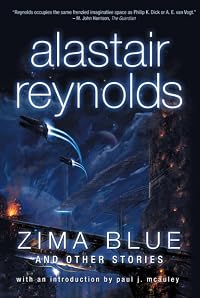
Zima Blue and Other Stories [Night Shade Books]
by Alastair Reynolds
On This Page
Description
The stories in Zima Blue represent a more optimistic take on humanity's future, a view that says there may be wars, there may be catastrophes and cosmic errors, but something human will still survive. Skyhorse Publishing, under our Night Shade and Talos imprints, is proud to publish a broad range of titles for readers interested in science fiction (space opera, time travel, hard SF, alien invasion, near-future dystopia), fantasy (grimdark, sword and sorcery, contemporary urban fantasy, show more steampunk, alternative history), and horror (zombies, vampires, and the occult and supernatural), and much more. While not every title we publish becomes a New York Times bestseller, a national bestseller, or a Hugo or Nebula award-winner, we are committed to publishing quality books from a diverse group of authors. show lessTags
Recommendations
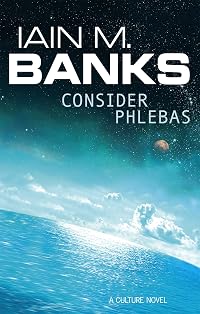
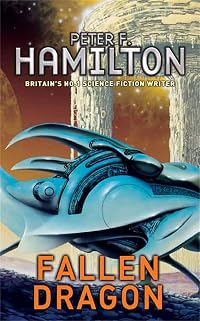
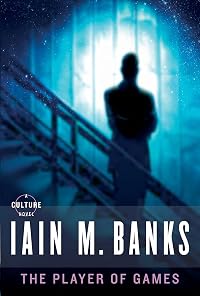
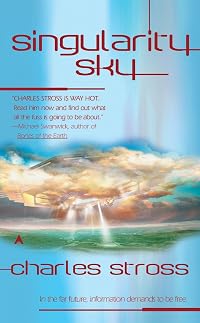
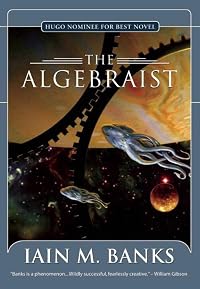

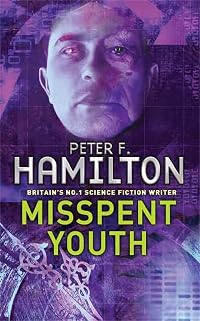
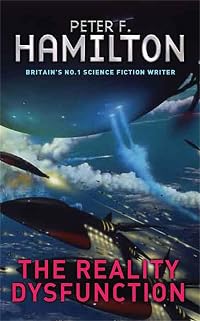
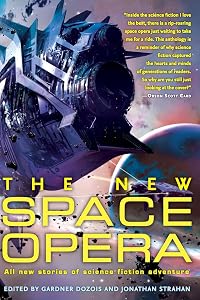




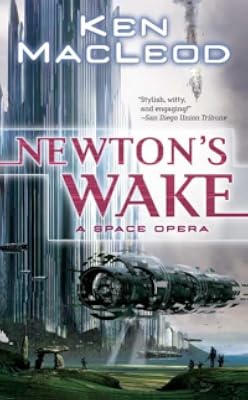
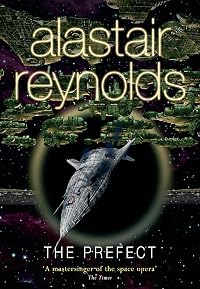
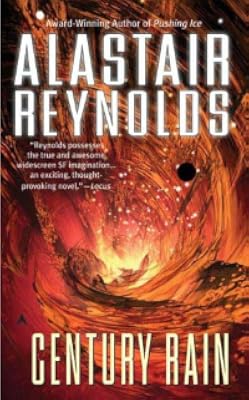
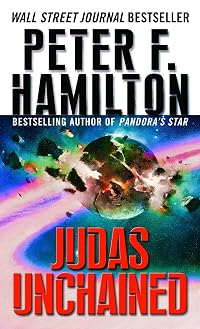


Member Recommendations

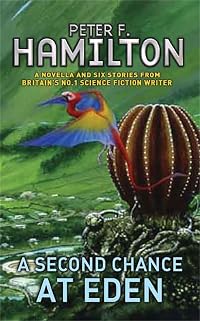
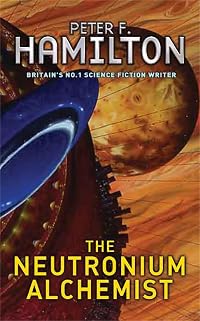
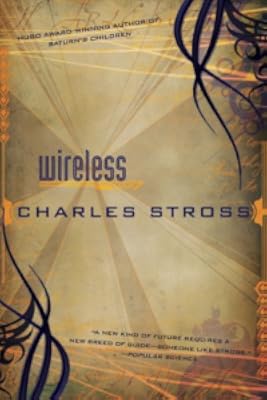
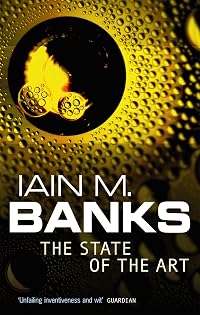
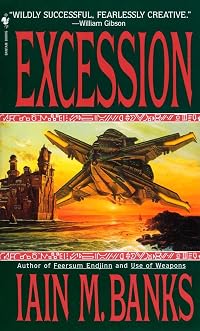
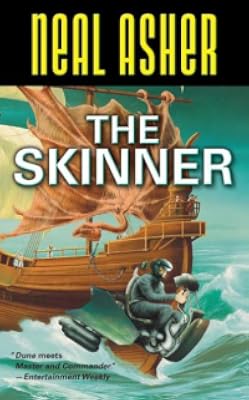
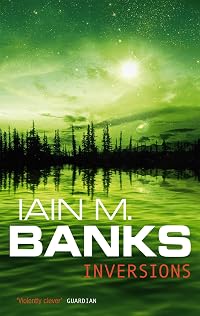
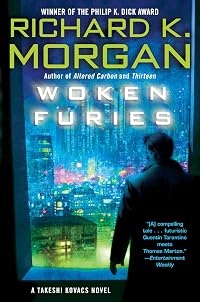
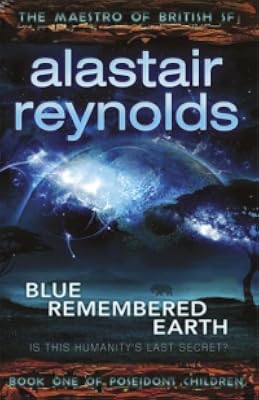
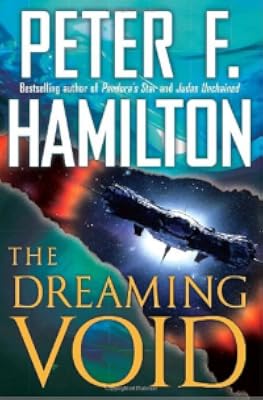
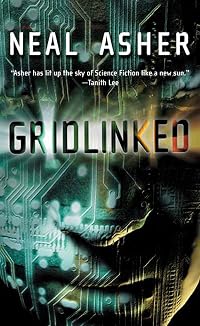
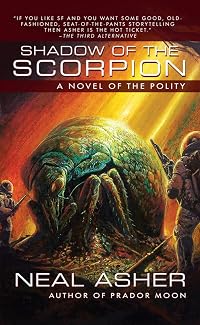
mackviking these book explore little imagined conrers of human interactions while cracking the nutshell of our basic collective thinking to expose meaty substrate of our beliefs
20
AlanPoulter Both are strong collections of hard SF stories, with some especially enjoyable short stories with a 'cosmic' perspective.
11
Member Reviews
If there is a single unifying theme to the stories collected here it is that nothing (and no one) is just as it appears. Whether it's a matter of individual identity (conflicted as in "The Real Story" or transcendent as in the title story), illusion, misinformation, or multiverse cross-over, Reynolds nests misdirection and incomplete understanding at the core of each tale; "Zima Blue and Other Stories" is as much an anthology of mysteries and whodunnits as it is traditional SF (and these stories are most certainly that).
Not that each story is equally rewarding, mind you. While "Beyond the Aquila Rift," "Enola," and "Zima Blue" are truly brilliant and "Spirey and the Queen" is as giddy a space-opera hoot as any a Golden Age periodical show more produced, "Hideaway" and "Angels of Ashes" were merely adequate and felt forced and gloomy. "Understanding Space and Time" is comparatively a piece _sui generis_ here, as if Reynolds mixed a Cosmic Cocktail using Douglas Adams' Whiskey and cosmology infodump soda; the musical selections that accompany it are well-chosen, though.
Via Spirey, Reynolds also provides me with a phrase I know I'll be using now and again when she worries about "suffering from acute existence failure." Nice; thanks, Al! show less
Not that each story is equally rewarding, mind you. While "Beyond the Aquila Rift," "Enola," and "Zima Blue" are truly brilliant and "Spirey and the Queen" is as giddy a space-opera hoot as any a Golden Age periodical show more produced, "Hideaway" and "Angels of Ashes" were merely adequate and felt forced and gloomy. "Understanding Space and Time" is comparatively a piece _sui generis_ here, as if Reynolds mixed a Cosmic Cocktail using Douglas Adams' Whiskey and cosmology infodump soda; the musical selections that accompany it are well-chosen, though.
Via Spirey, Reynolds also provides me with a phrase I know I'll be using now and again when she worries about "suffering from acute existence failure." Nice; thanks, Al! show less
Alastair Reynolds writes great short stories. And some of them are in this collection, but mostly they aren't. This is half good stuff, half off-cuts, and it honestly isn't where I'd recommend anyone start with his short stories. (Beyond the Aquila Rift is definitely the place to start.) That said, there's enough stuff in here that's worth reading and NOT in Beyond the Aquila Rift that this one is worth the time of -- well, someone like me, who has read almost every book Reynolds has written and a fair number of his short stories.
This book is notable for collecting all three Merlin stories (BAR only has the middle one, Minla's Flowers; it does stand alone, but the context of Hideaway and the resolution of Merlin's Gun are very nice to show more have). It also has both Carrie Clay stories (The Real Story and Zima Blue; the latter is better, and it's in BAR, but the former is also very good). Other stand-outs (that are NOT in BAR), for me:
ENOLA. I'm not sure why this wasn't in BAR; it's definitely, in my opinion, one of Reynolds's better stories. A trinket-seller in a marketplace is not what she seems, and neither is the world she lives in.
CARDIFF AFTER. The odd part of this one for me is that it is linked to Signal to Noise, which is the only Reynolds story I've ever found not worth finishing -- like, he's sometimes better, he's sometimes worse, but he's never just a dull mess, except in Signal to Noise. But Cardiff After is shorter, punchier, and more interesting. Cardiff is destroyed by a terrorist bomb in one universe, and, thanks to a quantum connection system, that has a number of effects on another universe, where Cardiff is fine.
SPIREY AND THE QUEEN. It's a space war between two significantly-named factions, and Spirey and Yarrow are chasing a defector on orders from their superior. And then they land, and discover that literally nothing is how they thought it was, including the war itself.
I'm glad I read this. More Reynolds is always a good thing. (Although, wow, when you read a lot of him at once, you become grimly aware of how extremely not at all queer his futures are.) But if you haven't read any Reynolds, start with House of Suns (if you want a novel) or Beyond the Aquila Rift (if you want short stories). Don't start here. show less
This book is notable for collecting all three Merlin stories (BAR only has the middle one, Minla's Flowers; it does stand alone, but the context of Hideaway and the resolution of Merlin's Gun are very nice to show more have). It also has both Carrie Clay stories (The Real Story and Zima Blue; the latter is better, and it's in BAR, but the former is also very good). Other stand-outs (that are NOT in BAR), for me:
ENOLA. I'm not sure why this wasn't in BAR; it's definitely, in my opinion, one of Reynolds's better stories. A trinket-seller in a marketplace is not what she seems, and neither is the world she lives in.
CARDIFF AFTER. The odd part of this one for me is that it is linked to Signal to Noise, which is the only Reynolds story I've ever found not worth finishing -- like, he's sometimes better, he's sometimes worse, but he's never just a dull mess, except in Signal to Noise. But Cardiff After is shorter, punchier, and more interesting. Cardiff is destroyed by a terrorist bomb in one universe, and, thanks to a quantum connection system, that has a number of effects on another universe, where Cardiff is fine.
SPIREY AND THE QUEEN. It's a space war between two significantly-named factions, and Spirey and Yarrow are chasing a defector on orders from their superior. And then they land, and discover that literally nothing is how they thought it was, including the war itself.
I'm glad I read this. More Reynolds is always a good thing. (Although, wow, when you read a lot of him at once, you become grimly aware of how extremely not at all queer his futures are.) But if you haven't read any Reynolds, start with House of Suns (if you want a novel) or Beyond the Aquila Rift (if you want short stories). Don't start here. show less
This is an excellent collection of short stories written and published over an extended period of time primarily from Interzone Magazine and Asimov's Science Fiction magazine, brought together here and made widely available for the first time. I wasn't wowed by every story but most of these are very good. Although most of the stories are rather small scale, and a few set in the near future, they are almost all within a "space opera" universe. Vast explorations and immense periods of time and ancient alien civilizations and technology are a given in just about every story - but the stories themselves are focused on small scenes and just one or two characters. Suffice it to say, I really enjoyed these stories.
These tend to be all hard show more science stories and the info dump a time or two such as what happens in "Understanding Space and Time", can cause a bit of overload in what was otherwise a pretty great story. My favorite story here was the last, the title story, Zima Blue. It gave me the warm fuzzies at the end also, with a bit of homage to my favorite Asimov story, "The Bicentennial Man". I was also quite moved by "Beyond the Aquila Rift."
Reynolds provides an afterword to each story which adds to the enjoyment of the collection, in small ways.
I read the US edition of stories published by Nightshade Press in 2006. A later expanded UK collection has more stories. show less
These tend to be all hard show more science stories and the info dump a time or two such as what happens in "Understanding Space and Time", can cause a bit of overload in what was otherwise a pretty great story. My favorite story here was the last, the title story, Zima Blue. It gave me the warm fuzzies at the end also, with a bit of homage to my favorite Asimov story, "The Bicentennial Man". I was also quite moved by "Beyond the Aquila Rift."
Reynolds provides an afterword to each story which adds to the enjoyment of the collection, in small ways.
I read the US edition of stories published by Nightshade Press in 2006. A later expanded UK collection has more stories. show less
I’ve recently read many science fiction works by Alastair Reynolds, but this was the first collection of his short stories I’ve seen. It is a pretty broad assortment of stories, some more science fiction than others, and a few that are rock “hard”. What I mean by that is that the astrophysics is meticulously explained, far above my ability to comprehend. In fact, he could just be spouting absolute nonsense and not one in a million could call him on it.
If you like space opera, or Alastair Reynolds in particular, the majority of these stories will find your favor. I thought the title work, Zima Blue, was particularly poignant.
If you like space opera, or Alastair Reynolds in particular, the majority of these stories will find your favor. I thought the title work, Zima Blue, was particularly poignant.
This collection of short stories NOT set in the Revelation Space world shows greater range than all of Reynolds' other books combined! Space Opera and identity confusion are mixed with near-future, earth-bound stories and even a completely non-SF story. Some of the characters/backgrounds have multiple stoires and I could happily read more about most of them.
Each story or sequence has an afterword by the author - some of these are interesting.
Each story or sequence has an afterword by the author - some of these are interesting.
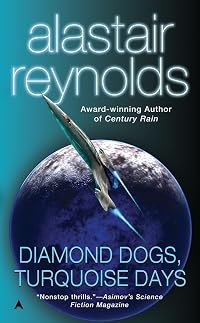
My successful encounter with Alastair Reynold's short fiction in Diamond Dogs, Turquoise Days persuaded me to look for more of his stories collections and this one proved to be again different from what I expected: there is a wide range of themes and moods in this anthology, and it helped me appreciate the different shades of storytelling of this amazing author.
Continue reading over at SPACE and SORCERY Blog
Continue reading over at SPACE and SORCERY Blog
Really good short-stories that can get a little samey
Members
- Recently Added By
Published Reviews
ThingScore 75
... noted for big novels that combine storylines strung out across aeons with mind-blowing cosmological theory, and he's just as successful at presenting these concepts in the more constraining form of the short story
added by andyl
Author Information

141+ Works 40,075 Members
Some Editions
Work Relationships
Is contained in
Contains
Common Knowledge
- Canonical title
- Zima Blue and Other Stories [Night Shade Books]
- Original publication date
- 2006-09
- Blurbers
- Harrison, M. John; Gevers, Nick; Kleffel, Rick; Horton, Rich; Grimwood, Jon Courtenay; Cornwell, Bernard
- Original language
- English
- Disambiguation notice
- Note the 2009 UK edition has more stories than the 2006 American version.
Classifications
Statistics
- Members
- 372
- Popularity
- 84,359
- Reviews
- 14
- Rating
- (3.91)
- Languages
- English
- Media
- Paper, Ebook
- ISBNs
- 3
- ASINs
- 5