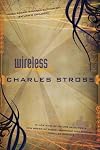
Wireless
by Charles Stross
On This Page
Description
In this collection of short stories, novelist Stross moves the U.S.-U.S.S.R. conflict onto a massive disk in another galaxy in "Missile Gap," offers a spam-filter solution to the Fermi paradox in "MAXOS," suggests clever bargains with the devil in a newly frozen Scotland in "Snowball's Chance," and sets the stage for appearances by Carl Sagan and Stephen Jay Gould in "The Colder War."Tags
Recommendations








Member Recommendations
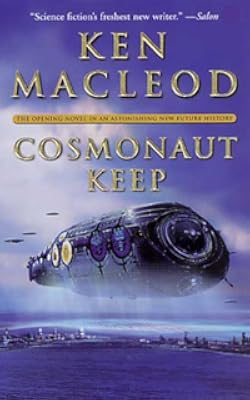
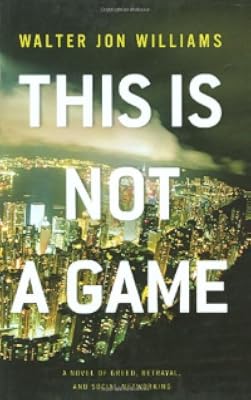
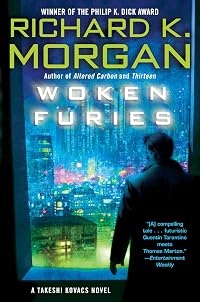
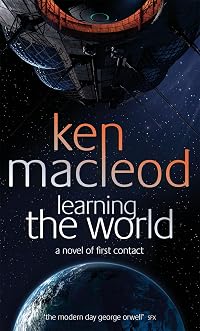
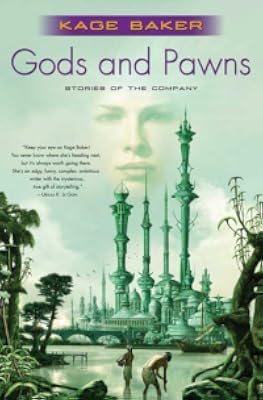
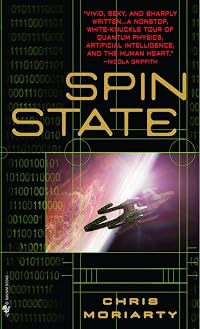
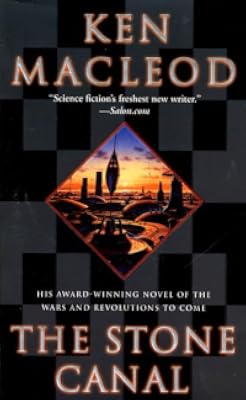
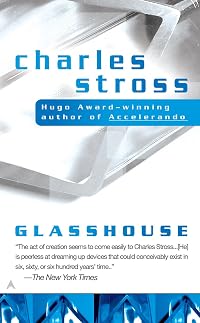
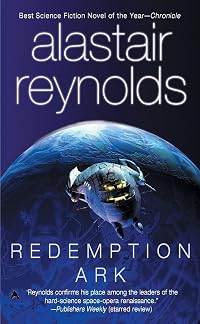
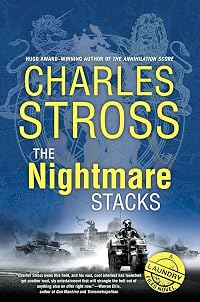
AlanPoulter Both are strong collections of hard SF stories, with some especially enjoyable short stories with a 'cosmic' perspective.
Member Reviews
I've always loved short stories much more than novels - an author worth reading always seems to be at his best in short form, where they're forced to do what they're going to do and get out.
Stross is definitely in good form in short fiction. This collection is pretty much excellent stories all the way through, with possibly one exception - the last of the bunch is perhaps a little weak, but an impressive stylistic experiment in any case.
The rest of the book, though, leaves no doubt. It's always nice to look up in the first few pages of the first story in a collection and realize that you're reading the work of a master craftsman, and to know that this realization takes nothing away from your enjoyment of the work itself. This show more experience repeated itself several times throught the book - over and over again, I found myself admiring the workmanship even as I was reveling in the flights of imagination.
Stross gets a few things particularly right. He has a way with opening lines: "Joe slid the tractor into gear, raised the scoop, and began turning it towards the open doors of the barn - just in time to see the itinerant farm coming down the road." " 'I want you to know, darling, that I'm leaving you for another sex robot - and she's twice the man you'll ever be.' Laura explained as she flounced over to the front door, wafting an alluring aroma of mineral oil behind her." Lines like that look like tricks, but they're craft. They get you into the story, and they keep you there. He has a way with humor - his stories don't generally depend on humor, but they're nicely leavened with it. And, most important, his characters are people, and you know the people early on. They have minds and thoughts, and you understand them, and they surprise you.
A friend of mine put it simply: "Stross is boss". I can go with that. show less
Stross is definitely in good form in short fiction. This collection is pretty much excellent stories all the way through, with possibly one exception - the last of the bunch is perhaps a little weak, but an impressive stylistic experiment in any case.
The rest of the book, though, leaves no doubt. It's always nice to look up in the first few pages of the first story in a collection and realize that you're reading the work of a master craftsman, and to know that this realization takes nothing away from your enjoyment of the work itself. This show more experience repeated itself several times throught the book - over and over again, I found myself admiring the workmanship even as I was reveling in the flights of imagination.
Stross gets a few things particularly right. He has a way with opening lines: "Joe slid the tractor into gear, raised the scoop, and began turning it towards the open doors of the barn - just in time to see the itinerant farm coming down the road." " 'I want you to know, darling, that I'm leaving you for another sex robot - and she's twice the man you'll ever be.' Laura explained as she flounced over to the front door, wafting an alluring aroma of mineral oil behind her." Lines like that look like tricks, but they're craft. They get you into the story, and they keep you there. He has a way with humor - his stories don't generally depend on humor, but they're nicely leavened with it. And, most important, his characters are people, and you know the people early on. They have minds and thoughts, and you understand them, and they surprise you.
A friend of mine put it simply: "Stross is boss". I can go with that. show less
Stross always creates dense political worlds complete with all their economic ugliness. This is his strength, and also his curse. His readers have to be able adapt to his world quickly. He doesn't waste time with infodumps. Yeah! He doesn't waste time with infodumps. Oh no! This means your in for a fast paced story where you better catch on quickly, or in the case of a short story, it will pass you by before you do. His stories are always witty, intelligent and full of allusions that will make the reader in the know chuckle with glee. The reader sort of in the know might wonder if he chose a name like "Manson" to refer to Charles Manson, the murderer? (Hint: I'm sure that was deliberate!)
Some of the stories passed me by before I got my show more "sea legs" in his world. Some of them, I knew I was working hard to understand them. Some of them were absolutely brilliant though. "Rogue Farm" delighted me with it's novelty, but for some reason the Saturday Night Live phrase "Land Shark" kept running through my head. That only made it quirkier and funnier. "Trunk and Disorderly" was a twisty little romance, a Jeeves and Wooster go partying on Mars... only in this case it isn't Bertie who has to be saved from a bad marriage proposal. Palimpsest was a nice anti-Tuesday Next, that was both enjoyable and thought provoking. Stross's comments at the ends of the stories were enjoyable too. Even though I've never met Stross, I've always been aware of him as a person with a distinct personality when I read his fiction. Other authors are invisible behind their words, or long dead and perhaps never really lived. They just existed in photographs and quotations. His commentaries are part of why I feel this way about him.
And, of course, Stross is known for his biting humor, so it only seems right to end with a couple quotes.
"Brains, fresh brains for baby Jesus," crooned the farm in a warm contralto, startling Joe half out of his skin. "Buy my brains!" Half a dozen disturbing cauliflower shapes poked suggestively out of the farm's back, then retracted, coyly. from Rogue Farm
Uncontrolled civilization is a terminal consumptive state, as the victims of the first extinction discovered the hard way. from Palimpsest show less
Some of the stories passed me by before I got my show more "sea legs" in his world. Some of them, I knew I was working hard to understand them. Some of them were absolutely brilliant though. "Rogue Farm" delighted me with it's novelty, but for some reason the Saturday Night Live phrase "Land Shark" kept running through my head. That only made it quirkier and funnier. "Trunk and Disorderly" was a twisty little romance, a Jeeves and Wooster go partying on Mars... only in this case it isn't Bertie who has to be saved from a bad marriage proposal. Palimpsest was a nice anti-Tuesday Next, that was both enjoyable and thought provoking. Stross's comments at the ends of the stories were enjoyable too. Even though I've never met Stross, I've always been aware of him as a person with a distinct personality when I read his fiction. Other authors are invisible behind their words, or long dead and perhaps never really lived. They just existed in photographs and quotations. His commentaries are part of why I feel this way about him.
And, of course, Stross is known for his biting humor, so it only seems right to end with a couple quotes.
"Brains, fresh brains for baby Jesus," crooned the farm in a warm contralto, startling Joe half out of his skin. "Buy my brains!" Half a dozen disturbing cauliflower shapes poked suggestively out of the farm's back, then retracted, coyly. from Rogue Farm
Uncontrolled civilization is a terminal consumptive state, as the victims of the first extinction discovered the hard way. from Palimpsest show less
After the Laundry Files didn't click for me, I thought I misremembered liking Stross a decade or so ago. But I'm very glad I discovered this short story collection because it made me re-appreciate his writing. I even sort of liked the Laundry-based episode.
Palimpsest ist my favorite. It's difficult to make far future sci-fi feel relatable, let alone in a short story, but through a few tricks he manages to do that.
I'll cheerfully attack the next Stross novel on my unread pile now.
Palimpsest ist my favorite. It's difficult to make far future sci-fi feel relatable, let alone in a short story, but through a few tricks he manages to do that.
I'll cheerfully attack the next Stross novel on my unread pile now.
This is the first time that I've read anything by Charles Stross but this was a great introduction to his style and stories and was thoroughly enjoyable. He named the book "Wireles" because they all had the them of communication - a seemingly loosely strung together book of tales.
All of them are set in an alternate-Earth universe, or possible universe, but two have Cold War themes: A Colder War and Missile Gap.
If you enjoy tales in the New Weird genre, you will like Rogue Farm, a story that carries genetic body modification to its most extreme.
There is also the gem, Unwirer, a collaboration with Cory Doctorow, that is just as disturbingly prescient now as it was when published in 2003.
Trunk and Disorderly is a comic story, which I show more enjoyed, although it was a little rough around the edges.
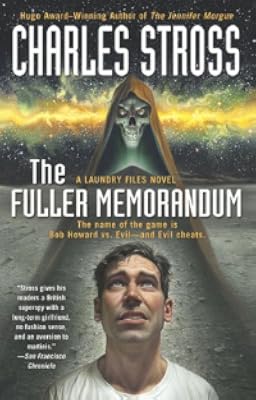
Down on the Farm is about Stross' main character in his Laundry Files series, and is an enticing and charming taste of his long-form work that you will want to explore it further.
Palimpsest is the final, nearly novelette length, story, about the long view of human history. What happens if humanity survives millions of years, and has access to time travel? This is the best story, and hopefully will be turned into a full length novel. show less
All of them are set in an alternate-Earth universe, or possible universe, but two have Cold War themes: A Colder War and Missile Gap.
If you enjoy tales in the New Weird genre, you will like Rogue Farm, a story that carries genetic body modification to its most extreme.
There is also the gem, Unwirer, a collaboration with Cory Doctorow, that is just as disturbingly prescient now as it was when published in 2003.
Trunk and Disorderly is a comic story, which I show more enjoyed, although it was a little rough around the edges.
Down on the Farm is about Stross' main character in his Laundry Files series, and is an enticing and charming taste of his long-form work that you will want to explore it further.
Palimpsest is the final, nearly novelette length, story, about the long view of human history. What happens if humanity survives millions of years, and has access to time travel? This is the best story, and hopefully will be turned into a full length novel. show less
Charlie Stross contributes a well-considered introduction to this collection of his short stories. Though he is better known for his longer-length work, Stross is one of the writers that came up through the UK sf magazine 'Interzone' and so cut his writer's teeth on short stories. Having reviewed the place of the short story format in the history of science fiction, he then goes on to talk about the things he uses short stories for - mainly as a way to experiment with ideas, especially ones that don't justify the time and effort to expand them into novel form (he says).
Which is odd, really. Because at least two stories in this collection - 'Missile Gap' and 'Palimpsest' have so many ideas in them and operate on such a large-scale canvas show more that you could imagine writers like, say, Harry Turtledove getting a series of doorstop-sized novels out of the ideas thrown off casually in these two pieces. Admittedly, in his afterword to 'Palimpsest', Stross does admit that it might still become a novel, some day. Another story, 'Trunk and Disorderly', an attempt to create a decadent post-human world, written as a P.G. Wodehouse pastiche, became a test run for Stross' novel 'Saturn's Children'; whilst another, 'Down on the Farm', is one of Stross' ongoing 'Laundry' stories, and so in passing reflects a particular take on a peculiar British institution, the Civil Service.
Indeed, many of the stories have a particularly British flavour to them. They also date from the decade up to 2010, so in at least one case ('Unwirer', co-authored with Cory Doctorow), the tech - and, indeed, the underlying legislative landscape that the story relies upon - has generally been overtaken by events and this story in particular feels seriously outdated. I know that it's identified as an alternate history, and there's immense scope for alternate realities based on the passage (or not) of all sorts of proposed legislation, but in this instance the end result is likely only to interest electronic frontier types. (It's one of the stories that doesn't share that British flavour I mentioned earlier, though.)
Throughout, Stross' inventiveness never flags. And I spent more time reading 'Palimpsest', a deep future time-travel intrigue, than I would like to admit to because I wanted to finish it to see how it worked out, so it certainly gripped my attention. Recommended. show less
Which is odd, really. Because at least two stories in this collection - 'Missile Gap' and 'Palimpsest' have so many ideas in them and operate on such a large-scale canvas show more that you could imagine writers like, say, Harry Turtledove getting a series of doorstop-sized novels out of the ideas thrown off casually in these two pieces. Admittedly, in his afterword to 'Palimpsest', Stross does admit that it might still become a novel, some day. Another story, 'Trunk and Disorderly', an attempt to create a decadent post-human world, written as a P.G. Wodehouse pastiche, became a test run for Stross' novel 'Saturn's Children'; whilst another, 'Down on the Farm', is one of Stross' ongoing 'Laundry' stories, and so in passing reflects a particular take on a peculiar British institution, the Civil Service.
Indeed, many of the stories have a particularly British flavour to them. They also date from the decade up to 2010, so in at least one case ('Unwirer', co-authored with Cory Doctorow), the tech - and, indeed, the underlying legislative landscape that the story relies upon - has generally been overtaken by events and this story in particular feels seriously outdated. I know that it's identified as an alternate history, and there's immense scope for alternate realities based on the passage (or not) of all sorts of proposed legislation, but in this instance the end result is likely only to interest electronic frontier types. (It's one of the stories that doesn't share that British flavour I mentioned earlier, though.)
Throughout, Stross' inventiveness never flags. And I spent more time reading 'Palimpsest', a deep future time-travel intrigue, than I would like to admit to because I wanted to finish it to see how it worked out, so it certainly gripped my attention. Recommended. show less
I'm giving [b:Wireless|5226027|Wireless|Charles Stross|http://photo.goodreads.com/books/1267357403s/5226027.jpg|5293299] five stars on the strength of the final story, "Palimpsest", alone. It is jaw-droppingly huge in its scope, mind-warpingly complex in its time traveling plot. It is truly science fiction. The other stories range from merely good to well above average (where Stross usually hangs out).
Science fiction is not my favorite genre, mainly because you have to wade through a lot of mediocre writing that is in service to some imaginative concept. In other words, the writing comes second to the ideas. This is the main issue I have with Stross's stories: his ideas are often ingenious, but the way that he unspools his narrative leaves the reader confused and detached. The twisty time travel novella "Palimpsest" is a good example of this - while I liked the idea of an organization of time travellers whose job it is to preserve humanity until the death of the universe, the implications of this mission, while obviously well-thought out by Stross, is not explained very well to the reader.
Members
- Recently Added By
Published Reviews
ThingScore 50
This is good representative sampling of Stross' fiction; a must-have for any Stross fan and a fine introduction for the uninitiated.
added by sdobie
Lists

KayStJ's to-read list
1,616 works; 11 members
Author Information

119+ Works 45,524 Members
Born in Leeds, England, Charles Stross knew he wanted to be a science fiction writer from the age of six. Despite this, he went to university in London and qualified as a Pharmacist. He made his first writing sale to Interzone in 1986, and sold about a dozen stories elsewhere throughout the late 1980s and early 1990s. He now writes fiction show more full-time, has sold about 16 novels, has won one Hugo award and been nominated nearly a dozen times, and has been translated into about a dozen languages. He is the author of the Merchant Princes series. His latest book, The Revolution Business, is the fifth in this series. He lives in Edinburgh, Scotland, with his wife Feorag. (Bowker Author Biography) show less
Awards and Honors
Awards
Distinctions
Work Relationships
Common Knowledge
- Canonical title
- Wireless
- Original title
- Wireless
- Original publication date
- 2009-07
- Dedication
- For David Pringle, Gardner Dozois, and Sheila Williams
- Blurbers
- Dozois, Gardner; Doctorow, Cory; Vinge, Vernor
- Original language
- English
Classifications
Statistics
- Members
- 971
- Popularity
- 27,169
- Reviews
- 26
- Rating
- (3.76)
- Languages
- English
- Media
- Paper, Audiobook, Ebook
- ISBNs
- 10
- ASINs
- 7