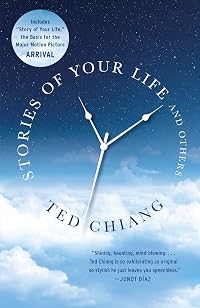
Stories of Your Life and Others
by Ted Chiang
On This Page
Description
From the author of Exhalation, an award-winning short story collection that blends "absorbing storytelling with meditations on the universe, being, time and space ... raises questions about the nature of reality and what it is to be human" (The New York Times).Stories of Your Life and Others delivers dual delights of the very, very strange and the heartbreakingly familiar, often presenting characters who must confront sudden change—the inevitable rise of automatons or the appearance of show more aliens—with some sense of normalcy. With sharp intelligence and humor, Chiang examines what it means to be alive in a world marked by uncertainty, but also by beauty and wonder. An award-winning collection from one of today's most lauded writers, Stories of Your Life and Others is a contemporary classic.
Includes “Story of Your Life”—the basis for the major motion picture Arrival. show less
Tags
Recommendations
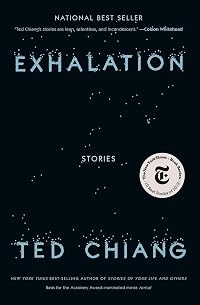
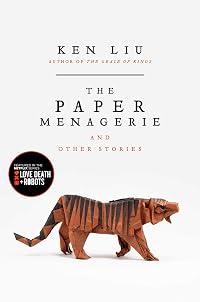
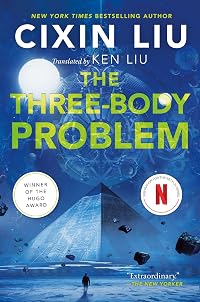


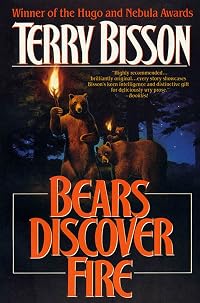
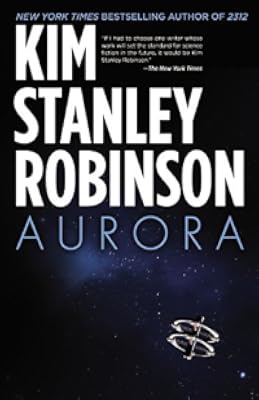
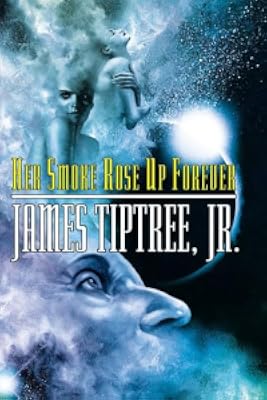

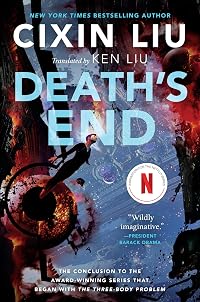
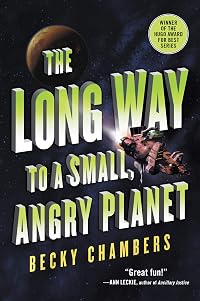
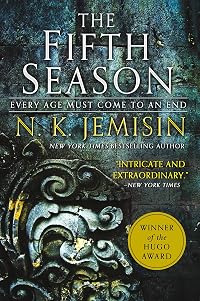

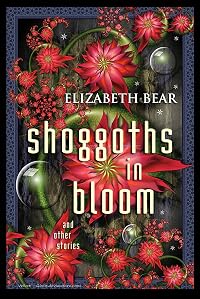
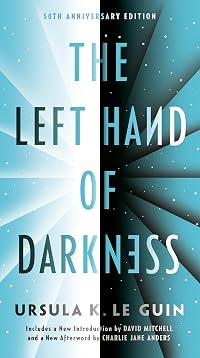
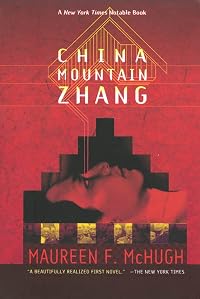

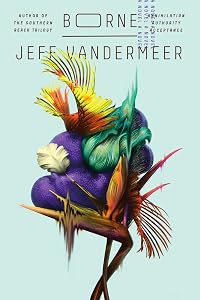
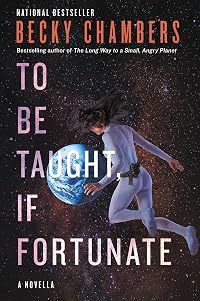
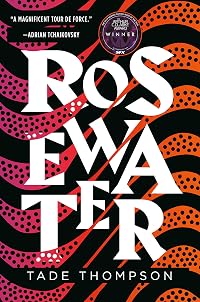
Member Recommendations
beyondthefourthwall Sparkling sci-fi stories for readers who enjoy well-developed thought experiments.
20
by szarka

Cecrow In which language can shape the way one thinks.
Member Reviews
This story collection was originally published under the title Stories of Your Life and Others, but that was changed after the movie based on "Story of Your Life" came out. Which seems like something of a pity, as I think the original title is a lot better, but, hey, Hollywood sells books. (Somewhat more amusing is the still from the movie on the cover of the edition I have, depicting a spaceship that appears nowhere in the actual story.)
Anyway. There are eight stories in here, and the commonality between all of them seems to be Ted Chiang taking a strange, impossible, unlikely, or discredited idea (or, in some cases, several of them at once), asking "what if this were really true?" and exploring the results in fascinating detail, often show more while taking them to the furthest logical extreme. What if the cosmology envisioned by the people who wrote the Old Testament was accurate and something like the tower of Babel could literally reach the heavens? What if human intelligence could be augmented without bounds? What if ancient ideas about reproduction like the homunculus theory and spontaneous generation were true (and also golems)?
What Chiang gets out of these intellectual exercises is always fascinating, smart, thought-provoking, and really, really cool.
I even feel like I have better appreciation for the movie Arrival now. Before, my attitude was basically, "Well, this is an interesting and well-done movie, but I feel like I ought to be disturbed by the way it takes an idea in linguistics that was so extreme that modern linguists mostly seem embarrassed that anyone ever took it seriously, and not only accepts it, but makes it even more ridiculously extreme and adds in some dubious physics, as well." But watching someone deliberately playing yes-but-what-if? with a wrong idea is way more interesting and fun than if they just don't know or care that it's wrong, so I was delighted to realize that's basically what Chiang was doing.
Bottom line: this is a book full of great stories, and I thoroughly enjoyed it. show less
Anyway. There are eight stories in here, and the commonality between all of them seems to be Ted Chiang taking a strange, impossible, unlikely, or discredited idea (or, in some cases, several of them at once), asking "what if this were really true?" and exploring the results in fascinating detail, often show more while taking them to the furthest logical extreme. What if the cosmology envisioned by the people who wrote the Old Testament was accurate and something like the tower of Babel could literally reach the heavens? What if human intelligence could be augmented without bounds? What if ancient ideas about reproduction like the homunculus theory and spontaneous generation were true (and also golems)?
What Chiang gets out of these intellectual exercises is always fascinating, smart, thought-provoking, and really, really cool.
I even feel like I have better appreciation for the movie Arrival now. Before, my attitude was basically, "Well, this is an interesting and well-done movie, but I feel like I ought to be disturbed by the way it takes an idea in linguistics that was so extreme that modern linguists mostly seem embarrassed that anyone ever took it seriously, and not only accepts it, but makes it even more ridiculously extreme and adds in some dubious physics, as well." But watching someone deliberately playing yes-but-what-if? with a wrong idea is way more interesting and fun than if they just don't know or care that it's wrong, so I was delighted to realize that's basically what Chiang was doing.
Bottom line: this is a book full of great stories, and I thoroughly enjoyed it. show less
A questão da linguagem é destaque em ao menos três dos oito contos do livro, um dos quais (História da sua vida) serviu de base para o argumento do filme A Chegada. Ted Chiang tem uma abordagem inovadora da ficção científica, explorando temas que vão de fábulas religiosas à ciência mais elementar e suas implicações.
Meu conto preferido no livro é "Gostando do que você vê: um documentário", original na apresentação e uma forte crítica à "ditadura da beleza", uma poderosa provocação às indústrias de cosméticos e cirurgia plástica.
Meu conto preferido no livro é "Gostando do que você vê: um documentário", original na apresentação e uma forte crítica à "ditadura da beleza", uma poderosa provocação às indústrias de cosméticos e cirurgia plástica.
Stories of Your Life and Others
By Ted Chiang
2016, Vintage
Paperback, 281pp
"I comprehend the Word, and the means by which it operates, and so I dissolve."
This volume of sci-fi short stories touts “Story of Your Life” (the basis for the movie Arrival), but, in my opinion, “Understand” is the star of the show. Chiang blends that perfect balance of storytelling with technical acumen. From psychology to neuroscience to biology to linguistics, the stories are saturated with scientific intrigue. What stories like "Understand" do is highlight Chiang's masterful control over a steadily-increasing sense of conflict until a satisfying crescendo that leaves the stories (and their ethical ambiguity) lingering in your mind. Think: Borges with show more a deeper technical focus. show less
By Ted Chiang
2016, Vintage
Paperback, 281pp
"I comprehend the Word, and the means by which it operates, and so I dissolve."
This volume of sci-fi short stories touts “Story of Your Life” (the basis for the movie Arrival), but, in my opinion, “Understand” is the star of the show. Chiang blends that perfect balance of storytelling with technical acumen. From psychology to neuroscience to biology to linguistics, the stories are saturated with scientific intrigue. What stories like "Understand" do is highlight Chiang's masterful control over a steadily-increasing sense of conflict until a satisfying crescendo that leaves the stories (and their ethical ambiguity) lingering in your mind. Think: Borges with show more a deeper technical focus. show less
I can’t say I felt good after reading these stories—well, except for “Seventy-Two Letters”—but I was so captivated by the brilliance of the author, that I can’t help but give this story collection a 5-star rating.
I was initially attracted to this book because it has the story that the movie Arrival is based on, “Story of Your Life.” That movie blew my mind in the best way, and I think the story would have too if the movie hadn’t spoiled it for me. It’s still a neat story, but I’m sure it’s better when experienced before seeing the movie.
The stories in this collection were published in magazines or journals over the course of 12 years, and they cover a wide range of subjects—linguistics, religion, math, show more physics, neuroscience—that the author researched and gave a unique science fiction twist. It’s truly impressive writing, but so much of it left me with a sense of futility and inevitability that I ended most stories feeling like I needed to lie down and process. When I saw that there was a section of story notes at the end, I was excited that I might be able to compare my notes to the author’s, but they were more about what inspired them than what he meant by them.
It’s exceptional sci-fi, and I will probably seek out more of his work when I’m up to the level of concentration required for it. show less
I was initially attracted to this book because it has the story that the movie Arrival is based on, “Story of Your Life.” That movie blew my mind in the best way, and I think the story would have too if the movie hadn’t spoiled it for me. It’s still a neat story, but I’m sure it’s better when experienced before seeing the movie.
The stories in this collection were published in magazines or journals over the course of 12 years, and they cover a wide range of subjects—linguistics, religion, math, show more physics, neuroscience—that the author researched and gave a unique science fiction twist. It’s truly impressive writing, but so much of it left me with a sense of futility and inevitability that I ended most stories feeling like I needed to lie down and process. When I saw that there was a section of story notes at the end, I was excited that I might be able to compare my notes to the author’s, but they were more about what inspired them than what he meant by them.
It’s exceptional sci-fi, and I will probably seek out more of his work when I’m up to the level of concentration required for it. show less
Some might say (I think I said this myself in my review of his second collection, Exhalation) that Ted Chiang writes hard sf. I don't think that's true per se, because I don't think Chiang is always concerned with rigorous science. Rather, I think what Chiang is interested in is rigorous extrapolation. Given a counterfactual idea, he wants to explore exactly how it would play out, no matter how fanciful the original idea is. Such an approach is fundamental to, for example, "Hell Is the Absence of God," which is based around the question "what if people's belief really did send them to heaven or hell, and we knew it to be factually true?" But Chiang's extrapolations aren't there just to be there; Chiang is also really good at that show more target="_top">Miévillian doubling effect, where the story is both a really detailed extrapolation of another world, and tells us something about our own world—in the case of "Hell Is the Absence of God," he explores the operation of faith, for example. (Across his whole oeuvre, I think Chiang does this best in Exhalation's "The Lifecycle of Software Objects," which is both a really thoughtful take on how we might make genuinely intelligent AI, and a moving metaphor for the difficulties of parenting.)
Honestly, though, I found "Hell Is the Absence of God" more intellectually interesting than genuinely moving, which is probably the trap Chiang most often falls into. (Again, Chiang doesn't write hard sf, but it is definitely a fault hard can have.) On other occasions, Chiang doesn't quite land the metaphoric resonance of his sfnal idea; the core conceit of "Division by Zero" ended up coming across as a stretch. Still, Chiang even at his weakest is always attempting to do something interesting, and I think it's the kind of collection where one reader's weak story will be another reader's favorite. (The only story I flat out disliked was "Understand," a take on one of my least-favorite sf tropes, the guy who becomes a super-genius.)
For me, the two best stories in the book were "Story of Your Life" and "Tower of Babylon." The former justly gets a lot of praise. There's an interesting sfnal concept about time and perception given here (the gimmick here is about Fermat's principle, not the Sapir-Whorf hypothesis like in the film), married to a strong meditation on the kids of decisions parents must inevitably make, along with some disturbing implications about free will. Really cleverly done and told.
But I also really liked "Tower of Babylon," which essentially takes a Babylonian conception of the universe as literally true. What if there was a physical firmament in the sky, and you could build a miles-high tower that went up to it? Chiang explores this idea in a lot of ways, making it feel real with lots of small logistical details, in a story that at the same time is about faith and what it gets people to do and how it works. (I found it had much more of interest to say about faith than "Hell Is the Absence.") show less
Honestly, though, I found "Hell Is the Absence of God" more intellectually interesting than genuinely moving, which is probably the trap Chiang most often falls into. (Again, Chiang doesn't write hard sf, but it is definitely a fault hard can have.) On other occasions, Chiang doesn't quite land the metaphoric resonance of his sfnal idea; the core conceit of "Division by Zero" ended up coming across as a stretch. Still, Chiang even at his weakest is always attempting to do something interesting, and I think it's the kind of collection where one reader's weak story will be another reader's favorite. (The only story I flat out disliked was "Understand," a take on one of my least-favorite sf tropes, the guy who becomes a super-genius.)
For me, the two best stories in the book were "Story of Your Life" and "Tower of Babylon." The former justly gets a lot of praise. There's an interesting sfnal concept about time and perception given here (the gimmick here is about Fermat's principle, not the Sapir-Whorf hypothesis like in the film), married to a strong meditation on the kids of decisions parents must inevitably make, along with some disturbing implications about free will. Really cleverly done and told.
But I also really liked "Tower of Babylon," which essentially takes a Babylonian conception of the universe as literally true. What if there was a physical firmament in the sky, and you could build a miles-high tower that went up to it? Chiang explores this idea in a lot of ways, making it feel real with lots of small logistical details, in a story that at the same time is about faith and what it gets people to do and how it works. (I found it had much more of interest to say about faith than "Hell Is the Absence.") show less
Stories of Your Life and Others is a truly amazing collection of science fiction short stories. Between them, the stories have a huge array of award nominations, and I can completely see why. Really, the quality of this collection is remarkable.
The most famous story in the collection is probably the titular “Stories of Your Life,” which was recently turned into the first contact movie Arrival. While there’s obviously differences between the short story and the feature film length adaption, it turned out that the film stayed pretty close to the original. In “Stories of Your Life,” a linguist is contacted by the government to translate the aliens who have mysteriously arrived on Earth, purpose unknown. The story hinges around show more the idea of “linguistic relativity,” language shaping the speaker’s thoughts and worldview. I learned a little bit about the idea in high school and found it fascinating. “Stories of Your Life” takes it to the next level, where an alien language starts to give the narrator an alien view of time. I won’t say much more, but it’s worth reading the story or watching the movie adaption.
One story in the collection I’d actually read before – in a companion book to Scott Westerfeld’s Uglies series of all places. “Liking What You See: A Documentary” is story told via the transcript of a documentary on calli, a reversible procedure that switches off people’s ability to perceive whether or not a person is beautiful. In this near future, calli is becoming a cultural force, with groups campaigning to make it mandatory for their colleges and others fighting against it. The supporters of calli argue that it combats lookism, supports social justice, and counters the un-achievable beauty norms set by the media and cosmetics industry. I have to admit, I’d be with the students against making it mandatory. I can see the benefits… but I wouldn’t want to see less beauty in the world. Anyway, it’s a really good story that got me thinking.
Another story in the collection I loved was “Seventy-Two Letters.” The story could be considered steampunk, as it’s set in an alternate vision of Victorian era London. However, instead of creations powered by machinery, this world is powered by golems and meticulously crafted names of seventy-two letters. The protagonist, Robert Stratton, has always been fascinated by golems, and he grows up to make a career out of creating them. He wants to revolutionize society by making golems affordable, thus improving the lot of the lower classes. One other major change dominates “Seventy-Two Letters”: in this world, a proto-evolutionary theory is correct. Humans and all other animals reproduce by containing within their eggs and sperm tiny reproductions of themselves, nestled together like Russian dolls, one inside the other. But here we get to the crux of the matter: scientists have discovered that the human species is within five generations of extinction. Robert Stratton is tasked with distilling humanity into seventy-two letters that can be imprinted on an egg, allowing humanity to continue artificially. The implications are vast, making “Seventy-Two Letters” a truly brilliant and unique story.
Chiang also delves into the mystical with his first published (and Nebula award winning) story, “Tower of Babylon.” In this story, the city of Babylon has built a tower so high it touches the vault of heaven. The protagonist is a stone mason, hired to ascend the tower and chisel into heaven itself. Most of the story is taken up with ascent up the tower, a journey that lasts months. Chiang’s vision of the tower was spellbinding, and the circular logic of the story’s ending was again brilliant.
In “Understand,” an ordinary man enters a drug trial to help him recover from a crash that damaged his brain. The drug turns out to not only heal his brain but to improve it, making him into a genius like no other. But he is not content with mere genius – he wants to be able to understand anything and everything, to see the totality of the connections that make up the world.
There were a couple of short stories that didn’t strike me the way the others did. In “Division by Zero,” a mathematician devises a formula that proves all of math is a lie and has a mental breakdown over the destruction of what she loves most. “The Evolution of Human Science” is written in the form of a journal article, looking at the scientific disparities between humans and “meta-humans.” Neither of these stories were bad, they just didn’t do anything for me. Luckily, they were both the shortest stories in the collection.
Throughout this review, I’ve repeatedly used the word “brilliant” because no other word can as succinctly explain this collection. Ted Chiang is a true master of his craft, and his stories should be required reading for anyone interested in speculative fiction or short fiction.
Originally posted on The Illustrated Page. show less
The most famous story in the collection is probably the titular “Stories of Your Life,” which was recently turned into the first contact movie Arrival. While there’s obviously differences between the short story and the feature film length adaption, it turned out that the film stayed pretty close to the original. In “Stories of Your Life,” a linguist is contacted by the government to translate the aliens who have mysteriously arrived on Earth, purpose unknown. The story hinges around show more the idea of “linguistic relativity,” language shaping the speaker’s thoughts and worldview. I learned a little bit about the idea in high school and found it fascinating. “Stories of Your Life” takes it to the next level, where an alien language starts to give the narrator an alien view of time. I won’t say much more, but it’s worth reading the story or watching the movie adaption.
One story in the collection I’d actually read before – in a companion book to Scott Westerfeld’s Uglies series of all places. “Liking What You See: A Documentary” is story told via the transcript of a documentary on calli, a reversible procedure that switches off people’s ability to perceive whether or not a person is beautiful. In this near future, calli is becoming a cultural force, with groups campaigning to make it mandatory for their colleges and others fighting against it. The supporters of calli argue that it combats lookism, supports social justice, and counters the un-achievable beauty norms set by the media and cosmetics industry. I have to admit, I’d be with the students against making it mandatory. I can see the benefits… but I wouldn’t want to see less beauty in the world. Anyway, it’s a really good story that got me thinking.
Another story in the collection I loved was “Seventy-Two Letters.” The story could be considered steampunk, as it’s set in an alternate vision of Victorian era London. However, instead of creations powered by machinery, this world is powered by golems and meticulously crafted names of seventy-two letters. The protagonist, Robert Stratton, has always been fascinated by golems, and he grows up to make a career out of creating them. He wants to revolutionize society by making golems affordable, thus improving the lot of the lower classes. One other major change dominates “Seventy-Two Letters”: in this world, a proto-evolutionary theory is correct. Humans and all other animals reproduce by containing within their eggs and sperm tiny reproductions of themselves, nestled together like Russian dolls, one inside the other. But here we get to the crux of the matter: scientists have discovered that the human species is within five generations of extinction. Robert Stratton is tasked with distilling humanity into seventy-two letters that can be imprinted on an egg, allowing humanity to continue artificially. The implications are vast, making “Seventy-Two Letters” a truly brilliant and unique story.
Chiang also delves into the mystical with his first published (and Nebula award winning) story, “Tower of Babylon.” In this story, the city of Babylon has built a tower so high it touches the vault of heaven. The protagonist is a stone mason, hired to ascend the tower and chisel into heaven itself. Most of the story is taken up with ascent up the tower, a journey that lasts months. Chiang’s vision of the tower was spellbinding, and the circular logic of the story’s ending was again brilliant.
In “Understand,” an ordinary man enters a drug trial to help him recover from a crash that damaged his brain. The drug turns out to not only heal his brain but to improve it, making him into a genius like no other. But he is not content with mere genius – he wants to be able to understand anything and everything, to see the totality of the connections that make up the world.
There were a couple of short stories that didn’t strike me the way the others did. In “Division by Zero,” a mathematician devises a formula that proves all of math is a lie and has a mental breakdown over the destruction of what she loves most. “The Evolution of Human Science” is written in the form of a journal article, looking at the scientific disparities between humans and “meta-humans.” Neither of these stories were bad, they just didn’t do anything for me. Luckily, they were both the shortest stories in the collection.
Throughout this review, I’ve repeatedly used the word “brilliant” because no other word can as succinctly explain this collection. Ted Chiang is a true master of his craft, and his stories should be required reading for anyone interested in speculative fiction or short fiction.
Originally posted on The Illustrated Page. show less
A terrific collection of Ted Chiang's early stories, representing a large proportion of his small but perfectly formed output to date. Arguably, the novella is the right size for science fiction stories, and this is exhibit A. These eight long stories are lucid, muscular, and challenging, perfect examples of where science fiction can take you both intellectually and emotionally. Chiang's prose is polished without being showy or cute, the stories are complex with a cast-iron internal logic that rewards attention, and a long, smooth finish. They are the single malts of science fiction in a field awash with cheap lager.
Members
- Recently Added By
Lists

Read the book and saw the movie
1,170 works; 195 members

Favorite Short Fiction
228 works; 99 members

Best 21st Century Books (So Far)
670 works; 85 members

Top Five Books of 2013
1,562 works; 721 members

S.F. Masterworks (Complete)
229 works; 15 members

The Guardian's 100 best books of the 21st century
100 works; 21 members

Best Contemporary Literary Fiction (Around the Last 30 Years)
388 works; 124 members

Amazon's 100 Science Fiction & Fantasy Books to Read in a Lifetime
87 works; 23 members

Short Story Collections and Anthologies
261 works; 42 members

Recommended Speculative Fiction by Women and People of Color
298 works; 45 members

Top Five Books of 2021
604 works; 181 members

Religious Science Fiction
70 works; 20 members

Top Five Books of 2014
1,064 works; 398 members

LibraryThingers' 1001 Books You Must Read Before You Die
442 works; 29 members
Unbound Worlds 100 Best SF Books
100 works; 8 members

Speculative Fiction to Read
706 works; 32 members

Character-driven SF
59 works; 1 member
Best Books With Aliens
67 works; 10 members

Favorite Books from the 1990s
32 works; 3 members

Asian American Literature
46 works; 6 members

Five star books
1,767 works; 110 members
Overdue Podcast
806 works; 9 members

Vlogbrothers Book Recommendations
307 works; 4 members

Reading Glasses Podcast
410 works; 3 members

Top Five Books of 2024
795 works; 264 members

.
184 works; 1 member

What are your favourite books?
121 works; 11 members

Books That Changed Our Perspective
423 works; 168 members
Franklit
95 works; 1 member

Books tagged favorites
390 works; 30 members

Mind-Benders: Fiction that Hurts Your Head
34 works; 8 members

Short Story and Novella Collections
47 works; 6 members

Books Read in 2022
5,168 works; 111 members

Books Read in 2015
3,299 works; 129 members

Books Read in 2021
5,361 works; 114 members

1990s
309 works; 17 members

Favourite Short Stories
22 works; 2 members
Books Read in 2018
4,360 works; 110 members

Top Five Books of 2017
757 works; 230 members

Books Read in 2017
4,249 works; 129 members

Favorite Science Fiction
456 works; 218 members
Author Information

35+ Works 12,341 Members
Some Editions
Awards and Honors
Awards
Distinctions
Notable Lists
Series
Belongs to Publisher Series
Work Relationships
Contains
Common Knowledge
- Canonical title*
- La tour de Babylone
- Original title
- Stories of your life and others
- Alternate titles
- Arrival
- Original publication date
- 2002-07
- People/Characters
- Hillalum; Leon Greco; Renee Norwood; Peter Fabrisi; Louise Banks; Gary Donnelly (show all 10); Robert Stratton; Neil Fisk; Janice Reilly; Ethan Mead
- Related movies
- Arrival (2016 | IMDb)
- Dedication
- For Brian Chiang and Jenna Felice
In memory of
Brian Chiang
and
Jenna Felice. - First words
- Were the tower to be laid down across the plain of Shinar, it would be two days' journey to walk from one end to the other.
- Last words
- (Click to show. Warning: May contain spoilers.)But it's something we have to deal with now.
- Publisher's editor
- Nielsen Hayden, Patrick
- Blurbers
- Brin, David; Diaz, Junot; Link, Kelly; Harrison, Harry; Doctorow, Cory; Bear, Greg (show all 7); Butler, Octavia E.
- Original language*
- English US
- Canonical DDC/MDS
- 813.6
- Canonical LCC
- PS3603.H53
- Disambiguation notice
- The movie Arrival is based on the novella Story of your Life, not this anthology.
This collection contains eight (8) stories. Please do not combine with a similar collection that has a different set of stori... (show all)es.
*Some information comes from Common Knowledge in other languages. Click "Edit" for more information.
Classifications
Statistics
- Members
- 6,476
- Popularity
- 1,886
- Reviews
- 274
- Rating
- (4.19)
- Languages
- 18 — Catalan, Chinese, Czech, Dutch, English, French, German, Greek, Hebrew, Hungarian, Italian, Japanese, Korean, Polish, Portuguese, Russian, Spanish, Swedish
- Media
- Paper, Audiobook, Ebook
- ISBNs
- 63
- ASINs
- 15