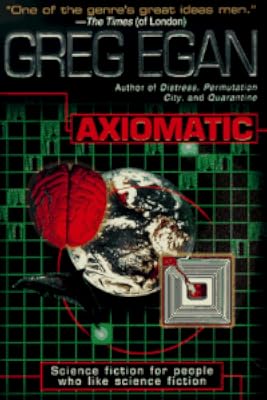
Axiomatic
by Greg Egan
On This Page
Description
THE HUNDRED LIGHT YEAR DIARY-Scientists can bounce messages from the future backto the present,but there's no guarantee they'll tell the truth... LEARNING TO BE ME-Crystalline minds may take the place of human brains,but where does the self really lie? CLOSER-Lovers exchange bodies and minds,but their experiments go just that little bit too far,proving that you can have too much of a good thingTags
Recommendations




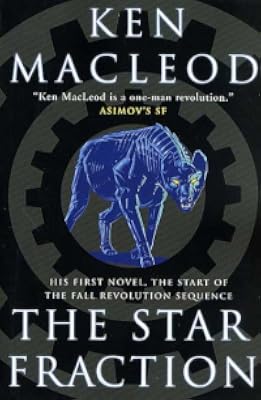
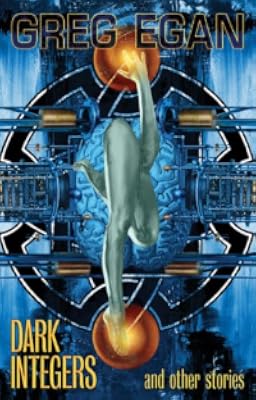

Member Recommendations
anonymous user Heavily features mind uploading.
anonymous user Heavily features mind uploading.
Member Reviews
Great stuff. My favorite author as a kid was Isaac Asimov, and his Foundation and Robot novels gave me a permanent appetite for books that try to take ridiculous ideas about the future as seriously as possible, factory-farmed MFA-approved "literary" qualities be damned. The average story in this collection of 18 is twenty pages long, but each one has an absurd number of nutcase ideas per page, and it's wonderful. There's no way I can summarize all of the stories so I only want to talk about two, both of which I found genuinely disturbing; more Philip K Dick than Asimov. The first, The Safe-Deposit Box, involves a man who has been suffering through continuous metempsychosis ever since childhood, his consciousness jumping from body to show more body so that he wakes up every day in a new body. The soap opera possibilities of getting to nail different women every day are brought up, but Egan's description of what it would be like to grow up as a child, having no frame of reference whatsoever beyond the hard-won knowledge that somewhere behind the evanescent faces you see in the mirror is you, was seriously haunting. You could probably fill a novel with all the different facets of that kind of emotional solitude, but he wrapped it up in a few pages. It's one of those instances where the plain, unadorned style of the typical science fiction author is perfectly appropriate, and though the actual sci-fi part of the story is brief and totally overshadowed by the main character's description of the ever-changing but inescapable prison of his life, I think it's one of the most interesting short stories I've read in a while. Maybe all the more so because I think it's genuinely unfilmable; I just don't think there would be any way to really convey the quiet horror of not having an individual life of your own, not even a name, on the screen. Learning to Be Me, the other story, has a take on "helplessness in the face of fate" that's similar in a way, set in a world where implantable jewels in people's skulls learn and gradually mimic consciousness almost perfectly, so that in your mid-twenties you can get all that useless brain-matter excised and enjoy the benefits of having your thoughts manifested in flawless silicon instead of fallible neurons. So far so good, not much different from the familiar idea of uploading your consciousness to a computer except that the computer becomes you. The difference is that even though from the outside it's impossible to tell if a person is still entirely flesh and blood or just a meat puppet with an immortal silicon homunculus pulling the strings, from the inside it's quite different, and when the main character has a sync error between his jewel and his actual brain, all those familiar Cartesian ideas about the soul become more than academic. Imagine what it would be like to know that you've failed a Turing test and the penalty is death, or that you were trapped in the Chinese room. The bottom line is that I have no idea how Egan writes all these minor masterpieces again and again, the dude is plainly and simply a genius. show less
Greg Egan, el hombre de las ideas. ‘Axiomático’, calificada como la mejor antología de relatos de ciencia ficción de los últimos 20 años (tal vez junto a ‘La historia de tu vida, de Ted Chiang), es una obra imprescindible para el aficionado. Cada uno de sus relatos contiene ideas que darían para varias novelas. No había leído nada parecido desde la Trilogía de Marte, de Kim Stanley Robinson, que incluía capítulos plagados de ideas. Tipos como estos te hacen pensar si no se habrán dado un viajecito por el futuro para después regresar y dejarnos vislumbrar algunas de las maravillas (u horrores) que han presenciado.
Hay que tener en cuenta que Egan publicó los dieciocho relatos de esta antología entre 1989 y 1995, show more concentrándose la mayoría de ellos en 1990 y 1991. Después de leerlos, me doy cuenta de la gran influencia que ha tenido en otros escritores de ciencia ficción.
Los temas que toca Greg Egan abarcan diversas disciplinas: matemáticas (en las cuales está graduado), informática (es programador; interesante su novela ‘Ciudad Permutación’), física (la física cuántica está muy presente en su obra; ahí está la increíble ‘Quarantine’), biología, genética, inteligencia artificial, robótica, arte, filosofía, metafísica… Sus libros tienen fama de difíciles, y es verdad, escribe ciencia ficción hard, algo que hay que dejar claro, porque este tipo de literatura no gusta a todo el mundo por la acumulación de elementos y explicaciones científicas que contienen.
Egan te hace pensar.
Imagina un futuro en el que, cuando eres niño, se te inserta una red neuronal que va copiando tu cerebro hasta la última neurona, y que cuando llegas a una edad (normalmente los 30 años) en que el cerebro se va deteriorando, se extrae éste y se sustituye por un objeto esponjoso que únicamente se dedicará a controlar las funciones biológicas básicas, pasando el mando a esta red neuronal; este objeto será tu nuevo cerebro; ha ido aprendiendo, con ayuda de un dispositivo inteligente, a ser “tú” desde hace años. ¿Pero qué pasa en esos años previos a la sustitución, en los que sabes que tienes otro “yo” en tu interior? ¿Y las dudas, serás después tú mismo, recordarás cuál era tu juguete favorito? ¿Importa? ¿Te pareces a ese niño de 5 años, o a ese chico de 16; acaso no has evolucionado desde entonces, convirtiéndote en otra persona diferente de la que eras?
Imagina que se pudiese preparar el cuerpo de una persona (hombre o mujer) para llevar en su interior un cerebro, como si de un embarazo se tratase, y ser su sorporte vital durante dos años, tiempo necesario para tener listo el que será su nuevo cuerpo (un clon) igual al del antiguo dueño del cerebro (cuerpo que ha ido creciendo en una madre de alquiler y cuyo cerebro (el del feto) ha sido dañado a propósito por motivos “humanitarios”). El nuevo cerebro podrá ocupar su lugar en el nuevo cuerpo cuando este haya sido manipulado para su pronto crecimiento, y entrenado para su adaptación. ¿Qué sentirá esa persona llevando en su interior un cerebro? ¿Miedo, repugnancia? Pero también llevamos en nuestro interior un cerebro y unos intestinos, y no sentimos ese asco. (Claro, a no ser que pensemos en ello un poco.)
Imagina que se puede comprar un software que te haga creer en lo que sea, que te haga adepto a cualquier religión, real o inventada. ¿Cuándo dejas de ser tú mismo?
Imagina que pudieras describir a un software de arte tus ideas pictóricas para realizar todo tipo de cuadros, paisajes, autorretratos.... Obtendrías cuadros perfectos. Entonces, ¿por qué no limitarse a encuadrar un espejo?
Estos son sólo algunos ejemplos de las ideas contenidas en estos relatos.
EL ASESINO INFINITO. (****) Un yonqui de S puede cambiar la relidad, enviando todo lo que le rodea a una vorágine. Entonces mandan a un mercenario tras él.
EL DIARIO DE CIEN-AÑOS-LUZ. (***) Un experimento permite conocer lo que sucederá dentro de cien años, y que exista una cierta comunicación entre ese futuro y el presente.
EUGENE. (*****) La genética es capaz de proporcionar hijos a la carta, incluso seleccionar sus gustos musicales o su nivel de inteligencia, todo a petición de los padres y de su economía, por supuesto.
LA CARICIA. (*****) En una casa es descubierto el cadáver de una doctora. En su sótano es encontrada una criatura alucinante: una pantera con cabeza de mujer.
HERMANAS DE SANGRE. (***) Relato sobre el poder y la corrupción de las empresas farmacéuticas.
AXIÓMATICO. (*****) Existen ciertos programas (nanotecnología), que se pueden insertar y permitirte hacer algo que vaya en contra de tus principios.
LA CAJA DE SEGURIDAD. (****) Un hombre tiene la facultad de mudar de cuerpo cada cierto tiempo.
VER. (***) Un suceso traumático provoca en un hombre un cambio inusual: su percepción física ha cambiado, lo ve todo como si estuviese varios metros por encima de su cuerpo.
UN SECUESTRO. (*****) A un hombre se le exige un rescate por la liberación de su esposa, pero al llegar a su casa, ella está allí como si nada.
APRENDIENDO A SER YO. (*****) Al protagonista le insertaron la joya a los seis años. Ahora teme el momento en que tendrá que sustituir las funciones de su cerebro por las de la joya.
EL FOSO. (****) Una patóloga encuentra unos rastros de ADN muy extraños.
EL PASEO. (***) ¿Para salvar tu vida, te meterías un implante que trastocaría toda tu visión del mundo?
LA RICURA. (*****) Un hombre desea ser padre, así que compra un kit, La Ricura, que le permitirá quedar embarazado de un bebé en su propia casa.
HACIA LA OSCURIDAD. (***) Cada cierto tiempo aparece en algún sitio un agujero de gusano. Está descontrolado y hay gente que queda atrapada sin saber salir. Aquí entran en juego los Corredores, que se introducen para rescatarlos.
AMOR APROPIADO. (*****) Una aseguradora se niega a pagar el tratamiento completo al marido, gravemente herido, de la protagonista. Tendrá que elegir entre su muerte segura, o aceptar la técnica de soporte vital biológico: transportar en su interior el cerebro de su marido.
EL VIRÓLOGO VIRTUOSO. (****) Un virólogo ha encontrado una nueva manera de acabar con adúlteros y homosexuales.
CERCANÍA. (***) ¿Es posible conocer a otra persona tanto como a ti mismo?
ÓRBITAS INESTABLES EN EL ESPACIO DE LAS MENTIRAS. (***) Un extraño suceso ha separado a la población en grupos, cada uno con su propia religión. Cuando pasas cerca de una de estas zonas, te conviertes en adepto automáticamente. Sólo unos pocos logran evitar su influencia viajando por los bordes. show less
Hay que tener en cuenta que Egan publicó los dieciocho relatos de esta antología entre 1989 y 1995, show more concentrándose la mayoría de ellos en 1990 y 1991. Después de leerlos, me doy cuenta de la gran influencia que ha tenido en otros escritores de ciencia ficción.
Los temas que toca Greg Egan abarcan diversas disciplinas: matemáticas (en las cuales está graduado), informática (es programador; interesante su novela ‘Ciudad Permutación’), física (la física cuántica está muy presente en su obra; ahí está la increíble ‘Quarantine’), biología, genética, inteligencia artificial, robótica, arte, filosofía, metafísica… Sus libros tienen fama de difíciles, y es verdad, escribe ciencia ficción hard, algo que hay que dejar claro, porque este tipo de literatura no gusta a todo el mundo por la acumulación de elementos y explicaciones científicas que contienen.
Egan te hace pensar.
Imagina un futuro en el que, cuando eres niño, se te inserta una red neuronal que va copiando tu cerebro hasta la última neurona, y que cuando llegas a una edad (normalmente los 30 años) en que el cerebro se va deteriorando, se extrae éste y se sustituye por un objeto esponjoso que únicamente se dedicará a controlar las funciones biológicas básicas, pasando el mando a esta red neuronal; este objeto será tu nuevo cerebro; ha ido aprendiendo, con ayuda de un dispositivo inteligente, a ser “tú” desde hace años. ¿Pero qué pasa en esos años previos a la sustitución, en los que sabes que tienes otro “yo” en tu interior? ¿Y las dudas, serás después tú mismo, recordarás cuál era tu juguete favorito? ¿Importa? ¿Te pareces a ese niño de 5 años, o a ese chico de 16; acaso no has evolucionado desde entonces, convirtiéndote en otra persona diferente de la que eras?
Imagina que se pudiese preparar el cuerpo de una persona (hombre o mujer) para llevar en su interior un cerebro, como si de un embarazo se tratase, y ser su sorporte vital durante dos años, tiempo necesario para tener listo el que será su nuevo cuerpo (un clon) igual al del antiguo dueño del cerebro (cuerpo que ha ido creciendo en una madre de alquiler y cuyo cerebro (el del feto) ha sido dañado a propósito por motivos “humanitarios”). El nuevo cerebro podrá ocupar su lugar en el nuevo cuerpo cuando este haya sido manipulado para su pronto crecimiento, y entrenado para su adaptación. ¿Qué sentirá esa persona llevando en su interior un cerebro? ¿Miedo, repugnancia? Pero también llevamos en nuestro interior un cerebro y unos intestinos, y no sentimos ese asco. (Claro, a no ser que pensemos en ello un poco.)
Imagina que se puede comprar un software que te haga creer en lo que sea, que te haga adepto a cualquier religión, real o inventada. ¿Cuándo dejas de ser tú mismo?
Imagina que pudieras describir a un software de arte tus ideas pictóricas para realizar todo tipo de cuadros, paisajes, autorretratos.... Obtendrías cuadros perfectos. Entonces, ¿por qué no limitarse a encuadrar un espejo?
Estos son sólo algunos ejemplos de las ideas contenidas en estos relatos.
EL ASESINO INFINITO. (****) Un yonqui de S puede cambiar la relidad, enviando todo lo que le rodea a una vorágine. Entonces mandan a un mercenario tras él.
EL DIARIO DE CIEN-AÑOS-LUZ. (***) Un experimento permite conocer lo que sucederá dentro de cien años, y que exista una cierta comunicación entre ese futuro y el presente.
EUGENE. (*****) La genética es capaz de proporcionar hijos a la carta, incluso seleccionar sus gustos musicales o su nivel de inteligencia, todo a petición de los padres y de su economía, por supuesto.
LA CARICIA. (*****) En una casa es descubierto el cadáver de una doctora. En su sótano es encontrada una criatura alucinante: una pantera con cabeza de mujer.
HERMANAS DE SANGRE. (***) Relato sobre el poder y la corrupción de las empresas farmacéuticas.
AXIÓMATICO. (*****) Existen ciertos programas (nanotecnología), que se pueden insertar y permitirte hacer algo que vaya en contra de tus principios.
LA CAJA DE SEGURIDAD. (****) Un hombre tiene la facultad de mudar de cuerpo cada cierto tiempo.
VER. (***) Un suceso traumático provoca en un hombre un cambio inusual: su percepción física ha cambiado, lo ve todo como si estuviese varios metros por encima de su cuerpo.
UN SECUESTRO. (*****) A un hombre se le exige un rescate por la liberación de su esposa, pero al llegar a su casa, ella está allí como si nada.
APRENDIENDO A SER YO. (*****) Al protagonista le insertaron la joya a los seis años. Ahora teme el momento en que tendrá que sustituir las funciones de su cerebro por las de la joya.
EL FOSO. (****) Una patóloga encuentra unos rastros de ADN muy extraños.
EL PASEO. (***) ¿Para salvar tu vida, te meterías un implante que trastocaría toda tu visión del mundo?
LA RICURA. (*****) Un hombre desea ser padre, así que compra un kit, La Ricura, que le permitirá quedar embarazado de un bebé en su propia casa.
HACIA LA OSCURIDAD. (***) Cada cierto tiempo aparece en algún sitio un agujero de gusano. Está descontrolado y hay gente que queda atrapada sin saber salir. Aquí entran en juego los Corredores, que se introducen para rescatarlos.
AMOR APROPIADO. (*****) Una aseguradora se niega a pagar el tratamiento completo al marido, gravemente herido, de la protagonista. Tendrá que elegir entre su muerte segura, o aceptar la técnica de soporte vital biológico: transportar en su interior el cerebro de su marido.
EL VIRÓLOGO VIRTUOSO. (****) Un virólogo ha encontrado una nueva manera de acabar con adúlteros y homosexuales.
CERCANÍA. (***) ¿Es posible conocer a otra persona tanto como a ti mismo?
ÓRBITAS INESTABLES EN EL ESPACIO DE LAS MENTIRAS. (***) Un extraño suceso ha separado a la población en grupos, cada uno con su propia religión. Cuando pasas cerca de una de estas zonas, te conviertes en adepto automáticamente. Sólo unos pocos logran evitar su influencia viajando por los bordes. show less
My reaction to reading this collection in 1998. Spoilers follow.
“The Infinite Assassin” -- The cover blurb on this collection stridently says it’s “Science fiction for people who like science fiction”, and I can’t imagine Egan as an entry for many people who don’t already read the genre. Egan is sometimes accused of producing stories with lots of neat ideas but bland, forgettable characters – the same criticism leveled at science fiction as a whole before the New Wave. I’m firmly in the camp that, if necessary – particularly at shorter lengths, characters should serve the idea and become symbolic Everymen. Here I don’t think Egan quite pulls off the rationalization of the danger driving the story’s plot – the show more dangers of “whirlpools” causing actual physical exchanges between the alternate quantum realities perceived by the users of the drug S. The narrator is a cipher, predictably given that he’s an unusually stable personality across universes and all his failures and successes, as the end of the story states, are realized. I liked the idea of an assassin personality existing across several, possibly infinite set of, worlds and always assigned to kill dangerous dreamers.
“The Hundred Light-Year Diary” -- This story plays off the common regret of most people expressed in the saying “If I only knew then what I know now … “ Well, in this story, that notion is partly realized. It is discovered that information can be sent back in time. Most people keep a diary, limited to 100 words a day, which is broadcast backwards in time upon your death. You can literally know all the major events of your life in advance – assuming you’re honest. (The machines that make this possible are, given their effect, ironically called Hazzard Machines.). And that’s one of the main realizations that the narrator comes to, that he and others and the governments and corporations that use most of the capacity of the Hazzard Machines frequently lie in their records for a variety of reasons. I’ve only read one other Egan story and his novel Distress, but Egan seems preoccupied with truly large philosophical issues and two in particular: Can you ever have too much knowledge and the question of personal identity. This story shows the interplay between the two notions. In a world of seeming predestination, how do you live with that? (Egan may not be skilled at creating particular, memorable characters, but he is skilled in depicting the psychological and social reactions to his premises, and that’s all that’s required, a symbolic depiction of Everyman’s response to his bizarre premises.) Some, like the narrator’s adulterous lover (the narrator speculates that his wife knew before they ever met that she’d marry a creep) don’t keep a diary. Some, like the narrator, lie to their diary or write it in innuendo only obvious after crucial events have happened. Two large social reactions are in the cults of ignorance (“ignorance cults” show up as a plausible concept in Distress too): one believes humans have ceased being human, are meat puppets since they can’t choose between right or wrong; the other embraces the idea as meaning the end of responsibility, guilt, striving, failure, anxiety. For his part, the narrator thinks the Hazzard Machines provide him greater freedom, that he and his actions are shaped by the past and the future. (Politics has become an odd pantomime with a pre-ordained outcome.) The narrator thinks our nature decides what we do “and what greater ‘freedom’ could anyone demand?”. At least he feels this way until he discovers the lies of his own diary and the official utopian lies of future history, society’s diaries. The future utopian lies cover current genocides, and, in an ambiguous ending, the narrator still thinks who he is determines the future, but that identity is shaped by social manipulation and the times and personality manipulates the time. Thus, after coasting in a world of seeming pre-destination, the narrator realizes what most mature people do: we have to try to influence the world, which also acts on us, in a moral way though our influence may be small or non-existent. That holds true whether we know the future or not. This echoes the narrator’s realization after recognizing the truth of biological and cosmological facts in Distress. Thus, at story’s end, the narrator begins to pay attention to his now and not the future in an attempt to learn the truth of the world.
“Eugene” -- Egan as always shown bursts, of wit but this story has more with than usual and is a satire on genetically engineering your child to be a competitive genius. Geneticist and fertility expert Sam Cook sells a lottery winning couple on trying out (and paying for) the most advanced suite of possible techniques for creating a genius. A witty denouement of the story takes this notion to a surprising, but logical notion. Cook has formalized his knowledge of genetic effects so completely that some computers run a simulation of the engineered child’s future personality. That simulated personality takes the couples’ money and disburses it to various charitable organizations achieving the ends of doing great things for the human race that was Cook’s selling point for designing the child in the first place. The couple decides – and can’t after having so much of their fortune taken by their simulated brat (I didn’t approve of that plot twist) – not to go through with the child. As the simulated personality says, why exist when he can achieve so much without existing.
“The Caress” -- A strange tale of an eccentric, perhaps insane, and very rich artist who thinks artists actually view another universe which we can import into our world by recreating the artwork’s scene. He cheats death through the strange mechanism of implanting slices of his brain into a clone. He manipulates both genes and emotions to recreate a strange painting called The Caress by Fernand Khnoff (a real painting). To recreate the scene of the sphinx meeting Oedipus, he creates a genetic chimera, manipulates a police detective (the details of his drug mediated life and how he handles tips on his cases were interesting) into caring for her, and surgically alters him to look like the paintings’ Oedipus, all to create a living copy of the painting for a few minutes.
“Blood Sisters” -- Tale of identical twins, the victims (one in an emotional sense, the other in a physical, dead sense) of an unethical medical experiment. Both come down with one of the suite of Monte Carlo viruses (biowarfare viruses created via applied evolutionary techniques and then accidentally released) that preys on their genotype. Both are given medicine, but one is not told she has been given a worthless placebo while the other gets a cure. Egan seems understandably upset at the ethics of denying probable lifesaving experiment to people in the name of doubleblind tests. This is a real issue medicine has started to deal with. The story involves her reactions to their illness and her sister’s death. Again, Egan is capable of psychological realism even if he doesn’t create a specific and memorable character.
“Axiomatic” -- Interesting tale of brain implants and a man who gets one to steel his desire for revenge and murder. (Hardly a new notion. George Alec Effinger’s Budayeen series worked this vein.) He opposes capital punishment. The story ends on the disturbing note of the narrator picking up an idea from his wife’s murderer (the object of his vengeance): that he should regard her death as being insignificant as the “death of a fly or an amoeba.” It will make his life easier to get an implant that instills this notion, but it seems cruel, ungrateful, and inhuman.
“The Safe-Deposit Box” -- This story of a person daily shifting identities with the males (within a certain age range) of a city at first seemed like a fantasy (and a bit like tv’s Quantum Leap though I doubt this was Egan’s inspiration), but Egan eventually offers a quasi-rationalization to make the story sf. The narrator’s peculiar dilemma is well worked out and stems from an insane neurosurgeon father who stimulated his son’s developing brain while systematically destroying sections of it. I liked the various wives, siblings, and parents he had being sort of comfortable manifestations of an archetype to him. He always shifted identity from body to body so knows nothing else, no “real” family. That son, now institutionalized, may be the narrator whose consciousness flits from brain to brain in a sort of timeshare scheme.
“Seeing” -- This story takes an idea of cognitive science, that we construct a “primary model” to organize our sensory input, an plays with a variation of it. A movie (actually he uses “software avatars” as standin for certain directors and actors and makes movies that died in development or sequels to classics) producer suffers brain damage in the “associative cortex” which causes him to model the world as if he were floating above his body. His new perspective (literally) on life lends to a new, more generous moral stance – though it seems less based on generosity than the aesthetics of the narrator watching himself be generous.
“A Kidnapping” -- Sf stories about personality constructs are not new. Nor is the idea that they can provide some sort of immortality via simply encoding the information of a personality into another matrix. Egan uses the idea here, though, in a new and witty way and to explore questions of intimacy and philosophy in ways that reminded me a bit of George R. R. Martin’s “A Song for Lya”. The owner of a gallery selling computer animation and wallpaper (Egan throws in some plausible details on the economics and security necessary to profit from the sale of such easily copied intellectual property) gets a call – a “prank” as it turns out (actually the intent and legality of the act make it extortion) – stating his wife has been kidnapped and to immediately pay the ransom. The call is soon revealed to be a hoax. The narrator/gallery owner notices the telling details, and his wife says her alleged image is nothing like her. To the narrator, though, her looks and, more importantly, her personality on the fake call and utterly convincing. And they continue to be convincing through several more calls. The narrator finds out the simulation’s accuracy derives from his “scanned” memories. Scanning is a process where, after a person dies, his personality’s copy lives on in a virtual world (which proceeds at a different time rate). Thus the simulation of his wife seems utterly convincing (and he eventually pays the ransom) to him because it’s identical to the construct in his mind. His wife, whose internal self-construct is different, doesn’t find it a good copy. The narrator and his wife, who refuses to be scanned – she takes the view that a second copy is just a copy, discuss the philosophical implications of scanned copies and the kidnapping. The narrator takes the view that all we possess of our loved ones, be it memories or scanned reconstructions, are imitations.
“Learning to Be Me” -- This story takes place in a society transformed by the Ndoli Device, a very durable device that records memories and personalities and, eventually, is substituted for a person’s brain. The central philosophical question here is one of those from Egan’s “A Kidnapping”: is a perfect copy of an individual’s mind identical (from the inside of “living” in the mind) to the original? (Many sf stories treat this whole issue cavalierly such as Clifford D. Simak’s The Goblin Reservation and, to a lesser extent, Algis Budrys' Rogue Moon.) Egan offers no final answer (it would be very hard to). The main pleasure of the story is the subcultures of those who don’t go through the culturally normal procedure of getting their brain scraped out of their skull and replaced with the Ndoli Device. The unjeweled form social clubs. Some form paramilitary groups fighting, as they see it, body snatchers. Most talk of nothing else but their “fear of switching”.
“The Moat” -- This story uses a thoroughly frightening and creepy idea also featured in Egan’s Distress: replacing the four base nucleotides in DNA with four other nucleotides. This would render the resulting organism completely invulnerable to infection diseases. In Distress this was undertaken by rich survivalists who planned on surviving the post-holocaust world by eating grass and old tires. Here the notion may be put to use by a cabal of wealthy elite only able to breed with each other to sustain the genetic difference.
“The Walk” -- Like many Egan storie,s this one has a philosophical dialogue on matters of existence and the afterlife. Here, though, the dialogue takes between a hitman and his intended victim. The hitman has the peculiar notion that he will live on (and he strenuously denies the validity of reincarnation) if his victim accepts, with the aid of a nano brain implant, his philosophy of life grafted on his brain. The narrator victim accepts, and the hitman kills himself.
“The Cutie” -- This story features a very sick idea and technology I can definitely see people utilizing. The single male narrator, desiring a child, buys a Cutie kit (Shades of William Tenn’s “Child Play”). Cuties are derivatives of human stock but genetically engineered to not develop higher brain functions and to die at age four. They are, in effect, pets for those who want a human infant but not “surly six-year-olds, or rebellious teenagers”. Legally, they are not human. The narrator becomes pregnant (an added feature of the kit) with a Cutie derived from his DNA thus also experiencing the “joys” of motherhood. Unfortunately, the narrator buys a cheap, pirated version of the Cutie kit and his Cutie doesn’t die as scheduled.
“Into Darkness” -- This is one of Egan’s less successful stories. Essentially it is a metaphor of life realized with a confusingly detailed spacetime anomaly that randomly (more or less) sweeps down to trap people in a zone where they can only move forward with darkness to escape. The narrator rescues people from these events and explicitly sees the inability to retreat and the darkness of the future as symbolizing our journey through life. Egan’s fiction usually seems to deal with more plausible ideas and their implications and not just through out wonders to use as metaphors.
“Appropriate Love” -- Here Egan again bases a story around a bizarre medical notion: a woman, for financial and insurance purposes, carries the brain of her injured husband in her body for two years until a body can be grown for him. This strains her relationship when he is finally rebuilt. She feels resentful at the convenience and (this is not handled very clearly) has tanged emotions about the brain being a sort of child rather than her husband.
“Closer” -- This story is a sequel of sorts to Egan’s “Learning to Be Me”. Both stories feature the Ndoli Device which records personality and memory, but this story seems to be set further in the future of that particular universe. Here the male narrator constantly asks greater intimacy with his female lover. At first, they use the Ndoli Device recordings of their personalities to inhabit various body permutations (male-female, female-male, female-female, male-male) to gain different perspectives on the sexual part of their relationship. They also undergo an experimental procedure which brings their minds into synch. Eventually the couple splits. The narrator discovers that too much intimacy is possible. While he wanted to now his lover better, she was attracted to him for his alieness and mystery.
“Unstable Orbits in the Space of Lies” -- This is a more fanciful story than usual for Egan. Using the language of chaos theory, he postulates a social collapse when people in different geographical attraction basins adopt various religious and political ideologies. His narrator and friends have not settled in any basin and carefully navigate the terrain in order not to be sucked into any basins. However, it is speculated these wanderers may simply have a complex orbit about another attractor or they may be able to escape the are all together. show less
“The Infinite Assassin” -- The cover blurb on this collection stridently says it’s “Science fiction for people who like science fiction”, and I can’t imagine Egan as an entry for many people who don’t already read the genre. Egan is sometimes accused of producing stories with lots of neat ideas but bland, forgettable characters – the same criticism leveled at science fiction as a whole before the New Wave. I’m firmly in the camp that, if necessary – particularly at shorter lengths, characters should serve the idea and become symbolic Everymen. Here I don’t think Egan quite pulls off the rationalization of the danger driving the story’s plot – the show more dangers of “whirlpools” causing actual physical exchanges between the alternate quantum realities perceived by the users of the drug S. The narrator is a cipher, predictably given that he’s an unusually stable personality across universes and all his failures and successes, as the end of the story states, are realized. I liked the idea of an assassin personality existing across several, possibly infinite set of, worlds and always assigned to kill dangerous dreamers.
“The Hundred Light-Year Diary” -- This story plays off the common regret of most people expressed in the saying “If I only knew then what I know now … “ Well, in this story, that notion is partly realized. It is discovered that information can be sent back in time. Most people keep a diary, limited to 100 words a day, which is broadcast backwards in time upon your death. You can literally know all the major events of your life in advance – assuming you’re honest. (The machines that make this possible are, given their effect, ironically called Hazzard Machines.). And that’s one of the main realizations that the narrator comes to, that he and others and the governments and corporations that use most of the capacity of the Hazzard Machines frequently lie in their records for a variety of reasons. I’ve only read one other Egan story and his novel Distress, but Egan seems preoccupied with truly large philosophical issues and two in particular: Can you ever have too much knowledge and the question of personal identity. This story shows the interplay between the two notions. In a world of seeming predestination, how do you live with that? (Egan may not be skilled at creating particular, memorable characters, but he is skilled in depicting the psychological and social reactions to his premises, and that’s all that’s required, a symbolic depiction of Everyman’s response to his bizarre premises.) Some, like the narrator’s adulterous lover (the narrator speculates that his wife knew before they ever met that she’d marry a creep) don’t keep a diary. Some, like the narrator, lie to their diary or write it in innuendo only obvious after crucial events have happened. Two large social reactions are in the cults of ignorance (“ignorance cults” show up as a plausible concept in Distress too): one believes humans have ceased being human, are meat puppets since they can’t choose between right or wrong; the other embraces the idea as meaning the end of responsibility, guilt, striving, failure, anxiety. For his part, the narrator thinks the Hazzard Machines provide him greater freedom, that he and his actions are shaped by the past and the future. (Politics has become an odd pantomime with a pre-ordained outcome.) The narrator thinks our nature decides what we do “and what greater ‘freedom’ could anyone demand?”. At least he feels this way until he discovers the lies of his own diary and the official utopian lies of future history, society’s diaries. The future utopian lies cover current genocides, and, in an ambiguous ending, the narrator still thinks who he is determines the future, but that identity is shaped by social manipulation and the times and personality manipulates the time. Thus, after coasting in a world of seeming pre-destination, the narrator realizes what most mature people do: we have to try to influence the world, which also acts on us, in a moral way though our influence may be small or non-existent. That holds true whether we know the future or not. This echoes the narrator’s realization after recognizing the truth of biological and cosmological facts in Distress. Thus, at story’s end, the narrator begins to pay attention to his now and not the future in an attempt to learn the truth of the world.
“Eugene” -- Egan as always shown bursts, of wit but this story has more with than usual and is a satire on genetically engineering your child to be a competitive genius. Geneticist and fertility expert Sam Cook sells a lottery winning couple on trying out (and paying for) the most advanced suite of possible techniques for creating a genius. A witty denouement of the story takes this notion to a surprising, but logical notion. Cook has formalized his knowledge of genetic effects so completely that some computers run a simulation of the engineered child’s future personality. That simulated personality takes the couples’ money and disburses it to various charitable organizations achieving the ends of doing great things for the human race that was Cook’s selling point for designing the child in the first place. The couple decides – and can’t after having so much of their fortune taken by their simulated brat (I didn’t approve of that plot twist) – not to go through with the child. As the simulated personality says, why exist when he can achieve so much without existing.
“The Caress” -- A strange tale of an eccentric, perhaps insane, and very rich artist who thinks artists actually view another universe which we can import into our world by recreating the artwork’s scene. He cheats death through the strange mechanism of implanting slices of his brain into a clone. He manipulates both genes and emotions to recreate a strange painting called The Caress by Fernand Khnoff (a real painting). To recreate the scene of the sphinx meeting Oedipus, he creates a genetic chimera, manipulates a police detective (the details of his drug mediated life and how he handles tips on his cases were interesting) into caring for her, and surgically alters him to look like the paintings’ Oedipus, all to create a living copy of the painting for a few minutes.
“Blood Sisters” -- Tale of identical twins, the victims (one in an emotional sense, the other in a physical, dead sense) of an unethical medical experiment. Both come down with one of the suite of Monte Carlo viruses (biowarfare viruses created via applied evolutionary techniques and then accidentally released) that preys on their genotype. Both are given medicine, but one is not told she has been given a worthless placebo while the other gets a cure. Egan seems understandably upset at the ethics of denying probable lifesaving experiment to people in the name of doubleblind tests. This is a real issue medicine has started to deal with. The story involves her reactions to their illness and her sister’s death. Again, Egan is capable of psychological realism even if he doesn’t create a specific and memorable character.
“Axiomatic” -- Interesting tale of brain implants and a man who gets one to steel his desire for revenge and murder. (Hardly a new notion. George Alec Effinger’s Budayeen series worked this vein.) He opposes capital punishment. The story ends on the disturbing note of the narrator picking up an idea from his wife’s murderer (the object of his vengeance): that he should regard her death as being insignificant as the “death of a fly or an amoeba.” It will make his life easier to get an implant that instills this notion, but it seems cruel, ungrateful, and inhuman.
“The Safe-Deposit Box” -- This story of a person daily shifting identities with the males (within a certain age range) of a city at first seemed like a fantasy (and a bit like tv’s Quantum Leap though I doubt this was Egan’s inspiration), but Egan eventually offers a quasi-rationalization to make the story sf. The narrator’s peculiar dilemma is well worked out and stems from an insane neurosurgeon father who stimulated his son’s developing brain while systematically destroying sections of it. I liked the various wives, siblings, and parents he had being sort of comfortable manifestations of an archetype to him. He always shifted identity from body to body so knows nothing else, no “real” family. That son, now institutionalized, may be the narrator whose consciousness flits from brain to brain in a sort of timeshare scheme.
“Seeing” -- This story takes an idea of cognitive science, that we construct a “primary model” to organize our sensory input, an plays with a variation of it. A movie (actually he uses “software avatars” as standin for certain directors and actors and makes movies that died in development or sequels to classics) producer suffers brain damage in the “associative cortex” which causes him to model the world as if he were floating above his body. His new perspective (literally) on life lends to a new, more generous moral stance – though it seems less based on generosity than the aesthetics of the narrator watching himself be generous.
“A Kidnapping” -- Sf stories about personality constructs are not new. Nor is the idea that they can provide some sort of immortality via simply encoding the information of a personality into another matrix. Egan uses the idea here, though, in a new and witty way and to explore questions of intimacy and philosophy in ways that reminded me a bit of George R. R. Martin’s “A Song for Lya”. The owner of a gallery selling computer animation and wallpaper (Egan throws in some plausible details on the economics and security necessary to profit from the sale of such easily copied intellectual property) gets a call – a “prank” as it turns out (actually the intent and legality of the act make it extortion) – stating his wife has been kidnapped and to immediately pay the ransom. The call is soon revealed to be a hoax. The narrator/gallery owner notices the telling details, and his wife says her alleged image is nothing like her. To the narrator, though, her looks and, more importantly, her personality on the fake call and utterly convincing. And they continue to be convincing through several more calls. The narrator finds out the simulation’s accuracy derives from his “scanned” memories. Scanning is a process where, after a person dies, his personality’s copy lives on in a virtual world (which proceeds at a different time rate). Thus the simulation of his wife seems utterly convincing (and he eventually pays the ransom) to him because it’s identical to the construct in his mind. His wife, whose internal self-construct is different, doesn’t find it a good copy. The narrator and his wife, who refuses to be scanned – she takes the view that a second copy is just a copy, discuss the philosophical implications of scanned copies and the kidnapping. The narrator takes the view that all we possess of our loved ones, be it memories or scanned reconstructions, are imitations.
“Learning to Be Me” -- This story takes place in a society transformed by the Ndoli Device, a very durable device that records memories and personalities and, eventually, is substituted for a person’s brain. The central philosophical question here is one of those from Egan’s “A Kidnapping”: is a perfect copy of an individual’s mind identical (from the inside of “living” in the mind) to the original? (Many sf stories treat this whole issue cavalierly such as Clifford D. Simak’s The Goblin Reservation and, to a lesser extent, Algis Budrys' Rogue Moon.) Egan offers no final answer (it would be very hard to). The main pleasure of the story is the subcultures of those who don’t go through the culturally normal procedure of getting their brain scraped out of their skull and replaced with the Ndoli Device. The unjeweled form social clubs. Some form paramilitary groups fighting, as they see it, body snatchers. Most talk of nothing else but their “fear of switching”.
“The Moat” -- This story uses a thoroughly frightening and creepy idea also featured in Egan’s Distress: replacing the four base nucleotides in DNA with four other nucleotides. This would render the resulting organism completely invulnerable to infection diseases. In Distress this was undertaken by rich survivalists who planned on surviving the post-holocaust world by eating grass and old tires. Here the notion may be put to use by a cabal of wealthy elite only able to breed with each other to sustain the genetic difference.
“The Walk” -- Like many Egan storie,s this one has a philosophical dialogue on matters of existence and the afterlife. Here, though, the dialogue takes between a hitman and his intended victim. The hitman has the peculiar notion that he will live on (and he strenuously denies the validity of reincarnation) if his victim accepts, with the aid of a nano brain implant, his philosophy of life grafted on his brain. The narrator victim accepts, and the hitman kills himself.
“The Cutie” -- This story features a very sick idea and technology I can definitely see people utilizing. The single male narrator, desiring a child, buys a Cutie kit (Shades of William Tenn’s “Child Play”). Cuties are derivatives of human stock but genetically engineered to not develop higher brain functions and to die at age four. They are, in effect, pets for those who want a human infant but not “surly six-year-olds, or rebellious teenagers”. Legally, they are not human. The narrator becomes pregnant (an added feature of the kit) with a Cutie derived from his DNA thus also experiencing the “joys” of motherhood. Unfortunately, the narrator buys a cheap, pirated version of the Cutie kit and his Cutie doesn’t die as scheduled.
“Into Darkness” -- This is one of Egan’s less successful stories. Essentially it is a metaphor of life realized with a confusingly detailed spacetime anomaly that randomly (more or less) sweeps down to trap people in a zone where they can only move forward with darkness to escape. The narrator rescues people from these events and explicitly sees the inability to retreat and the darkness of the future as symbolizing our journey through life. Egan’s fiction usually seems to deal with more plausible ideas and their implications and not just through out wonders to use as metaphors.
“Appropriate Love” -- Here Egan again bases a story around a bizarre medical notion: a woman, for financial and insurance purposes, carries the brain of her injured husband in her body for two years until a body can be grown for him. This strains her relationship when he is finally rebuilt. She feels resentful at the convenience and (this is not handled very clearly) has tanged emotions about the brain being a sort of child rather than her husband.
“Closer” -- This story is a sequel of sorts to Egan’s “Learning to Be Me”. Both stories feature the Ndoli Device which records personality and memory, but this story seems to be set further in the future of that particular universe. Here the male narrator constantly asks greater intimacy with his female lover. At first, they use the Ndoli Device recordings of their personalities to inhabit various body permutations (male-female, female-male, female-female, male-male) to gain different perspectives on the sexual part of their relationship. They also undergo an experimental procedure which brings their minds into synch. Eventually the couple splits. The narrator discovers that too much intimacy is possible. While he wanted to now his lover better, she was attracted to him for his alieness and mystery.
“Unstable Orbits in the Space of Lies” -- This is a more fanciful story than usual for Egan. Using the language of chaos theory, he postulates a social collapse when people in different geographical attraction basins adopt various religious and political ideologies. His narrator and friends have not settled in any basin and carefully navigate the terrain in order not to be sucked into any basins. However, it is speculated these wanderers may simply have a complex orbit about another attractor or they may be able to escape the are all together. show less
I'd rate this 2.5 stars if I could, but I can't. I read this after /loving/ Egan's book Permutation City, but found this collection of short stories wanting. It feels a lot like the feeder ideas that went into Permutation City, but explored less well here than there. Most of the stories washed over me without leaving a trace; but The Darkness and the time travel one were absolute masterpieces and have both stuck with me (except, evidently, the title.)
The overarching theme of the stories (like Permutation City) is "what does it mean to be me?" Axiomatic explores this question under the lens of twins, parallel universes, time travel, P-zombies, designer embryonics, brain transplants, body transplants, and the merging of two minds. A few show more of them are interesting, but it gets repetitive, and there are many more misses than hits here.
If you're looking for some dark ass, heavy, depressing short stories with a hard SF twist, this might be the book for you. There are a few gems to be found here, but I'd strongly suggest reading other books in between these stories. show less
The overarching theme of the stories (like Permutation City) is "what does it mean to be me?" Axiomatic explores this question under the lens of twins, parallel universes, time travel, P-zombies, designer embryonics, brain transplants, body transplants, and the merging of two minds. A few show more of them are interesting, but it gets repetitive, and there are many more misses than hits here.
If you're looking for some dark ass, heavy, depressing short stories with a hard SF twist, this might be the book for you. There are a few gems to be found here, but I'd strongly suggest reading other books in between these stories. show less
The hardest of hard sf. I have a couple years of college physics, and Egan's stories were a challenge for me to follow.
'bluetyson' here on LT characterizes this sort of thing as "mind melting". That's exactly what I got from it, too: this is so good that I found that I needed to take a rest between stories.
(So good that it forever destroyed any illusions I ever harbored of writing the stuff: the state of the art is now Too High for me.) Hell, this is so good that it put me off reading the stuff for a while: nothing else measured up.
'bluetyson' here on LT characterizes this sort of thing as "mind melting". That's exactly what I got from it, too: this is so good that I found that I needed to take a rest between stories.
(So good that it forever destroyed any illusions I ever harbored of writing the stuff: the state of the art is now Too High for me.) Hell, this is so good that it put me off reading the stuff for a while: nothing else measured up.
Hard to rate collections of stories. There was really cool stuff in there, and I like how he works off similar themes (such as the jewel) repeatedly, but some stories felt too close thematically or in the way they were structured. Really enjoyed it though!
This is a collection of short sci-fi stories that I really love. They have surprisingly 'hard' maths / physics / biology (Cantor sets, cell biology, strange attractors, etc) and address big questions about what it means to be human interestingly.
Members
- Recently Added By
Lists

Favorite Short Fiction
228 works; 99 members

Want to Read — open list
55 works; 2 members

Philosophical Fiction
97 works; 27 members

XB-1: Osobnosti zanru doporucuji
67 works; 1 member

Favorite Science Fiction
458 works; 224 members
Author Information

129+ Works 13,956 Members
Some Editions
Awards and Honors
Awards
Work Relationships
Contains
Common Knowledge
- Canonical title
- Axiomatic
- Original title
- Axiomatic
- Original publication date
- 1995 (Collection) (Collection); 1991 (Appropriate Love) (Appropriate Love); 1990 (Axiomatic) (Axiomatic); 1991 (Blood Sisters) (Blood Sisters); 1990 (the Caress) (the Caress); 1992 (Closer) (Closer) (show all 19); 1989 (The Cutie) (The Cutie); 1990 (Eugene) (Eugene); 1992 (The Hundred Light Year Diary) (The Hundred Light Year Diary); 1991 (The Infinite Assassin) (The Infinite Assassin); 1992 (Into Darkness) (Into Darkness); 1995 (A Kidnapping) (A Kidnapping); 1990 (Learning to be Me) (Learning to be Me); 1991 (The Moat) (The Moat); 1990 (The Moral Virologist) (The Moral Virologist); 1990 (The Safe-Deposit Box) (The Safe-Deposit Box); 1995 (Seeing) (Seeing); 1992 (Ustable Orbits in the Space of Lies) (Ustable Orbits in the Space of Lies); 1992 (The Walk) (The Walk)
- First words
- One thing never changes: when some mutant junkie on S starts shuffling reality, it's always me they send into the whirlpool to put things right.
- Last words*
- (Click to show. Warning: May contain spoilers.)Puis je prends mon paquetage et commence à descendre l'autoroute, croyant un instant que je sens le vide à l'extérieur de la ville m'atteindre par-delà tous les obstacles et venir me chercher.
*Some information comes from Common Knowledge in other languages. Click "Edit" for more information.
Classifications
Statistics
- Members
- 1,144
- Popularity
- 22,119
- Reviews
- 28
- Rating
- (4.11)
- Languages
- 5 — Chinese, Czech, English, French, Spanish
- Media
- Paper, Audiobook, Ebook
- ISBNs
- 19
- ASINs
- 6