
Babel-17
by Samuel R. Delany
On This Page
Description
Babel-17, winner of the Nebula Award for best novel of the year, is a fascinating tale of a famous poet bent on deciphering a secret language that is the key to the enemy's deadly force, a task that requires she travel with a splendidly improbable crew to the site of the next attack.Tags
Recommendations





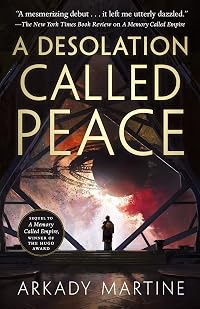

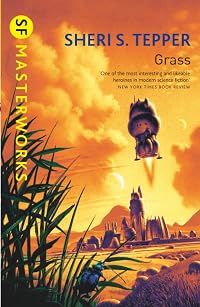
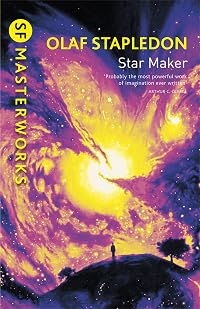
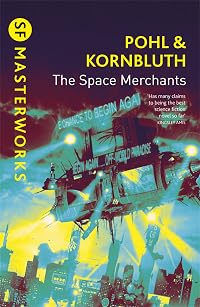






Member Recommendations

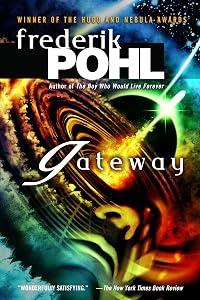
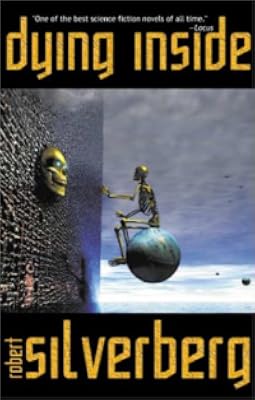
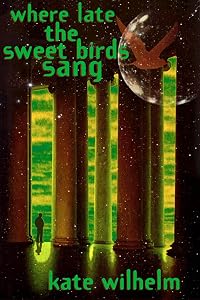
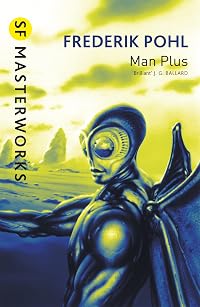
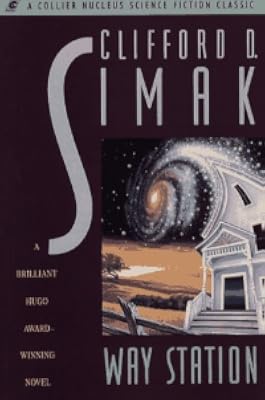
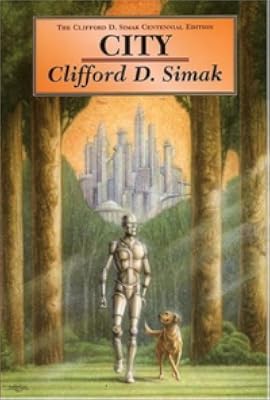
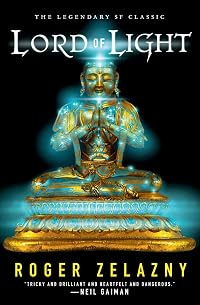
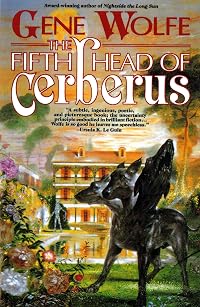
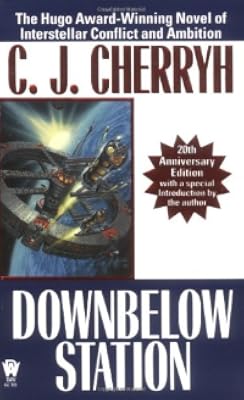
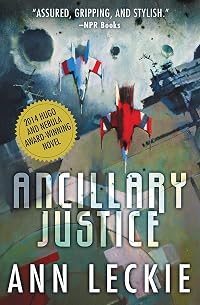
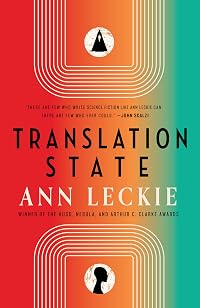
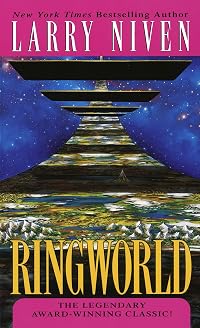
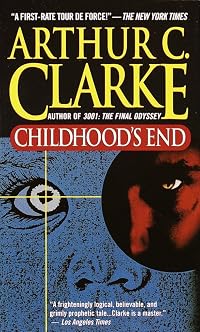
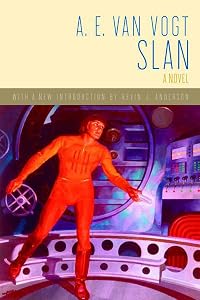
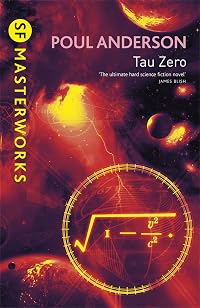
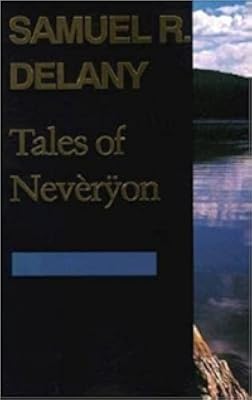
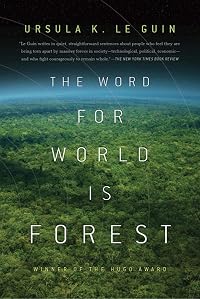
kevinashley Both these books take the relationship between language and thought as central themes. They explore it in different ways but with a similar thoroughness; both really explore just how 'other' alien can be.
40
LamontCranston Space Opera, updated. Strange mystery, assemble a crew of lively characters, go explore it. Sound familiar?
11
LamontCranston The same ephemeral beat prose.
And of course Space Opera, updated. Strange mystery, assemble a crew of lively characters, go explore it.
LamontCranston Space Opera, updated.
Strange mystery, assemble a crew of lively characters, go explore it. Sound familiar?
12
Member Reviews
A science fiction classic from 1966, and one that is, sadly, still somewhat ahead of the times. Not in terms of the technology (there are still phone booths!), nor the linguistic theory (Sapir-Whorf linguistic determinism having since fallen by the wayside), but in terms of its social and sexual diversity. Delany paints a world lush with strange and interesting details that aren’t directly required for the story—body modification, polyamory, ethnic diversity, many of which are still considered outlandish by some people today. Rydra Wong, poet and linguist extraordinaire, is the character who pulls all the disparate elements together, even as she builds bridges among people of different classes, ideologies, and show more languages.
Communication is a key theme. An intergalactic war is going on between the Alliance and the Invaders. Key Alliance military targets are being sabotaged, and when they are, a strange transmissions are detected that the military believes to be a code but that Rydra recognizes as a language. How Rydra goes about translating that language is the core of the plot, but there are many fascinating side trips. Rydra’s recruiting her spaceship crew to take her to the scene of what she’s determined will be the next target of sabotage takes up a good part of the early chapters, and this is where Delany flaunts the sociocultural details that color his universe: from the stiff, bureacratic Customs officer who is introduced to the wrong side of town, to the bars and wrestling rings where potential pilots with exotic body modifications fight, to the Morgue where a dead navigator is brought back to be the third member of the required polyamorous triple of navigators; these chapters were my favorite part of the book.
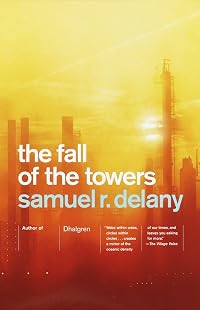
I haven’t read enough Delany, and I’m inspired to take on Dhalgren at long last. show less
Communication is a key theme. An intergalactic war is going on between the Alliance and the Invaders. Key Alliance military targets are being sabotaged, and when they are, a strange transmissions are detected that the military believes to be a code but that Rydra recognizes as a language. How Rydra goes about translating that language is the core of the plot, but there are many fascinating side trips. Rydra’s recruiting her spaceship crew to take her to the scene of what she’s determined will be the next target of sabotage takes up a good part of the early chapters, and this is where Delany flaunts the sociocultural details that color his universe: from the stiff, bureacratic Customs officer who is introduced to the wrong side of town, to the bars and wrestling rings where potential pilots with exotic body modifications fight, to the Morgue where a dead navigator is brought back to be the third member of the required polyamorous triple of navigators; these chapters were my favorite part of the book.
I haven’t read enough Delany, and I’m inspired to take on Dhalgren at long last. show less
This is science fiction where the most relevant science is linguistics! I’m not a linguist, but I’ve always found the field really interesting, so I loved that. The Earth is under attack by aliens of a kind we’ve never encountered before, and we’ve hacked their transmissions coordinating the attacks, but the only way to make use of this information is to find someone who can translate their langauge.
And that’s where Rydra Wong, world famous poet and linguist and code-breaker, comes in. Our protagonist is the only person with a hope in hell of teaching herself to comprehend the incredibly complex alien langauge, and therby saving humanity. She’s explicitly, canonically a bisexual, polyamorous, autistic woman of colour, and show more she’s a starship captain adored by her crew, and she has telepathic powers, and she’s brave and kind and beautiful and full of human fears and doubts. Which is all really cool - what a great power fantasy! - but even more so when you remember that she was written by a male author in 1966. I know people didn’t just abruptly start wanting to read and write about awesome diverse characters with the advent of tumblr, but it’s still so surprising and delightful to actually see it in a book from almost fifty years ago. show less
And that’s where Rydra Wong, world famous poet and linguist and code-breaker, comes in. Our protagonist is the only person with a hope in hell of teaching herself to comprehend the incredibly complex alien langauge, and therby saving humanity. She’s explicitly, canonically a bisexual, polyamorous, autistic woman of colour, and show more she’s a starship captain adored by her crew, and she has telepathic powers, and she’s brave and kind and beautiful and full of human fears and doubts. Which is all really cool - what a great power fantasy! - but even more so when you remember that she was written by a male author in 1966. I know people didn’t just abruptly start wanting to read and write about awesome diverse characters with the advent of tumblr, but it’s still so surprising and delightful to actually see it in a book from almost fifty years ago. show less
Babel-17 is basically strong Sapir-Whorf, the novel. A series of attacks on Alliance military bases are preceded by strangely coded messages, and when polymath poet, linguist, and space captain Rydra Wong discovers that the Babel-17 messages are a language not a code, and one of incredible precision and expressive power, it's up to her to find the source and start a dialog.
Delany is a master of eyeball kicks of language, of strong self-indentity and beautiful decadence. Wong puts together a fascinating space crew of misfits, including a massive clawed pilot-wrestler, a live trinary navigation group and dead trinary sensor group, and a platoon of kids to turn the knobs. She visits a noble who dreams of death in a million exotic show more configurations, and falls in with space pirates. The setting is a fantastic fait accomplai, artistic weirdness that holds together in a glittering pattern. This is a very strange world of people who consider their lives entirely mundane, and it's a fantastic tension.
The meat of the novel hangs on the ideas of what can and cannot be translated, and a space pirate named The Butcher who speaks a native language without the words 'You' or 'I'. Wong realizes that The Butcher is the key to the whole mess. Babel-17 is a constructed language designed for sabotage without self-awareness, a control system for a schizoid spy that with her genius she is able to rework into a force for good. This is a very strange novel, totally unique, and well worth reading. show less
Delany is a master of eyeball kicks of language, of strong self-indentity and beautiful decadence. Wong puts together a fascinating space crew of misfits, including a massive clawed pilot-wrestler, a live trinary navigation group and dead trinary sensor group, and a platoon of kids to turn the knobs. She visits a noble who dreams of death in a million exotic show more configurations, and falls in with space pirates. The setting is a fantastic fait accomplai, artistic weirdness that holds together in a glittering pattern. This is a very strange world of people who consider their lives entirely mundane, and it's a fantastic tension.
The meat of the novel hangs on the ideas of what can and cannot be translated, and a space pirate named The Butcher who speaks a native language without the words 'You' or 'I'. Wong realizes that The Butcher is the key to the whole mess. Babel-17 is a constructed language designed for sabotage without self-awareness, a control system for a schizoid spy that with her genius she is able to rework into a force for good. This is a very strange novel, totally unique, and well worth reading. show less
Delany, Samuel R. Babel-17. 1966. Orion, 2010.
I last read Delany’s Babel-17 sometime in the late 1960s, probably in its first Ace paperback edition. I was impressed at the time with its somewhat poetic style and its innovative use of linguistic themes in a space opera. The only things I had read to rival it were Dune (Frank Herbert 1965) with its power words and strange navigators and The World of Null-A (A. E. van Vogt, 1948) that delved into general semantics. Rereading Babel-17 now, I am less impressed by the linguistic theory, but I am still enchanted with its youthful ebullience and more appreciative of the audacious originality of its characters and its society. It is a world in which poetry and language in general shape minds show more and have power we never suspected. The novel provides hints of the gender bending themes and racial diversity that would mark Delany’s later novels. Stylistically, Delany gets away with things that in lesser writers would be insupportable. What, for example, are “hyperstasis currents” and “the spacelli Snap”? We aren’t told, but they just seem to fit. The ending of the novel seems rushed, but it leaves one with an intended mental whiplash. Much new science fiction today seems extremely pedestrian by comparison. Five stars, with flaws, but five stars for sure. show less
I last read Delany’s Babel-17 sometime in the late 1960s, probably in its first Ace paperback edition. I was impressed at the time with its somewhat poetic style and its innovative use of linguistic themes in a space opera. The only things I had read to rival it were Dune (Frank Herbert 1965) with its power words and strange navigators and The World of Null-A (A. E. van Vogt, 1948) that delved into general semantics. Rereading Babel-17 now, I am less impressed by the linguistic theory, but I am still enchanted with its youthful ebullience and more appreciative of the audacious originality of its characters and its society. It is a world in which poetry and language in general shape minds show more and have power we never suspected. The novel provides hints of the gender bending themes and racial diversity that would mark Delany’s later novels. Stylistically, Delany gets away with things that in lesser writers would be insupportable. What, for example, are “hyperstasis currents” and “the spacelli Snap”? We aren’t told, but they just seem to fit. The ending of the novel seems rushed, but it leaves one with an intended mental whiplash. Much new science fiction today seems extremely pedestrian by comparison. Five stars, with flaws, but five stars for sure. show less
I’m not sure if I liked how the story tied up, but Delany wrote some lovable characters here and placed them in a really interesting setting - a string of galaxies ravaged by a war between two parties, classes within each party clashing with their attitudes towards sexuality, the body, and how you treat the dead (or ‘discorporate’). Delany navigates through the various densities of this social soup with lovely twists of language, much like our protagonist - “She cut through worlds, and joined them - that’s the important part - so that both became bigger.”
The general commanding the forces of the Earth Alliance seeks out poet, linguist, and cryptographer Rydra Wong, to ask her to take on the decryption of the Invaders' code, which is being used to commit sabotage in the Alliance's military and transport forces. After some work with it, she tells him it's a language, not a code, and she needs everything the Alliance has on it to be able to translate it. She also asks him for a ship, and recruits a diverse and somewhat unlikely crew to go with her to what her analysis of the code/language, Babel-17, leads her to conclude will be the location of the next act of sabotage.
They reach their destination, and it's not long before the sabotage strikes in several ways--one of them affecting her own show more ship, and boosting them into near-disaster.
It's only near disaster because another, huge ship hooks them out of the disaster at the last moment, and she and her crew find themselves aboard a ship that isn't really a pirate ship, but isn't really not a pirate ship, either. Privateer might be the closest term, but the term the ship's captain and crew use is "shadow ship."
It's here that she meets a man called the Butcher, second in command on the ship, a man who doesn't use or understand the words "I" and "you," and who seems to have a character very much at odds with his given name, and his past record.
It's also here that, working together with the Butcher, she starts to understand what the Babel-17 language really is, and what the Invaders are really doing.
This is a book published in 1966, when Delany was 23, or 24 years old, and features a rather young woman, who is primarily known as a poet, as its protagonist. I was afraid I would find the Suck Fairy had visited it; it hasn't. It's still fascinating, fun, exciting book. Rydra is a strong, intelligent, and utterly believable woman. Some of the other characters are thinner and less satisfying, but it's still a rich, rewarding read or listen.
The linguistics here is central, and it's based on the Sapir-Whorf hypothesis, that says you can't think ideas and concepts that you don't have words for. That's largely discredited now, but that's not important in enjoying the book--unless, of course, you are yourself a linguist and that's as central to you as it is to the novel. In that case, I would imagine it would be maddening. For the rest of us, or at least for me, knowing the theory is wrong doesn't disturb me any more than knowing that faster than light travel is not likely to ever really happen.
This is a classic of science fiction that really stands up almost sixty years later. Recommended.
I bought this audiobook. show less
They reach their destination, and it's not long before the sabotage strikes in several ways--one of them affecting her own show more ship, and boosting them into near-disaster.
It's only near disaster because another, huge ship hooks them out of the disaster at the last moment, and she and her crew find themselves aboard a ship that isn't really a pirate ship, but isn't really not a pirate ship, either. Privateer might be the closest term, but the term the ship's captain and crew use is "shadow ship."
It's here that she meets a man called the Butcher, second in command on the ship, a man who doesn't use or understand the words "I" and "you," and who seems to have a character very much at odds with his given name, and his past record.
It's also here that, working together with the Butcher, she starts to understand what the Babel-17 language really is, and what the Invaders are really doing.
This is a book published in 1966, when Delany was 23, or 24 years old, and features a rather young woman, who is primarily known as a poet, as its protagonist. I was afraid I would find the Suck Fairy had visited it; it hasn't. It's still fascinating, fun, exciting book. Rydra is a strong, intelligent, and utterly believable woman. Some of the other characters are thinner and less satisfying, but it's still a rich, rewarding read or listen.
The linguistics here is central, and it's based on the Sapir-Whorf hypothesis, that says you can't think ideas and concepts that you don't have words for. That's largely discredited now, but that's not important in enjoying the book--unless, of course, you are yourself a linguist and that's as central to you as it is to the novel. In that case, I would imagine it would be maddening. For the rest of us, or at least for me, knowing the theory is wrong doesn't disturb me any more than knowing that faster than light travel is not likely to ever really happen.
This is a classic of science fiction that really stands up almost sixty years later. Recommended.
I bought this audiobook. show less
Even in his earliest, most journeyman like work Delany had a knack for creating exotic yet believable worlds to set his stories in, immersing the reader in them through a wealth of well chosen detail. With Babel 17 this knack has come into full blossom, further maturing in later novels like Nova. What Delany had that a lot of his contemporaries lacked was a feeling for culture and the arts as just as important subjects for science fiction as science and technology traditionally are. In Bab bel 17 Delany manages to merge these two subjects, science and culture, as the story revolves around language, which can be understood both scientifically and culturally.
More at http://cloggie.org/books/babel-17.html
More at http://cloggie.org/books/babel-17.html
Members
- Recently Added By
Published Reviews
ThingScore 100
If Babel 17 were published now as a new book, I think it would strike us an great work that was doing wonderful things and expanding the boundaries of science fiction. I think we’d nominate it for awards and talk a lot about it. It’s almost as old as I am, and I really think it would still be an exciting significant book if it were new now.
added by paradoxosalpha
Lists

Survey of Classic Science Fiction
171 works; 47 members
Best Science Fiction Novels
816 works; 430 members

Novels featuring language professionals
98 works; 12 members

Bibliography for Among Others
159 works; 15 members

S.F. Masterworks (Complete)
229 works; 15 members

SF Masterworks
193 works; 8 members

Recommended Speculative Fiction by Women and People of Color
298 works; 45 members
Nebula Award
111 works; 14 members

New wave science fiction
23 works; 2 members
What Makes This Book So Great
102 works; 16 members

1960s, Best books published therein
254 works; 22 members

Readable Classics
110 works; 15 members

Speculative Fiction to Read
706 works; 31 members

Books With Numbers in the Title
308 works; 13 members

SFFCat 2015
35 works; 1 member

Diverse Horror
262 works; 6 members

Books mentioned in Vandermeer's Wonderbook
34 works; 2 members

Linguistics in Science Fiction
27 works; 4 members

Books talked about in Pamela Dean's Tam Lin
74 works; 1 member

Pre-1969 LGBTQ Literature
182 works; 69 members

Speculative Fiction: The Classics
36 works; 5 members

Books Read in 2019
4,052 works; 110 members

Books Read in 2016
4,666 works; 197 members

1960s
281 works; 16 members
Books Read in 2015
3,299 works; 126 members

BingoDOG 2015 Challenge
49 works; 3 members

BingoDOG - Language in Fiction
35 works; 12 members
Favorite Science Fiction
456 works; 219 members

Expand Your Reading Demographics!
47 works; 15 members
Author Information

195+ Works 28,991 Members
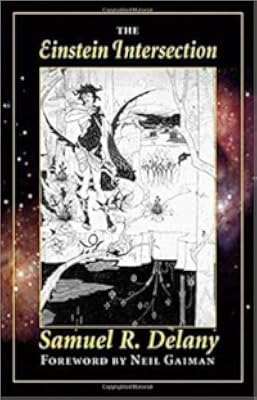
Samuel R. Delany Jr. was born in Harlem, New York on April 1, 1942. He is a science fiction and short story writer. His first novel, The Jewels of Aptor, was published in 1962. He has written more than 20 novels and collections of short stories, memoirs, and critical essays. He has received numerous awards including the Nebula Award for best novel show more for Babel-17 in 1966 and The Einstein Intersection in 1967, the Nebula Award for best short story for Aye, and Gomorrah and Time Considered as a Helix of Semi-Precious Stones, the Hugo Award for best short story for Time Considered as a Helix of Semi-Precious Stones in 1970 and for his non-fiction book, The Motion of Light in Water, and the Bill Whitehead Award for Lifetime Achievement in Gay Literature in 1993. He is as a professor in the department of English at the University at Buffalo, Buffalo, New York. (Bowker Author Biography) Samuel R. Delany is a professor of English & Creative Writing at Temple University in Philadelphia. (Publisher Provided) show less
Some Editions
Awards and Honors
Awards
Distinctions
Notable Lists
Series
Belongs to Publisher Series
Grandes Éxitos de Bolsillo (B-104)
SF Masterworks (6)
Work Relationships
Common Knowledge
- Canonical title
- Babel-17
- Original title
- Babel-17
- Original publication date
- 1966
- People/Characters
- Rydra Wong; Butcher; Brass; Calli; Ron; Dr. Markus T'mwarba (show all 24); Baron Felix Ver Dorco; Tarik; General Forester; Mollya Twa; Carlos; Diavalo; Danil D. Appleby; Lome; Allegra; Flop; Baroness Ver Dorco; Sam; Lizzy; Albert Ver Dorco; Kile; Klik; Ratt; Geoffrey Cord
- Important places
- Transport Town; Alliance War Yards, Armsedge; Jebel Tarik; Administrative Alliance Headquarters
- Epigraph
- Nowhere is civilization so perfectly mirrored as in speech. If our knowledge of speech, or the speech itself, is not yet perfect neither is civilization.
-- Mario Pei - Dedication
- --this one, now, is
for Bob Folsom,
to explain just a little of
the past year-- - First words
- It's a port city.
- Quotations
- A language, however, has its own internal logic, its own grammar, its own way of putting thoughts together with words that span various spectra of meaning. There is no key you can plug in to unlock the exact meaning. At best ... (show all)you can get a close approximation.
If there's no word for it, how do you think about it? And, if there isn't the proper form, you don't have the how even if you have the words. - Last words
- (Click to show. Warning: May contain spoilers.)And even without Babel-17, you should know by now, I can talk my way out of anything.
- Original language
- English
Classifications
Statistics
- Members
- 3,066
- Popularity
- 5,786
- Reviews
- 98
- Rating
- (3.66)
- Languages
- 11 — Chinese, Dutch, English, French, German, Greek, Italian, Japanese, Polish, Spanish, Portuguese (Portugal)
- Media
- Paper, Audiobook, Ebook
- ISBNs
- 36
- ASINs
- 53