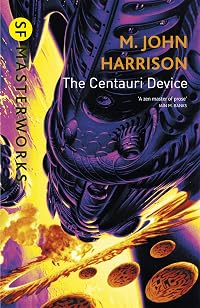
The Centauri Device
by M. John Harrison
On This Page
Description
John Truck was to outward appearances just another lowlife spaceship captain. But he was also the last of the Centaurans - or at least, half of him was - which meant that he was the only person who could operate the Centauri Device, a sentient bomb which might hold the key to settling a vicious space war. M. John Harrison's classic novel turns the conventions of space opera on their head, and is written with the precision and brilliance for which is famed.Tags
Recommendations
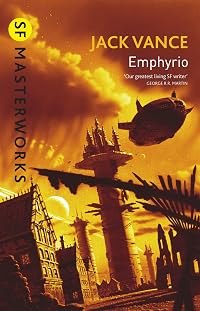
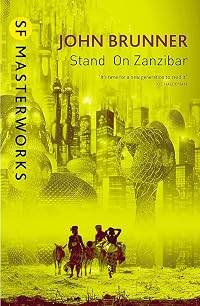
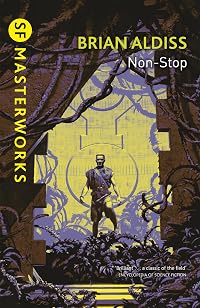
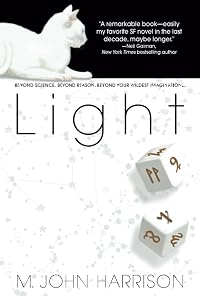
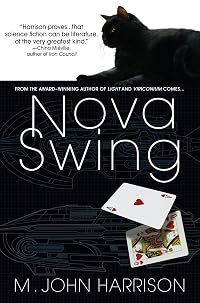
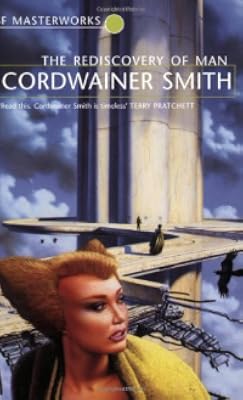
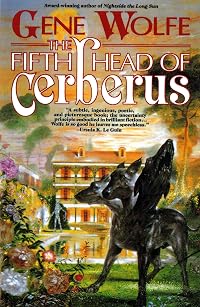

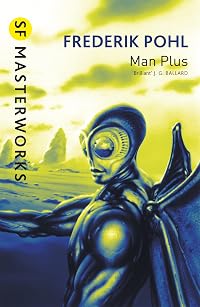














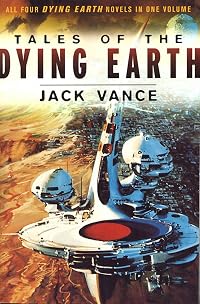
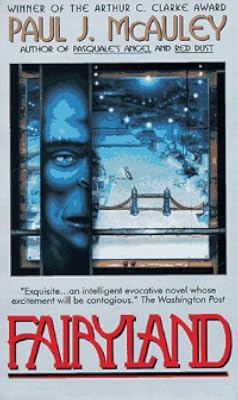
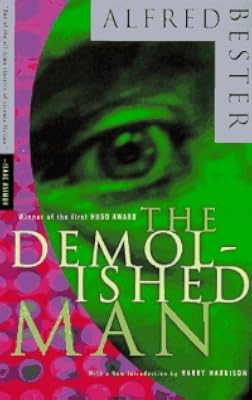

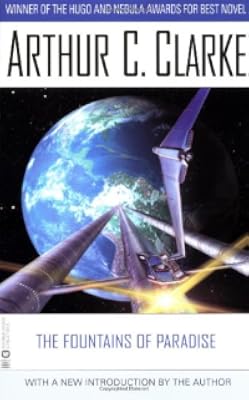

Member Recommendations

LamontCranston The same ephemeral beat prose.
And of course Space Opera, updated. Strange mystery, assemble a crew of lively characters, go explore it.
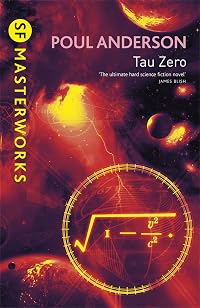
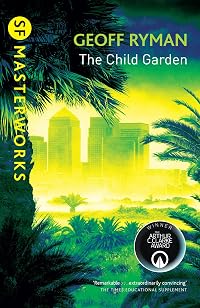
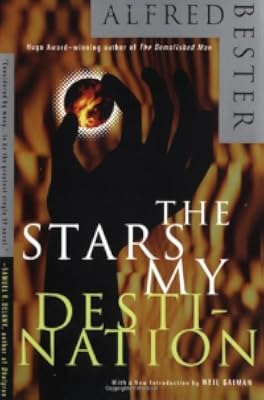
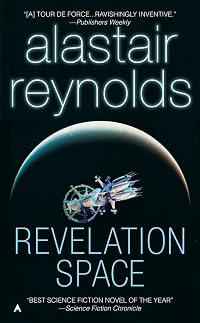
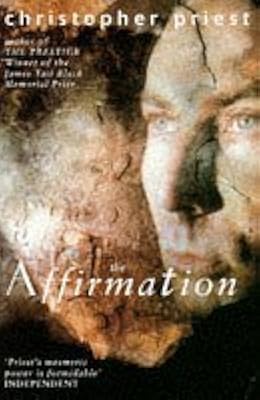
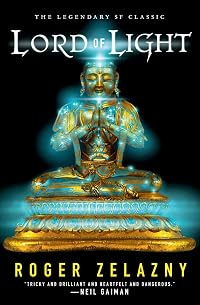
AlanPoulter Two dark, complex, bizarre slices of space opera, which exist in another dimension compared to most novels in this sub-genre.
AlanPoulter Two very rare beasts, "anti-space operas"...
Member Reviews
The jacket copy on the back of this book begins "Bastard son of a port whore ...," and gives an impression of this book's contents that is unusually accurate among 1970s SF paperbacks. Its setting is a twenty-fourth century in which an interstellar cold war is heating up, and the rival superpowers are both terrestrially-based: the Israeli World Government and the Union of Arabic Socialist Republics. Protagonist John Truck is an alienated loser, who the reader soon finds out is also descended from an alien survivor of human-perpetrated genocide. The "device" of the title is an enigmatic find from the ruined Centauran homeworld, which the agents of the competing powers each think will give them the edge. Other players in the game where show more Truck seems to be a pawn include a cabal of space anarchists led by an aesthete, an interstellar drug business and its kingpin, and the evangelical cult of the Openers, who have windows surgically installed to reveal their innards.
Although Harrison seems not to be especially proud of this early effort, saying it was from before he "learned to write," it still stands out as bucking the trends of space opera in interesting ways. The antihero John Truck is not too unusual for the new wave science fiction set in which Harrison participated. I enjoyed the surprising passel of Swinburne references, especially to Atalanta in Calydon, along with allusions to Huysmanns and other decadents. Admittedly, most of what Harrison does well in this book, he does again far better in the more recent Kefahuchi Tract novels. show less
Although Harrison seems not to be especially proud of this early effort, saying it was from before he "learned to write," it still stands out as bucking the trends of space opera in interesting ways. The antihero John Truck is not too unusual for the new wave science fiction set in which Harrison participated. I enjoyed the surprising passel of Swinburne references, especially to Atalanta in Calydon, along with allusions to Huysmanns and other decadents. Admittedly, most of what Harrison does well in this book, he does again far better in the more recent Kefahuchi Tract novels. show less
[n.b. A ‘no star’ rating for books I review does not imply criticism—I rarely give ratings, as giving stars is an unhelpfully blunt instrument and all too often involves comparing apples with oranges.]
Harrison says he never much liked this book, but that it achieved what he had intended, which was ‘to take the piss out of’ certain tenets of SFF at the time: that the main character drives the action, that the universe is knowable, and the universe is anthropocentric.
'The Centauri Device' takes the piss and pours it all over the place. John Truck is the main character and never seems to know what is going on. He is dragged into the plot to get the device because he is half-Centauri, and he is manipulated, lied to, threatened, show more and generally kicked about by all political shades. He is not a hero at all, and he only reluctantly speaks for ‘all who breathe the air of tragedy’ when none on the political spectrum can offer anything else.
Women characters are hardly worth the effort, being limited to ‘port ladies’, Truck’s limp wife, and one-eyed Alice Gaw, a sort of pulp-punk Sister George. Everything in the worlds Truck encounters is compromised, vulgar, and demeaned. There is quite a bit of violence, in fact anything that is physical seems to be violent, or to invite violence, but the register in which everything is written is sophisticated and even, very unlike the heightened register (often involving very unlikely similes) of more contemporary works.
There is a very noir-ish, Tiger Lillies aesthetic and some great characters, including the full-blooded grotesque Grishkin, Truck’s friends Tiny—the ‘last great musician’, who incurs the wonderful characterisation of having ‘all the moral sensibility of a maggot in a cemetery’—and Fix the bo’sun.
Truck has no authority, no power, and seems to have no real aim in life except not to die. He is the grubbiest, most ramshackle, and most inept of Chosen Ones, but not without depth when pressed. Whatever meaning there might be lies in that response, and the ultimate decision about the deployment of the device is with Truck because of it. Even unreflective Truck, and the wretchedness experienced by those living on the abrasive edges of corrupt worlds, have an occasional desolate richness; not poetry but resonances of poetry in being both brief and illuminating: Truck recognising his fellow hustlers and losers “shivering with cold and fear of the long, incomprehensible future’, and his desolate struggle back to his ship, his encounter with the undramatic but profoundly alien Device.
'The Centauri Device' is a space opera (at the 'The Stars My Destination' end of the spectrum), but despite the drugs, the legions of dead bodies, and the spaceships, there are unexpected echoes—or, rather, adumbrations—of the alienating elegance of 'The Sunken Land Begins to Rise Again'. show less
Harrison says he never much liked this book, but that it achieved what he had intended, which was ‘to take the piss out of’ certain tenets of SFF at the time: that the main character drives the action, that the universe is knowable, and the universe is anthropocentric.
'The Centauri Device' takes the piss and pours it all over the place. John Truck is the main character and never seems to know what is going on. He is dragged into the plot to get the device because he is half-Centauri, and he is manipulated, lied to, threatened, show more and generally kicked about by all political shades. He is not a hero at all, and he only reluctantly speaks for ‘all who breathe the air of tragedy’ when none on the political spectrum can offer anything else.
Women characters are hardly worth the effort, being limited to ‘port ladies’, Truck’s limp wife, and one-eyed Alice Gaw, a sort of pulp-punk Sister George. Everything in the worlds Truck encounters is compromised, vulgar, and demeaned. There is quite a bit of violence, in fact anything that is physical seems to be violent, or to invite violence, but the register in which everything is written is sophisticated and even, very unlike the heightened register (often involving very unlikely similes) of more contemporary works.
There is a very noir-ish, Tiger Lillies aesthetic and some great characters, including the full-blooded grotesque Grishkin, Truck’s friends Tiny—the ‘last great musician’, who incurs the wonderful characterisation of having ‘all the moral sensibility of a maggot in a cemetery’—and Fix the bo’sun.
Truck has no authority, no power, and seems to have no real aim in life except not to die. He is the grubbiest, most ramshackle, and most inept of Chosen Ones, but not without depth when pressed. Whatever meaning there might be lies in that response, and the ultimate decision about the deployment of the device is with Truck because of it. Even unreflective Truck, and the wretchedness experienced by those living on the abrasive edges of corrupt worlds, have an occasional desolate richness; not poetry but resonances of poetry in being both brief and illuminating: Truck recognising his fellow hustlers and losers “shivering with cold and fear of the long, incomprehensible future’, and his desolate struggle back to his ship, his encounter with the undramatic but profoundly alien Device.
'The Centauri Device' is a space opera (at the 'The Stars My Destination' end of the spectrum), but despite the drugs, the legions of dead bodies, and the spaceships, there are unexpected echoes—or, rather, adumbrations—of the alienating elegance of 'The Sunken Land Begins to Rise Again'. show less
Gritty, acerbic, and blancmange are all words that come to mind as I think back over this book. Although that last one's probably because I haven't had any coffee yet today.
An alien device is found on a planet whose inhabitants were almost entirely wiped out in a war with humanity, and the leaders of the two world superpowers believe it to be the key to their side gaining dominance. Unfortunately for them it can only be controlled by someone with the alien genetic code. Enter John Truck, the only living person they can find who has any of these alien genes, and a bit of a loser to boot.
And so we follow Captain Truck as he staggers, vomits, and haphazardly shoots his way around the galaxy, variously trying to run from the myriad factions show more that want him to use the device for them, and giving himself up to one of the factions just to remove the responsibility from himself.
Truck's not the kind of hero that it's easy to appreciate, but then I think that's the point: he is the downtrodden everyman, not Jack Bauer. Harrison's prose is certainly rollicking, and the story holds promise, but overall it just lacked that certain something to elevate it beyond pretty-good-ness. show less
An alien device is found on a planet whose inhabitants were almost entirely wiped out in a war with humanity, and the leaders of the two world superpowers believe it to be the key to their side gaining dominance. Unfortunately for them it can only be controlled by someone with the alien genetic code. Enter John Truck, the only living person they can find who has any of these alien genes, and a bit of a loser to boot.
And so we follow Captain Truck as he staggers, vomits, and haphazardly shoots his way around the galaxy, variously trying to run from the myriad factions show more that want him to use the device for them, and giving himself up to one of the factions just to remove the responsibility from himself.
Truck's not the kind of hero that it's easy to appreciate, but then I think that's the point: he is the downtrodden everyman, not Jack Bauer. Harrison's prose is certainly rollicking, and the story holds promise, but overall it just lacked that certain something to elevate it beyond pretty-good-ness. show less
Gritty, acerbic, and blancmange are all words that come to mind as I think back over this book. Although that last one's probably because I haven't had any coffee yet today.
An alien device is found on a planet whose inhabitants were almost entirely wiped out in a war with humanity, and the leaders of the two world superpowers believe it to be the key to their side gaining dominance. Unfortunately for them it can only be controlled by someone with the alien genetic code. Enter John Truck, the only living person they can find who has any of these alien genes, and a bit of a loser to boot.
And so we follow Captain Truck as he staggers, vomits, and haphazardly shoots his way around the galaxy, variously trying to run from the myriad factions show more that want him to use the device for them, and giving himself up to one of the factions just to remove the responsibility from himself.
Truck's not the kind of hero that it's easy to appreciate, but then I think that's the point: he is the downtrodden everyman, not Jack Bauer. Harrison's prose is certainly rollicking, and the story holds promise, but overall it just lacked that certain something to elevate it beyond pretty-good-ness. show less
An alien device is found on a planet whose inhabitants were almost entirely wiped out in a war with humanity, and the leaders of the two world superpowers believe it to be the key to their side gaining dominance. Unfortunately for them it can only be controlled by someone with the alien genetic code. Enter John Truck, the only living person they can find who has any of these alien genes, and a bit of a loser to boot.
And so we follow Captain Truck as he staggers, vomits, and haphazardly shoots his way around the galaxy, variously trying to run from the myriad factions show more that want him to use the device for them, and giving himself up to one of the factions just to remove the responsibility from himself.
Truck's not the kind of hero that it's easy to appreciate, but then I think that's the point: he is the downtrodden everyman, not Jack Bauer. Harrison's prose is certainly rollicking, and the story holds promise, but overall it just lacked that certain something to elevate it beyond pretty-good-ness. show less
I picked this up from the library because I'd heard it referred to as a classic of Sci-Fi. The writing is certainly a cut above, but the story, settings, language are pure 70's... and, to my taste, haven't aged well. The blurb on the front gives this much away:
"A last-chance loner from the back alleys of space hold the fate of the earth in his hands."
Well then.
I suppose... think "Escape from New York" but in space. And "Escape from New York" is a classic, too, in its way; but it is very much aged, and not entirely for the better.
"A last-chance loner from the back alleys of space hold the fate of the earth in his hands."
Well then.
I suppose... think "Escape from New York" but in space. And "Escape from New York" is a classic, too, in its way; but it is very much aged, and not entirely for the better.
The first Harrison novel I have been disappointed by. The author himself is on record as saying that this is probably his worst book, and he's right. A space opera with a hero who gets thrown from one chaotic scene to the next in search of a mysterious Device after a genocidal war, this was a turgid slog of a read. All the usual Harrison tropes are here but nothing seems to gel, to work. You end up not caring about any of the characters. I virtually forced myself to finish it which has not been the case with other Harrison stories.
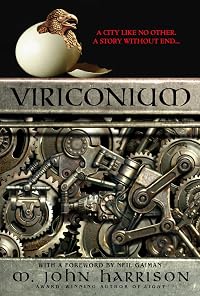
Heaven knows why this was selected as part of the SF Masterworks series. It is a huge step down from the delights of Viriconium, The Course of The Heart and the Light Trilogy.
For completists only.
Heaven knows why this was selected as part of the SF Masterworks series. It is a huge step down from the delights of Viriconium, The Course of The Heart and the Light Trilogy.
For completists only.
Purple prose and a listless, largely unsympathetic protagonist make a surprisingly action-packed political thriller cum space opera an unexpectedly difficult read. Additionally, I'm not sure what message I'm meant to take home, other than ideology and individuals in power do not serve the people at large. The final 30p or so are completely baffling. I here-by formally give up on Harrison SF novels.
Members
- Recently Added By
Lists

S.F. Masterworks (Complete)
229 works; 15 members

The 5 Parsec Shelf
50 works; 7 members

David Pringle's Science Fiction: The 100 Best Novels
101 works; 9 members

SF Masterworks
193 works; 8 members
Author Information

85+ Works 9,835 Members
Some Editions
Awards and Honors
Series
Belongs to Publisher Series
Artefakty (28)
SF Masterworks (31)
Gallimard, Folio SF (133)
Common Knowledge
- Canonical title
- The Centauri Device
- Original title
- The Centauri Device
- Alternate titles*
- In meiner Hand die Erde
- Original publication date
- 1974-11
- People/Characters
- John Truck; General Alice Gaw; Colonel Gadaffi ben Barka; Ruth Berenici; Angina Seng; Tiny Skeffern (show all 12); Himation; Doctor Grishkin; Chalice Veronica; Swinburne Sinclair-Pater; Fix; Nodes
- Important places
- Carter's Snort, Albion, Earth; Junk City, Avernus; Centauri VII
- Epigraph
- And they, so perfect is their misery
Not once perceive their foul disfigurement...
JOHN MILTON, Comus - First words
- It was St Crispin's Eve on Sad al Bari IV when Captain John Truck, impelled by something he was forced to describe to himself as 'sentiment', decided to visit The Spacer's Rave, on the corner of Proton Alley and Circuit (that... (show all) chilly junction where the higher class of port lady goes to find her customers).
- Quotations
- "We live in a sick charade of political polarities; of death, bad art, and wasted time--all in the cause of ideologies that were a century out of date in their heyday."
- Last words
- (Click to show. Warning: May contain spoilers.)Nothing is lost
something twists the world away - Blurbers
- Cadigan, Pat; Smith, Michael Marshall; Barker, Clive; Banks, Iain M.
- Original language
- English
- Canonical DDC/MDS
- 823.087625
*Some information comes from Common Knowledge in other languages. Click "Edit" for more information.
Classifications
- Genres
- Science Fiction, Fiction and Literature
- DDC/MDS
- 823.087625 — Literature & rhetoric English & Old English literatures English fiction By type Genre fiction Adventure fiction Speculative fiction Science fiction Space opera
- LCC
- PR6058 .A6942 — Language and Literature English English Literature 1961-2000
- BISAC
Statistics
- Members
- 795
- Popularity
- 35,116
- Reviews
- 17
- Rating
- (3.12)
- Languages
- English, French, German, Polish
- Media
- Paper, Ebook
- ISBNs
- 12
- ASINs
- 8