On This Page
Description
David Brin's Uplift novels are among the most thrilling, highly regarded works of contemporary science fiction. Beginning with Sundiver, Brin provides an intriguing exploration of humanity's future in the universe. For nearly a billion years, every known sentient species in the universe has been the result of genetic and cultural guidance--or "uplifting"--by a previously uplifted patron race. Then humans are discovered. Having already uplifted chimps and dolphins, humanity clearly qualifies show more as an intelligent species, but did they actually evolve their own intelligence, or did some mysterious patron race begin the process, then suddenly abandon Earth? The answer to this mystery might be as close as our own sun, but it will take a daring dive into its fiery interior to know for sure. Sundiver begins David Brin's thoughtful, exhilarating exploration of a future filled with an imaginative array of strange alien races, dazzling scientific achievements, and age-old enigmas. Narrator George Wilson gives a strong, enthusiastic voice to Brin's search for humanity's destiny in the cosmic order of life. show lessTags
Recommendations












Member Recommendations


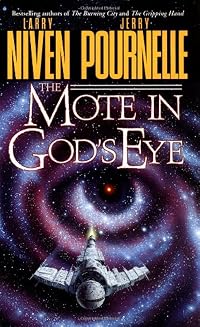
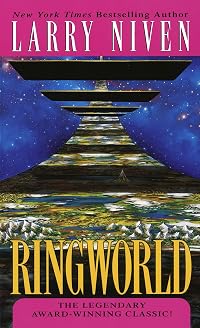
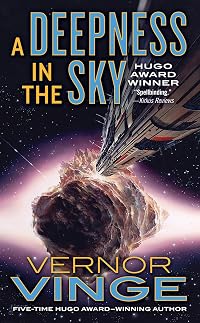
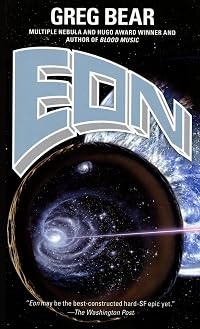
LamontCranston Space Opera, updated. Strange mystery, assemble a crew of lively characters, go explore it. Sound familiar?
21
LamontCranston Space Opera, updated. Strange mystery, assemble a crew of lively characters, go explore it. Sound familiar?
22
Member Reviews
This is science fiction from 1980 and is therefore not obsessed with:
1) Computers.
2) Nanotech.
3) Wormholes.
This makes it rather refreshing. Instead this book uses an old theme, prevalent in post-WWII American SF: Humans (read the USA) are superior to everybody else. In this example, humans are technologically outclassed by every other space-faring species in the galaxy but are superior because their intelligence evolved naturally instead of being the result of genetic manipulation by an older species. Or maybe not - it's the hottest debate in the galaxy. Various species think humans are upstarts. Others - usually also younger species - kinda like humans. Devious, nefarious politics ensues and our protagonist gets caught up in it.
A slow show more start leads on to an exciting Poirot-style murder mystery and then a further action-adventure in the chromosphere of the sun, where life has been discovered. Apart from being a compelling story, the main interesting thing in the book is this sun-life. I'm sure I've come across the idea of star life before but never in as much detail.
Inevitably this is the first volume of a series; I'm inclined to carry on with it if I spot the remaining volumes. show less
1) Computers.
2) Nanotech.
3) Wormholes.
This makes it rather refreshing. Instead this book uses an old theme, prevalent in post-WWII American SF: Humans (read the USA) are superior to everybody else. In this example, humans are technologically outclassed by every other space-faring species in the galaxy but are superior because their intelligence evolved naturally instead of being the result of genetic manipulation by an older species. Or maybe not - it's the hottest debate in the galaxy. Various species think humans are upstarts. Others - usually also younger species - kinda like humans. Devious, nefarious politics ensues and our protagonist gets caught up in it.
A slow show more start leads on to an exciting Poirot-style murder mystery and then a further action-adventure in the chromosphere of the sun, where life has been discovered. Apart from being a compelling story, the main interesting thing in the book is this sun-life. I'm sure I've come across the idea of star life before but never in as much detail.
Inevitably this is the first volume of a series; I'm inclined to carry on with it if I spot the remaining volumes. show less
The ship swooped through the turbulent chromospheric crosswinds, tacking on the plasma forces by subtle shifts in its own magnetic shields ... sailing with sheets made of almost corporeal mathematics. Lightning fast furling and thickening of those shields of force -- allowing the tug of the conflicting eddies to be felt in one direction and not another -- helped to cut down the buffeting dealt out by the storm.
Those same shields kept out most of the screaming heat, diverting the rest into tolerable forms. What got through was sucked up into a chamber to drive the Refrigerator Laser, the kidney whose filtered wasteflow was a stream of x-rays which clove aside even the plasma in its path.
Still, these were mere inventions of Earthmen. It show more was the science of the Galactics that made the Sunship graceful and safe. Gravity fields held back the amorous, crushing pull of the Sun so the ship fell or flew at will. The pounding forces of the center of the filament were absorbed or neutralized, and duration itself was altered by time-compression.
Sundiver is set less than thirty-five years after First Contact with the Galactic Civilisation. Virtually all space-faring species were uplifted into sapience by a patron race, so humanity's lack of a patron race is unusual and their status is increased by having two client species of their own, having recently uplifted chimpanzees and bottlenose dolphins, and not everybody in the galaxy is happy about that. There are two groups of humans who have very strong opinions on the subject; the Skins, who believe that humanity uplifted itself through evolution, and the Shirts who are certain that we were uplifted by an alien race and then abandoned by them.
This book is basically a detective story. Jacob Alvarez is invited to join the Mercury-based Sundiver project because the crews of the expeditions ships have started seeing strange things on their trips into the sun's chromosphere, ghostly figures that seem to be herds guarded by shepherd who sometimes transform themselves into humanoid shape and seem to be trying to communicate. Are these sun creatures real, and if so, could these sun creatures be humanity's lost patrons? It's a good mystery story, and I liked the aliens, especially Kant Fagin and Bubbacub, but the human characters were less so. Still, I am looking forward tot he rest of the series. show less
Those same shields kept out most of the screaming heat, diverting the rest into tolerable forms. What got through was sucked up into a chamber to drive the Refrigerator Laser, the kidney whose filtered wasteflow was a stream of x-rays which clove aside even the plasma in its path.
Still, these were mere inventions of Earthmen. It show more was the science of the Galactics that made the Sunship graceful and safe. Gravity fields held back the amorous, crushing pull of the Sun so the ship fell or flew at will. The pounding forces of the center of the filament were absorbed or neutralized, and duration itself was altered by time-compression.
Sundiver is set less than thirty-five years after First Contact with the Galactic Civilisation. Virtually all space-faring species were uplifted into sapience by a patron race, so humanity's lack of a patron race is unusual and their status is increased by having two client species of their own, having recently uplifted chimpanzees and bottlenose dolphins, and not everybody in the galaxy is happy about that. There are two groups of humans who have very strong opinions on the subject; the Skins, who believe that humanity uplifted itself through evolution, and the Shirts who are certain that we were uplifted by an alien race and then abandoned by them.
This book is basically a detective story. Jacob Alvarez is invited to join the Mercury-based Sundiver project because the crews of the expeditions ships have started seeing strange things on their trips into the sun's chromosphere, ghostly figures that seem to be herds guarded by shepherd who sometimes transform themselves into humanoid shape and seem to be trying to communicate. Are these sun creatures real, and if so, could these sun creatures be humanity's lost patrons? It's a good mystery story, and I liked the aliens, especially Kant Fagin and Bubbacub, but the human characters were less so. Still, I am looking forward tot he rest of the series. show less
A very confusing story - every time something was figured out, it was (at least partly) wrong. Everyone (and I mean everyone) had secrets and plots - Helene's was mild and pleasant, but still she was plotting. So was Fagin. And the protagonist was an unreliable narrator - we understood various things because he said they were so, and they weren't. The whole mystery was based on multiple misunderstandings - and not only of the E.T.s. The warfarin side-plot was...pretty weak, they were clutching at straws all over the place (Kepler's behavior isn't a side-effect of warfarin, for one thing!). I'm told this is the weakest story of the series, and that I needed to read it to understand Startide Rising, so I'm not sorry I read it, but I show more didn't enjoy it and probably will not read it again. show less
This is an interesting one. All of the stuff that feels original, the sci-fi and science elements, the world building etc. is all pretty good.
Couple of small issues with the main character, he goes through several epiphanies about himself which was a little hard to follow.
Also he has this big event in his past which casts a shadow over the story, the problem being its such a big, specific, interesting event that it kind a feels like you’ve missed a previous volume.
However the real issue is the central mystery, or rather murder mystery. The book actually feels a bit racist in places but i won’t bother saying more on that as it might just be interpretation, but also its linked to how anachronistic the characters feel at times which show more is linked to the central mystery.
So, the entire main murder mystery has been put together, or lifted bodily from Agatha Christie-style cozy murder mysteries. And definitely ones written between 1920-1950. I think the slightly racist/sexist flavour of some elements just came along as a natural bi-product of the author taking too much from these early tales.
Even before anything of the murder-mystery type element had happened i was not only able to predict it would go in that direction but even guessed who the ultimate villain would turn out to be.
So clearly the plot must also have picked up a lot of cliché's along the way too, for me to be able to figure out so much so early (especially given i’ve never read or seen any Agatha Christie, except small fragments) and if aliens feel dated clearly your doing something wrong ;) .
The first and last 15% or so which feels more original is better and its an interesting universe. I’ve heard later books are an improvement and don’t doubt it especially since rewriting Agatha Christie doesn’t seem like a trick anyone would try twice.
Of course if the idea of Agatha Christie with aliens sounds like a great idea to you then this one might be 5 stars :) .
Oh, my favourite anachronism FYI, was during the parlour scene (yep, it even did the parlour murderer reveal scene) in which someone started smoking a pipe! A freaking pipe! What century is this thing set in again? :lol . show less
Couple of small issues with the main character, he goes through several epiphanies about himself which was a little hard to follow.
Also he has this big event in his past which casts a shadow over the story, the problem being its such a big, specific, interesting event that it kind a feels like you’ve missed a previous volume.
However the real issue is the central mystery, or rather murder mystery. The book actually feels a bit racist in places but i won’t bother saying more on that as it might just be interpretation, but also its linked to how anachronistic the characters feel at times which show more is linked to the central mystery.
So, the entire main murder mystery has been put together, or lifted bodily from Agatha Christie-style cozy murder mysteries. And definitely ones written between 1920-1950. I think the slightly racist/sexist flavour of some elements just came along as a natural bi-product of the author taking too much from these early tales.
Even before anything of the murder-mystery type element had happened i was not only able to predict it would go in that direction but even guessed who the ultimate villain would turn out to be.
So clearly the plot must also have picked up a lot of cliché's along the way too, for me to be able to figure out so much so early (especially given i’ve never read or seen any Agatha Christie, except small fragments) and if aliens feel dated clearly your doing something wrong ;) .
The first and last 15% or so which feels more original is better and its an interesting universe. I’ve heard later books are an improvement and don’t doubt it especially since rewriting Agatha Christie doesn’t seem like a trick anyone would try twice.
Of course if the idea of Agatha Christie with aliens sounds like a great idea to you then this one might be 5 stars :) .
Oh, my favourite anachronism FYI, was during the parlour scene (yep, it even did the parlour murderer reveal scene) in which someone started smoking a pipe! A freaking pipe! What century is this thing set in again? :lol . show less
Science fiction is a genre full of common tropes, some of which are more-or-less franchised. If you are going to write a robot story, you are always working in the shadow of Asimov. Likewise, if you want to write a story about uplifted animals, you are in David Brin’s territory. Sundiver, the first book in the first Uplift series, begins in medias race. Jacob Demwa has already jumped off a space elevator. Dolphins and chimps have already been uplifted. There is already an interstellar market for whale songs (just in case you thought Star Trek IV: The Voyage Home (1986) was especially original). Most writers would have used these ideas in short stories and novellas to set up the series of novels, but as far as I know, Brin was happy to show more leave all the backstories hanging. Humanity is an upstart species who, as far as anyone knows, have not been themselves uplifted. Older galactic species have a hard time coming to grips with the idea of independent evolution. The plot of Sundiver involves a murder on a multispecies expedition to explore the surface of the sun. David Brin is one of those hard science fiction writers whose character development and prose are frequently slammed by critics but whose work cannot be ignored. 4 stars. show less
★★★-1/2
Good hard science fiction that, at it's core, is really a closed-room murder mystery. Agatha Christie in space, if you will. Along with our intrepid yet reluctant sleuth, Jacob Demwa, we have the typical cast of characters and the usual suspects, (comprised of humans, aliens, and an 'uplifted' neo-human chimpanzee). Brin throws a few very effective red herrings into the mix and, by the time the dust settles, our culprit turns out to be someone I didn't suspect. Well done, Mr. Brin!
This would have been a solid 4-star read for me if the initial 35% or so had not been spent on setup and exposition. Lots of hard science about how the sun works and about the galactic community that humanity has recently joined made it difficult show more for me to lose myself in the story. BUT... once that is out of the way, and the diving into the sun stuff begins, things really start to pick up as we thunder toward a bang-up of a finale. I expect all that setup will also provide a thorough background picture for continuing with the rest of the 'Uplift' books - which I intend to do right away. Next up: Startide Rising! show less
Good hard science fiction that, at it's core, is really a closed-room murder mystery. Agatha Christie in space, if you will. Along with our intrepid yet reluctant sleuth, Jacob Demwa, we have the typical cast of characters and the usual suspects, (comprised of humans, aliens, and an 'uplifted' neo-human chimpanzee). Brin throws a few very effective red herrings into the mix and, by the time the dust settles, our culprit turns out to be someone I didn't suspect. Well done, Mr. Brin!
This would have been a solid 4-star read for me if the initial 35% or so had not been spent on setup and exposition. Lots of hard science about how the sun works and about the galactic community that humanity has recently joined made it difficult show more for me to lose myself in the story. BUT... once that is out of the way, and the diving into the sun stuff begins, things really start to pick up as we thunder toward a bang-up of a finale. I expect all that setup will also provide a thorough background picture for continuing with the rest of the 'Uplift' books - which I intend to do right away. Next up: Startide Rising! show less
Brin's Uplift Saga was easily one of my favorite series way back in my younger days. The thing is, I started with the second book (Startide Rising), being unaware that the series started with Sundiver. I always meant to get to it, but didn't have a chance until now. Having done so, I'm going to re-read the six-book series which was published from 1980-1998.
So as the book blurb states, no species has ever reached the stars without the guidance of a patron. But somehow, Humans were able to do it on their own. It is an amazing feat, if true. However, it came with a few tradeoffs. On the negative side, we had to invent everything that the Galactic Library just teaches the other races, not to mention our species' tumultuous adolescence show more (wars, pollution, etc.). But on the positive side, we were spared the indentured servitude client races have to endure at the behest of their patrons. These can go on for hundreds of thousands to millions of years.
While a few races cheer us on, the vast majority see us as enigma or worse, an abomination. Surely, the Humans must've had a patron at one point but for some inexplicable reason, abandoned the uplift process, a crime by galactic standards.
Rumors are circulating that clues to our patron can be found inside the sun, so an expedition is underway to search for those clues. How can a spaceship possibly survive a trip into the sun? Well, there's a back-of-the-envelope style explanation that Brin gives us and it involves a refrigerator laser and thermodynamic equations that I don't fully understand, but he holds a doctorate in astrophysics, so I trust him that it's legit even if the technology is currently beyond us.
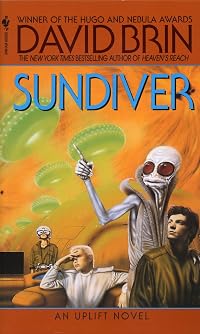
So besides the human crew and passengers, there are some alien representatives going along as advisors and witnesses, some friendly, some not. Jacob is our protagonist, who was invited to go along by Fagin, a Kanten (a mobile, tree-like species), to serve as an investigator. The story is primarily told from Jacob's viewpoint. Also present are the commander of the ship, Helene deSilva; Bubbacup, a Pila representative from the Galactic Library; his assistant Culla, a Pring, who are a client race to the Pila (pictured on the cover); Dr. Kepler, the Human head of the mission; Dr. Martine, a psychologist; and LaRoque, a politically charged journalist invited along to write about the mission.
Brin crafts the story as a mystery. There's a murder to go along with schemes to end the mission with disappointment or failure—depending on the schemer. It's up to Jacob and his fellows to figure things out to save Earth's reputation and (mild spoiler) their lives, for the stakes are higher than they realize.
All in all, an enjoyable read. show less
So as the book blurb states, no species has ever reached the stars without the guidance of a patron. But somehow, Humans were able to do it on their own. It is an amazing feat, if true. However, it came with a few tradeoffs. On the negative side, we had to invent everything that the Galactic Library just teaches the other races, not to mention our species' tumultuous adolescence show more (wars, pollution, etc.). But on the positive side, we were spared the indentured servitude client races have to endure at the behest of their patrons. These can go on for hundreds of thousands to millions of years.
While a few races cheer us on, the vast majority see us as enigma or worse, an abomination. Surely, the Humans must've had a patron at one point but for some inexplicable reason, abandoned the uplift process, a crime by galactic standards.
Rumors are circulating that clues to our patron can be found inside the sun, so an expedition is underway to search for those clues. How can a spaceship possibly survive a trip into the sun? Well, there's a back-of-the-envelope style explanation that Brin gives us and it involves a refrigerator laser and thermodynamic equations that I don't fully understand, but he holds a doctorate in astrophysics, so I trust him that it's legit even if the technology is currently beyond us.
So besides the human crew and passengers, there are some alien representatives going along as advisors and witnesses, some friendly, some not. Jacob is our protagonist, who was invited to go along by Fagin, a Kanten (a mobile, tree-like species), to serve as an investigator. The story is primarily told from Jacob's viewpoint. Also present are the commander of the ship, Helene deSilva; Bubbacup, a Pila representative from the Galactic Library; his assistant Culla, a Pring, who are a client race to the Pila (pictured on the cover); Dr. Kepler, the Human head of the mission; Dr. Martine, a psychologist; and LaRoque, a politically charged journalist invited along to write about the mission.
Brin crafts the story as a mystery. There's a murder to go along with schemes to end the mission with disappointment or failure—depending on the schemer. It's up to Jacob and his fellows to figure things out to save Earth's reputation and (mild spoiler) their lives, for the stakes are higher than they realize.
All in all, an enjoyable read. show less
Members
- Recently Added By
Lists

Best Science Fiction Novels
816 works; 430 members
Survey of Classic Science Fiction
171 works; 47 members

Best Books About Journeys and Quests
117 works; 30 members

Isaac Arthur’s Book Recommendations
98 works; 3 members

Books Read in 2015
3,299 works; 126 members

Books That Will Take You Out of This World
19 works; 5 members

First Novels
373 works; 16 members

Books Read in 2011
684 works; 19 members

Books Read in 2018
4,360 works; 110 members

Books Read in 2023
5,547 works; 145 members
Author Information

153+ Works 40,400 Members
David Brin is a scientist, writer, and public speaker. He was born in Pasadena, California, on October 9, 1950. Brin attended the California Institute of Technology (Caltech) and later earned a doctorate at the University of California. He accepted a position as an engineer at Hughes Aircraft Company. Brin is a former fellow at the California show more Space Institute and serves on several government and nongovernment advisory committees dealing with issues involved with technological growth. Brin has lectured all over the world on such topics as space flight, ecology, and the search for extraterrestrial life. Brin deals with global warming, the destruction of the ozone layer, and pollution of Earth. His 1987 novel, The Uplift War, received the Hugo Award and the Locus Award. His novels have been translated into 20 languages. (Bowker Author Biography) show less

David Brin is a LibraryThing Author, an author who lists their personal library on LibraryThing.
Some Editions
Series


Belongs to Publisher Series
Work Relationships
Common Knowledge
- Canonical title
- Sundiver
- Original title
- Sundiver
- Original publication date
- 1980
- People/Characters
- Jacob Demwa; Bubbacub; Culla; Helene deSilva; Fagin; Pierre LaRoque (show all 8); Millie Martine; Dwayne Kepler
- Important places
- Sol; Mercury; Sun
- Epigraph
- ... it is reasonable to hope that in the not too distant future we shall be competent to understand so simple a thing as a star. - A. S. Eddington, 1926
- Dedication
- To my brothers Dan and Stan, to Arglebargle the IVth . . . and to somebody else.
- First words
- "Makakai, are you ready?"
- Quotations
- "Once a caveman, always a caveman, ejh LaRoque? Men get all the way to the sun, and they build a fire to stay warm!"
- Last words
- (Click to show. Warning: May contain spoilers.)"We'll have to find a way to take along at least one dolphin. Her limericks are awfully dirty, but they may buy us supplies in a few ports while we're out there."
- Original language
- English
Classifications
Statistics
- Members
- 4,259
- Popularity
- 3,555
- Reviews
- 73
- Rating
- (3.51)
- Languages
- 9 — Czech, English, French, German, Italian, Polish, Romanian, Russian, Spanish
- Media
- Paper, Audiobook, Ebook
- ISBNs
- 37
- ASINs
- 19