On This Page
Description
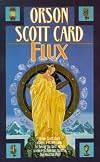
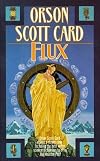
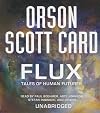
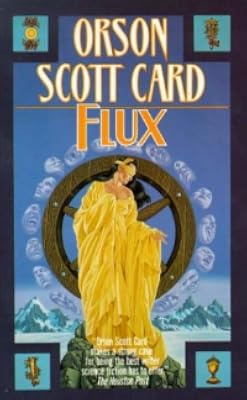
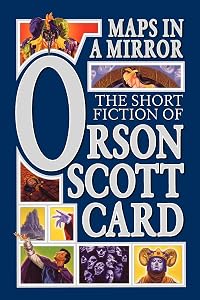
This second volume of Orson Scott Card's five-volume anthology of short stories features seven tales exploring possible future scenarios for the human race. A fascistic government's capital punishment extends beyond death. Intellectually superior aliens from a doomed world choose Earth's dogs as their new vessels. Not-quite-human beings on an Earth wasted by biological warfare continously fight an enemy which has long been annihilated ...Tags
Recommendations















Member Recommendations
Member Reviews
This is a collection of six short stories and a longish novella which takes up almost half the book--and was the only story I honestly liked. I do get and appreciate the point Card is making in "A Thousand Deaths" but found it just too sadistic and gruesome--I could barely make myself skim some parts. Card in the Afterward admits this is the one story of his "so sickening" his wife couldn't even finish it. "Clap Hands and Sing" is a story Card says he meant as "bittersweet"--but given the pedophilic overtones (old man time travels to his twenty-two year old self, still a virgin in body--to have sex with his lost love--when she was fourteen.) "Dogwalker" as Card explained, was his attempt at Cyberpunk--and like the other works in that show more genre, I found it largely incoherent and irritating. (And from what Card says, that's about the way he feels about the genre too.) "But We Try Not to Act Like It" is a dystopia reminiscent of Fahrenheit 457 but it never cohered for me. Neither did "I Put My Blue Jeans On." I found "In the Doghouse" just plain silly.
Which leaves the longish novella of 100 pages--"The Originist." It's essentially a work of fan fiction, based on the Foundation series by Isaac Asimov. In the Afterward he expresses disdain for the entire idea of fan fiction, but thinks he did right by Asimov but that he wrote the story "at the expense of a purely Orson Scott Card novel that will probably never be written." I found that ironic because in no other story of the collection did I hear Card's voice and themes more clearly--and I don't think that voice or themes or communitarian values are anything like those of Asimov--but are very much those of Card and remind me of themes explored in his Ender series and particularly Speaker of the Dead. Maybe that's why "The Originist" is the one story included I did like. But not enough to push this to a three star rating worthy of retaining it's place on my bookshelves. show less
Which leaves the longish novella of 100 pages--"The Originist." It's essentially a work of fan fiction, based on the Foundation series by Isaac Asimov. In the Afterward he expresses disdain for the entire idea of fan fiction, but thinks he did right by Asimov but that he wrote the story "at the expense of a purely Orson Scott Card novel that will probably never be written." I found that ironic because in no other story of the collection did I hear Card's voice and themes more clearly--and I don't think that voice or themes or communitarian values are anything like those of Asimov--but are very much those of Card and remind me of themes explored in his Ender series and particularly Speaker of the Dead. Maybe that's why "The Originist" is the one story included I did like. But not enough to push this to a three star rating worthy of retaining it's place on my bookshelves. show less
"The Originist", basically a fan fiction set in Asimov's Foundation world and featuring Hari Seldon's psychohistory, makes this book a keeper. That's where all the three stars come from.
+ is a hit, - is a miss:
+ A thousand deaths (1978)
+ Clap hands and sing (1982)
+ Dogwalker (1989)
- But we try not to act like it (1979)
- I put my blue genes on (1978)
- In the dog house (1978, with Jay A. Perry)
- The originist (1989)
I'm little impressed by Card's work, that I've read, other than a couple of his Ender books.
+ A thousand deaths (1978)
+ Clap hands and sing (1982)
+ Dogwalker (1989)
- But we try not to act like it (1979)
- I put my blue genes on (1978)
- In the dog house (1978, with Jay A. Perry)
- The originist (1989)
I'm little impressed by Card's work, that I've read, other than a couple of his Ender books.
Ratings
Members
- Recently Added By
Author Information

575+ Works 214,388 Members
Orson Scott Byron Walley Card, was born in 1951 and studied theater at Brigham Young University. He received his B.A. in 1975 and his M.A. in English in 1981. He wrote plays during that time, including Stone Tables (1973) and the musical, Father, Mother, Mother and Mom (1974). A Mormon, Scott served a two-year mission in Brazil before starting show more work as a journalist in Utah. He also designed games at Lucas Film Games, 1989-92. He is best known for his science fiction novels, including the popular Ender series. Well known titles include A Planet Called Treason (1979), Treasure Box (1996), and Heartfire (1998). He has also written the guide called How to Write Science Fiction and Fantasy (1990). His novel Ender's Game and its sequel Speaker for the Dead, both won Hugo and Nebula awards, making Card the only author to win both prizes in consecutive years. His titles Shadows in Flight, Ruins and Ender's Game made The New York Times Best Seller List. He is also the author of The First Formic War Series, which includes the titles Earth Unaware, Earth Afire, and Earth Awakens. (Bowker Author Biography) show less
Series

Belongs to Publisher Series
Work Relationships
Is contained in
Common Knowledge
- Canonical title
- Flux
- Alternate titles
- Maps in a Mirror Book 2: Flux
- Original publication date
- 1990 (collection) (collection)
- Dedication
- To Charlie Ben, who can fly
- Disambiguation notice
- There are two versions of Maps in a Mirror, Volume 2. This is the version containing 7 stories.
Classifications
Statistics
- Members
- 399
- Popularity
- 78,218
- Reviews
- 3
- Rating
- (3.56)
- Languages
- English, French, Polish, Spanish
- Media
- Paper, Audiobook, Ebook
- ISBNs
- 13
- ASINs
- 1