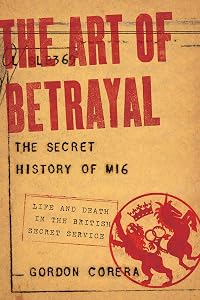
The Art of Betrayal: The Secret History of MI6: Life and Death in the British Secret Service
by Gordon Corera
On This Page
Description
"A wide-ranging, thought-provoking, and highly readable history of Britain's postwar Secret Intelligence Service, popularly known as MI6." ?The Wall Street JournalFrom Berlin to the Congo, from Moscow to the back streets of London, these are the true stories of the agents on the front lines of British intelligence. And the truth is sometimes more remarkable than the spy novels of Ian Fleming or John le Carré.
Gordon Corera provides a unique and unprecedented insight into this secret world show more and the reality that lies behind the fiction. He tells the story of how the secret service has changed since the end of the World War II and, by focusing on the real people and the relationships that lie at the heart of espionage, illustrates the danger, the drama, the intrigue, and the moral ambiguities that come with working for British intelligence.
From the defining period of the early Cold War through modern day, MI6 has undergone a dramatic transformation from a gung-ho, amateurish organization to its modern, no less controversial, incarnation. And some of the individuals featured here, in turn, helped shape the course of those events. Corera draws on the first-hand accounts of those who have spied, lied, and in some cases nearly died in service of the state. They range from the spymasters to the agents they controlled to their sworn enemies, and the result is a "fast-paced" examination that ranges "from the covert diplomacy of the Cold War to recent security concerns in Afghanistan and the Middle East" (The Times, London).
. show less
Tags
Recommendations











Member Reviews
"We'd have been better off doing nothing"
Alan Bates starred in two mildly comic tv films. An Englishman Abroad, by Alan Bennett, told the story of a tawdry, disheveled spy who defected to the USSR. He was irrelevant, ignored and reduced to scrounging bars of soap at receptions. In Tom Stoppard's The Dog It Was That Died, a double-double-double agent tries to commit suicide because he couldn’t figure out who he was really working for – or why. Both amusing, but I had no idea how close they were to the truth. Far from the glam world of 007, intelligence is a morass of malign incompetence and paranoia.
The Art of Betrayal is an astonishing depiction of the day to day failings of the intelligence community. They stumble, they fumble, show more they make it up as they go along, but mostly, they accomplish essentially nothing. Along the way, they betray colleagues, friends, family, and of course, their countries. And still they make no difference to history.
For decades it seemed their primary objective was to get civil servants and spies from the other side to betray their country. Yet they were beside themselves at the thought of it happening among their own. But of course it did, and The Art of Betrayal depicts decades of such betrayal, and all the resources and manpower it took to pull it off or detect it, neutralize it or exploit it. The details are exquisite.
MI6 began in 1909, aimlessly counting things: trains, people, cargo. “Much of the routine work of MI6 was a form of glorified trainspotting.” Before World War I, people were paid, for example, to help determine German naval strength by strolling around harbors and noting the vessels there.
Yet 45 years later, when it came to intelligence from inside the USSR, the USA and the UK both had “absolutely nothing”. Instead, they all played out a cheap drama in Vienna and Berlin, chasing each other for scraps of meaningless data, and of course, encouraging betrayal. The novels of Graham Greene, Ian Fleming and John Le Carré, all fulltime spies, glorified the mostly boring, mostly mundane, and almost always futile existence of their real lives.
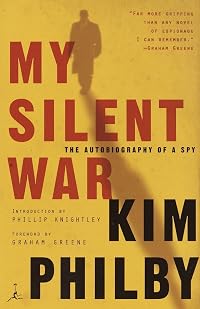
Then suddenly, the game changed. Kim Philby’s treachery led to suspicions of traitors everywhere. MI5 investigated MI6, which investigated MI5 and the CIA. It got to the absurd point where they were investigating the prime minister, Harold Wilson, as a Communist spy. Meanwhile the CIA suspected everybody, including itself, because it could not believe it had never had a traitor to call its own. It had one soon enough however, in the person of Aldrich Ames.
Soon, spies who worked the Soviet Block were at a disadvantage and looked down on. A rising star was told “You’ve got to know too many Russians”. “But that’s the job!” was the ignored reply. Instead of a head office promotion, he was transferred out of Geneva to the Far East.
Every decade seemed to have its all star Soviet informer, who sent MI6 scrambling in all directions following up his leads. And it still all amounted, as ever, to nothing. No wars were averted, no attacks prevented, no lives saved.
Possibly the worst example is Osama Bin Laden, an actual villain the CIA tracked through the 90s, with a view to eliminating him. The bureaucracy, rules, regulations and orders, not to mention bridges burned with the Afghans and Pakistanis, meant it never followed through or accomplished anything. Then 9-11 came - as a shock - and CIA staff vacated their building expecting it to be a target.
This was quickly followed by incredible dollops of selective nonsense accepted by Western leaders to justify war in Iraq. The total fraud of evidence stopped no one. And the intelligence community, in a Keystone Kops slapstick comedy, kept piling it up. To the public it was obvious. To Blair, Bush, Cheney and Powell, it was concrete proof. The result, as we know, is an increase in terrorist threats, as Islam feels under attack. MI6 was justifiably humiliated.
Corera writes in a clear, spare, direct style. No words are wasted. No pointless adjectives discolor the discourse. It’s active voice, with nary an extra comma. It is a style that is rare and precious, and delivers far more impact than the more florid prose we see daily. The Art of Betrayal is information far more valuable than the data collected by its characters. As more than one has of his sources described it, intelligence spying “does more harm than good”.
David Wineberg show less
Alan Bates starred in two mildly comic tv films. An Englishman Abroad, by Alan Bennett, told the story of a tawdry, disheveled spy who defected to the USSR. He was irrelevant, ignored and reduced to scrounging bars of soap at receptions. In Tom Stoppard's The Dog It Was That Died, a double-double-double agent tries to commit suicide because he couldn’t figure out who he was really working for – or why. Both amusing, but I had no idea how close they were to the truth. Far from the glam world of 007, intelligence is a morass of malign incompetence and paranoia.
The Art of Betrayal is an astonishing depiction of the day to day failings of the intelligence community. They stumble, they fumble, show more they make it up as they go along, but mostly, they accomplish essentially nothing. Along the way, they betray colleagues, friends, family, and of course, their countries. And still they make no difference to history.
For decades it seemed their primary objective was to get civil servants and spies from the other side to betray their country. Yet they were beside themselves at the thought of it happening among their own. But of course it did, and The Art of Betrayal depicts decades of such betrayal, and all the resources and manpower it took to pull it off or detect it, neutralize it or exploit it. The details are exquisite.
MI6 began in 1909, aimlessly counting things: trains, people, cargo. “Much of the routine work of MI6 was a form of glorified trainspotting.” Before World War I, people were paid, for example, to help determine German naval strength by strolling around harbors and noting the vessels there.
Yet 45 years later, when it came to intelligence from inside the USSR, the USA and the UK both had “absolutely nothing”. Instead, they all played out a cheap drama in Vienna and Berlin, chasing each other for scraps of meaningless data, and of course, encouraging betrayal. The novels of Graham Greene, Ian Fleming and John Le Carré, all fulltime spies, glorified the mostly boring, mostly mundane, and almost always futile existence of their real lives.
Then suddenly, the game changed. Kim Philby’s treachery led to suspicions of traitors everywhere. MI5 investigated MI6, which investigated MI5 and the CIA. It got to the absurd point where they were investigating the prime minister, Harold Wilson, as a Communist spy. Meanwhile the CIA suspected everybody, including itself, because it could not believe it had never had a traitor to call its own. It had one soon enough however, in the person of Aldrich Ames.
Soon, spies who worked the Soviet Block were at a disadvantage and looked down on. A rising star was told “You’ve got to know too many Russians”. “But that’s the job!” was the ignored reply. Instead of a head office promotion, he was transferred out of Geneva to the Far East.
Every decade seemed to have its all star Soviet informer, who sent MI6 scrambling in all directions following up his leads. And it still all amounted, as ever, to nothing. No wars were averted, no attacks prevented, no lives saved.
Possibly the worst example is Osama Bin Laden, an actual villain the CIA tracked through the 90s, with a view to eliminating him. The bureaucracy, rules, regulations and orders, not to mention bridges burned with the Afghans and Pakistanis, meant it never followed through or accomplished anything. Then 9-11 came - as a shock - and CIA staff vacated their building expecting it to be a target.
This was quickly followed by incredible dollops of selective nonsense accepted by Western leaders to justify war in Iraq. The total fraud of evidence stopped no one. And the intelligence community, in a Keystone Kops slapstick comedy, kept piling it up. To the public it was obvious. To Blair, Bush, Cheney and Powell, it was concrete proof. The result, as we know, is an increase in terrorist threats, as Islam feels under attack. MI6 was justifiably humiliated.
Corera writes in a clear, spare, direct style. No words are wasted. No pointless adjectives discolor the discourse. It’s active voice, with nary an extra comma. It is a style that is rare and precious, and delivers far more impact than the more florid prose we see daily. The Art of Betrayal is information far more valuable than the data collected by its characters. As more than one has of his sources described it, intelligence spying “does more harm than good”.
David Wineberg show less
This is a fascinating book, filled with names, places, dates and events that illustrate and illuminate a lot about British Secret Service activities - and that of some other agencies during the Cold War and after it.
Ratings
Members
- Recently Added By
Published Reviews
[Gordon Corera's The Art of Betrayal is] a wide-ranging, thought-provoking and highly readable history of Britain's postwar Secret Intelligence Service, popularly known as M16. . . . If journalism is the first draft of history, then serious and substantial books like Mr. Corera's are the second.
added by sgump
Author Information

8 Works 902 Members
Gordon Corera is a Security Correspondent for BBC News. He has presented major documentaries for the BBC on cybersecurity. He also the author of The Art of Betrayal. Gordon lives in London.
Common Knowledge
- Original publication date
- 2013-01-09
- Important places
- Great Britain
Classifications
- Genres
- Nonfiction, History, General Nonfiction, Politics and Government
- DDC/MDS
- 327.1241 — Society, government, & culture Political science International Relations: Spies Foreign policy and specific topics in international relations Espionage and subversion Intelligence Gathering - Europe
- LCC
- UB251 .G7 .C64 — Military Science Military administration Military administration Intelligence
- BISAC
Statistics
- Members
- 183
- Popularity
- 176,393
- Reviews
- 2
- Rating
- (3.89)
- Languages
- English
- Media
- Paper, Audiobook, Ebook
- ISBNs
- 8
- ASINs
- 8