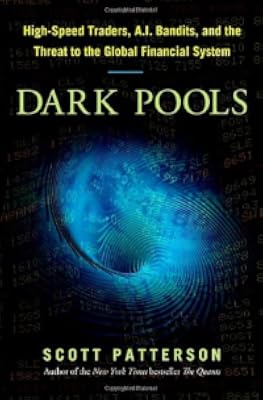
Dark Pools: The Rise of the Machine Traders and the Rigging of the U.S. Stock Market
by Scott Patterson
On This Page
Description
Evaluates the cost and consequences of high-speed trading, arguing that the development of automatic, super-intelligent trading machines is eliminating necessary human interests and compromising regulation measures.Tags
Recommendations
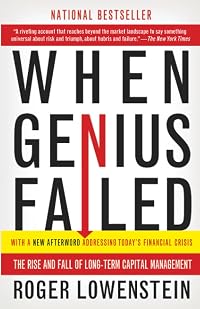
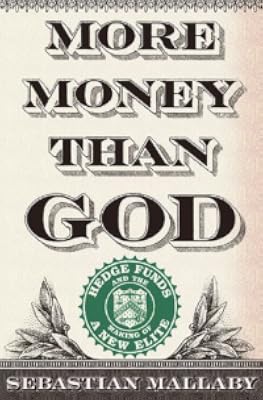
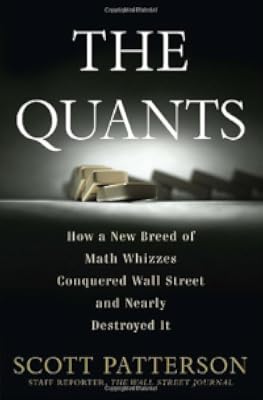
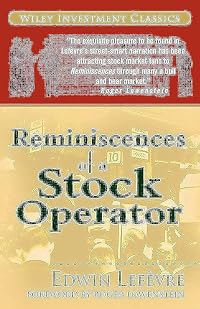

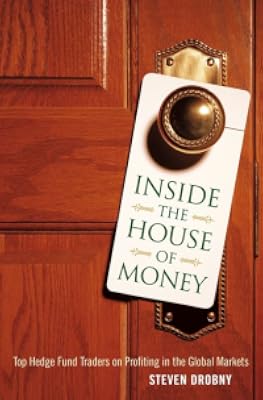
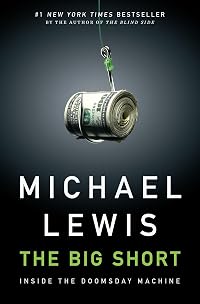
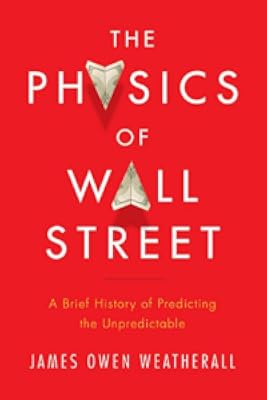
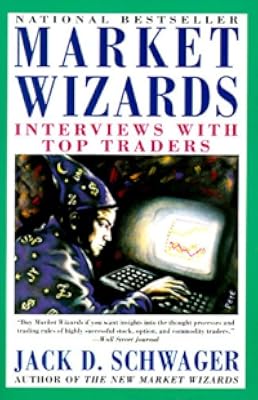
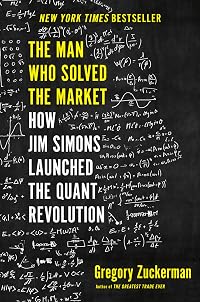

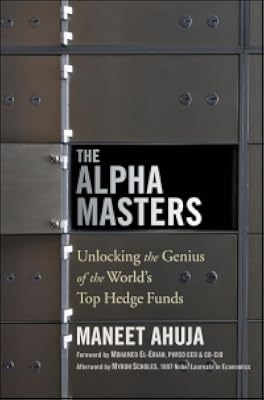

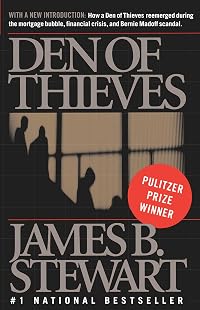
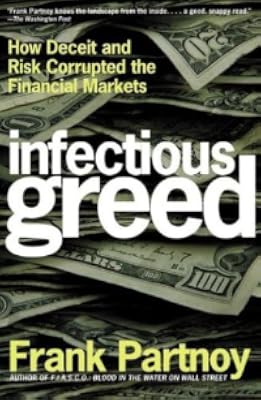
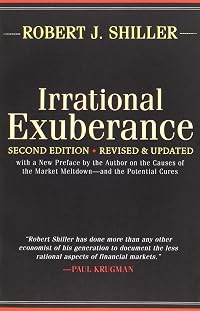

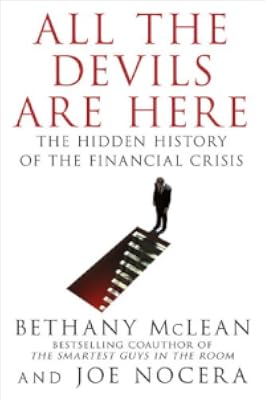
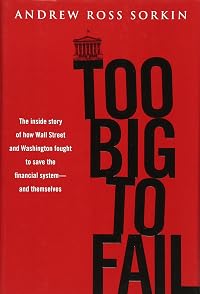
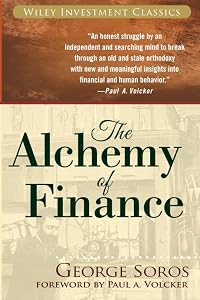
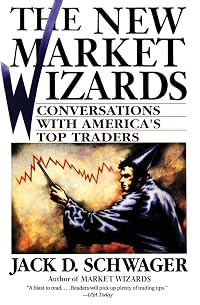
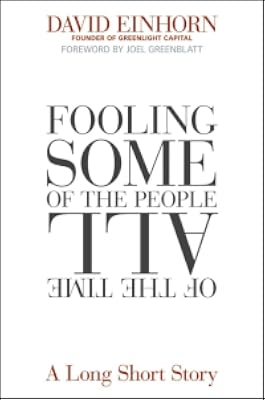
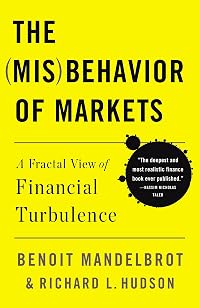
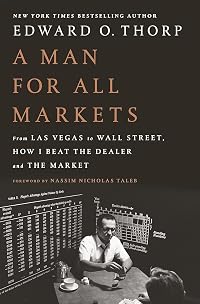
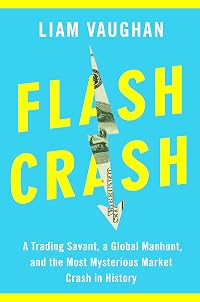
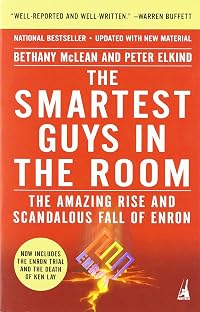
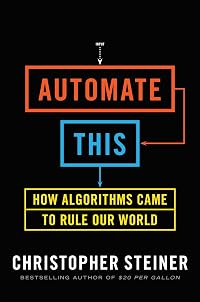

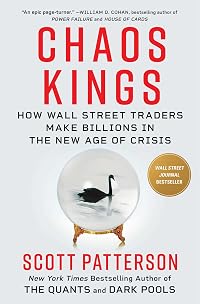
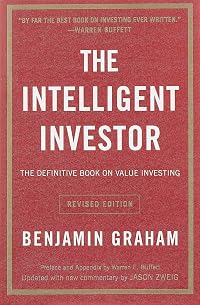
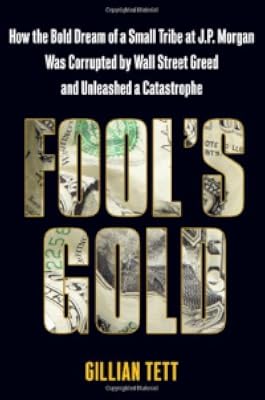
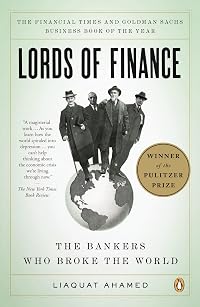
Member Recommendations
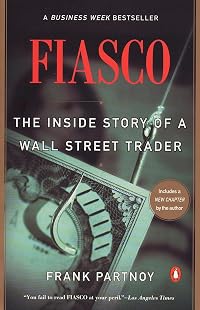
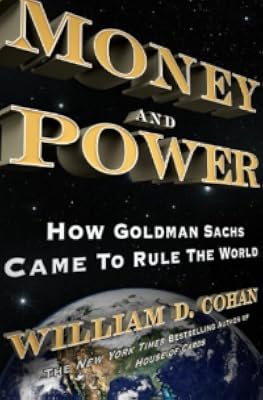
Stbalbach Similar writing styles, about outsider traders who beat the establishment and changed the rules.
Member Reviews
When I explained to my wife that high frequency traders were using artificial intelligence to place millions of stock trades in milliseconds, holding stocks on average for no longer than 22 seconds and effectively gaming stock markets around the world, her first reaction was "I had no idea." Her second reaction was "So what chance does the average person buying a stock have?" Computers have made the stock markets unrecognizable to us today. This book is a pretty good primer on how the changes took place and who changed the playing field, like it or not.
Back in the days when computers started appearing on desks in homes, there was a popular fear that some day the machines would Rise Up Against Us. Then the first home printers appeared and anyone trying to configure the things soon learned just how stupid machines were. The only threat that might be posed by a machine is if you climbed into the bath with your toaster.
However, the people programming machines soon took advantage in the growing power of computers to make them do things faster. Not intelligent things like composing a jingle, but straightforward things, very quickly indeed, constantly, without bathroom or even martini breaks. Then more twisted straightforward things, like buying and selling shares, but really quickly, then show more buying and selling shares if a certain criteria was met.
‘Dark Pools’ is the story of how guys wearing tennis shoes instead of tasselled loafers didn’t so much revolutionise the world of finance in a decade but rather laid waste to it and built a new computerised market in its place. It’s essential reading for anyone who wants to know why the global financial crisis happened. It reads like a cross between a thriller and the plot of a disaster movie. Which should probably not be such a surprise.
If greed really is the root of all evil, then a computer programmed to be greedy is possibly the square root of it.
As Dark pools explains, anyone who works in finance does so because they want to get rich. People in finance get so rich that even the occasional exceptions who get into the finance industry because they want to make a change that will make the finance system more democratic end up getting incredibly wealthy as a by-product of their actions.
Driven by a desire for wealth, the bankers and traders who populate Dark Pools do not want to get wealthy through, for instance, working really hard on the farm or in the mine, or inventing something really cool and useful or manufacturing the cool and useful thing. No, they would rather get rich by sticking a price on the crop or the yield or the company and trading with other rich folk to see who can get richest fastest.
This all used to be done on the floors of stock exchanges, then computers entered the game, programmed to make money, doing what they are told, quickly. So you have distilled greed happening very quickly trading on a global scale. It was only a matter of time before it all went horribly wrong.
One of the striking things that you learn when you read Dark Pools is that the global financial markets are all inhabited by men. There is so much testosterone evident in this book that I could feel my chest hair thickening just touching it. Make no mistake, the guys in this book, whose only defence when accused of causing a global financial crisis was that they were not smart enough to programme their computers properly, think that they are alpha males. They smoke cigars, they drink lots of coffee, they make extraordinary amounts of money and they get busted by the financial authorities.
That’s where the women are. Women are the regulators. Read this book and you will realise why every time you see a woman standing at a podium wearing her hair in a tight bun and looking furious as she announces that her regulator is slapping a huge fine on some trader, she is furious because the trader in question probably spends more than the value of the fine on cigars every week.
There are passages in this book that you will have to read twice. Occasionally, this is because the language can get technical and complicated, more usually, it’s because you simply cannot believe the attitudes of the people who were making the trades and taking the decisions that got everybody in the developed world in this mess in the first place.
This is a fascinating record of the establishment (we have money, pull up the ladder and let’s make more) being consigned to history by innovators and risk-takers (who cares about your ladder, I have just built myself a jet-pack!). show less
However, the people programming machines soon took advantage in the growing power of computers to make them do things faster. Not intelligent things like composing a jingle, but straightforward things, very quickly indeed, constantly, without bathroom or even martini breaks. Then more twisted straightforward things, like buying and selling shares, but really quickly, then show more buying and selling shares if a certain criteria was met.
‘Dark Pools’ is the story of how guys wearing tennis shoes instead of tasselled loafers didn’t so much revolutionise the world of finance in a decade but rather laid waste to it and built a new computerised market in its place. It’s essential reading for anyone who wants to know why the global financial crisis happened. It reads like a cross between a thriller and the plot of a disaster movie. Which should probably not be such a surprise.
If greed really is the root of all evil, then a computer programmed to be greedy is possibly the square root of it.
As Dark pools explains, anyone who works in finance does so because they want to get rich. People in finance get so rich that even the occasional exceptions who get into the finance industry because they want to make a change that will make the finance system more democratic end up getting incredibly wealthy as a by-product of their actions.
Driven by a desire for wealth, the bankers and traders who populate Dark Pools do not want to get wealthy through, for instance, working really hard on the farm or in the mine, or inventing something really cool and useful or manufacturing the cool and useful thing. No, they would rather get rich by sticking a price on the crop or the yield or the company and trading with other rich folk to see who can get richest fastest.
This all used to be done on the floors of stock exchanges, then computers entered the game, programmed to make money, doing what they are told, quickly. So you have distilled greed happening very quickly trading on a global scale. It was only a matter of time before it all went horribly wrong.
One of the striking things that you learn when you read Dark Pools is that the global financial markets are all inhabited by men. There is so much testosterone evident in this book that I could feel my chest hair thickening just touching it. Make no mistake, the guys in this book, whose only defence when accused of causing a global financial crisis was that they were not smart enough to programme their computers properly, think that they are alpha males. They smoke cigars, they drink lots of coffee, they make extraordinary amounts of money and they get busted by the financial authorities.
That’s where the women are. Women are the regulators. Read this book and you will realise why every time you see a woman standing at a podium wearing her hair in a tight bun and looking furious as she announces that her regulator is slapping a huge fine on some trader, she is furious because the trader in question probably spends more than the value of the fine on cigars every week.
There are passages in this book that you will have to read twice. Occasionally, this is because the language can get technical and complicated, more usually, it’s because you simply cannot believe the attitudes of the people who were making the trades and taking the decisions that got everybody in the developed world in this mess in the first place.
This is a fascinating record of the establishment (we have money, pull up the ladder and let’s make more) being consigned to history by innovators and risk-takers (who cares about your ladder, I have just built myself a jet-pack!). show less
This is a remarkable story and one of my favorite books of the year. It details how computers came to replace people in financial trading, giving rise to entirely new forms based on algorithms, high-speed trading and artificial intelligence. It's one of the most important stories of the modern era. The book reads like Michael Lewis' The Big Short, hard to put down but dense with industry information and personal stories.
The protagonist is a reclusive slacker programmer named Josh Levine (josh.com) who almost single-handed forced the industry to change with his software (Island ECN) to allow computers to trade between one another without human middle-men taking a cut. This would seem logical but the entrenched exchanges (NYSE, NASDAQ) show more had little interest or incentive since their flesh and blood market-maker middle-men were making so much money the old fashioned way. Levine and company eventually became so successful the big boards had no choice but to follow or die, eventually buying them out and adopting Levine's system. Incredibly he wrote most of it in C on MS-DOS using commodity PC hardware.
There's much more to the story, it will appeal to anyone who trades stocks or knows something about computer networks ("the plumbing"). The book leaves open the specter of another "flash crash" like what happened in 2010 when the algos (computer trading algorithms) went haywire. The book is strongest as a history of how computers replaced humans, it's a wild and fascinating trip that is still ongoing. Artificial Intelligence is now getting good at long term trading (the next frontier after micro-second HST) - just hand the money to the computer and it does the rest, an artificial Warren Buffet to replace money managers. show less
The protagonist is a reclusive slacker programmer named Josh Levine (josh.com) who almost single-handed forced the industry to change with his software (Island ECN) to allow computers to trade between one another without human middle-men taking a cut. This would seem logical but the entrenched exchanges (NYSE, NASDAQ) show more had little interest or incentive since their flesh and blood market-maker middle-men were making so much money the old fashioned way. Levine and company eventually became so successful the big boards had no choice but to follow or die, eventually buying them out and adopting Levine's system. Incredibly he wrote most of it in C on MS-DOS using commodity PC hardware.
There's much more to the story, it will appeal to anyone who trades stocks or knows something about computer networks ("the plumbing"). The book leaves open the specter of another "flash crash" like what happened in 2010 when the algos (computer trading algorithms) went haywire. The book is strongest as a history of how computers replaced humans, it's a wild and fascinating trip that is still ongoing. Artificial Intelligence is now getting good at long term trading (the next frontier after micro-second HST) - just hand the money to the computer and it does the rest, an artificial Warren Buffet to replace money managers. show less
Patterson has written a fascinating and detailed history of the rise of computers and bots in the American, and now global stock markets.
He has got potted histories of the major players in this business and shows how they wrestled power and control and most importantly money from the old guard who controlled the market before. He shows how the raise of computer generated trading has massively increased the churn of stocks, where the fastest to buy or sell is the one who makes the most money. There is a chapter on the flash crash, that took place on the 6th May 2010, where the computer started to sell and sell, causing the US stock market to drop 9% in minutes.
Most frighteningly he looks at the new computerised way that is coming AI. show more These machines take data from all over the web, from financial web sites to social media and make scarily accurate guesses as to the financial performance of a particular share from this feed aggregation. Not only are they demonstrating that they can outthink humans, but they can react almost instantly.
You don't expect a business book to read like a thriller, but this does. It does get technical at some points, but it is written well and is very readable. The implication behind out of control stock bots on the global economy does not bear thinking about. show less
He has got potted histories of the major players in this business and shows how they wrestled power and control and most importantly money from the old guard who controlled the market before. He shows how the raise of computer generated trading has massively increased the churn of stocks, where the fastest to buy or sell is the one who makes the most money. There is a chapter on the flash crash, that took place on the 6th May 2010, where the computer started to sell and sell, causing the US stock market to drop 9% in minutes.
Most frighteningly he looks at the new computerised way that is coming AI. show more These machines take data from all over the web, from financial web sites to social media and make scarily accurate guesses as to the financial performance of a particular share from this feed aggregation. Not only are they demonstrating that they can outthink humans, but they can react almost instantly.
You don't expect a business book to read like a thriller, but this does. It does get technical at some points, but it is written well and is very readable. The implication behind out of control stock bots on the global economy does not bear thinking about. show less
A well written fun slightly fictionalised reconstruction of the story of automated trading algorithms being introduced to the US stock market. Tha author does a great job in making what would seem to be an abstract story interesting by reconstructing the characters so that their dynamics and characters drive the plot on.
There are several problems with this book though even though I highly recommend it:
- The story brushes on the details that surround how the algos work and their ecosystem but does not do so systematically enough to present insight and educate a lay audience
- The author touches on the dark pool scenarios several times and in different contexts but does not give these
much context, we are left with many questions about dark show more pools…
- We never clearly hear that the problem is a lack of regulation despite that ultimately being the most likely author position
- I find it impossible to think that someone would write at this level of detailed reconstruction of history and not include at least a post-script that looks at these issues from a broader perspective and include a note to the edition that talks about current algos
The book feels like half a book, like the qualitative research evidence for a discussion to be made in another half. show less
There are several problems with this book though even though I highly recommend it:
- The story brushes on the details that surround how the algos work and their ecosystem but does not do so systematically enough to present insight and educate a lay audience
- The author touches on the dark pool scenarios several times and in different contexts but does not give these
much context, we are left with many questions about dark show more pools…
- We never clearly hear that the problem is a lack of regulation despite that ultimately being the most likely author position
- I find it impossible to think that someone would write at this level of detailed reconstruction of history and not include at least a post-script that looks at these issues from a broader perspective and include a note to the edition that talks about current algos
The book feels like half a book, like the qualitative research evidence for a discussion to be made in another half. show less
Very well written, albeit with some dramatisation which never adds anything to factual books. I already knew about dark pools but I've learned a lot about the story behind their creation. The author seems to have a poor grasp of technology but I'm willing to chalk it up to oversimplification in an effort to reach a non-technical audience. It never gets preachy which is something rare in books about economy or the stock market. It tells you the story and leaves the exclamations of indignation or awe up to you.
I liked this book way more than I thought I would. Previously my opinion was that this topic was somewhat dry and boring, but the author is similar to Michael Lewis in that he weaves a compelling story around a subject that is somewhat complex and not familiar to a lot of people. Good read if you are interested in finance or the stock market.
Members
- Recently Added By
Author Information

3 Works 959 Members
Scott Patterson worked for several years as a financial reporter at the Wall Street Journal. He lives in New York.
Some Editions
Common Knowledge
- Original publication date
- 2012
- People/Characters
- Joshua Levine; Haim Bodek; Jeffrey Citron; Sheldon Maschler; Will Sterling; Bernard Madoff
- Important places
- New York, New York, USA; Chicago, Illinois, USA
- Important events
- Flash Crash, May 6, 2010
Classifications
Statistics
- Members
- 264
- Popularity
- 123,507
- Reviews
- 16
- Rating
- (4.10)
- Languages
- Chinese, English
- Media
- Paper, Audiobook, Ebook
- ISBNs
- 8
- ASINs
- 5