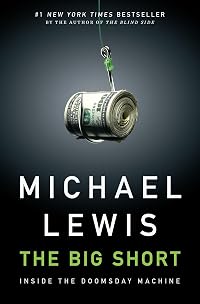
The Big Short: Inside the Doomsday Machine
by Michael Lewis
On This Page
Description
The author examines the causes of the U.S. stock market crash of 2008 and its relation to overpriced real estate, bad mortgages, shareholder demand for excessive profits, and the growth of toxic derivatives.Tags
Recommendations
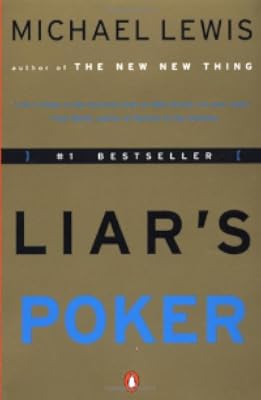
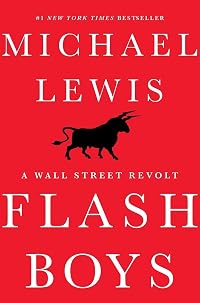
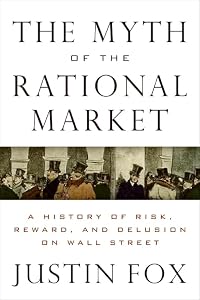
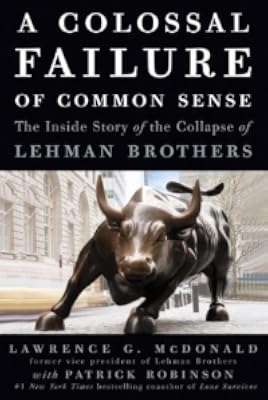
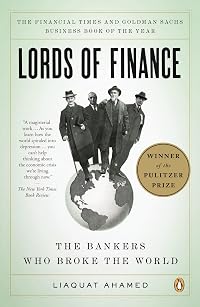
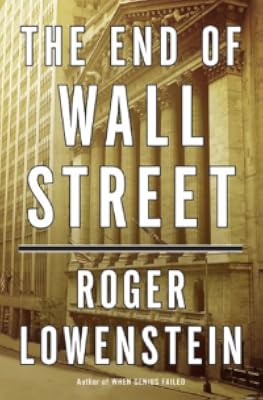
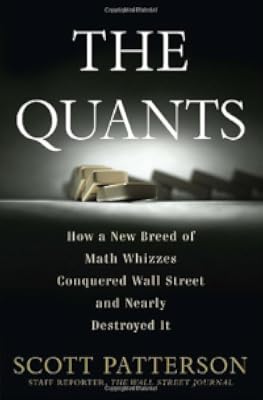
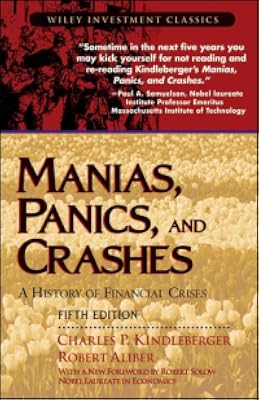
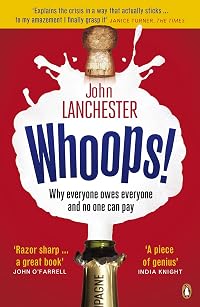
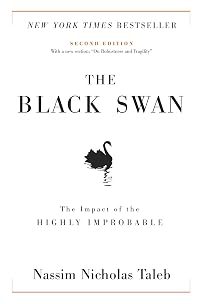
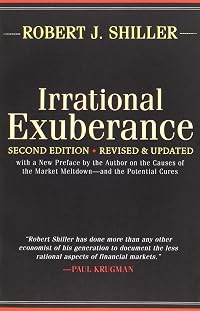
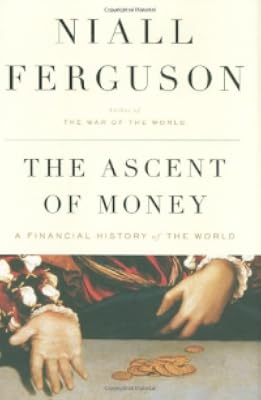
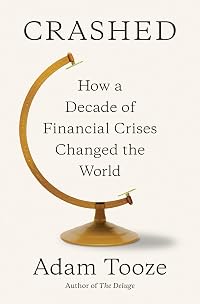
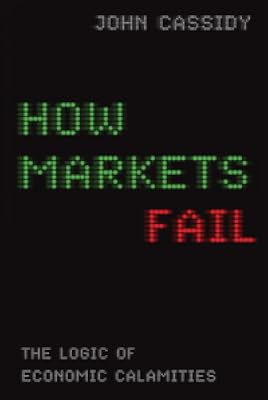
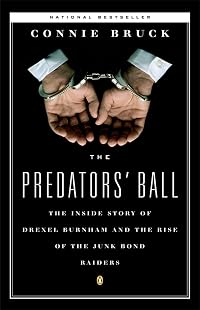


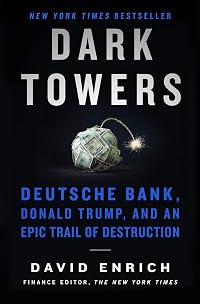
Member Recommendations
browner56 The hubris, greed and mismanagement behind two of the most devasting financial collapses of the last 75 years, brilliantly and carefully told.
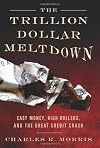
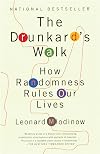
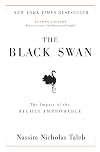
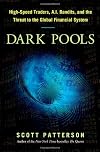
Dark Pools: The Rise of the Machine Traders and the Rigging of the U.S. Stock Market by Scott Patterson
Stbalbach Similar writing styles, about outsider traders who beat the establishment and changed the rules.
BookshelfMonstrosity The Big Short and House of Cards present views of the economic crisis and collapse of the financial markets in the early 21st century. Both are disturbing and character-driven, as they examine the causes and personalities involved.
Member Reviews
Arriving very late to the party, I finally read Lewis' The Big Short. I enjoyed both his Liar's Poker and Moneyball. His talent of drawing quirky portraits is again on display. The Big Short might also be called "The Revenge of the Nerds". In Lewis' tale, it is only the outcasts, the socially misfits and cranks. who discover that the US real estate market has run amok, fueled by easy money provided both by the FED and Wall Street whose greedy investment bankers eagerly sold their clients toxic sludge with Triple A ratings, signed by Moody's and Standard & Poor's. Lewis' tale is a good yarn of David vs. Goliath (where Goliath is rescued by government life support). The banks, the rating agencies and the regulators thus are allowed off show more the hook far too easily.
The crisis of 2008 happened because criminal activities were not checked by the watchdogs whose sole job would have been to keep those criminals in check. As Lewis shows, the bosses in the rating agencies were not unaware that BBB tranches could not magically all be turned into AAA tranches. They signaled and made clear to their employees that they wanted this fraud to proceed (and were compensated for their sale of their reputation accordingly by the investment banks). The retail banks knew that "liar loans" were not worth the contract paper they were signed on. They willingly handed on unsound risks to dumb investors (often European) who believed in the "made in the USA" quality label, despite much prior experience with the shoddy quality of US cars which should have cured anyone from such an idea. Lawyers and regulators also, for a fee, looked away, actively directing the Titanic onto the iceberg. Instead of paying the price for their folly, the criminals not only were allowed to keep their loot, government handed them huge amounts of money. In directing his focus on the few who stood on the right side of history, Lewis allows the culprits to get away. Just like Liar's Poker became a manual for junior Gordon Geckos. The Big Short might train the next generation of real estate crooks. show less
The crisis of 2008 happened because criminal activities were not checked by the watchdogs whose sole job would have been to keep those criminals in check. As Lewis shows, the bosses in the rating agencies were not unaware that BBB tranches could not magically all be turned into AAA tranches. They signaled and made clear to their employees that they wanted this fraud to proceed (and were compensated for their sale of their reputation accordingly by the investment banks). The retail banks knew that "liar loans" were not worth the contract paper they were signed on. They willingly handed on unsound risks to dumb investors (often European) who believed in the "made in the USA" quality label, despite much prior experience with the shoddy quality of US cars which should have cured anyone from such an idea. Lawyers and regulators also, for a fee, looked away, actively directing the Titanic onto the iceberg. Instead of paying the price for their folly, the criminals not only were allowed to keep their loot, government handed them huge amounts of money. In directing his focus on the few who stood on the right side of history, Lewis allows the culprits to get away. Just like Liar's Poker became a manual for junior Gordon Geckos. The Big Short might train the next generation of real estate crooks. show less
The Big Short by Michael Lewis is one of the smartest books I ever read and it rarely meanders. This short history is a careful explanation of an occurrence that was fraught with extremely complicated financial and mathematical models. If you come away feeling like you still don't fully understand credit default swaps and consolidated debt obligations, then you're not alone. (I still don't.) Part of the truth is they were mostly designed to be complicated, and another part is Wall Street was searching for even more creative ways of creating wealth from nothing.
It's almost too simplistic to reduce the sub-prime mortgage crisis down to simple explanations such as greed, being uninformed, targeting the lower middle class, fraud, lack of show more regulation or even a simple loss of values. The truth is much more complicated. I was most intrigued to peer into the daily lives of the types of people who inhabit the Wall Street culture. It seems most of them aren't driven primarily by greed, though need for unbelievable sums of money does play a significant role. It's like they see the financial markets as a game and they want to play, and given this culture possesses the raw power to move and shake the world, it's natural for ambitious people to want to be included.
Read this book if you're looking for why the sub-prime mortgage crisis happened. The answer is both routinely boring and really, really frightening. show less
It's almost too simplistic to reduce the sub-prime mortgage crisis down to simple explanations such as greed, being uninformed, targeting the lower middle class, fraud, lack of show more regulation or even a simple loss of values. The truth is much more complicated. I was most intrigued to peer into the daily lives of the types of people who inhabit the Wall Street culture. It seems most of them aren't driven primarily by greed, though need for unbelievable sums of money does play a significant role. It's like they see the financial markets as a game and they want to play, and given this culture possesses the raw power to move and shake the world, it's natural for ambitious people to want to be included.
Read this book if you're looking for why the sub-prime mortgage crisis happened. The answer is both routinely boring and really, really frightening. show less
I'm not quite sure this book deserves 5 stars, but I personally found it so fascinating that I gave it that fifth star. Michael Lewis has a great, engaging writing style that makes you feel as though you really know the players in this tale of the housing market (and subsequent banking system) collapse. I've never felt quite satisfied that I knew the real story behind the collapse of the housing market and if and why Wall Street was to blame. I'm still not 100% there, but I know a LOT more than I did before. Unfortunately, it is very complex, and even though I have some knowledge of finance, it still wasn't perfectly clear to me how the various financial instruments exactly worked, but what Lewis does make clear is the whole psychology show more that drove the bubble and then lead to the collapse. He tells the story through the eyes of a few contrarians - - folks who saw the problems with the housing markets before anyone else. It's a brilliant idea to focus on those very few insightful people - - especially since they were all quirky and unlikely to be taken seriously by the rest of Wall St.I'm really looking forward to reading more on this topic. This book didn't address government's role very much, and I'd like to learn more about that element. All in all, Lewis deliver a very readable book that simultaneously taught me a lot while fueling my interest in learning more.
show less
I think this is the best one that Michael Lewis has produced so far, in terms of content. I started it the evening I got it, and woke up early the next morning to finish it. Maybe Moneyball was a little more accessible – after all, second- and third-order derivatives are, almost by definition, complex and baffling – but in the long run, it doesn't really matter whether the Oakland Athletics or the New York Yankees win their league or division. It does, however, matter a lot if the financial industry creates a trillion dollars of worthless "Monopoly money" and then persuades the government to exchange it for real money on a one-for-one basis.
Once again, Lewis explains a complex situation through the eyes of edgy outsider contrarians show more who are out to beat the system by exposing its inherent weaknesses, and we learn, along with them, of the shameful excesses and actions of these "blue-chip" institutions.
If the book has a fault, it's that it's not hard enough on the government regulators and organizations who gave the taxpayers' money to these banks. I'm guessing that the publisher got a few cold feet, and the legal section advised some parts to be snipped out. After all, if you stressed Hank Paulson's previous ties to Goldman Sachs and then in the next paragraph explain how the Treasury gave preferential treatment to Goldman Sachs, you might just be laying yourself open to some sort of legal threats.
That aside, I recommend it to anyone who has an interest in how the financial world got royally worked over by a small gang of ruthless con-men. show less
Once again, Lewis explains a complex situation through the eyes of edgy outsider contrarians show more who are out to beat the system by exposing its inherent weaknesses, and we learn, along with them, of the shameful excesses and actions of these "blue-chip" institutions.
If the book has a fault, it's that it's not hard enough on the government regulators and organizations who gave the taxpayers' money to these banks. I'm guessing that the publisher got a few cold feet, and the legal section advised some parts to be snipped out. After all, if you stressed Hank Paulson's previous ties to Goldman Sachs and then in the next paragraph explain how the Treasury gave preferential treatment to Goldman Sachs, you might just be laying yourself open to some sort of legal threats.
That aside, I recommend it to anyone who has an interest in how the financial world got royally worked over by a small gang of ruthless con-men. show less
I'm actually a little bit angry that this was such a fun read, because I think that the view it presents of the crisis is fundamentally misleading - namely that it treats the financial crisis as a poker game, a bunch of bad beats, rather than what was, which was a series of major crimes that helped plunge the entire world into a catastrophic recession. This book is an account of the subprime mortgage bond meltdown on Wall Street in the years leading up to the latest recession we're still basically treading water in, 2005 to 2008. It centers on a handful of plucky underdog traders whose antisocial, anti consensus, anti-mainstream views helped them see through the miasma of manic speculation around them and eventually reap vast profits show more when everyone slowly realized that the products they had been frantically trading to each other were based on optimistic assumptions that they didn't understand or didn't care about.
It's an excellent tale ably told, with compelling characters, a strong narrative, plenty of clear exposition of notoriously abstruse financial products like credit default swaps and collateralized debt obligations, and even a suspenseful plot arc as the clock on the Doomsday Machine of the subtitle ticks down to zero and people start losing billions of dollars. This would make for an excellent thriller novel, even if only people who actually worked on Wall Street would read it. Unfortunately, this is nonfiction targeted at a general audience, meaning it's supposed to be an accurate account of How Shit Went Down in the days before the financial crisis became everyone's crisis, and it's really lacking when you compare it to other accounts. Lewis' primary mistake is limiting his scope, and although the humanization admittedly improves the read, it completely leaves out the key lesson of the whole thing. He tells the story like it's a bunch of individual oddball traders bucking conventional wisdom through their superior research and what amounts to better math skills (one of the erstwhile heroes has Aspergers, which we're told helps him focus on his work better than the normies) in order to pursue essentially individual grudges in the small world of bond trading. It actually reads oddly like those parts of James Bond novels where he wins big in baccarat because he's a badass.
There are pages and pages of backstory on these traders operating in this world where ridiculous deals that no one understands are almost a given, and it's not until the end that you realize that some major questions don't get answered, like: are Our Heroes actually smarter than all these other traders? The book is certainly written that way, and there are several scenes where the opponents are shown to be idiots who don't reads prospectuses or question the flaws in their pricing models or consider what exactly it means to create all these nifty new types of securities. But does that imply that the crisis could have been avoided if everyone had bothered to do their research? I think the answer is clearly no, because multi-trillion dollar assets bubbles don't come about because someone's valuation formula can't handle negative numbers (as Lewis alleges), they come about because everyone is investing in garbage and simply looking for the next sucker, hoping to cash out their bonuses before the music stops. Lewis acts like there are somehow good guys in this story, those canny few who placed the right bets on the right financial products, but they aren't good at all when you look at the story from the outside, because what they're doing is indistinguishable from what Goldman Sachs and Deutsche Bank were doing.
It's easy to lose sight of that fact in the blizzard of financial terminology (which Lewis does a great job of explaining, probably thanks to his background as exactly this kind of trader), but as an ordinary citizen who doesn't think that bond traders do anything especially noble or interesting or beneficial to society, all I see is that a couple of rich people happened to be slightly better than some other rich people at keeping track of which insane bets they were making. The ultimate reason why we had a housing bubble, and why Lewis is writing about these people in the first place, is that traders exactly like the ones we're supposed to be rooting for got greedy when they thought they could make limitless amounts of money from nothing, and eventually they made a few bets too many. The key factor here isn't the stupidity of the traders, though there's certainly plenty of that; it's greed, because a lot of what this boils down to is fraud, plain and simple. That there haven't been more prosecutions speaks to both the timidity of the government and the incomprehension of the public (check out what happens in the trial that Lewis relegates to the last footnote).
I'm positive you could write equally interesting stories about previous crises like the South Sea bubble, tulipomania, the Mississippi Company, the dotcom era, and so forth (Lewis has also written about the S&L crisis, in a previous book I haven't read, and he has a forthcoming book about the fallout from this crisis), because as works like Reinhart & Rogoff's This Time Is Different show, asset bubbles all follow eerily similar scripts. The solution is not to simply make more clever trades and do better math (if someone like Isaac Newton can lose money on a speculative bubble, normal people haven't a prayer), the solution is to think carefully about what this kind of unregulated speculation really means in terms of the human lives out there who are somewhere out there beneath the ethereal whispers of CDSs and CDOs. The kind of gambling that all of these people are doing is corrosive and fundamentally different than what average commodity speculators are doing and should be doing, which is pricing risk and allocating capital.
In the foreword to the book Lewis tries to claim that he's always surprised that people seem to take his financial journalism in the same spirit as all those people who pump their fists to the "greed is good" speech from the movie Wall Street, but he's probably lying: the moral he presents isn't that piling derivatives on top of each other is retarded and bound to blow up in your face to the tune of many millions of dollars, it's that if you're a particular type of prickly savant you can tell rich people to fuck off whenever you feel like it and make zillions thanks to your misunderstood genius. Be a maverick! Fuck the suits! He's unquestionably glorifying the life of a bond trader, and while that's of course his prerogative, he can't claim to be totally unaware of the effect on the reader as he lovingly describes each clever deal and outsized return. The way he tells it, the only crimes committed here all involved not making enough money.
Meanwhile the actual fallout of all of this excitement - i.e. trillions of dollars of real money gone, economies around the world in ruins, widespread riots, and unknown but probably horrible political shifts as society's elites smoothly escape any real consequences for their actions and consolidate their power - gets relegated to the epilogue. This is the anti-Griftopia, a book that takes the insane world of high finance on its own terms almost without reference to the real world. He wants you to root for the main characters, even though they're betting against the housing market! Would you high-five a guy who won $50 betting that his next-door neighbor couldn't pay his mortgage? This was a good read, but a terrible way to understand the financial crisis, and it sucks that people who have never seen Inside Job or read Naked Capitalism will take this to heart without getting into the larger, and more important story beyond these "genius" traders. show less
It's an excellent tale ably told, with compelling characters, a strong narrative, plenty of clear exposition of notoriously abstruse financial products like credit default swaps and collateralized debt obligations, and even a suspenseful plot arc as the clock on the Doomsday Machine of the subtitle ticks down to zero and people start losing billions of dollars. This would make for an excellent thriller novel, even if only people who actually worked on Wall Street would read it. Unfortunately, this is nonfiction targeted at a general audience, meaning it's supposed to be an accurate account of How Shit Went Down in the days before the financial crisis became everyone's crisis, and it's really lacking when you compare it to other accounts. Lewis' primary mistake is limiting his scope, and although the humanization admittedly improves the read, it completely leaves out the key lesson of the whole thing. He tells the story like it's a bunch of individual oddball traders bucking conventional wisdom through their superior research and what amounts to better math skills (one of the erstwhile heroes has Aspergers, which we're told helps him focus on his work better than the normies) in order to pursue essentially individual grudges in the small world of bond trading. It actually reads oddly like those parts of James Bond novels where he wins big in baccarat because he's a badass.
There are pages and pages of backstory on these traders operating in this world where ridiculous deals that no one understands are almost a given, and it's not until the end that you realize that some major questions don't get answered, like: are Our Heroes actually smarter than all these other traders? The book is certainly written that way, and there are several scenes where the opponents are shown to be idiots who don't reads prospectuses or question the flaws in their pricing models or consider what exactly it means to create all these nifty new types of securities. But does that imply that the crisis could have been avoided if everyone had bothered to do their research? I think the answer is clearly no, because multi-trillion dollar assets bubbles don't come about because someone's valuation formula can't handle negative numbers (as Lewis alleges), they come about because everyone is investing in garbage and simply looking for the next sucker, hoping to cash out their bonuses before the music stops. Lewis acts like there are somehow good guys in this story, those canny few who placed the right bets on the right financial products, but they aren't good at all when you look at the story from the outside, because what they're doing is indistinguishable from what Goldman Sachs and Deutsche Bank were doing.
It's easy to lose sight of that fact in the blizzard of financial terminology (which Lewis does a great job of explaining, probably thanks to his background as exactly this kind of trader), but as an ordinary citizen who doesn't think that bond traders do anything especially noble or interesting or beneficial to society, all I see is that a couple of rich people happened to be slightly better than some other rich people at keeping track of which insane bets they were making. The ultimate reason why we had a housing bubble, and why Lewis is writing about these people in the first place, is that traders exactly like the ones we're supposed to be rooting for got greedy when they thought they could make limitless amounts of money from nothing, and eventually they made a few bets too many. The key factor here isn't the stupidity of the traders, though there's certainly plenty of that; it's greed, because a lot of what this boils down to is fraud, plain and simple. That there haven't been more prosecutions speaks to both the timidity of the government and the incomprehension of the public (check out what happens in the trial that Lewis relegates to the last footnote).
I'm positive you could write equally interesting stories about previous crises like the South Sea bubble, tulipomania, the Mississippi Company, the dotcom era, and so forth (Lewis has also written about the S&L crisis, in a previous book I haven't read, and he has a forthcoming book about the fallout from this crisis), because as works like Reinhart & Rogoff's This Time Is Different show, asset bubbles all follow eerily similar scripts. The solution is not to simply make more clever trades and do better math (if someone like Isaac Newton can lose money on a speculative bubble, normal people haven't a prayer), the solution is to think carefully about what this kind of unregulated speculation really means in terms of the human lives out there who are somewhere out there beneath the ethereal whispers of CDSs and CDOs. The kind of gambling that all of these people are doing is corrosive and fundamentally different than what average commodity speculators are doing and should be doing, which is pricing risk and allocating capital.
In the foreword to the book Lewis tries to claim that he's always surprised that people seem to take his financial journalism in the same spirit as all those people who pump their fists to the "greed is good" speech from the movie Wall Street, but he's probably lying: the moral he presents isn't that piling derivatives on top of each other is retarded and bound to blow up in your face to the tune of many millions of dollars, it's that if you're a particular type of prickly savant you can tell rich people to fuck off whenever you feel like it and make zillions thanks to your misunderstood genius. Be a maverick! Fuck the suits! He's unquestionably glorifying the life of a bond trader, and while that's of course his prerogative, he can't claim to be totally unaware of the effect on the reader as he lovingly describes each clever deal and outsized return. The way he tells it, the only crimes committed here all involved not making enough money.
Meanwhile the actual fallout of all of this excitement - i.e. trillions of dollars of real money gone, economies around the world in ruins, widespread riots, and unknown but probably horrible political shifts as society's elites smoothly escape any real consequences for their actions and consolidate their power - gets relegated to the epilogue. This is the anti-Griftopia, a book that takes the insane world of high finance on its own terms almost without reference to the real world. He wants you to root for the main characters, even though they're betting against the housing market! Would you high-five a guy who won $50 betting that his next-door neighbor couldn't pay his mortgage? This was a good read, but a terrible way to understand the financial crisis, and it sucks that people who have never seen Inside Job or read Naked Capitalism will take this to heart without getting into the larger, and more important story beyond these "genius" traders. show less
I am of two minds about this book. Either:
* Everyone in the world should read this book
... or ...
* No one should /ever/ read this book.
When The Big Short first came out, I heard about it on NPR, listened to a review on Planet Money, listened to an interview with Michael Lewis on Planet Money, heard several more people talk about this book, and then decided not to read it for 'rage management' reasons. Planet Money recently released their recommended books about the crash and the economy and, this time around, I felt enough time passed between the crash and now that the rage would be a lesser rage, that I would not throw my Kindle into the wall, and the teeth grinding would be lessened.
The Big Short is a concise history of Wall Street show more from 2003-2008. By following the lives, and trades, of several sets of investors who saw the crash coming from miles away, the book delves deeply into the world of mortgage backed securities. As well as anyone can, it explains bond trading, tranches, credit default swaps (CDS), collatoralized debt obligations (CDOs), and synthesized CDOs which are CDOs made, bewilderingly, of other CDOs. Then the book goes on to talk about the crazy trader at Deutsche Bank who ran around selling CDSes on everything, the bond trader group -- who used to be equity traders -- who went short on everything they could find, the doctor come hedge fund manager who fought endlessly to tell his investors that these no-doc, negative amortizing adjustable rate mortgages with 2 year teaser rates were going to blow up and they did not listen, the kids from Berkeley who tried to make a killing and the people who actually went long on these things.
The pinnacle of the book is the "Wing Chau" scene, where the equity trader met someone on the other side of his trades who, in 2006, when bonds were already going bad, was convinced of the status quo forever and ever. Then the equity trader went home going "oh my god..."
The game was rigged. In theory Americans would refinance every two years from one terrible mortgage to the next to generate endless fees to dump into endless bonds that pretended to be "riskless." In the end, the mortgage deals blew up and the huge bundles of bonds were not riskless. Housing did not increase in value forever.
And yes, the few people who saw it coming made hundreds of millions off the crash, but at what cost to society as a whole? Most of them left, never to return to the game. They made their money but the cost to themselves was so high it wasn't worth it anymore.
It's a story of massive collective delusion, of outright greed, of fraud, of lies, of gamed rating agencies, of banks shifting massive untold risk on to their shareholders, of normal banking becoming too 'boring', of an industry who sucked up trillions of dollars and produced nothing, and of people who were playing with things they had no hope of understanding. A story of a giant game played with people's homes and people's ignorance on a mass scale and turning the American homeowner into just one dot in a giant Ponzi Scheme that was bailed out, no questions asked, by the US Government with even more of the American homeowner's money.
The book has an incredibly hooky style. It's clear. It's concise. It's sarcastic. It's entertaining. It's compulsive. It reads quickly. It's also a drive by on a twenty car accident on a freeway. I want desperately to recommend it but I feel everyone who reads this book will promptly sell their house, pull their money out of the banks, and go live on a compound somewhere in Western Michigan.
Seriously two thumbs up but now, when I read the economics blogs -- all which recommend the Big Short -- I am always going to think about one bond trader screaming at another one: "I'M SHORTING YOUR HOUSE!" show less
* Everyone in the world should read this book
... or ...
* No one should /ever/ read this book.
When The Big Short first came out, I heard about it on NPR, listened to a review on Planet Money, listened to an interview with Michael Lewis on Planet Money, heard several more people talk about this book, and then decided not to read it for 'rage management' reasons. Planet Money recently released their recommended books about the crash and the economy and, this time around, I felt enough time passed between the crash and now that the rage would be a lesser rage, that I would not throw my Kindle into the wall, and the teeth grinding would be lessened.
The Big Short is a concise history of Wall Street show more from 2003-2008. By following the lives, and trades, of several sets of investors who saw the crash coming from miles away, the book delves deeply into the world of mortgage backed securities. As well as anyone can, it explains bond trading, tranches, credit default swaps (CDS), collatoralized debt obligations (CDOs), and synthesized CDOs which are CDOs made, bewilderingly, of other CDOs. Then the book goes on to talk about the crazy trader at Deutsche Bank who ran around selling CDSes on everything, the bond trader group -- who used to be equity traders -- who went short on everything they could find, the doctor come hedge fund manager who fought endlessly to tell his investors that these no-doc, negative amortizing adjustable rate mortgages with 2 year teaser rates were going to blow up and they did not listen, the kids from Berkeley who tried to make a killing and the people who actually went long on these things.
The pinnacle of the book is the "Wing Chau" scene, where the equity trader met someone on the other side of his trades who, in 2006, when bonds were already going bad, was convinced of the status quo forever and ever. Then the equity trader went home going "oh my god..."
The game was rigged. In theory Americans would refinance every two years from one terrible mortgage to the next to generate endless fees to dump into endless bonds that pretended to be "riskless." In the end, the mortgage deals blew up and the huge bundles of bonds were not riskless. Housing did not increase in value forever.
And yes, the few people who saw it coming made hundreds of millions off the crash, but at what cost to society as a whole? Most of them left, never to return to the game. They made their money but the cost to themselves was so high it wasn't worth it anymore.
It's a story of massive collective delusion, of outright greed, of fraud, of lies, of gamed rating agencies, of banks shifting massive untold risk on to their shareholders, of normal banking becoming too 'boring', of an industry who sucked up trillions of dollars and produced nothing, and of people who were playing with things they had no hope of understanding. A story of a giant game played with people's homes and people's ignorance on a mass scale and turning the American homeowner into just one dot in a giant Ponzi Scheme that was bailed out, no questions asked, by the US Government with even more of the American homeowner's money.
The book has an incredibly hooky style. It's clear. It's concise. It's sarcastic. It's entertaining. It's compulsive. It reads quickly. It's also a drive by on a twenty car accident on a freeway. I want desperately to recommend it but I feel everyone who reads this book will promptly sell their house, pull their money out of the banks, and go live on a compound somewhere in Western Michigan.
Seriously two thumbs up but now, when I read the economics blogs -- all which recommend the Big Short -- I am always going to think about one bond trader screaming at another one: "I'M SHORTING YOUR HOUSE!" show less
An absolutely riveting "financial thriller" that describes how three groups of investors, working independently, managed to win big betting against an overinflated housing market. Lewis, who's intimately familiar with the subject of monetary misadventure, uses these intertwined narratives as a tool to make an extremely complex subject accessible to the lay reader. "The Big Short" is, among other things, the clearest explanation of the Crash of '08 that I've read to date. CDOs, mortgage bonds, floating ARM loans: they're all explained here in gruesome detail. The book also provides fascinating portraits of its oddball investor heroes. It seems that making money off real estate derivatives was such an intoxicating experience for Wall show more Street that it took a slightly cracked outsider to see how doomed the market really was. In more personal terms, it's gratifying to see these talented eccentrics – most of them late bloomers without any formal training in finance – beat the Wall Street pros and make a bundle doing it. Lastly, "The Big Short" is a stunning indictment of Wall Street fecklessness and irresponsibility. Say what you will about those Occupy Wall Street folks beating on drums in downtown Manhattan: "The Big Short" will make you want to heave a brick through the window of an investment bank and hide your own money in a mattress. After finishing Lewis's book, you'll never look at modern capitalism the same way again. show less
Members
- Recently Added By
Published Reviews
ThingScore 100
Thinking about the subprime crisis with the benefit of da Vinci’s distance, it struck me anew how Darwinian and predatory the whole system is. One constantly has to ask, Cui Bono: “Who benefits?” And Ubi Est Mea: “Where’s mine?” One of Eisman’s traders was constantly obsessed with how the party on the other side might screw him (though “screw” was not the word used). That is show more probably a good attitude to have on Wall Street. show less
added by mercure
By focusing so precisely on the particular, Lewis makes the objects of his scrutiny stand for the whole of the financial world: its obscurantism, under-regulation and wildly short-termist institutional profiteering; the bank bosses’ reluctance to scrutinise the mechanics and risks of their most profitable divisions; and the general refusal to understand the connection between the profits show more made and the dangerous actuality they were based on: in this case, the deliberately over-complicated financial “instruments” and the poor Americans who were about to default on their mortgages. show less
added by mercure
In his new book, Lewis is neither obnoxious nor charming. The skies have fallen. The market Wall Street created in the housing debt of the very poorest Americans, so-called "sub-prime" mortgage bonds and various derivative securities, which fell to bits in 2007 and all but engulfed the world in 2008, is the greatest financial fraud since the 18th century. Men and women who once made us laugh show more now make us shudder. In other words, The Big Short is not half the fun of Liar's Poker, but it is more important. show less
added by mikeg2
Lists

Non-Fiction Worth Reading
1,015 works; 261 members

Recommend the 20 best books you've read in the last five years
2,168 works; 601 members

Top Five Books of 2014
1,064 works; 398 members

False prophets
9 works; 1 member

infjsarah's wishlist
408 works; 2 members

Books Read in 2016
4,666 works; 197 members

The Joe Rogan Experience Library
254 works; 3 members

Mind Expanding Books by hackerkid
581 works; 8 members

My List
302 works; 1 member

Read the book and saw the movie
1,170 works; 195 members

La Bibliothèque Mediapart de l’économie
63 works; 1 member
Author Information

33+ Works 35,690 Members
Michael Lewis was born in New Orleans, Louisiana on October 15, 1960. He received a BA in art history from Princeton University in 1982 and a Masters in economics from the London School of Economics in 1985. He is a non-fiction author/journalist of mostly financial themes. His books include Liar's Poker, Moneyball: The Art of Winning an Unfair show more Game, The Blind Side: Evolution of a Game, The Money Culture, Boomerang, Flash Boys: A Wall Street Revolt, The Big Short: Inside the Doomsday Machine and The Undoing Project: A Friendship That Changed Our Minds. (Bowker Author Biography) show less
Some Editions
Awards and Honors
Awards
Distinctions
Notable Lists
Work Relationships
Has the adaptation
Has as a student's study guide
Common Knowledge
- Canonical title*
- La grande scommessa
- Original title
- The big short
- Original publication date
- 2010
- People/Characters
- Michael Burry; Charles Ledley; James Mai; Greg Lippman; Kyle Bass; Steve Eisman (show all 8); John Paulson; Howie Hubler
- Important places
- Wall Street, New York, New York, USA
- Related movies
- The Big Short (2015 | IMDb)
- Epigraph
- The most difficult subjects can be explained to the most slow-witted man if he has not formed any idea about them already; but the simplest thing cannot be made clear to the most intelligent man if he is firmly persuaded that... (show all) he knows already, without a shadow of doubt, what is laid before him. - Leo Tolstoy
- Dedication
- For Michael Kinsley, To Whom I Still Owe an Article
- Quotations
- How can a guy who can't speak English lie? - Greg Lippmann
- Publisher's editor
- Lawrence, Starling
- Canonical DDC/MDS
- 330.973
- Canonical LCC
- HC106.83
*Some information comes from Common Knowledge in other languages. Click "Edit" for more information.
Classifications
- Genres
- Business, Economics, General Nonfiction, Nonfiction, History
- DDC/MDS
- 330.973 — Society, government, & culture Economics Jobs & Careers Economic geography and history North America United States
- LCC
- HC106.83 — Social sciences Economic history and conditions Economic history and conditions By region or country
- BISAC
Statistics
- Members
- 5,889
- Popularity
- 2,194
- Reviews
- 179
- Rating
- (4.19)
- Languages
- 11 — Dutch, English, French, German, Italian, Polish, Portuguese, Serbian, Spanish, Swedish, Turkish
- Media
- Paper, Audiobook, Ebook
- ISBNs
- 55
- UPCs
- 2
- ASINs
- 36